
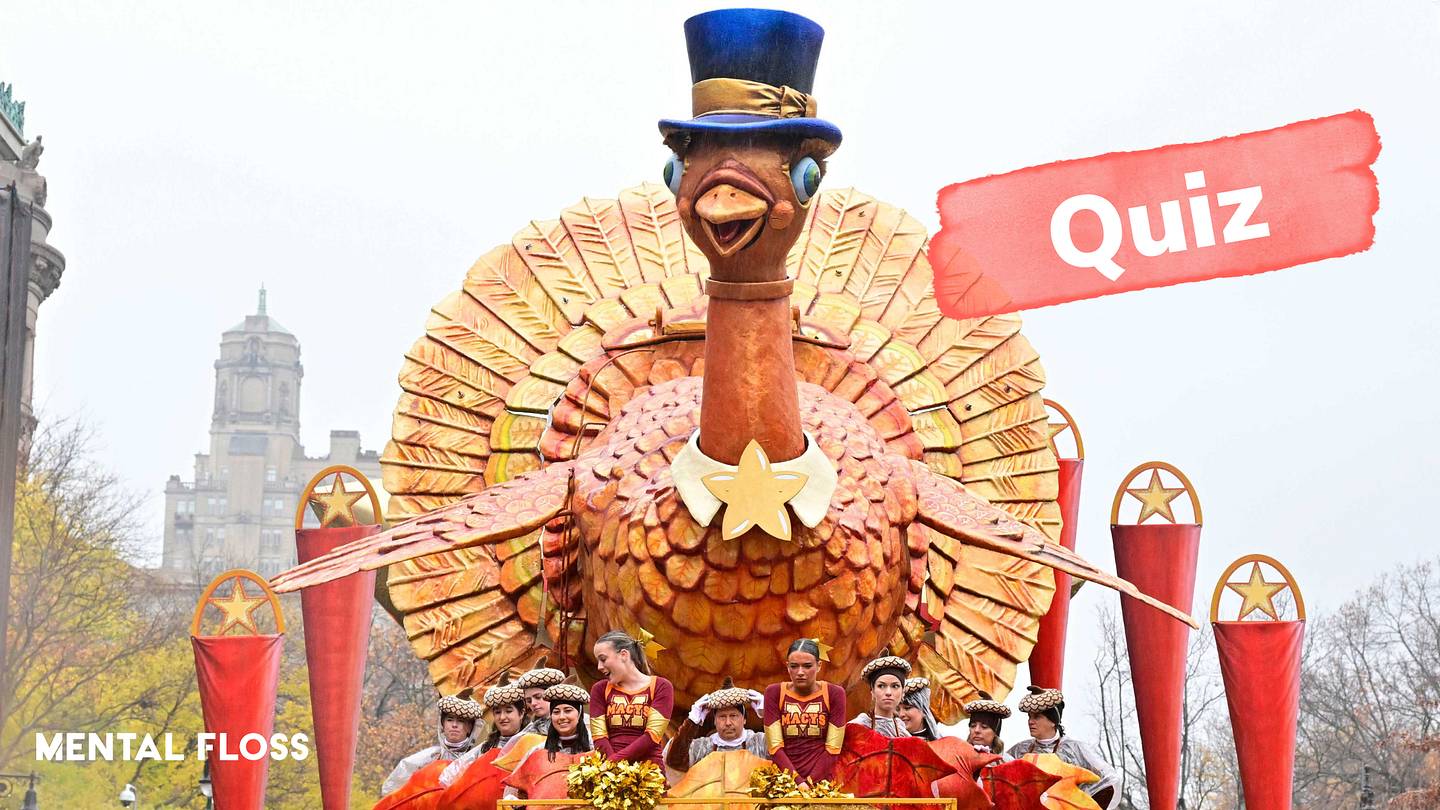
Every Thanksgiving morning, while turkeys are still negotiating their oven fate and relatives are debating whether “just one more side dish” is a medical emergency, millions of Americans turn on the Macy’s Thanksgiving Day Parade. It is cozy. It is chaotic. It is enormous. It is also one of the strangest, most brilliant traditions in American entertainment history.
But how much do you really know about the parade beyond the giant balloons, marching bands, celebrity lip-sync moments, and Santa’s grand finale? This Macy’s Thanksgiving Day Parade quiz takes you through the real history behind the spectacle: its department-store beginnings, the live animals that once marched through Manhattan, the birth of the famous balloons, the World War II pause, the television boom, and the safety changes that helped shape the modern parade.
Grab a cup of coffee, a slice of pie you absolutely promised you would not eat before dinner, and test your Thanksgiving parade knowledge.
Macy’s Thanksgiving Day Parade Quiz: Test Your Parade Smarts
1. What year was the first Macy’s Thanksgiving Day Parade held?
Answer: 1924. The first parade took place on November 27, 1924, in New York City. It was originally known as the Macy’s Christmas Parade, because its main goal was to launch the holiday shopping season and celebrate Macy’s massive Herald Square store.
2. What was the parade originally called?
Answer: Macy’s Christmas Parade. The name may surprise modern viewers, but the early event was less about Thanksgiving branding and more about welcoming the Christmas season. Santa Claus was there from the beginning, because apparently even in 1924, retail knew how to make an entrance.
3. What kinds of animals appeared in the earliest parade?
Answer: Live animals from the Central Park Zoo. Before helium balloons became the stars, the parade featured real animals, including elephants, camels, bears, and other zoo creatures. It sounds magical until you imagine trying to guide an elephant through Manhattan traffic before everyone has had breakfast.
4. When did giant balloons first appear?
Answer: 1927. The giant balloons were introduced a few years after the first parade. They replaced the live animals and quickly became the parade’s signature attraction.
5. Which famous cartoon character is widely recognized as the first major parade balloon?
Answer: Felix the Cat. Felix was one of the earliest and most famous character balloons. His appearance helped turn the parade from a moving store promotion into a floating pop-culture museum.
6. Why was the parade paused during World War II?
Answer: Rubber and helium were needed for the war effort. The parade was suspended from 1942 through 1944. Materials used for balloons were considered too important to spare during wartime, so the celebration returned only after the war years had passed.
7. What holiday movie helped make the parade even more famous?
Answer: Miracle on 34th Street. The 1947 film used real parade imagery and helped connect Macy’s, Santa Claus, and Thanksgiving morning in the national imagination.
8. What network became strongly associated with the parade broadcast?
Answer: NBC. Television transformed the parade from a New York City event into a national Thanksgiving ritual. Families who had never stood on a cold Manhattan sidewalk could suddenly watch balloons, Broadway numbers, and Santa from the couch.
9. What usually signals the end of the parade?
Answer: The arrival of Santa Claus. Santa’s appearance at the end of the Macy’s Thanksgiving Day Parade has long served as the unofficial opening bell for the Christmas season.
10. Why are wind conditions so important during the parade?
Answer: Giant balloons are difficult to control in high winds. The parade has had several balloon mishaps over the decades. Modern safety rules, trained handlers, and wind monitoring help protect spectators, performers, and the balloons themselves.
The Surprising Origin of a Thanksgiving Tradition
The Macy’s Thanksgiving Day Parade did not begin as a sacred national ceremony. It began as smart retail theater. In 1924, Macy’s wanted to celebrate its expanded Herald Square flagship and attract shoppers at the start of the holiday season. So employees dressed in costumes, performers marched, bands played, floats rolled, and Santa Claus arrived like the world’s most festive marketing executive.
The first parade was a hit. More importantly, it gave New Yorkers a public celebration that felt joyful, crowded, and grand. The parade also reflected the energy of the city itself. Macy’s employees included many immigrants who brought memories of European street festivals and pageantry. Mix those traditions with New York showmanship, department-store ambition, and a dash of Thanksgiving chaos, and the result was something Americans had not quite seen before.
Unlike a quiet family dinner, the parade was loud, public, and theatrical. It turned a holiday morning into a shared citywide performance. That combination helped it survive far beyond its original purpose. Macy’s may have wanted shoppers, but the public wanted magic. The magic won.
Before Balloons, There Were Zoo Animals
One of the funniest facts in Macy’s Thanksgiving Day Parade history is that the first editions featured live animals from the Central Park Zoo. Today, the idea feels both charming and wildly impractical. Imagine standing near the route with a paper cup of coffee while a camel strolls past, followed by clowns, bands, and a department-store Santa. That is not a parade; that is a fever dream with sponsorship.
The animals were exciting, but they were not ideal for a crowded urban celebration. They could be noisy, unpredictable, and intimidating to children. As the parade evolved, Macy’s needed something safer, easier to manage, and more visually spectacular. Enter the balloons.
The switch from live animals to balloons was a masterstroke. Balloons could be huge, colorful, funny, and recognizable. They were also perfect for children looking up from the sidewalks and, later, for television cameras looking for dramatic overhead shots. Once balloons entered the story, the parade found its most famous identity.
The Rise of the Giant Balloons
The giant balloons first appeared in 1927, and they changed everything. Early balloon designs were inspired by puppetry, illustration, and popular characters. Felix the Cat became one of the best-known early balloon stars, proving that the parade could celebrate not only Thanksgiving but also the pop culture of the moment.
In the early years, Macy’s experimented with balloon design, inflation, and even release methods. Some balloons were once allowed to float away after the parade, with rewards offered for their return. This sounds delightful until you remember that giant drifting objects and airplanes are not exactly best friends. The practice eventually ended, and the parade became more controlled and safety-focused.
Over time, balloons became a visual timeline of American childhood. Mickey Mouse, Snoopy, Superman, Kermit the Frog, Spider-Man, Pikachu, SpongeBob SquarePants, and many other characters have floated above the streets. Each generation sees its own favorites in the sky. That is part of the parade’s genius: it is nostalgic for adults and brand-new for children at the same time.
World War II and the Parade’s Patriotic Pause
The Macy’s Thanksgiving Day Parade did not run from 1942 through 1944 because World War II changed national priorities. Rubber and helium were needed for the war effort, and giant balloons were not exactly essential equipment compared with military supplies.
This pause is an important reminder that the parade’s history is tied to larger American history. It is easy to think of the event as a cheerful annual routine, but it has moved with the country through prosperity, war, cultural change, technological shifts, and public safety concerns. When the parade returned in 1945, it carried a renewed sense of celebration. After years of sacrifice, the sight of floats, performers, and Santa Claus rolling through Manhattan meant more than entertainment. It meant normal life was coming back.
Television Turned a New York Parade Into a National Ritual
Television gave the Macy’s Thanksgiving Day Parade its living-room empire. Once the parade reached viewers beyond New York City, it became part of the national Thanksgiving schedule. Wake up. Turn on the parade. Smell something buttery from the kitchen. Hear someone ask where the good tablecloth went. Repeat every year forever.
The broadcast format also changed how people experienced the event. Viewers could see Broadway performances, celebrity appearances, marching bands, floats, and balloons from camera angles that sidewalk spectators could not always enjoy. Television made the parade feel polished and intimate at the same time.
The 1947 film Miracle on 34th Street also helped cement the parade’s connection to holiday storytelling. By placing the parade inside a beloved Christmas movie, Hollywood turned Macy’s Thanksgiving morning spectacle into a symbol of wonder, belief, and seasonal cheer. Not bad for an event that began as a department-store promotion.
Why the Parade Still Works
The Macy’s Thanksgiving Day Parade survives because it balances tradition with change. The structure is familiar: balloons, floats, bands, performers, clowns, and Santa. But the details change every year. New characters appear. New Broadway shows perform. New musical guests wave from floats. New children fall in love with a balloon their parents have to Google.
That mix keeps the parade fresh without making it unrecognizable. It is a rare event that can feature old-fashioned marching bands and modern pop stars in the same morning without seeming confused. Somehow, the parade makes room for both nostalgia and whatever character currently dominates lunchboxes.
It also works because Thanksgiving morning is a strange pocket of time. The big meal has not happened yet. Guests are arriving. Kitchens are busy. Football has not fully taken over. The parade fills that space with movement, music, and a sense of shared national routine. Even people who only half-watch it still know it is there, humming in the background like holiday wallpaper.
How Well Did You Do on the Quiz?
If you knew the parade began in 1924, give yourself a drumroll. If you knew it was originally called Macy’s Christmas Parade, add a cymbal crash. If you remembered the live zoo animals, you are officially operating at advanced Thanksgiving trivia level. And if you knew about the World War II pause, the early balloon experiments, and the role of television, you may be ready to host your own parade-themed trivia night.
The best part of Macy’s Thanksgiving Day Parade history is that it feels both grand and delightfully odd. It is a story about retail strategy, immigrant pageantry, zoo animals, helium, wartime sacrifice, television, pop culture, and Santa Claus. In other words, it is extremely American.
Experience: What This Parade Feels Like Beyond the Trivia
Knowing the history of the Macy’s Thanksgiving Day Parade makes watching it more fun, but the real experience is emotional. The parade is one of those rare events that can make a living room feel connected to a city street hundreds or thousands of miles away. You may be in pajamas. Someone may be burning the rolls. A cousin may be explaining cryptocurrency to an aunt who did not ask. Still, when the first balloon appears on screen, the day suddenly feels official.
For many families, the parade is not watched with perfect attention. It is absorbed. It plays while people chop celery, set the table, argue gently about gravy thickness, and sneak bites of pie crust. Children run in when a favorite character appears. Adults pause when a classic balloon floats by. Grandparents point out how different the parade looked decades ago. The broadcast becomes a bridge between generations, even when nobody says that out loud.
Seeing the parade in person is a different adventure. The crowds are huge, the weather can be rude, and getting a good viewing spot requires commitment. But there is something unforgettable about looking up and seeing a giant balloon drift between Manhattan buildings. On television, the balloons look cute. In person, they look enormous, strange, and almost dreamlike. You understand immediately why children remember them.
The sounds matter too. Marching bands do not feel the same through a screen as they do when the drums echo down the avenue. Clowns and performers create constant motion. Floats pass slowly enough that spectators can notice small details: costumes, waving dancers, handlers concentrating on ropes, police officers managing the route, and parents lifting children onto shoulders for a better view. The parade is not just a show; it is a massive coordination effort disguised as holiday fun.
The historical knowledge adds another layer. When you know that live animals once walked the route, the balloons seem even more imaginative. When you know the parade paused during World War II, its annual return feels less automatic and more meaningful. When you know television helped turn it into a national tradition, you can appreciate how a local New York event became part of Thanksgiving for families everywhere.
That is why a Macy’s Thanksgiving Day Parade quiz works so well. It is not just about memorizing dates. It is about noticing how traditions are built. A parade that began as a store promotion became a holiday ritual because people gave it meaning year after year. Families made it part of their morning. Children grew up and kept watching. New balloons replaced old ones, but the feeling stayed familiar.
So the next time the parade begins, watch with a sharper eye. Notice the old-fashioned structure beneath the modern sparkle. Think about the employees who marched in 1924, the zoo animals that came before balloons, the designers who turned characters into floating giants, the wartime years when the parade disappeared, and the television crews that helped bring it into American homes. Suddenly, the whole event becomes more than background noise before dinner. It becomes a moving history lesson with confetti, choreography, and a very punctual Santa Claus.
Conclusion
The Macy’s Thanksgiving Day Parade is more than a cheerful holiday broadcast. It is a nearly century-long story of American entertainment, retail imagination, New York City spectacle, and family tradition. From its 1924 debut as the Macy’s Christmas Parade to the rise of giant balloons, the World War II pause, the television era, and today’s pop-culture-filled celebration, the parade has constantly evolved while keeping its central promise: Thanksgiving morning should feel a little magical.
Whether you aced the quiz or learned that elephants once marched where Pikachu now floats, you now know the parade with more depth. And that makes watching it even better. After all, trivia is more satisfying when it comes with balloons the size of apartments.










