
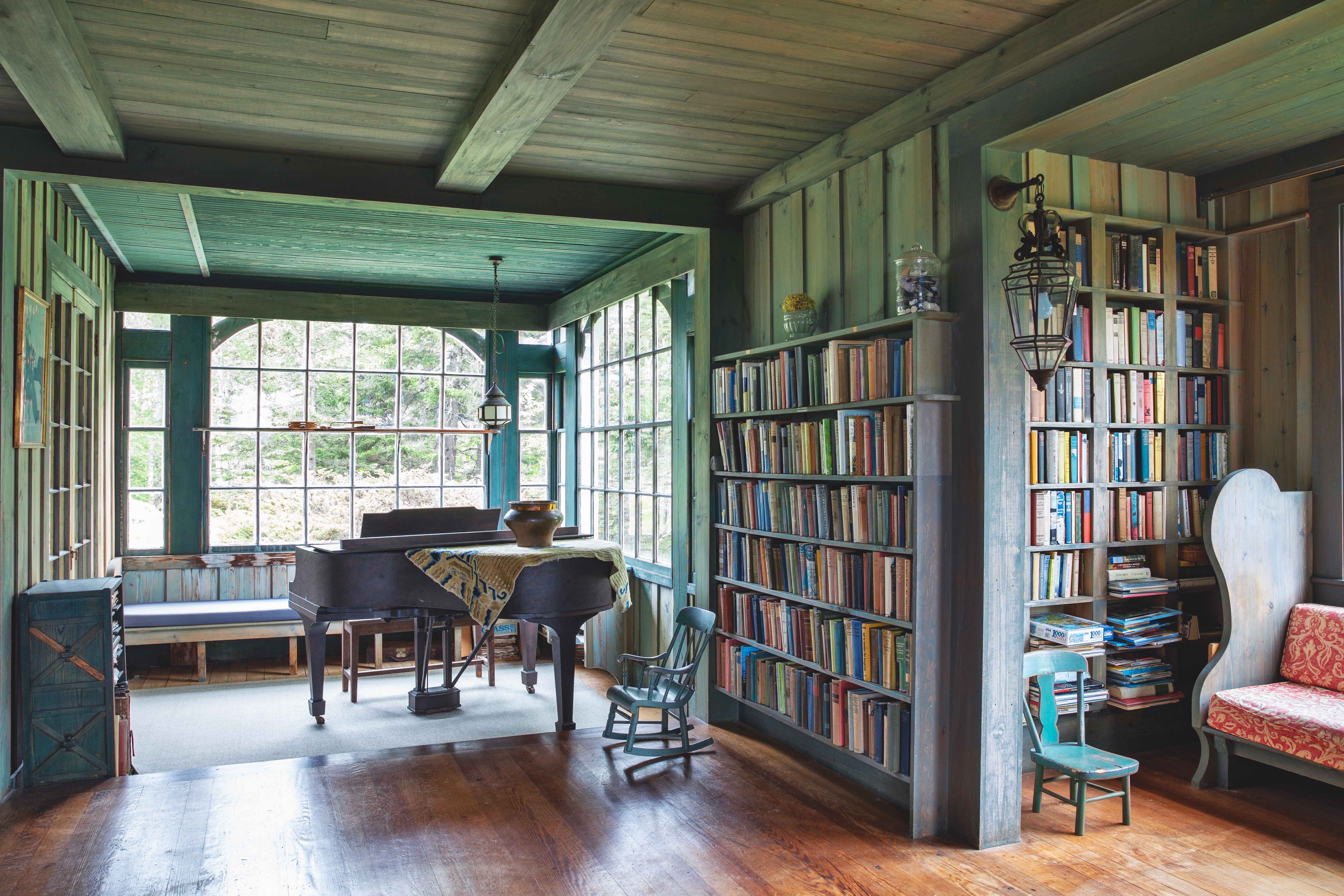
Some design books whisper politely from a coffee table. The Maine House kicks off its boots at the door, opens the windows, and lets in a breeze that smells like cedar shingles, salt air, old pine floors, and something deliciously buttery that may or may not involve lobster. This is not a glossy fantasy of coastal living where every pillow has been karate-chopped into submission. Instead, it is a love letter to homes with stories, scratches, slamming screen doors, hand-me-down chairs, practical kitchens, and the kind of charm that cannot be purchased in a single weekend shopping spree.
Created by photographer Maura McEvoy, stylist and art director Basha Burwell, and writer Kathleen Hackett, The Maine House celebrates the interiors and architecture that make Maine homes feel so unmistakably themselves. The book does not chase trendiness. It looks toward cottages, saltwater farms, fish shacks, clapboard houses, cabins, and summer places that have survived because people loved them enough not to “improve” all the personality out of them.
For anyone interested in Maine cottage style, coastal home design, historic preservation, rustic interiors, or simply the art of making a house feel human, this book belongs on the required reading list. It is beautiful, yes, but it is also quietly rebellious. In a world obsessed with renovations that erase the past, The Maine House makes a persuasive case for keeping the creak in the stair, the nick in the table, and the odd little shelf that no one can explain but everyone uses.
Why "The Maine House" Feels Different From Other Design Books
The magic of The Maine House is that it does not treat homes as showroom objects. It treats them as living archives. A Maine house, at least the kind celebrated in this book, is not designed all at once. It is gathered. A painted chair comes from a grandmother. A chipped bowl survives because it is perfect for blueberries. A bedroom may have an iron bed, a quilt, a stack of summer books, and curtains that appear to have been chosen by someone who valued breeze over drama. Somehow, it all works.
This is the opposite of instant decorating. The rooms featured in and inspired by The Maine House tend to feel assembled over years, not installed in a day. That accumulated quality is central to the Maine look. It is why an old farmhouse kitchen can feel warmer than a brand-new luxury kitchen with a marble island the size of a small ferry. Maine style understands that comfort is not the enemy of beauty. In fact, comfort may be the whole point.
The Maine House Aesthetic: Practical, Weathered, and Wonderfully Unfussy
Search for “Maine house style” and you will quickly run into familiar ingredients: cedar shingles, white clapboard, beadboard, painted floors, cast-iron stoves, open shelves, farm sinks, knotty pine, old quilts, and furniture that appears to have lived several interesting lives. But the real Maine house aesthetic is not a checklist. It is an attitude.
That attitude says a house should serve the people who live in it. It should handle sand, raincoats, wet dogs, muddy boots, board games, visiting cousins, and the occasional heroic attempt to cook for twelve people in a kitchen built for three. It should be beautiful, but not delicate. It should make room for art, books, rocks collected from the shore, mismatched mugs, and a lobster pot large enough to qualify as industrial equipment.
1. Let the Landscape Lead
One of the clearest lessons from The Maine House is that nature is not a backdrop; it is the lead designer. Maine’s coast, islands, forests, coves, granite ledges, and shifting weather naturally influence the interiors. Color palettes often seem borrowed from the view: fog gray, pine green, blueberry blue, driftwood brown, cream, oxblood, barn red, and the deep black-green of spruce woods after rain.
This does not mean every Maine-inspired room needs a bowl of seashells and a lighthouse painting. Please, let the lighthouse rest. The better move is subtler: choose natural textures, keep windows honest, use colors that feel connected to place, and avoid over-polishing. In a true Maine room, the view is allowed to do some of the decorating.
2. Keep the Old Stuff
Many modern renovations begin with demolition. Maine wisdom often begins with a pause. Before tearing out old paneling, replacing a worn floor, or banishing a strange built-in cabinet, ask whether the feature gives the house its voice. A sloped ceiling, a narrow stair, an uneven plank floor, or a funny little pantry may be inconvenient, but it may also be the thing that makes the house memorable.
The Maine House encourages a preservation-minded way of seeing. The goal is not to freeze a home in time. The goal is to let the old and new speak to each other. A farmhouse sink can coexist with modern plumbing. A cottage can gain insulation without losing its soul. A cabin can become more comfortable while still looking like it belongs to the woods and not to a luxury catalogue.
3. Choose Function First, Then Make It Charming
Maine interiors tend to be practical because Maine itself demands practicality. Weather changes fast. Houses near the water need to withstand moisture, wind, salt, and heavy use. Summer homes often host more people than expected. Year-round homes need storage, warmth, and resilience. This is why utility becomes part of the beauty.
Open shelves are not just decorative; they keep everyday dishes within reach. Painted floors are not just quaint; they are forgiving and easy to refresh. Hooks by the door are not a styling trick; they are survival equipment for coats, hats, totes, and whatever else a person drags in from a boat, trail, or car. The Maine house does not ask, “Will this impress guests?” It asks, “Will this still work when everyone arrives hungry and damp?”
Inside the Rooms: What Makes a Maine House Feel Like Maine?
The Kitchen: Cobble Together, Then Cook
The Maine kitchen is rarely precious. It may have open shelving, a painted cabinet, a vintage table, a cast-iron pan, and a window with a view that makes even washing dishes feel like a small spiritual event. The best examples are not overly coordinated. They are layered, useful, and confident in their imperfections.
Instead of hiding every object, Maine kitchens often display what is used daily: mugs, bowls, enamelware, baskets, jars, cutting boards, and stacks of plates. There is a humble honesty to this approach. A kitchen is a working room. It should not look terrified of toast crumbs.
The Living Room: Comfort Without Performance
A Maine living room often feels like a place where people actually sit. Sofas may be slipcovered, faded, or pleasantly overworked. Chairs may not match, but they know how to hold a reader. There may be books everywhere, a woodstove or fireplace, a braided rug, a basket of blankets, and art that reflects the owner’s life rather than a designer’s invoice.
This is a useful lesson for any home. A living room does not need to perform wealth. It needs to support living. If the room invites conversation, naps, reading, puzzles, rainy afternoons, and snacks that leave crumbs, it is doing its job beautifully.
The Bedroom: Simple, Airy, and Personal
The Maine bedroom is often restrained in the best way. Think iron beds, painted wood, quilts, simple lamps, small tables, and windows that matter more than wall decor. There is usually a strong sense of seasonal rhythm: cool sheets in summer, wool blankets in fall, maybe an extra quilt folded at the foot of the bed because Maine weather enjoys keeping people humble.
The key is not minimalism for its own sake. It is clarity. A bedroom should feel restful, not staged. It should hold personal details without becoming cluttered. A small stack of books, a handmade textile, a family painting, or a stone picked up on a beach can say more than a wall full of generic prints.
The Preservation Message Behind the Beauty
What makes The Maine House more than a pretty book is its underlying concern for preservation. Maine’s older houses, cottages, farms, and island homes carry cultural memory. They tell stories about fishing communities, artists, summer colonies, rural families, maritime labor, resourcefulness, and the long relationship between people and a demanding landscape.
When these homes are flattened and replaced by oversized new builds with no connection to local character, something irreplaceable disappears. The loss is not only architectural. It is emotional and communal. A modest cottage with original doors, worn floors, and handmade repairs may reveal more about Maine than a giant glass house that could sit on any expensive coastline in America.
This does not mean every old house must remain untouched. Houses need to evolve. Roofs fail. Foundations shift. Families need heat, bathrooms, storage, and safe wiring. But sensitive renovation asks better questions. What should be repaired rather than replaced? What materials belong here? How can comfort improve without erasing identity? What would the house itself choose if it had a vote?
How to Bring Maine House Style Into Your Own Home
You do not need oceanfront property, a 19th-century cottage, or a family camp on an island to borrow from The Maine House. The best lessons travel well because they are rooted in common sense.
Start With What You Already Own
Before buying new furniture, look at what is already in your home. Which pieces have history? Which ones are useful? Which ones could be painted, repaired, reupholstered, or moved to a better spot? Maine style rewards patience. A room becomes more interesting when it contains evidence of time.
Use Paint Generously
Paint is one of the great democratic design tools. Painted floors, painted furniture, painted beadboard, and painted cabinets can refresh a room without making it feel newly manufactured. Soft whites, blues, greens, warm grays, and deep reds all fit naturally into a Maine-inspired palette. The trick is to avoid making everything too perfect. A brush mark or two is not a crime; it is proof that a human was involved.
Mix, Do Not Match
A Maine house does not need matching bedroom sets or identical dining chairs. In fact, too much matching can make a room feel less alive. Combine old and new, humble and elegant, inherited and handmade. A pine table can sit under a modern pendant. A faded armchair can live beside a clean-lined sofa. The goal is harmony, not uniformity.
Let Collections Tell the Story
Books, pottery, shells, paintings, maps, baskets, quilts, and tools can all become part of the design when they reflect real interests. The difference between soulful collecting and clutter is intention. Display what matters. Rotate what does not. Leave enough breathing room so the eye can enjoy the story without needing a rescue boat.
Why This Book Still Matters
The Maine House matters because it champions authenticity at a time when many homes are being renovated into sameness. It reminds readers that beauty can be humble, that old materials have dignity, and that a house does not need to be perfect to be deeply desirable.
The book also arrives as part of a larger conversation about sustainable living. Preserving, repairing, and reusing existing buildings is not only emotionally satisfying; it is often environmentally sensible. The greenest house is frequently the one that already exists, especially when updated thoughtfully. Maine’s tradition of thrift, repair, and adaptation feels surprisingly modern for exactly that reason.
Experience Notes: Living With the Lessons of "The Maine House"
The most useful experience related to The Maine House is learning to slow down before changing a room. Many people walk into an older home and immediately see problems: the floor is scratched, the trim is uneven, the cabinets are old, the windows are not perfectly symmetrical. But after spending time with Maine-style interiors, those “problems” begin to look more like personality. The scratch on the floor may mark decades of chairs pulled back from family dinners. The old cabinet may hold more soul than a sleek replacement. The uneven trim may be the house quietly reminding everyone that straight lines are sometimes overrated.
One practical experience is the power of living with a space before renovating it. A room that seems awkward in July may become the coziest room in November. A dark corner might be perfect for a reading chair once a lamp is added. A tiny kitchen might function beautifully after adding hooks, shelves, and a better worktable. The Maine house mindset teaches that design is not always about expansion. Sometimes it is about paying attention.
Another experience is discovering how durable simple materials can be. Painted wood floors, for example, may sound fragile until you live with them. They age honestly. A new scratch does not ruin them; it joins the party. Slipcovered sofas, woven rugs, old tables, and open shelves all create a forgiving environment. This is especially valuable in homes with children, pets, guests, or adults who occasionally spill coffee while pretending to be elegant.
There is also an emotional experience at the center of this style: relief. A Maine-inspired home does not demand perfection from its owner. It does not require constant polishing, rearranging, or apologizing. It invites use. It says, “Put the wet boots there. Toss the blanket over the chair. Leave the book open. We are living here.” That sense of permission is rare and deeply appealing.
For anyone trying to create a more personal home, the best lesson is to trust accumulation over instant completion. Buy fewer things, but choose better stories. Keep the chair that makes guests linger. Frame the odd little drawing from a flea market. Use the bowl from your aunt. Paint the table instead of replacing it. Let the house become a record of your life, not a showroom for someone else’s taste.
In the end, The Maine House is not only about Maine. It is about belonging. It is about homes that know where they are, who has lived in them, and what matters when the wind picks up outside. That is why the book feels so memorable. It does not sell a fantasy of escape. It shows a better kind of luxury: a house with history, usefulness, humor, and enough room for real life to come in, sandy shoes and all.
Conclusion
The Maine House is required reading because it makes a strong, beautiful argument for homes with memory. Through weathered cottages, practical kitchens, coastal textures, handmade details, and preservation-minded design, the book captures an ideal that feels both specific to Maine and useful everywhere. It proves that timeless interiors do not come from copying trends. They come from honoring place, keeping what works, repairing what matters, and letting a home collect evidence of real life.
For readers who love coastal houses, rustic interiors, cottage style, historic preservation, or simply rooms with soul, this book offers more than inspiration. It offers a design philosophy. Be practical. Be personal. Let nature help. Do not rush. And above all, never underestimate the beauty of a screen door, a painted floor, and a room full of objects that have earned their place.













