
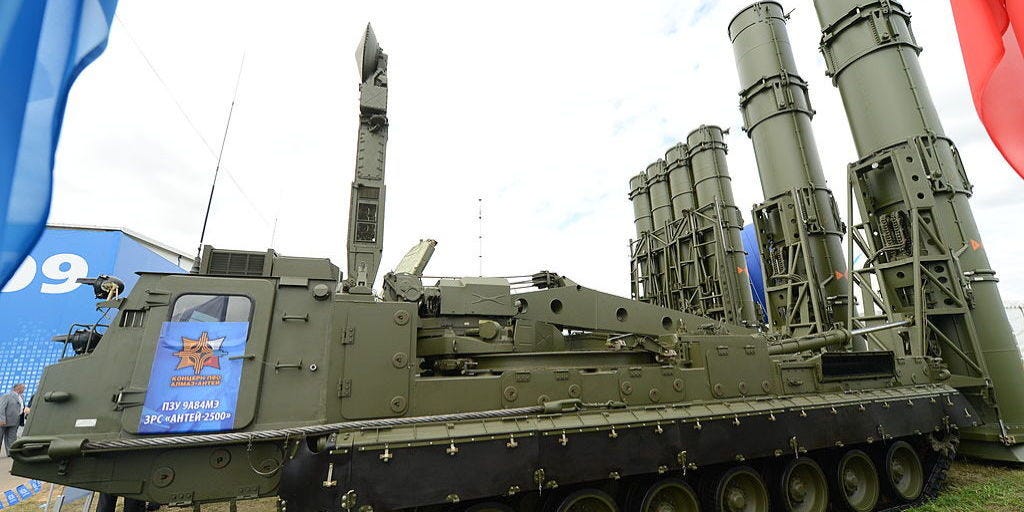
Russia’s latest anti-satellite activity has pushed space security back into the spotlight, and not in the fun “look, a meteor shower” way. According to U.S. officials and space-security analysts, Russia has repeatedly demonstrated counterspace capabilities that could threaten satellites in low Earth orbit, including a 2020 space-based test, a 2021 destructive direct-ascent anti-satellite missile test, and later deployments that U.S. defense officials described as suspicious counterspace behavior.
That sounds like a distant military drama happening somewhere above the clouds, but the stakes are surprisingly close to everyday life. Satellites help run GPS navigation, weather forecasting, banking time stamps, disaster response, aviation, internet connectivity, national defense, and that little blue dot on your phone map that confidently tells you to turn left into a lake. Anti-satellite weapons, often called ASAT weapons, are designed to disable, disrupt, damage, or destroy satellites. When a country tests one, the world does not just get a military headline. It gets a warning label for the modern economy.
This article breaks down what happened, why Russia’s anti-satellite weapon tests matter, what the risks are, and why space debris is now one of the least glamorous but most serious security problems orbiting Earth.
What Is an Anti-Satellite Weapon?
An anti-satellite weapon is any system intended to interfere with a satellite’s ability to operate. Some ASAT systems are physical, such as direct-ascent missiles launched from Earth toward a satellite in orbit. Others may be space-based, involving satellites that maneuver near other spacecraft. Still others are non-kinetic, using cyber tools, electronic jamming, dazzling, or other forms of interference to interrupt satellite services without creating a dramatic explosion.
The most dangerous tests are destructive kinetic tests. These create debris, and debris in orbit is not like a plastic bag blowing across a parking lot. Even tiny fragments can move at extremely high speeds. A bolt-sized piece of space junk can become a high-velocity wrecking ball. Space, it turns out, has no janitor, no traffic cones, and no convenient “oops, my bad” button.
Russia’s 2020 Space-Based ASAT Test
In July 2020, U.S. Space Command said Russia conducted a non-destructive test of a space-based anti-satellite weapon. The event involved Cosmos 2543 releasing a new object into orbit. U.S. officials argued that the behavior was inconsistent with ordinary satellite inspection and showed characteristics of a weapon test.
This event did not destroy a satellite, which is good news in the same way that a dragon sneezing instead of breathing fire is technically good news. But it raised major concerns because a satellite capable of releasing a projectile or maneuvering aggressively near another spacecraft could threaten assets without ever launching a missile from the ground.
Russia described many of its activities as inspection or technology demonstrations. The problem is that the line between inspection, surveillance, and attack capability can be thin. A satellite that can approach another satellite may be useful for repair, refueling, or observation. It may also be useful for interference or damage. In space security, context matters, behavior matters, and trust is in shorter supply than legroom on a budget airline.
The 2021 Destructive Test Against Cosmos 1408
The most alarming Russian ASAT event came on November 15, 2021, when Russia conducted a destructive direct-ascent anti-satellite missile test against Cosmos 1408, a defunct Soviet-era satellite. The test shattered the satellite and created a large debris field in low Earth orbit.
U.S. officials said the test produced more than 1,500 pieces of trackable debris and likely hundreds of thousands of smaller fragments. NASA reported that astronauts and cosmonauts aboard the International Space Station had to take emergency safety measures because of the debris risk. Imagine being in orbit, doing highly advanced science, and suddenly needing to shelter because someone far below decided to make space messier. That is not exactly the inspirational poster version of space exploration.
The debris from such an event does not politely disappear after the news cycle ends. Depending on altitude, shape, and orbital conditions, fragments can remain in orbit for months, years, or even longer. Every surviving fragment becomes one more object that must be tracked, avoided, and worried about by satellite operators.
Why Russia’s ASAT Tests Matter to the United States
The United States relies heavily on satellites for both civilian and military functions. GPS supports navigation, financial timing, agriculture, logistics, emergency services, and military operations. Weather satellites help forecast storms. Communications satellites connect remote regions. Intelligence satellites support national security. Remove satellites from the picture, and modern life starts looking less like the digital age and more like a very expensive camping trip.
Russia’s anti-satellite weapon tests matter because they demonstrate capability and intent. A country does not need to use an ASAT weapon in war for it to shape behavior. The mere possibility that satellites could be threatened changes military planning, diplomatic strategy, and commercial risk calculations.
For Washington, the concern is not only that Russia can damage satellites. The larger concern is that ASAT testing normalizes dangerous behavior in orbit. If one country creates debris and faces few consequences, others may feel pressure to test similar systems. That leads to an orbital arms race, which is exactly as comforting as it sounds.
The Space Debris Problem: One Test, Many Headaches
Space debris is the long-term villain in this story. It is not dramatic in the movie-trailer sense, but it is persistent, dangerous, and extremely difficult to remove. Debris from ASAT tests can cross the paths of operational satellites, crewed spacecraft, and commercial constellations.
Low Earth orbit is becoming busier every year. Commercial satellite networks are expanding. Governments are launching more national-security satellites. Scientific missions continue to operate. The International Space Station remains active, and future commercial space stations are being planned. Into this crowded environment, debris-generating ASAT tests introduce unpredictable hazards.
The scary part is the chain-reaction risk sometimes associated with the Kessler Syndrome concept. In simple terms, one collision creates debris, that debris causes more collisions, and the problem grows. It is the orbital version of knocking over one grocery-store display and watching soup cans roll into the cereal aisle.
Direct-Ascent vs. Co-Orbital ASAT Weapons
Direct-Ascent ASAT Weapons
A direct-ascent ASAT weapon is launched from Earth toward a satellite. It does not need to stay in orbit. Its purpose is generally to intercept a target in space. These systems are easier to identify after launch and can create massive debris if they physically destroy a satellite.
Co-Orbital ASAT Systems
Co-orbital systems are placed in orbit and may maneuver near other satellites. They can be harder to interpret because close approaches may be described as inspection, research, or servicing. The same basic capability that allows one satellite to inspect another could, in theory, be used for hostile action.
This ambiguity is one reason Russia’s space-based activities draw so much scrutiny. When a satellite behaves like a repair truck, a spyglass, and a potential weapon all at once, other countries tend to get nervous. Space may be vast, but suspicion has excellent range.
How the International Community Has Responded
After the 2021 Russian destructive ASAT test, the United States announced that it would not conduct destructive direct-ascent anti-satellite missile testing. Washington also encouraged other nations to support a norm against debris-generating ASAT tests.
The United Nations General Assembly later adopted a resolution calling on countries not to conduct destructive direct-ascent anti-satellite missile tests. The resolution was not a binding treaty, but it helped build diplomatic pressure around the idea that creating long-lasting space debris is irresponsible.
Several countries have supported similar commitments. Still, space arms control remains difficult. Verification is complex, dual-use technology is everywhere, and geopolitical trust is low. In other words, everyone agrees that space should be safe, but not everyone agrees on what “safe” means when national security is involved.
Why Satellites Are So Tempting as Targets
Satellites are valuable because they are useful. That also makes them vulnerable. In a major conflict, disrupting an adversary’s satellite network could affect communications, precision navigation, surveillance, missile warning, and command systems. From a military perspective, satellites are high-value assets floating in predictable paths.
However, attacking satellites carries huge risks. A destructive strike could harm neutral countries, commercial companies, scientific missions, and crewed spacecraft. Debris does not check passports. It does not politely avoid satellites owned by uninvolved nations. Once created, it becomes everyone’s problem.
This is why many experts argue that anti-satellite weapons are strategically dangerous. They may offer short-term advantage but create long-term instability. It is like setting fire to the road because you want to slow down one car.
The Commercial Space Angle
The rise of commercial space has changed the ASAT conversation. Companies now operate large satellite constellations for broadband internet, imaging, weather data, logistics, and communications. A debris-generating ASAT test no longer threatens only government spacecraft. It can threaten private infrastructure used by millions of people.
Commercial operators already perform collision-avoidance maneuvers, track conjunction warnings, and design satellites with end-of-life disposal plans. But every new debris cloud increases workload, cost, and uncertainty. Insurance prices can rise. Mission planning becomes harder. Operators may need to spend fuel avoiding debris instead of extending service life.
In short, ASAT tests can turn space sustainability into a business problem. And when space becomes a business problem, invoices eventually find their way back to people on Earth.
Russia’s 2024 Counterspace Concerns
In 2024, U.S. officials said Russia had launched a satellite assessed as a potential counterspace weapon into an orbit associated with a U.S. government satellite. Russia denied hostile intent, and the public evidence remained limited. Still, the incident fit a broader pattern of concern over Russian rendezvous and proximity operations, military satellites, and possible co-orbital capabilities.
This does not mean every Russian satellite is a weapon. It does mean that the United States and allied space watchers are paying close attention. In orbit, behavior can speak louder than press releases. A satellite’s path, timing, maneuvers, and proximity to other spacecraft all become part of the security picture.
What Could Happen If ASAT Testing Continues?
If countries continue to test anti-satellite weapons, several risks grow. First, space debris will increase, making low Earth orbit more hazardous. Second, military tensions could rise as nations prepare to defend or replace vulnerable satellites. Third, commercial satellite operators could face higher costs and more operational disruptions. Fourth, the risk of miscalculation could increase.
Miscalculation may be the most dangerous part. A close satellite approach might be intended as surveillance, but interpreted as a pre-attack maneuver. A jamming incident might be viewed as temporary interference, but interpreted as the opening move of a larger conflict. In a crisis, uncertainty is not a harmless detail. It is fuel.
What Can Be Done?
There is no single magic fix. Space security will require a mix of diplomacy, technical safeguards, transparency, better tracking, resilient satellite design, and clearer international norms. Countries can reduce risk by avoiding debris-generating tests, sharing space situational awareness data, improving communication channels, and supporting rules for responsible behavior in orbit.
Satellite operators can also build more resilient systems. That may include distributed constellations, backup systems, maneuverable satellites, improved cybersecurity, and better debris-avoidance tools. The goal is not to make satellites invincible. The goal is to make space systems harder to disrupt and easier to recover.
Diplomacy still matters. Even rivals share the same orbital environment. A debris cloud created by one country can threaten another country’s satellite, a private company’s broadband service, and a crewed spacecraft carrying astronauts from multiple nations. Space is the ultimate shared neighborhood, and nobody benefits when one neighbor starts throwing bricks into the street.
Experience-Based Reflections: What This Topic Teaches Us
Watching the Russia anti-satellite weapon story unfold offers several practical lessons for anyone who follows technology, security, or space policy. The first lesson is that space is no longer a distant, abstract domain. It is infrastructure. We often think of satellites as glamorous machines drifting above Earth, but they are more like invisible utility poles. They support things we use constantly without noticing.
One experience many people can relate to is losing GPS signal while driving. For a few minutes, life becomes surprisingly chaotic. Now imagine that problem scaled across shipping, aviation, emergency response, agriculture, military planning, and financial systems. That is why satellite security matters. It is not about science fiction. It is about the quiet systems that keep daily life moving.
The second lesson is that technology can be dual-use. A satellite that inspects another satellite may support peaceful maintenance. The same capability can also create military concern. This dual-use problem appears in many fields, from drones to artificial intelligence to cybersecurity. The tool itself may not tell the whole story. Intent, context, and behavior matter.
The third lesson is that debris is a consequence without borders. The 2021 Russian ASAT test showed how a national military decision could create international safety problems. The debris did not only concern Russia and the United States. It affected the International Space Station, commercial operators, scientific missions, and future launches. Space debris is like glitter at a craft table: once released, it spreads everywhere, and nobody knows how to fully clean it up.
The fourth lesson is that norms can be powerful even when treaties are difficult. The U.S. commitment not to conduct destructive direct-ascent ASAT missile tests did not solve the problem overnight. But it created a diplomatic benchmark. It gave other countries a standard to support or reject. In international security, norms often develop before hard law. They are imperfect, but they can shape expectations.
The fifth lesson is that resilience matters more than panic. The correct response to ASAT threats is not to assume space is doomed. It is to build systems that can survive disruption, recover quickly, and reduce incentives for attack. Distributed satellite networks, better tracking, stronger cybersecurity, and smarter space traffic coordination can all help.
Finally, this topic reminds us that the most important space stories are not always about rockets launching, astronauts waving, or telescopes finding galaxies that look like cosmic pancakes. Sometimes the most important space story is about responsibility. Humanity has become good at reaching orbit. Now it has to become better at behaving there.
Conclusion
Russia’s anti-satellite weapon tests show that space is now a contested strategic domain, not just a place for exploration and communications. The 2020 space-based ASAT test, the 2021 destructive strike against Cosmos 1408, and later counterspace concerns have all increased pressure on governments, satellite operators, and international organizations to take orbital security seriously.
The biggest danger is not only the weapon itself. It is the debris, uncertainty, and arms-race logic that follow. Satellites support modern life in ways most people barely notice, from navigation and weather forecasting to banking, communications, and national defense. When countries test weapons that threaten satellites, they are not just flexing military muscle. They are shaking the scaffolding of the connected world.
The path forward requires restraint, transparency, resilience, and international pressure against debris-generating tests. Space may be vast, but the safe orbital lanes humans depend on are limited. Keeping them usable is not optional. It is the price of living in a satellite-powered civilization.
Note: This article synthesizes public information from reputable U.S. government, space policy, defense, science, and news sources. It is written for public education and does not provide operational guidance on weapon design, deployment, or use.














