
There are science stories, there are climate stories, and then there are stories that sound like a studio executive shouted, “Make it bigger, furrier, and a little more prehistoric.” The campaign to revive the woolly mammoth, dodo bird, and Tasmanian tiger somehow manages to be all three at once. What sounds like science fiction is now a serious biotechnology and conservation conversation, driven by advances in genome sequencing, CRISPR gene editing, reproductive biology, and biodiversity research.
The central idea is simple enough to explain at a dinner table and chaotic enough to start an argument before dessert arrives: if humans helped wipe out species, should humans use modern science to restore some of what was lost? Supporters say these projects could rebuild missing ecological functions, improve conservation genetics, and create tools that help endangered species survive. Critics counter that de-extinction may produce expensive approximations of extinct animals while pulling money, time, and attention away from protecting species that are still hanging on by a claw, feather, or trunk.
Either way, the woolly mammoth, the dodo, and the thylacine, also called the Tasmanian tiger, are no longer just museum favorites and cautionary tales. They are the headline species in a growing movement that sees biodiversity not as a static memorial wall, but as something biotechnology might actively repair. That is the promise. The fine print is where things get interesting.
What de-extinction really means
First, let’s clear up the most important misconception: scientists are not expecting to find a perfectly preserved mammoth cell, press a giant red “clone” button, and welcome back an exact Ice Age original. DNA degrades over time. For all three species, the likely outcome is not a flawless genetic replica, but a living animal engineered to carry the key traits of the extinct species and perform a similar ecological role.
That distinction matters. In the mammoth project, scientists are working toward a cold-adapted elephant that carries core woolly mammoth traits, such as dense hair, fat metabolism suited to cold, and other survival features needed for Arctic life. In the dodo project, the target is a bird built through the genome of the dodo’s closest living relatives, especially the Nicobar pigeon, plus advanced avian reproductive tools. In the thylacine effort, the plan is to edit the genome of a living marsupial relative so the resulting animal increasingly resembles the extinct apex predator that disappeared in the twentieth century.
So no, this is not Jurassic Park. Nobody is about to open a theme park where a mammoth judges your winter jacket. It is closer to “functional de-extinction,” meaning the goal is to restore enough of an animal’s biology and ecological behavior to make it matter in the living world.
Why scientists think these species could help biodiversity
The woolly mammoth and the Arctic ecosystem
The woolly mammoth is the most ambitious and arguably the most climate-themed of the three projects. The ecological case goes like this: large grazing mammals once helped maintain grassland ecosystems across parts of the Arctic. Some scientists argue that restoring mammoth-like herbivores could help reduce shrub and tree expansion, compact snow, and preserve colder ground conditions. In theory, that could help protect permafrost and slow greenhouse gas release.
That is the dream, and it is a big one. The mammoth is not being pitched merely as a shaggy mascot for biotech optimism. It is being discussed as an ecosystem engineer, a species that could influence vegetation, soil conditions, and energy balance across a landscape. If that sounds almost too convenient, that is because the claim is still debated. Even supportive scientists generally acknowledge that restoring such a role would require enormous scale, careful habitat planning, and decades of observation. One or two fuzzy celebrity elephants would not save the tundra.
The dodo and island restoration
The dodo’s biodiversity story is less about Arctic drama and more about ecological relationships on islands. The bird evolved in Mauritius, where isolation shaped its behavior and biology. It disappeared within a short period after human arrival, hunting pressure, and introduced animals such as rats and pigs destabilized the system. The dodo has since become the global poster bird for extinction, which is unfair in one sense and deserved in another. It was not “too dumb to live”; it was simply not designed for invasive predators and sudden human disruption.
Scientists interested in reviving the dodo argue that the project could do more than recreate a famous lost bird. It could also advance bird conservation tools, especially techniques involving primordial germ cells, surrogate hosts, and genome editing. Those methods could eventually help endangered birds that are very much alive but in serious trouble. In other words, the dodo may be the charismatic front page, but the conservation toolbox is part of the deeper story.
The Tasmanian tiger and trophic balance
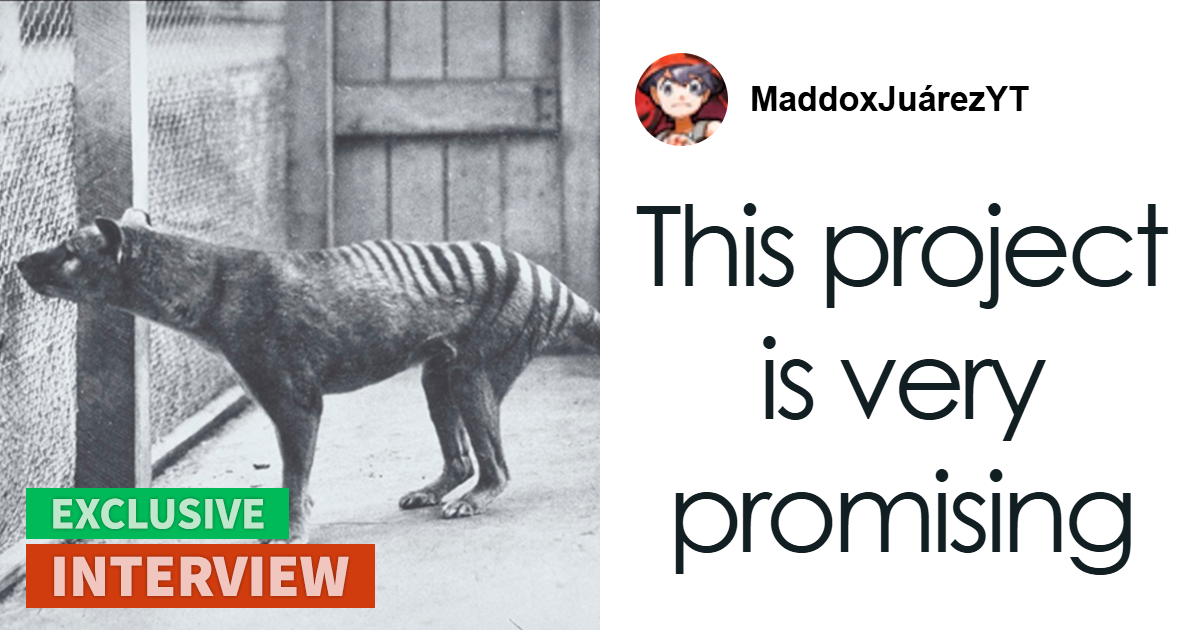
The thylacine case is often framed around predator ecology. The Tasmanian tiger was a carnivorous marsupial and an apex predator in its ecosystem. After being hunted, persecuted, and pushed toward extinction, it vanished in 1936. Supporters of revival argue that restoring a predator-like ecological function could help rebalance food webs, especially in areas affected by mesopredator release, invasive prey, and long-term ecological simplification.
There is also a practical argument here: technologies developed for the thylacine could support marsupial conservation more broadly. The science needed to edit marsupial genomes, improve reproductive systems, and develop embryo support methods could spill over into efforts to help threatened Australian mammals. So even if the final “Tasmanian tiger” is years away, the research path may still produce biodiversity benefits along the way.
How each resurrection project is supposed to work
Woolly mammoth: edit an elephant, don’t clone an Ice Age ghost
The mammoth effort starts with ancient DNA recovered from preserved remains and modern DNA from living elephants, especially the Asian elephant, the mammoth’s closest living relative. Researchers compare genomes, identify traits associated with cold adaptation, and edit elephant cells to carry those features. The eventual aim is to create embryos and use elephant surrogates or alternative reproductive systems.
Recent proof-of-concept work has included the so-called “woolly mouse,” a gene-edited mouse with hair and metabolic traits intended to model mammoth-style adaptations. No, a mouse is not a mammoth. Thank you, science, for clearing that up. But small mammal models can help researchers test how specific edits affect visible traits before attempting anything in a large, slow-breeding animal like an elephant.
Dodo bird: build avian tools first
The dodo project has to solve a different problem: birds are not mammals, and avian reproduction is a technical beast of its own. Researchers are focusing on primordial germ cells, the precursors to sperm and eggs, and on methods for transferring edited cells into surrogate birds. The Nicobar pigeon is central because it is the dodo’s closest living relative. Scientists are also using genomic information from the Rodrigues solitaire, another extinct relative, to better understand what made a dodo a dodo.
Recent announcements around cultured pigeon germ cells and gene-edited chicken surrogates have been framed as major steps because they move the project from a grand concept into a more practical reproductive pathway. The broader significance is that bird conservation has historically had fewer high-powered reproductive tools than mammal conservation. If those tools mature, the dodo project could influence far more than one famous extinct bird.
Tasmanian tiger: marsupial biology changes the game
The thylacine project is especially unusual because marsupials develop differently from placental mammals. Rather than using an elephant-like surrogate challenge, scientists are looking at marsupial relatives such as the fat-tailed dunnart. The dunnart is tiny, which means the project sounds a little like nature hired a startup consultant and told it to think smaller. But scientifically, the dunnart offers a workable model for marsupial embryology, genome editing, and early development.
The thylacine effort is not just about producing a striped carnivore that looks dramatic in documentaries. It is also about learning how to manipulate marsupial genomes in ways that may help living species. That could be one of the strongest biodiversity arguments for the project: the technology platform itself may be as important as the extinct species headline.
The biggest scientific and ethical problems
These animals may not be true originals
One of the sharpest criticisms of de-extinction is that the result may be an approximation, not a resurrection in the strict sense. That is not just philosophical nitpicking. Species are not only DNA sequences; they are also behaviors, microbiomes, developmental environments, learned habits, migrations, and relationships with landscapes that no longer exist in their old form. A mammoth-like elephant born in a managed setting is not the same thing as a wild mammoth calf born on an Ice Age steppe.
Genetic diversity is a real problem
Bringing back a few engineered individuals is one thing. Building a healthy population is another. Genetic bottlenecks can leave a species vulnerable to disease, infertility, and poor adaptability. This issue is especially important for the dodo, where experts have long warned that a tiny engineered founding population could create serious diversity problems. De-extinction only starts to look like conservation if it can support viable populations, not just photogenic prototypes.
Animal welfare cannot be an afterthought
The mammoth plan raises serious questions about elephant welfare. Elephants are intelligent, social, endangered animals, and any strategy that relies on egg collection, surrogate pregnancy, or repeated reproductive intervention must be judged against very high ethical standards. Critics have argued that no biodiversity pitch should casually treat elephants as biological equipment with trunks attached.
The same principle applies across species. Failed embryos, developmental problems, and reproductive trial-and-error are not theoretical concerns; they are often part of difficult frontier science. That does not automatically make the work unethical, but it does mean the ethics must be as advanced as the genetics.
Could de-extinction distract from conservation?
This is the argument that refuses to leave the room, and fairly so. Skeptics say the extinction crisis is already here, with species disappearing because of habitat destruction, invasive species, climate change, pollution, and overexploitation. From that perspective, spending huge sums on extinct species can look like trying to rebuild a burnt cake while the kitchen is still on fire.
Supporters respond that de-extinction technologies are not separate from conservation. Genome banking, cloning methods, ancient DNA analysis, reproductive biology, and genetic rescue tools could help endangered species right now. That rebuttal has weight, especially when the same labs discuss biobanking and conservation applications alongside de-extinction. Still, the burden of proof remains high. The field has to show that it can do both: inspire the public with big extinct animals and deliver practical benefits for species still with us.
What recent progress actually shows
Recent developments suggest that the science is moving, even if the finish line remains fuzzy. Mammoth research has advanced through trait-testing models such as the woolly mouse. Dodo research has moved forward with cultured avian germ cells and surrogate-host strategies. The thylacine project has continued developing marsupial genomic and reproductive methods. Meanwhile, the broader de-extinction conversation changed dramatically after Colossal announced the birth of gene-edited dire wolves in 2025, which the company described as a landmark proof of concept for its platform.
That does not settle the debate. In fact, it sharpens it. The more the science progresses, the less useful it becomes to dismiss the entire field as fantasy. But the more serious the work becomes, the more urgent the questions become too: What counts as a resurrected species? What ecological standards must be met before rewilding? Who decides whether an engineered animal belongs in a landscape? And how much uncertainty is acceptable when biodiversity is the stated goal?
What these projects feel like in the real world
Outside the headlines, de-extinction is not one dramatic moment with thunder, sparks, and a mammoth silhouette in a lightning storm. It is usually a chain of very human experiences, many of them slow, muddy, technical, and emotionally complicated. A paleogeneticist may spend days working with degraded DNA fragments so small and damaged they barely look like the raw material of a future species. A field scientist in the Arctic may look at thawing ground and see not abstract climate data, but a landscape physically slumping under warming temperatures. A conservation biologist in Mauritius may hear “bring back the dodo” and immediately think less about spectacle and more about rats, habitat restoration, and whether the forest itself is ready.
There is also a strange emotional split built into this work. For some researchers, these species represent unfinished business. The thylacine, for example, is not some deep-time creature from a geological fantasy. It survived into modern recorded history. There are photographs, film footage, and a hauntingly recent timeline. That makes the project feel less like fantasy and more like an uncomfortable question: if humans erased something this recently, do we owe the future more than an apology plaque?
For others, the experience is more cautionary than hopeful. Zoo professionals, wildlife ethicists, and conservation veterans often respond to de-extinction with a kind of guarded fatigue. They have spent years trying to save species before they vanish, and they know how brutally hard that is even with living populations. From that perspective, the idea of reviving an extinct animal can sound glamorous in all the wrong ways. It can feel like the world is more excited about an extinct celebrity than about an endangered frog nobody has turned into a logo yet.
Then there is the public experience, which is part awe, part confusion, and part very internet behavior. People love these stories because they sit right at the intersection of wonder and argument. A mammoth revival story lets readers imagine the impossible, but it also forces them to think about biodiversity in practical terms: habitat, genetics, ethics, long-term stewardship, and unintended consequences. That may be one hidden benefit of the entire field. Even people who roll their eyes at de-extinction end up talking about extinction in a more serious way than they did before.
And in the labs themselves, the experience is often not cinematic at all. It is troubleshooting culture conditions, comparing genomes, refining cell lines, and repeating experiments until the romance burns off and only discipline is left. That might actually be the most reassuring part. If de-extinction ever contributes meaningfully to biodiversity, it will not be because someone loved the dodo enough to make a dramatic announcement. It will be because thousands of unglamorous choices, from welfare protocols to ecological planning, were made carefully and well.
So the lived experience around this topic is not really about bringing back the past for nostalgia’s sake. It is about deciding what kind of responsibility modern science has in a damaged world. The mammoth, dodo, and Tasmanian tiger are the attention magnets. But the real experience, for scientists and the public alike, is wrestling with a harder question: when we finally have the power to intervene, how do we make sure we are helping life rather than just impressing ourselves?
Final verdict: bold science, but biodiversity will be the real test
Scientists who want to resurrect the woolly mammoth, dodo bird, and Tasmanian tiger are not just chasing viral science headlines. At least in principle, they are trying to develop tools that could restore lost ecological functions, improve conservation genetics, and strengthen biodiversity efforts in a century defined by extinction pressure. That goal is serious, and parts of the science are serious too.
But the word could is doing a lot of work here. Could mammoth-like elephants help Arctic ecosystems? Could dodo research reshape avian conservation? Could thylacine biology help protect living marsupials? Yes, potentially. Could all of this also become a costly exercise in techno-drama if welfare, ecological readiness, and long-term population planning are not handled properly? Also yes.
The smartest way to think about de-extinction is neither breathless belief nor smug dismissal. It is careful conditional optimism. If these projects help biodiversity, they will do so not because extinct animals are cool, though they absolutely are, but because the science behind them ends up protecting living systems. In the end, the mammoth, dodo, and thylacine may return as symbols. Whether they return as true conservation victories is a question the next decade will have to answer.














