
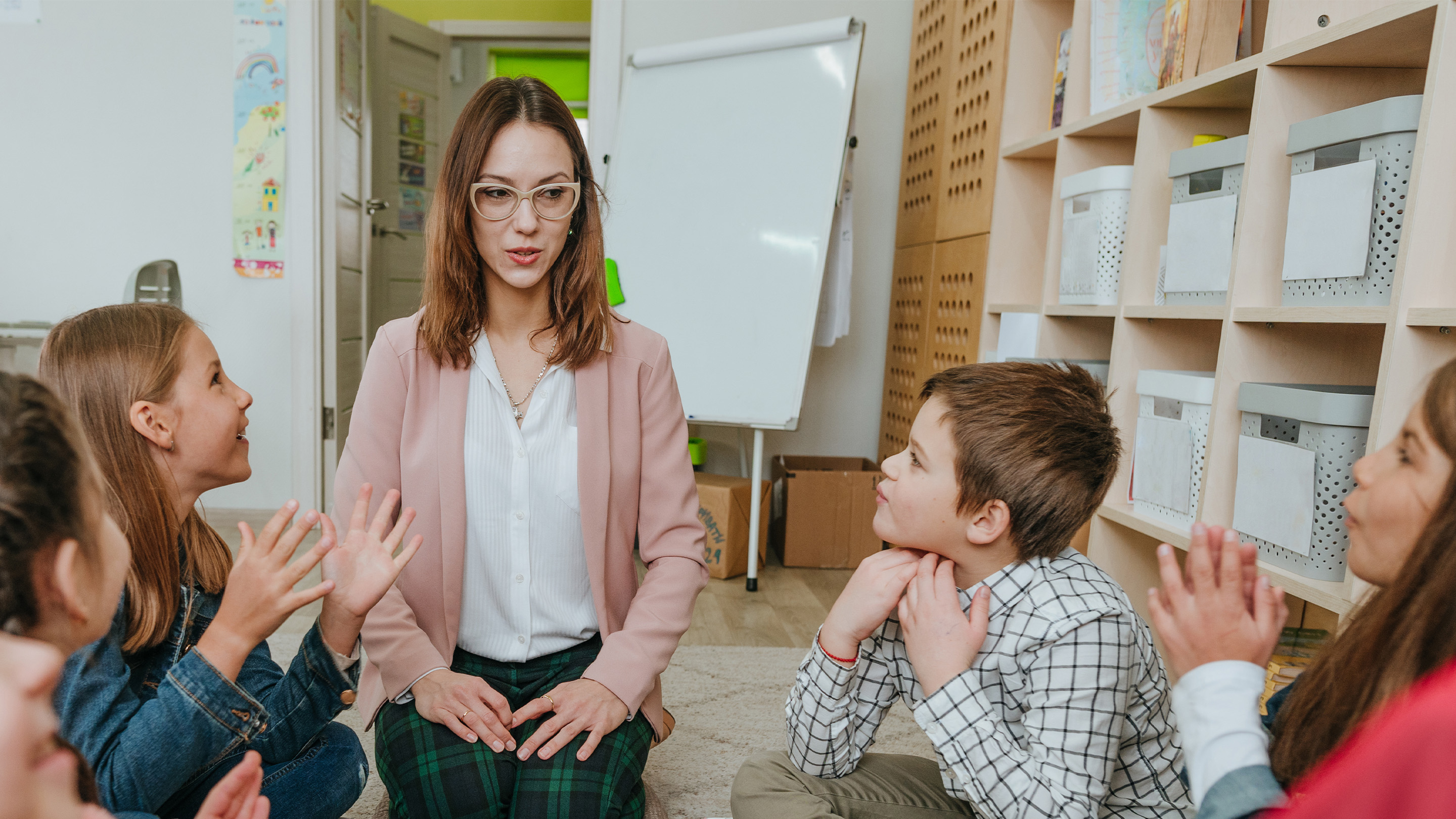
Self-regulation is one of those school skills that sounds quiet and polite, like it should wear a cardigan and whisper in the library. In reality, it is the powerhouse behind learning, behavior, focus, relationships, and classroom sanity. When students can pause before reacting, manage frustration, shift attention, follow routines, and recover from disappointment, the entire classroom feels different. The pencil sharpener becomes less of a traffic jam. Group work becomes less of a contact sport. And teachers get to teach instead of spending the day as emotional air traffic controllers.
For teachers, self-regulation is just as important. A calm adult nervous system can set the emotional weather of the room. That does not mean teachers must become unbothered robots who smile serenely while glue sticks disappear into the ceiling tiles. It means they have practical tools to notice stress, manage tone, respond instead of react, and model the exact skills students are still learning.
This guide explores practical, research-informed self-regulation strategies for teachers and students, with classroom examples that can work across grade levels. The goal is not perfection. The goal is progress, practice, and fewer moments where everyone silently wonders whether indoor recess should be classified as an extreme sport.
What Is Self-Regulation?
Self-regulation is the ability to manage thoughts, emotions, behaviors, and attention in order to meet a goal. In school, that might mean staying focused during a math lesson, calming down after a conflict, waiting for a turn, asking for help instead of shutting down, or completing a writing assignment even when the first sentence refuses to behave.
Self-regulation is closely connected to executive function skills, including working memory, flexible thinking, planning, organization, impulse control, and emotional management. These skills develop over time, which is why expecting every child to “just calm down” is about as effective as telling a printer to “just stop jamming.” Students need instruction, modeling, practice, feedback, and supportive routines.
Self-Regulation Is Not the Same as Compliance
A common mistake is treating self-regulation as simple obedience. A quiet student is not always regulated. Sometimes that student is anxious, confused, disconnected, or trying very hard not to cry over long division. True self-regulation means students understand what is happening inside them and can choose helpful strategies to manage it.
In other words, the goal is not to create classrooms full of silent statues. The goal is to help students become aware, flexible, responsible learners who can handle challenges without falling apart, giving up, or launching a dramatic pencil protest.
Why Self-Regulation Matters in the Classroom
Self-regulation affects nearly every part of school life. Students who can regulate emotions and attention are better prepared to learn, participate, solve problems, and build positive relationships. They are also more likely to recover from mistakes, which is essential because learning is basically the art of being wrong in increasingly useful ways.
For teachers, self-regulation supports classroom management, instructional clarity, and emotional resilience. Teaching is demanding work. A teacher may move from a technology glitch to a student conflict to a surprise schedule change before 9:15 a.m. Strong self-regulation helps teachers stay grounded, make fair decisions, and avoid turning one frustrating moment into the theme of the whole day.
The Classroom Climate Connection
Students learn best in environments that feel predictable, respectful, and emotionally safe. When routines are clear, expectations are taught, and adults respond calmly, students are more likely to take academic risks. They can raise a hand, try a difficult problem, read aloud, or admit confusion without feeling like the classroom is a courtroom.
Self-regulation strategies also support social-emotional learning. Skills such as self-awareness, self-management, relationship-building, and responsible decision-making are not “extra” lessons squeezed in after academics. They are the foundation that helps academics actually stick.
Self-Regulation Strategies for Teachers
Teachers cannot pour calm from an empty coffee mug. Before students can consistently regulate, they need adults who model regulation in real time. This does not require perfection. In fact, students benefit from seeing adults repair, reset, and try again.
1. Use the Pause Before Responding
When a student blurts, refuses, argues, or melts down, the first adult response matters. A short pause gives the teacher time to choose a response instead of donating extra energy to the chaos fund.
Try silently asking: “What does this student need right now: correction, connection, space, or structure?” That one question can prevent a power struggle. A calm response might sound like, “I can see this is frustrating. Take one minute, then we’ll solve the first step together.”
2. Lower Your Voice Instead of Raising It
A calm, steady voice communicates safety and authority. Raising your voice may get attention, but it can also raise the emotional temperature of the room. Lowering your voice often makes students lean in, both physically and mentally.
This does not mean using a whisper that only the classroom plants can hear. It means using a clear, neutral tone: “Pause. Eyes here. We are going to reset.” Simple. Direct. No theatrical thunder required.
3. Name Your Own Regulation Strategy
Students need to see self-regulation in action. Teachers can model it without oversharing. For example: “I’m going to take a breath before I answer because I want to think clearly,” or “The schedule changed, so I’m checking our plan and adjusting.”
This kind of modeling teaches students that regulation is not magic. It is a series of small choices. It also gives them language they can borrow later.
4. Build Predictable Routines
Predictable routines reduce decision fatigue for everyone. When students know how to enter the room, get materials, transition, ask for help, and turn in work, they use less mental energy on guessing and more on learning.
Strong routines should be taught, practiced, and revisited. Do not assume students know what “line up quietly” means. One student’s quiet line is another student’s slow-motion parade with commentary. Model the routine, practice it, praise it, and refresh it after breaks.
5. Use Pre-Corrections Before Problems Happen
A pre-correction is a reminder before a challenging situation. Before group work, a teacher might say, “Remember, today we are using one speaker at a time, kind words, and the ‘ask three before me’ rule.” Before a transition, try, “When the timer rings, close your laptop, stand behind your chair, and wait for the next direction.”
Pre-corrections support self-regulation because they reduce surprises. Students do better when they know what success looks like before they are expected to perform it.
6. Create a Teacher Reset Routine
Teachers need their own quick reset strategies. A reset routine can be as simple as putting both feet on the floor, relaxing the shoulders, breathing out slowly, and choosing one next step. Some teachers use a sticky note on the desk that says “Pause,” “Breathe,” or “Do not argue with a twelve-year-old about the spiritual meaning of homework.”
The best reset routine is short, private, and repeatable. It should work during real classroom conditions, not only in a silent meadow with spa music and no one asking to go to the bathroom.
Self-Regulation Strategies for Students
Students need explicit instruction in self-regulation. Telling them to “make better choices” is not enough if they do not know what choices are available. Teach strategies the same way you would teach reading comprehension or long division: explain, model, practice, reinforce, and revisit.
1. Teach Students to Name Their Emotions
Students cannot manage feelings they cannot identify. A feelings chart, mood meter, or simple check-in can help students connect body signals with emotion words. Instead of “I’m bad,” a student may learn to say, “I’m embarrassed,” “I’m overwhelmed,” or “I’m frustrated because I don’t understand the directions.”
Once the feeling has a name, it becomes easier to choose a strategy. Naming emotions does not solve everything, but it turns a mystery fire into a known fire. That is progress.
2. Use Breathing Techniques That Are Not Awkward
Breathing strategies are popular because they are portable, free, and rarely require a permission slip. Still, students need options that feel age-appropriate.
Try box breathing: inhale for four counts, hold for four, exhale for four, hold for four. Younger students may prefer “smell the flower, blow the candle.” Older students may respond better to “slow exhale breathing,” where the exhale is longer than the inhale. The key is practicing before students are upset. Teaching breathing during a meltdown is like teaching swimming during a cannonball contest.
3. Create Calm-Down Plans
A calm-down plan helps students know what to do when emotions rise. The plan can include steps such as pause, breathe, name the feeling, choose a tool, and return to the task. Tools might include a short walk, a sensory object, journaling, drawing, stretching, or using a quiet space.
Calm-down spaces should not feel like punishment corners. They should be framed as reset spaces where students practice returning to readiness. The message is: “You are not in trouble for having a feeling. You are responsible for what you do next.”
4. Break Big Tasks Into Smaller Steps
Many students appear unmotivated when they are actually overwhelmed. A large assignment can feel like climbing a mountain while carrying a backpack full of confusing instructions. Breaking tasks into smaller steps makes the work more manageable.
For example, instead of “write an essay,” use a checklist: choose a topic, write a claim, list three reasons, find evidence, draft the introduction, write body paragraphs, revise, and submit. Each completed step gives the brain a little victory parade.
5. Teach Self-Talk Scripts
Self-talk is the inner voice students use when work gets hard. Some students have an inner coach. Others have an inner raccoon knocking over trash cans. Teachers can help students develop useful scripts.
Helpful self-talk might include: “I can try the first step,” “Mistakes help me learn,” “I can ask for help,” “This is hard, but I have strategies,” or “I need a reset, not an escape.” Post these phrases, practice them, and connect them to real classroom moments.
6. Use Movement as a Regulation Tool
Movement helps many students regulate attention and energy. Quick movement breaks can include stretching, wall pushes, chair yoga, walking to deliver materials, or standing while working. Movement should be purposeful, not a surprise conga line through the reading corner.
Students can also learn to match movement to need. If they feel sleepy, they may need energizing movement. If they feel agitated, they may need slow, heavy movement or stretching. The goal is body awareness, not random wiggle management.
7. Practice Transitions
Transitions are a common self-regulation challenge. Moving from recess to reading, group work to independent work, or lunch to math requires attention shifting and impulse control. Visual timers, countdowns, songs, written steps, and transition jobs can help.
For older students, a transition routine might be simple: finish the current task, write one note about where you stopped, put materials away, and look at the next agenda item. This reduces the mental whiplash that can come with abrupt changes.
Co-Regulation: The Bridge to Self-Regulation
Co-regulation happens when an adult supports a student’s regulation through calm presence, empathy, structure, and guidance. It is the bridge between “I cannot handle this” and “I can use a strategy.” Young children need a lot of co-regulation, but older students need it too, especially during stress, conflict, or embarrassment.
Co-regulation does not mean rescuing students from every uncomfortable feeling. It means staying steady while helping them move through it. A teacher might say, “You are upset. I’m going to give you space, and I’ll come back in two minutes. Then we’ll figure out the next step.”
Connection Before Correction
When emotions are high, lectures usually bounce off like rubber balls. Connection helps the student feel seen, and then correction becomes more possible. A short phrase such as “I can tell this matters to you” or “That was frustrating” can lower defensiveness.
After the student is calmer, the teacher can address behavior: “It is okay to be angry. It is not okay to throw materials. Next time, use the break card or ask for space.” This approach maintains expectations without ignoring emotional reality.
Self-Regulation Strategies by Grade Level
Elementary School
Young students benefit from visual supports, play, stories, songs, role-play, and repeated practice. Use picture schedules, calm-down cards, emotion faces, and short routines. Games like Simon Says, Red Light Green Light, and freeze dance build impulse control while students think they are simply having fun. Sneaky? Maybe. Effective? Absolutely.
Middle School
Middle school students need strategies that respect their growing independence. Teach them how stress affects the brain, how to use planners and checklists, how to identify triggers, and how to recover from social conflict. Humor helps, but avoid making students feel childish. A seventh grader may reject a “calm-down corner” but accept a “reset station.” Same idea, better branding.
High School
High school students benefit from goal-setting, time management tools, reflective journaling, mindfulness, study planning, and stress-management strategies. They also need honest conversations about sleep, digital distraction, workload, and help-seeking. Self-regulation at this age includes preparing for tests, managing deadlines, handling disappointment, and communicating with adults before a small problem becomes a flaming group project disaster.
How to Build a Self-Regulation-Friendly Classroom
A self-regulation-friendly classroom is predictable but not rigid, structured but not cold, and supportive without becoming consequence-free. It teaches students what to do, not just what to stop doing.
Use Visuals and Simple Language
Post expectations, routines, and strategy menus where students can see them. Use simple language such as “Stop, breathe, choose,” or “Name it, tame it, reframe it.” Visuals are especially helpful when emotions are high because stressed brains do not enjoy reading paragraphs of instructions. Honestly, neither do most adults during staff meetings.
Offer Limited Choices
Choice supports autonomy and reduces resistance. Instead of saying, “Do your work now,” try, “Would you like to start with the first problem or the vocabulary box?” Instead of “Calm down,” try, “Do you want to take three breaths at your desk or use the reset space for two minutes?”
Limited choices keep expectations intact while giving students a sense of control. That sense of control can be regulating in itself.
Reinforce Effort, Not Just Outcomes
Students need feedback when they use regulation strategies successfully. Be specific: “You were frustrated, and you asked for help instead of quitting. That is strong self-regulation.” Or, “I noticed you took a breath before responding. That helped the conversation.”
Specific praise tells students exactly what to repeat. General praise is nice, but specific praise is a roadmap.
Common Self-Regulation Mistakes to Avoid
Waiting Until Students Are Upset to Teach Strategies
Self-regulation strategies must be taught during calm moments. A student in full emotional overload is not ready for a fresh mini-lesson on neuroscience. Practice strategies during morning meetings, advisory periods, transitions, or warm-ups.
Using Regulation Tools as Rewards Only
Students should not have to “earn” access to basic regulation tools. A break card, sensory tool, checklist, or quiet space is not a luxury prize. It is support. Of course, tools need clear expectations, but they should be available for learning, not treated like golden tickets.
Assuming One Strategy Works for Everyone
Some students calm down through quiet breathing. Others need movement, drawing, writing, or problem-solving. Regulation is personal. A good classroom offers a small menu of strategies so students can discover what works for their brains and bodies.
How Teachers Can Measure Progress
Self-regulation growth is not always dramatic. Sometimes progress looks like a student recovering in five minutes instead of twenty. Sometimes it looks like using words instead of yelling, asking for help before shutting down, or starting the first step of an assignment independently.
Teachers can track progress with simple tools: behavior notes, self-reflection forms, goal sheets, checklists, or brief conferences. Ask students questions such as: “What strategy did you use?” “What helped?” “What will you try next time?” These reflections build ownership and help students see regulation as a skill they can strengthen.
Experience-Based Reflections: What Self-Regulation Looks Like in Real Classrooms
In real classrooms, self-regulation rarely arrives with a drumroll. It shows up in small, practical moments. A student who once crumpled every difficult worksheet starts circling the first problem and asking for help. A teacher who used to respond sharply to interruptions begins pausing, breathing, and saying, “Let’s reset.” A class that once treated transitions like a competitive sport learns to move from stations to seats with only mild backpack drama. These small shifts matter because they change the emotional rhythm of the room.
One useful experience is starting with a shared language. When a class understands phrases like “reset,” “strategy,” “trigger,” and “ready to learn,” students and teachers can talk about behavior without turning every conversation into a blame festival. For example, instead of saying, “You are being disruptive,” a teacher might say, “It looks like your energy is high. Choose a regulation strategy so you can rejoin the group.” That wording protects dignity while keeping expectations clear.
Another powerful experience is giving students time to practice when nothing is wrong. A two-minute breathing practice after lunch, a checklist before independent work, or a quick emotion check-in at the start of class may seem small, but these routines build muscle memory. Students are more likely to use strategies during stress if they have practiced them during calm moments. No basketball coach waits until the championship game to explain dribbling. Self-regulation works the same way.
Teachers also learn that consistency beats intensity. A huge classroom management overhaul may sound exciting in August, but the most effective strategies are usually the ones teachers can repeat on an ordinary Tuesday when the projector refuses to cooperate. A simple routine, used every day, is better than a complicated system that collapses by Thursday.
There is also an important lesson in repair. Teachers will occasionally lose patience. Students will occasionally make choices that seem personally designed to test the limits of human breathing. Repair teaches self-regulation better than pretending mistakes never happen. A teacher might say, “I spoke too sharply earlier. I was frustrated, but I should have used a calmer voice. Let’s try that conversation again.” That moment models accountability, emotional awareness, and respect.
Students need repair opportunities too. After a conflict, a reflection conversation can help them identify what happened, what they felt, who was affected, and what they can do next. This is not about letting students “get away with it.” It is about helping them build the skills that prevent the same problem from becoming a daily rerun.
In practice, self-regulation is not a single poster, program, or breathing exercise. It is a classroom culture. It lives in routines, tone of voice, transitions, feedback, relationships, and the belief that students can learn better ways to handle hard moments. Some days will still be messy. Someone will still lose a pencil that is somehow in their hand. But with steady practice, teachers and students can create classrooms where calm is taught, mistakes are repairable, and learning has room to breathe.
Conclusion
Self-regulation strategies for teachers and students are essential for building focused, respectful, and emotionally healthy classrooms. Students need direct instruction, practice, supportive routines, and adults who model calm problem-solving. Teachers need strategies too, because their tone, pacing, and responses shape the classroom climate every day.
The best approach is practical and consistent: teach emotion vocabulary, build predictable routines, use breathing and movement tools, offer choices, practice transitions, break tasks into steps, and create opportunities for reflection and repair. Self-regulation is not about creating perfect students or endlessly patient teachers. It is about helping real people manage real school moments with more awareness, flexibility, and confidence.
Note: This article is written in original wording and synthesized from established education, child-development, classroom management, executive function, and social-emotional learning guidance.













