
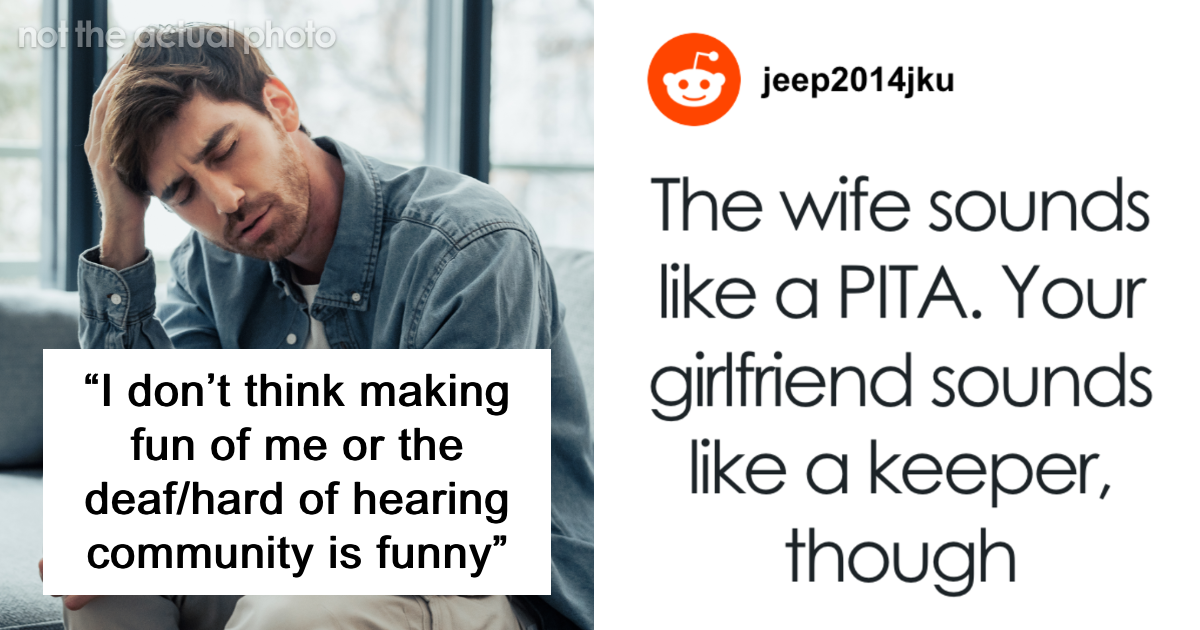
Some social disasters arrive with a dramatic soundtrack. Others walk in quietly, sit down at game night, and reveal exactly who has been paying attention. In the viral story behind “She Forgot I Was There”: Deaf Man Explains Why He’s Cutting Ties With His Best Friend And His Horrible Wife, the central conflict is not merely about one rude sentence. It is about repeated exclusion, awkward silence from a supposed best friend, and the exhausting experience of being treated as an accessory in a room full of people.
The situation centers on a deaf man whose best friend’s wife repeatedly fails to include him in conversations. The final straw comes when she says she “forgot” he was there because he is “so quiet.” That remark lands like a dropped casserole at a dinner party: messy, loud, and impossible to pretend did not happen. For the deaf man, the insult is not just that she overlooked him. It is that she turned his deafness, his communication style, and his social presence into a punchline.
Many readers reacted strongly because the story touches a nerve far beyond one household. It raises bigger questions about disability etiquette, friendship loyalty, social respect, and how people should respond when someone they care about is being dismissed in plain sight.
What Happened in the Story?
The man in the story is deaf and often relies on lip-reading, written communication, and help from his girlfriend when group conversations become difficult to follow. He is not asking everyone to become fluent in American Sign Language overnight. He is asking for basic human decency: face him when speaking, include him in the conversation, and do not treat him like a decorative lamp with opinions.
Instead, his best friend’s wife appears uncomfortable, dismissive, or unwilling to adjust. During social gatherings, she talks around him rather than to him. When she finally comments that she forgot he was present because he is “so quiet,” the remark exposes the problem with fluorescent lighting. She is not simply unfamiliar with deaf communication. She is careless with someone’s dignity.
The best friend’s reaction matters just as much. When a friend stands by while their spouse insults or excludes someone, silence becomes a choice. The deaf man’s decision to cut ties is therefore not impulsive. It is a boundary drawn after repeated discomfort, embarrassment, and emotional fatigue.
Why “I Forgot You Were There” Hurts So Much
At first glance, some people may try to downplay the wife’s comment as awkward rather than cruel. But impact matters. Saying “I forgot you were there” to a deaf person who has already been excluded from conversation is not harmless. It suggests that participation only counts when it is loud, verbal, and convenient for hearing people.
Deaf people communicate in many different ways. Some use sign language. Some read lips. Some speak. Some use text, captions, gestures, interpreters, or a mix of methods depending on the setting. Quietness is not absence. A person can be observant, engaged, and emotionally present even when they are not jumping into a fast-moving conversation like a caffeinated game-show contestant.
The wife’s comment also carries a hidden assumption: if someone is not communicating the way the majority communicates, they are somehow less involved. That is where everyday ableism often hides. It is not always a dramatic villain moment. Sometimes it looks like impatience, eye-rolling, talking from another room, covering your mouth while speaking, refusing to repeat yourself, or acting as though accessibility is a personal inconvenience.
Deaf Communication Etiquette: The Basics People Still Miss
The surprising part is that inclusive communication is not complicated. It requires attention, flexibility, and the revolutionary social skill known as “not being weird about it.”
Get the Person’s Attention First
Before speaking to someone who is deaf or hard of hearing, make sure you have their attention. A small wave, a light tap on the shoulder, or a visual cue can help. Starting a sentence while looking away and then getting annoyed when the person misses the first half is not communication. It is a magic trick with no audience.
Face the Person When Speaking
Many deaf and hard-of-hearing people rely on facial expressions, mouth movements, and context clues. Turning away, covering your mouth, chewing, or speaking from another room can make understanding much harder. If your mouth is hidden behind a coffee mug, a sandwich, or your own hand, the conversation has already lost several important subtitles.
Speak Naturally, Not Louder
Shouting rarely helps. In many cases, it makes things more awkward and less clear. Speak clearly at a normal pace. Over-exaggerating words can distort lip movements, and talking painfully slowly can make the speaker look like they are narrating a nature documentary about one syllable at a time.
Ask What Works Best
The simplest solution is often the one people avoid: ask. “Would you rather I text this?” “Is it easier if I face you?” “Do you want me to repeat or rephrase that?” These questions show respect without making the deaf person responsible for soothing everyone else’s discomfort.
The Real Issue: Lack of Effort, Not Lack of Expertise
Nobody expects every hearing person to know everything about deaf culture or accessibility. Mistakes happen. A person might accidentally turn away while talking or forget to reduce background noise. The key difference is whether they correct themselves when they learn better.
In this story, the frustration comes from repeated unwillingness. The wife does not appear to be making clumsy but sincere attempts. She appears to be avoiding responsibility. That distinction matters. Ignorance can be fixed with education. Indifference requires a boundary.
Healthy relationships are built on repair. If the wife had said, “I’m sorry. That was rude. I didn’t realize how dismissive I sounded, and I’ll do better,” the situation might have shifted. Instead, when people defend hurtful behavior, the injured person is often pressured to “be the bigger person.” Translation: please make yourself smaller so everyone else can stay comfortable.
Why the Best Friend’s Silence Feels Like Betrayal
The best friend is in a difficult position, but difficult does not mean impossible. When your spouse hurts your friend, you do not need to start a courtroom drama in the living room. You do need to acknowledge the harm.
A supportive friend could say, “That comment was not okay,” or “We need to make sure everyone is included.” Even a private follow-up would matter: “I’m sorry I didn’t speak up. I should have.” That kind of repair shows accountability.
But when a friend minimizes the problem or expects the deaf man to tolerate repeated disrespect, the friendship changes. The issue becomes larger than the wife. It becomes a question of whether the friend values comfort over loyalty.
Friendship is not just laughing at memes, sharing pizza, and remembering each other’s embarrassing college haircuts. Friendship is also protection. It means noticing when someone is being pushed to the margins and refusing to act as though the margin is where they belong.
Is Cutting Ties Too Extreme?
Some readers may wonder whether cutting ties is too harsh. But boundaries are not punishments. They are safety rails. When someone repeatedly makes you feel unseen, mocked, or unwelcome, stepping away can be a reasonable act of self-respect.
Cutting ties does not have to mean hatred. It can mean, “I no longer trust this environment.” It can mean, “I am tired of explaining my humanity.” It can mean, “I gave you chances, and you used them as coasters.”
The deaf man’s decision makes sense because the harm was not isolated. One awkward sentence can be repaired. A pattern of exclusion requires a different response. If people only apologize after consequences appear, the apology may be more about losing access than understanding harm.
What Hearing People Can Learn From This
This story offers a useful reminder: inclusion is not a mood. It is a practice. It happens in small decisions long before a conflict explodes.
Do Not Make One Person Do All the Work
In group settings, deaf and hard-of-hearing people often carry the burden of tracking multiple speakers, reading lips, filling in missing context, and asking for clarification. Hearing people can help by slowing the conversational chaos, taking turns, and making sure side comments are not treated as private jokes everyone else magically understands.
Stop Treating Accessibility as Special Treatment
Facing someone while speaking, writing something down, turning on captions, or moving to a quieter table is not royal treatment. It is basic access. Nobody calls it “special treatment” when a restaurant gives menus to people who can see. Communication access deserves the same common-sense energy.
Do Not Joke About Someone’s Disability
Humor can build connection, but only when everyone is laughing from the same side of the joke. If the joke depends on someone’s disability, silence, speech, hearing aids, interpreter, or communication needs, consider placing that joke gently into the nearest trash can.
How the Wife Could Have Handled It Better
The wife did not need to be perfect. She needed to be teachable. If she felt uncertain, she could have asked respectful questions. If she worried about saying the wrong thing, she could have said, “I want to include you, but I’m not sure what helps most.” That one sentence would have changed the emotional temperature of the room.
After making the hurtful comment, she could have repaired the moment immediately. A good apology would include acknowledgment, responsibility, and changed behavior. For example: “I’m sorry. Saying I forgot you were there was insulting. I should have made more effort to include you. I’ll do better by facing you, checking in, and not making assumptions.”
Notice what is missing from that apology: excuses. No “I was just joking.” No “You’re too sensitive.” No “I didn’t mean it like that.” Intent explains behavior; it does not erase impact.
How the Best Friend Could Still Repair the Damage
If the best friend wants to save the relationship, he must do more than ask the deaf man to move on. He needs to show that he understands the pattern. That means listening without defensiveness, apologizing for not speaking up, and making future gatherings genuinely accessible.
Repair might also mean having a serious conversation with his wife. Not a dramatic “choose between us” speech, but a clear standard: “My friend deserves respect in our home. We need to communicate in a way that includes him.”
Friendship can survive conflict when people take responsibility. It struggles when one person is expected to absorb the discomfort so nobody else has to grow.
The Bigger Lesson About Being Seen
At its heart, this story is about visibility. The deaf man was physically in the room, but socially erased. That experience is painful because humans are wired to want recognition. We want to know that our presence matters, especially among people who claim to care about us.
Being deaf does not make someone less expressive, less funny, less intelligent, or less worthy of attention. It simply means communication may happen differently. Different is not difficult when people approach it with respect.
The wife’s mistake was not only poor etiquette. It was a failure of imagination. She could not imagine that someone quiet might still be fully present. She could not imagine that communication was a shared responsibility. She could not imagine that her discomfort was less important than someone else’s dignity.
Experiences Related to This Topic: What Similar Situations Teach Us
Many deaf and hard-of-hearing people describe similar experiences in everyday life. The details change, but the pattern is familiar: people talk over them, talk around them, or assume they are not interested because they are not responding in the expected way. A dinner table becomes a blur of overlapping voices. A party becomes a guessing game. A work meeting becomes a marathon of missed context and forced smiles.
Imagine sitting at a restaurant with six friends. The music is loud, the waiter is rushing, and everyone is talking at once. Someone tells a joke, the table bursts into laughter, and when you ask what happened, a friend waves it away with “Never mind.” That tiny phrase can feel like a door closing. It says, intentionally or not, “Your inclusion is too much trouble.” Now imagine that happening again and again. The problem is not one missed joke. The problem is being trained to expect exclusion.
In another common scenario, a deaf person may attend a family gathering where relatives speak from the kitchen, shout from behind them, or talk while looking down at their phones. When the deaf person misses part of the conversation, someone says, “You never listen.” That sentence is both inaccurate and unfair. Listening is not the same as hearing. Communication requires cooperation from both sides.
Workplaces can be even trickier. A hard-of-hearing employee might ask coworkers to face them during meetings or send important updates in writing. Most people may adjust easily, but one colleague might complain that it is “too much effort.” Yet the requested changes often improve communication for everyone. Clear notes, visible speakers, reduced background noise, and written follow-ups help new employees, remote workers, non-native English speakers, and anyone who has ever zoned out during a meeting about a meeting.
There are also positive experiences worth remembering. Some friends become excellent allies by doing simple things consistently. They turn on captions before movie night without making a grand announcement. They pause group conversations and say, “Let’s fill him in.” They text the punchline instead of saying “never mind.” They learn basic signs, not to collect applause, but to show care. These gestures may look small from the outside, but they can feel enormous to the person who is finally being included without having to beg for it.
The most meaningful lesson from these experiences is that accessibility is emotional as well as practical. Yes, captions, good lighting, written notes, and clear speech matter. But so does attitude. People can sense when they are being accommodated with warmth versus tolerated with annoyance. The difference is not subtle. It is the difference between being welcomed at the table and being treated like a technical difficulty.
That is why the deaf man’s decision to cut ties resonates with so many readers. He is not rejecting friendship because one woman made one clumsy comment. He is rejecting a dynamic where his presence was negotiable. He is choosing the company of people who remember he is there, not because he is loud, but because he matters.
Conclusion
The story behind “She Forgot I Was There”: Deaf Man Explains Why He’s Cutting Ties With His Best Friend And His Horrible Wife is more than internet drama. It is a sharp reminder that respect is revealed in ordinary moments: who gets included, who gets defended, and who is expected to quietly absorb disrespect.
For hearing people, the lesson is simple. Face the person. Ask what helps. Do not shout. Do not dismiss. Do not make jokes that turn someone’s disability into entertainment. And when someone tells you they were hurt, listen before reaching for excuses.
For anyone who has felt invisible in a room full of people, the deaf man’s boundary may feel deeply familiar. Sometimes walking away is not dramatic. Sometimes it is the first peaceful thing you have done for yourself in a long time.
Note: This article is an original, publication-ready analysis based on a publicly discussed social situation and widely accepted deaf-awareness and communication guidance. Review names, quotes, and sensitive personal details before publishing.













