
Some stores sell things. A few stores sell a point of view. Mc & Co in Williamsburg belonged firmly to the second group. It was not the kind of home design shop where you wandered in for “just a vase” and escaped with only a vase. It was the kind of place where a mirror looked like a puddle, a daybed made you question your sofa’s entire career, and a woven wall hanging somehow seemed more emotionally mature than half the furniture in your apartment.
Located at 57 North Sixth Street in Brooklyn, Mc & Co was part boutique, part design laboratory, and part cabinet of curiosities. Owned by French-born collector, artist, and designer Corinne Gilbert, the shop became one of Williamsburg’s memorable sources for modern home furnishings, handmade accessories, lighting, ceramics, textiles, and objects with personality. It reflected the neighborhood at a specific moment: creative, experimental, slightly scruffy around the edges, but increasingly confident about its design identity.
Revisiting Mc & Co today is not simply about nostalgia. It is a useful design exercise. The shop’s mix of local artisans, European influence, handcrafted furniture, and playful restraint still feels relevant in a retail world crowded with mass-produced “curated” sameness. Mc & Co reminds us that good taste does not have to whisper from a beige linen sofa. Sometimes it can point an arrow at the wall, balance a mobile in the air, and quietly ask, “Are you sure you need another generic side table?”
The Williamsburg Setting: Why Mc & Co Made Sense Here
Williamsburg has long been a neighborhood where shopping feels less like a chore and more like a cultural field trip with coffee breaks. Its streets have drawn people to indie labels, vintage shops, locally made goods, art spaces, music venues, and restaurants that treat a sandwich like a thesis statement. The neighborhood’s retail personality has always leaned toward discovery. That made it a fitting home for Mc & Co, a shop where the pleasure was not just buying but noticing.
North Sixth Street, near Wythe Avenue, placed Mc & Co in the path of design-conscious walkers who wanted something different from the polished predictability of Manhattan retail. Williamsburg’s appeal was, and still is, tied to contrast: old industrial textures beside new restaurants, creative studios near luxury buildings, flea-market sensibility beside high-end taste. Mc & Co understood that tension beautifully. Its inventory did not look as though it had been chosen by algorithm. It looked chosen by an eye.
Who Was Behind Mc & Co?
Corinne Gilbert was central to the shop’s identity. A French-born creative based in Brooklyn, Gilbert brought an artist’s sense of proportion and a collector’s appetite for unusual objects. Her taste leaned toward the poetic but practical: furniture that worked hard, accessories with wit, textiles with texture, and objects that made a room feel lived-in rather than staged for a nervous real estate photo shoot.
Mc & Co was also associated with Dan McCarthy, Gilbert’s partner in the shop’s design work. Together, they offered not only curated goods but original furniture and home pieces. The result was a store that felt personal without becoming precious. It did not chase trends as much as gather ideas: handmade, modern, graphic, slightly eccentric, and often surprisingly useful.
What Mc & Co Sold: A Mix of Utility and Mischief
The best way to understand Mc & Co is to look at the kinds of objects that defined it. The store carried furniture, lighting, mirrors, ceramics, textiles, wall pieces, tableware, and accessories. But that list is too plain. It sounds like a department store inventory, and Mc & Co was not that. The better description is this: it sold household objects with a pulse.
The Mc & Co Daybed
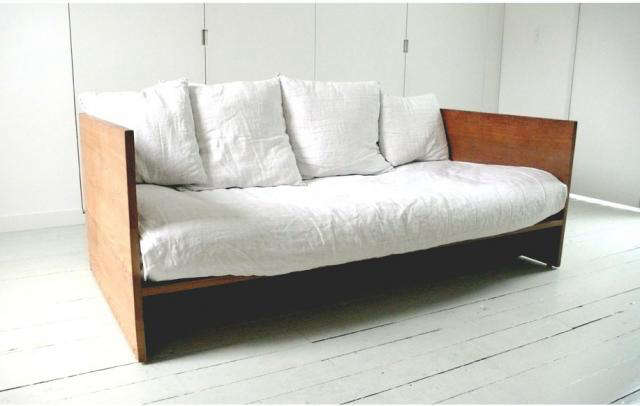
The Mc & Co Daybed became one of the shop’s signature pieces. Designed to fit a twin-size futon or mattress, it offered a flexible answer to small-space living. In Brooklyn, where apartments often ask residents to become spatial magicians, a handsome daybed is not a luxury. It is domestic diplomacy. It can be a sofa, guest bed, nap station, reading throne, or the place where laundry briefly believes it owns real estate.
Made in wood and associated with a simple, modern silhouette, the daybed had the calm confidence of furniture that does not need to over-explain itself. It fit naturally into Williamsburg lofts, brownstones, and compact apartments because it combined utility with sculpture. That balance is one reason the piece continued appearing in design references after the shop’s original moment had passed.
Puddles, Pebbles, and Irregular Mirrors
Mc & Co’s mirrors were another memorable detail. Inspired by puddles and pebbles, they softened the hard geometry of a room. Instead of the usual rectangle hanging obediently above a console, these mirrors introduced irregular shape and lightness. They had a sense of humor without becoming novelty objects.
That idea feels especially current now, when organic mirrors, wavy frames, and playful silhouettes appear in homes everywhere. Mc & Co’s versions showed how a small object can shift the mood of a room. A mirror does not have to shout. Sometimes it only needs to wobble gracefully.
Lighting, Mobiles, Ceramics, and Wall Pieces
The shop also featured lighting and decorative pieces that helped define its atmosphere. Floor lamps, light sculptures, porcelain clip lights, woven wall hangings, mobiles, ceramics, arrows, and tableware all contributed to a layered visual language. Mc & Co was not simply selling “decor.” It was selling punctuation marks for the home.
A mobile could add motion to a still corner. A ceramic piece could turn a shelf into a small gallery. A woven bull’s head could bring texture and humor to a wall without requiring anyone to commit to actual taxidermy. Every item seemed to ask a practical question: what can this corner become if you give it one thoughtful object?
The Mc & Co Style: Minimal, Local, Handmade, and Human
Many design shops claim to be curated. Mc & Co actually felt curated. The store’s strength came from the relationship between restraint and surprise. A white, serene shop could have become cold, but Gilbert’s selections kept it warm. Handmade textiles, rougher materials, odd shapes, and small-batch objects interrupted the clean backdrop.
That blend is part of what made the shop feel so Brooklyn. Not Brooklyn as a branding cliché, but Brooklyn as a working design ecosystem. Mc & Co reportedly highlighted local artisans, with many objects produced within a short radius of the shop. That local production mattered. It gave the store a grounded quality. The objects did not feel flown in from a lifestyle fantasy; they felt connected to makers, studios, and hands.
At the same time, Gilbert’s French background added another layer. The shop carried an ease often associated with French interiors: the ability to mix humble and refined pieces, to allow imperfection, and to make a room look collected rather than decorated in a single exhausting weekend.
Why Mc & Co Still Matters for Modern Home Decor
Mc & Co may no longer operate as the same Williamsburg storefront, but its design lessons remain useful. In fact, they may be even more relevant now. Today’s shoppers are surrounded by endless online options, many of which look suspiciously like the same product wearing different hats. Mc & Co offered a slower model of shopping: fewer things, better chosen, with more story.
For anyone decorating a home, the shop’s approach offers several clear takeaways.
Choose Objects That Do More Than Fill Space
A room does not improve simply because every blank wall has been defeated. Mc & Co’s best pieces had presence. They added shape, texture, function, or wit. The lesson is simple: buy fewer decorative objects, but make them count. A single sculptural mirror may do more for an entryway than six nervous accessories lined up like they are waiting for a bus.
Mix Local Craft With Everyday Function
The shop’s focus on small-scale makers showed that handmade design does not have to be purely ornamental. Lighting, furniture, textiles, and tableware can be both useful and expressive. A home feels richer when everyday objects carry evidence of human choice and craft.
Let Furniture Be Flexible
The Mc & Co Daybed is a perfect example of furniture that adapts. In urban homes, flexibility is golden. A piece that serves guests, lounging, reading, and visual structure earns its footprint. When shopping for furniture today, especially in small apartments, flexibility should be treated as a design feature, not a compromise.
Leave Room for Humor
Good interiors do not need to be solemn. A playful object can keep a room from becoming too perfect. Mc & Co understood that a home can be elegant and a little odd at the same time. In fact, that combination often feels more personal than elegance alone.
How to Shop With the Mc & Co Mindset Today
You do not need access to the original shop to borrow its spirit. The Mc & Co mindset is less about copying specific pieces and more about changing how you shop.
Start by looking for objects with a clear point of view. That might mean a handmade ceramic bowl with an imperfect glaze, a lamp with a sculptural base, a vintage textile used as a curtain, or a bench that doubles as storage. Before buying, ask whether the object adds something specific to the room. Does it bring warmth? Shape? Contrast? Usefulness? A tiny moment of joy? If the answer is “it was on sale and I panicked,” step away from the cart.
Next, think in layers. Mc & Co’s charm came from contrast: clean forms beside tactile materials, modern lines beside folk-like objects, international design beside local craft. A room built from only one style often looks flat. A room built from conversations between styles looks alive.
Finally, shop slowly. The best rooms are not completed in one checkout session. They develop through attention. Visit local markets, independent boutiques, antique shops, estate sales, and artist studios. Look for pieces that feel specific to you. The goal is not to recreate Mc & Co exactly. The goal is to create a home that feels as though someone interesting lives there.
Mc & Co and the Broader Brooklyn Design Story
Mc & Co belonged to a larger Brooklyn design movement that valued craft, reuse, independent retail, and small-batch production. Over time, that sensibility became widely imitated. The so-called Brooklyn look traveled far beyond Brooklyn, sometimes reduced to reclaimed wood, exposed bulbs, and a fern placed bravely near a brick wall. But Mc & Co showed a more nuanced version.
Its style was not industrial cosplay. It was softer, more curious, and more artful. The shop’s best pieces were not trying to prove they were “authentic.” They simply were. That distinction matters. Authentic design is not a costume. It is the result of materials, makers, history, proportion, and use coming together naturally.
A Shopper’s Experience: Revisiting the Mc & Co Feeling
To revisit Mc & Co in Williamsburg is to remember a specific kind of shopping experience: the kind where you entered with no strict agenda and left with your taste slightly rearranged. The first impression was calm. The shop’s all-white environment gave the objects breathing room. Instead of overwhelming the eye, it invited it to focus. In a city where stores often compete by shouting, Mc & Co spoke in a well-edited accent.
Walking through a place like that changes the pace of shopping. You do not sprint from shelf to shelf. You circle. You pause. You pick up a small object, put it down, then return to it three minutes later because apparently it has started a relationship with you. A mirror catches the light in a strange way. A lamp seems too simple until you imagine it glowing beside your bed. A daybed looks austere at first, then suddenly becomes the answer to every guest-room problem you do not technically have because you do not technically have a guest room.
The experience also reminds shoppers that good design is physical. Online shopping can show dimensions, colors, and reviews from people named “Verified Buyer,” but it cannot fully communicate weight, texture, or quiet charm. In a shop like Mc & Co, you could sense the difference between an object selected for inventory and an object selected because someone loved its odd little soul. That feeling is hard to fake.
There was also pleasure in the mix. You might see a refined ceramic near a handmade textile, a modern lamp near a slightly rustic wooden form, or a decorative object that looked as if it had wandered in from an artist’s studio and decided to stay. Nothing felt overly matched. That is one of the great lessons of boutique shopping: harmony does not require uniformity. A home can be cohesive because of mood, not because every item belongs to the same product line.
For modern shoppers, especially those furnishing apartments in cities, the Mc & Co experience offers a practical reminder: buy pieces that can grow with you. A flexible daybed, a distinctive mirror, a handmade light, a good textilethese are not filler purchases. They are anchors. They can move from one apartment to another, survive changing wall colors, and make even a rental feel intentional.
The emotional side matters too. A memorable shop gives customers permission to trust their eye. Mc & Co did not appear to be built around chasing approval. It was built around confidence, curiosity, and a little mischief. That kind of retail experience leaves a mark because it teaches shoppers to ask better questions. Not “Does this match?” but “Does this make the room more alive?” Not “Is this trendy?” but “Will I still enjoy looking at this when the internet has moved on to mushroom lamps, chrome stools, or whatever decorative fever dream comes next?”
Revisiting Mc & Co, then, is less about mourning a closed storefront and more about recovering a way of seeing. It encourages shoppers to slow down, notice materials, support independent makers, and let rooms develop character over time. It says that a home should not look assembled by a committee of catalogs. It should look like a life in progress: thoughtful, useful, imperfect, and occasionally funny.
Conclusion
Mc & Co in Williamsburg remains a meaningful reference point for anyone who loves independent design shops, Brooklyn home decor, and interiors with personality. Corinne Gilbert’s store offered more than attractive objects. It offered a design philosophy: choose carefully, mix freely, value craft, and let the home have a sense of humor.
Whether you are furnishing a compact apartment, refreshing a living room, or simply trying to avoid buying another anonymous accent piece, the Mc & Co approach still works. Look for pieces with function and feeling. Give handmade goods room to shine. Let one object surprise you. And remember that the best homes are rarely perfect. They are collected, edited, and lived inwith just enough mischief to keep the furniture awake.










