
Jealousy is one of those emotions people love to deny and secretly Google at 1:13 a.m. It shows up fast, speaks loudly, and has terrible timing. One minute you are peacefully existing. The next, your brain is writing a three-season drama because your girlfriend laughed a little too hard at someone else’s joke. Fun.
So, should you tell your girlfriend you’re jealous? In most cases, yes, but not like a prosecutor delivering closing arguments. Healthy honesty can build trust. Emotional chaos with a side of accusations usually does the opposite. The goal is not to make your girlfriend feel guilty for your feelings. The goal is to understand what jealousy is trying to tell you, communicate it like an adult, and keep the relationship from turning into a detective series nobody asked for.
Dealing with jealousy in a relationship is less about pretending you are above human emotion and more about handling that emotion without becoming controlling, passive-aggressive, or weirdly obsessed with who liked what on Instagram. In other words: feel it, name it, manage it, and talk about it well.
The Short Answer: Yes, Tell Her, but Tell Her Well
If you feel jealous, telling your girlfriend can be a healthy move. Silence often turns jealousy into resentment, and resentment is basically emotional leftovers nobody wants. When you keep your fears hidden, your brain tends to fill in the blanks with assumptions. Those assumptions can become suspicion, then tension, then arguments about something that started as a feeling you never explained clearly.
That said, there is a huge difference between saying, “I’ve been feeling insecure about something and I want to talk about it,” and saying, “Why were you smiling at that guy like that?” One opens a conversation. The other starts a small wildfire.
The best way to bring up jealousy is with vulnerability, not blame. If you tell her in a calm, honest, respectful way, you give both of you a chance to build more trust instead of less. If you use jealousy as a weapon, a guilt trip, or a reason to control her behavior, then you are not solving the problem. You are becoming the problem.
Why Jealousy Happens in Relationships
Jealousy usually is not just about the moment in front of you. It is often connected to what that moment means to you. Maybe you are scared of being replaced. Maybe you have been cheated on before. Maybe your self-esteem has been running on fumes lately. Maybe social media has turned your imagination into a menace. Jealousy often grows where fear, insecurity, comparison, and uncertainty already exist.
1. Fear of loss
At its core, jealousy often says, “I care about this relationship, and I’m afraid something could threaten it.” That fear can be about losing attention, affection, status, security, or the relationship itself.
2. Past experiences
If you have been lied to, cheated on, rejected, or emotionally blindsided before, old wounds can make current situations feel bigger than they are. Your girlfriend may not be doing anything wrong, but your nervous system may still be bracing for impact.
3. Insecurity and low self-worth
Sometimes jealousy is less about what your partner is doing and more about what you believe about yourself. If part of you thinks, “I’m not enough,” then normal situations can feel threatening. A harmless conversation becomes “proof” that someone else is better than you. Jealousy loves bad math.
4. Anxious attachment
Some people are more sensitive to signs of distance, rejection, or abandonment. If you tend to need frequent reassurance, overthink small shifts in tone, or panic when things feel uncertain, jealousy may show up faster and hit harder.
5. Digital comparison and overinterpretation
Social media is gasoline for jealousy. You see half a story, invent the other half, and suddenly one emoji feels legally suspicious. Online activity can trigger insecurity because it invites comparison, ambiguity, and endless room for interpretation.
When Telling Her Is Helpful and When It Is Not
Telling your girlfriend you are jealous is helpful when you are trying to create honesty, clarity, and connection. It is not helpful when you are trying to make her feel bad, force reassurance on demand, or control who she talks to.
It helps when:
- You want to explain what you are feeling instead of hiding it.
- You are open to hearing her perspective.
- You can admit the feeling may be partly about your own insecurity.
- You want to work together on trust and boundaries.
It hurts when:
- You bring it up as an accusation.
- You expect her to “fix” all your insecurity for you.
- You use jealousy to justify checking her phone, policing her friendships, or demanding proof.
- You are really angry and call it “honesty.”
Healthy communication says, “I want us to understand each other.” Unhealthy jealousy says, “I want to control the situation until I stop feeling uncomfortable.” Those are very different goals.
How to Tell Your Girlfriend You’re Jealous Without Making It Worse
Pick the right moment
Do not start the conversation in the middle of a party, during an argument, or five minutes before one of you has to leave. Pick a calm time. Jealousy already arrives with enough drama. It does not need stage lighting.
Use “I” statements
Lead with your feelings, not your assumptions. Try: “I felt jealous when that happened, and I think it brought up some insecurity for me.” That is a lot healthier than: “You were obviously flirting.”
Be specific
Vague jealousy is hard to address. Explain what triggered the feeling without turning it into a courtroom exhibit. Example: “When I saw how close you seemed with your ex at the party, I felt insecure. I don’t know if I’m overreading it, but I wanted to talk about it instead of letting it stew.”
Own your side
This part matters. Say what belongs to you. Maybe you are stressed. Maybe your last relationship broke your trust. Maybe you know you tend to compare yourself to other people. Owning your side lowers defensiveness and makes the conversation safer.
Ask, don’t assume
Jealousy is a terrible mind reader. Ask for clarification. Ask what something meant. Ask how she saw the situation. Curiosity keeps the conversation open. Assumptions slam it shut.
Make a respectful request if needed
Sometimes jealousy reveals a real need for reassurance or clearer boundaries. You can ask for that respectfully. For example: “Could we talk about what feels appropriate with exes?” or “I’d appreciate a little reassurance here because I’ve been feeling off.” A request is not the same as a demand.
What Not to Do When You Feel Jealous
There are many bad ways to deal with jealousy, and unfortunately some of them are weirdly common. Let us retire a few of them immediately.
Do not snoop
Checking texts, scrolling through DMs, and playing amateur forensic analyst with her notifications may give you a quick hit of fake control, but it damages trust. If your solution requires violating privacy, it is not a healthy solution.
Do not punish her for your feeling
Cold behavior, sarcasm, random distance, or picking a fight because you feel insecure is still unfair. Your jealousy may be real, but that does not make passive-aggression noble.
Do not issue rules just to calm yourself down
It is one thing for couples to agree on boundaries together. It is another thing to announce rules because you feel threatened. “You can’t talk to him anymore” is not communication. It is control dressed up as concern.
Do not confuse reassurance with surveillance
Healthy reassurance might sound like, “I care about you, and I’m here.” Unhealthy reassurance sounds like, “Send me proof, your location, and your passwords.” If trust needs a password to survive, trust is already on life support.
What a Healthy Conversation Might Sound Like
If you are wondering exactly what to say, here are a few examples:
Example 1: Simple and direct
“I want to be honest about something. I’ve been feeling jealous lately, and I don’t want that to come out in a weird or unfair way. Can we talk about it?”
Example 2: Specific but non-accusatory
“When I saw how much time you were spending with him, I noticed I felt insecure. I’m not saying you did anything wrong. I just want to tell you what came up for me.”
Example 3: Linking it to past hurt
“I think some of this is connected to stuff from my past. I’ve had trust broken before, and sometimes I react before I’ve really sorted out what’s happening.”
Example 4: Asking for reassurance
“I know this is partly my issue to work on, but I’d appreciate some reassurance from you because I’ve been in my head about it.”
Notice what these examples do not include: blame, threats, demands, or a dramatic monologue about how Chad from accounting is “probably enjoying this.” Keep it human. Keep it grounded.
How to Deal with Jealousy on Your Own, Too
Talking to your girlfriend is important, but it cannot be your only strategy. Jealousy is also something you have to work with internally. Otherwise every uncomfortable moment becomes your partner’s emergency to manage.
Name the real feeling under the jealousy
Often jealousy is a cover emotion. Underneath it might be fear, embarrassment, inadequacy, sadness, or insecurity. Ask yourself, “What am I actually afraid of right now?” That question usually gets you closer to the truth.
Check the story you are telling yourself
What happened, and what did you add to it? Maybe what happened was: she liked someone’s photo. The story you added was: she is losing interest, meeting someone better, and planning your emotional downfall. Facts first. Fan fiction later.
Reduce comparison
Comparison is one of jealousy’s favorite hobbies. It will compare your looks, your confidence, your job, your humor, your haircut, and probably your soup-making skills if given enough time. Do not feed that cycle. Comparison rarely gives useful information. It mostly gives bad moods.
Practice self-respect
Confidence does not mean never feeling jealous. It means not collapsing every time insecurity taps you on the shoulder. Invest in your own life, friendships, routines, goals, and identity. A stronger sense of self makes jealousy less likely to run the whole show.
Know when to get help
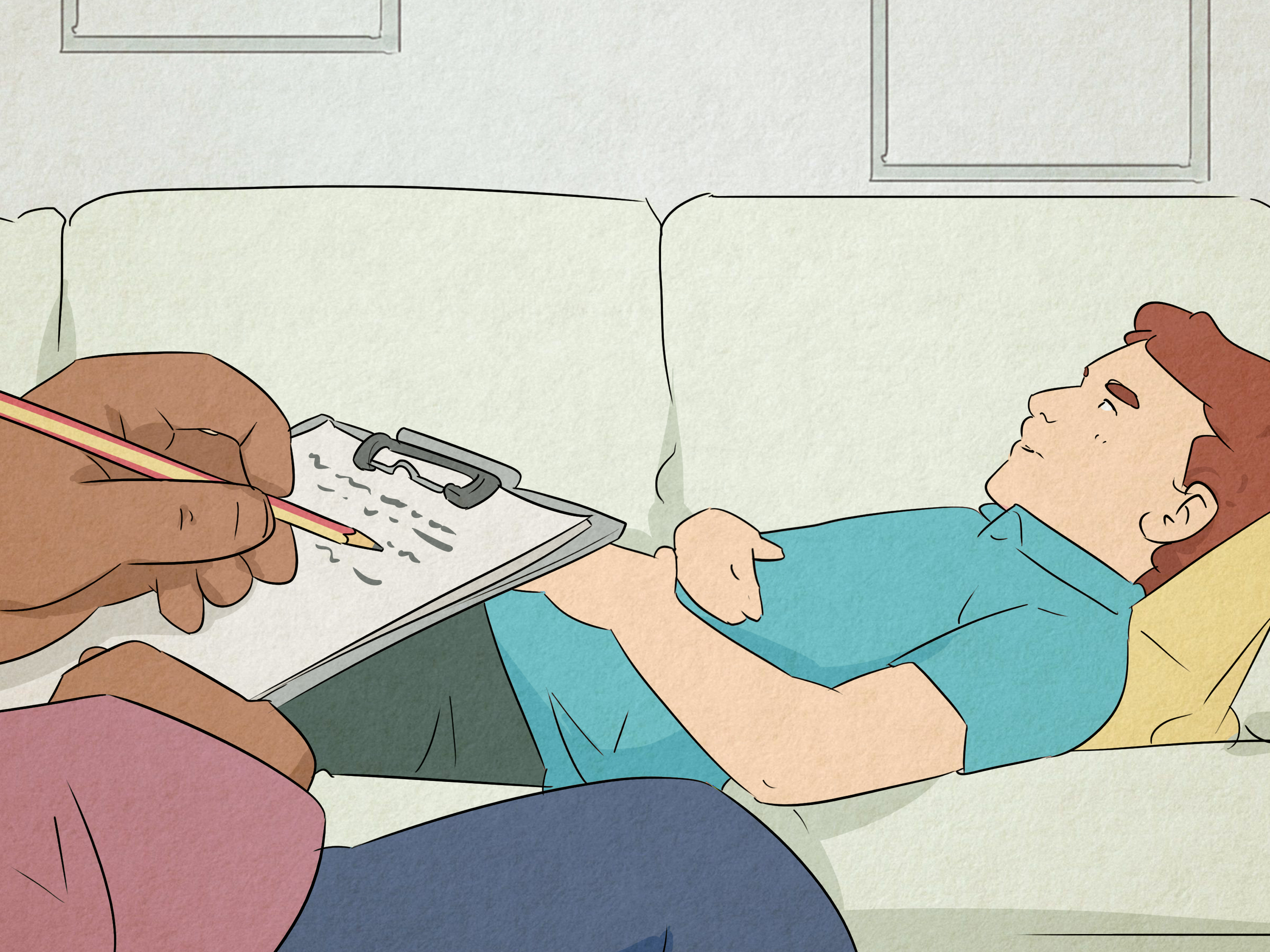
If jealousy is constant, obsessive, or affecting your daily functioning, it may help to talk with a therapist. This is especially true if jealousy leads to repeated conflict, compulsive checking, panic, rage, or ongoing distrust that does not match reality. There is nothing weak about getting support. In many cases, it is the most responsible thing you can do for yourself and your relationship.
When Jealousy Is a Sign of a Bigger Relationship Problem
Not all jealousy comes from insecurity alone. Sometimes it points to an actual issue in the relationship. Maybe boundaries are fuzzy. Maybe communication is inconsistent. Maybe there has been dishonesty before. Maybe one or both of you are acting in ways that keep trust shaky.
If you consistently feel dismissed, confused, or unsafe in the relationship, do not assume the problem is just that you are “too jealous.” It may be worth looking at the bigger pattern. Healthy relationships make room for honesty, respect, privacy, trust, and mutual reassurance. Unhealthy ones often turn jealousy into a cycle of secrecy, defensiveness, pressure, and control.
Also, let’s be very clear: extreme jealousy is not proof of love. It is not romantic when someone uses jealousy to isolate a partner, monitor them, intimidate them, or justify controlling behavior. If a relationship starts revolving around possession instead of trust, that is a serious red flag.
So, Should You Tell Your Girlfriend You’re Jealous?
Yes, if your goal is honesty, connection, and growth. No, if your plan is to dump your insecurity in her lap and call it communication.
The healthiest version of this conversation sounds like openness, accountability, and respect. You tell her what you feel. You explain what may be behind it. You ask for understanding, not obedience. You listen to her side. Then both of you figure out whether this is about reassurance, clearer boundaries, past hurt, or personal healing that needs more attention.
Jealousy does not automatically mean your relationship is doomed. Often it means something inside the relationship or inside you needs care. If you can talk about it with maturity, jealousy can become less of a wrecking ball and more of a signal. Not a fun signal, admittedly, but still a useful one.
In other words, tell her. Just do not let your inner chaos hold the microphone for the whole conversation.
Experiences Related to “Should I Tell My Girlfriend I’m Jealous?”
One common experience looks like this: a guy notices his girlfriend talking to a male friend at a party. Nothing inappropriate happens, but the conversation seems easy, playful, and natural. He feels that familiar tightness in his chest. On the drive home, he gets quiet. She asks what is wrong. He says, “Nothing,” even though his face is giving a full TED Talk. Over the next two days, he acts distant, rereads the moment in his head, and becomes convinced that her friendliness must mean something more. When he finally brings it up, it comes out as irritation instead of honesty. She feels accused. He feels misunderstood. The original issue was jealousy, but the real damage came from not expressing it clearly the first time.
Another experience is almost the opposite. Someone feels jealous, recognizes it quickly, and decides not to let the feeling ferment into a suspicious casserole. He says, “I want to be honest about something kind of uncomfortable. I felt jealous earlier, and I know part of that is my own insecurity. Can we talk about it?” The conversation is not magical, but it is productive. His girlfriend explains the situation, reassures him, and they end up discussing boundaries, exes, and what kinds of interactions make each of them uncomfortable. Nothing exploded because the feeling was handled before it turned into a character attack.
There are also experiences where jealousy is tied to older wounds. A person may fully understand that his current girlfriend is trustworthy, but still feel panic when she goes out without him or gets close to certain people. He may not actually believe she will cheat, but his body reacts as if danger is already in the room. In these situations, the conversation with a partner matters, but so does self-work. Otherwise the relationship becomes a place where old pain keeps demanding new evidence.
Social media creates another very modern version of jealousy. A harmless like, a comment, a follow, a story reply, or a photo with vague context can trigger spirals that would have been impossible twenty years ago. Many people describe feeling embarrassed by how strongly they react to tiny online cues. That embarrassment sometimes makes them hide their jealousy, which only gives it more power. Talking openly about digital boundaries can help a lot. Not because couples should police each other’s phones, but because ambiguity online can be real, and clarity reduces unnecessary stress.
Some experiences reveal that jealousy was trying to point out a real issue. For example, someone may keep feeling uneasy because his girlfriend is still emotionally entangled with an ex, flirts in ways she insists are “nothing,” or dismisses every concern with “you’re just insecure.” In cases like that, the lesson is not to suppress jealousy at all costs. The lesson is to separate irrational fear from valid discomfort. Mature relationships make space for both personal accountability and real boundaries.
And then there are people who admit that jealousy helped them grow up a little. They learned that saying “I’m jealous” was not weak. Snooping was weak. Sulking was weak. Pretending not to care was weak. Honest conversation, reflection, and change took more courage. That is probably the most useful experience of all: realizing jealousy is not the enemy. Avoidance, blame, and control are.
Conclusion
If you are asking, “Should I tell my girlfriend I’m jealous?” the healthiest answer is usually yes. Tell her with honesty, humility, and emotional responsibility. Let jealousy become a conversation, not a campaign. When handled well, it can reveal fears, needs, and relationship patterns that are worth understanding. When handled badly, it can turn into control, mistrust, and damage that is much harder to repair.
The real goal is not to never feel jealous again. The goal is to deal with jealousy in a way that protects respect, trust, and emotional safety for both people in the relationship. That is what healthy love looks like: not the absence of hard feelings, but the ability to face them without turning them into weapons.













