
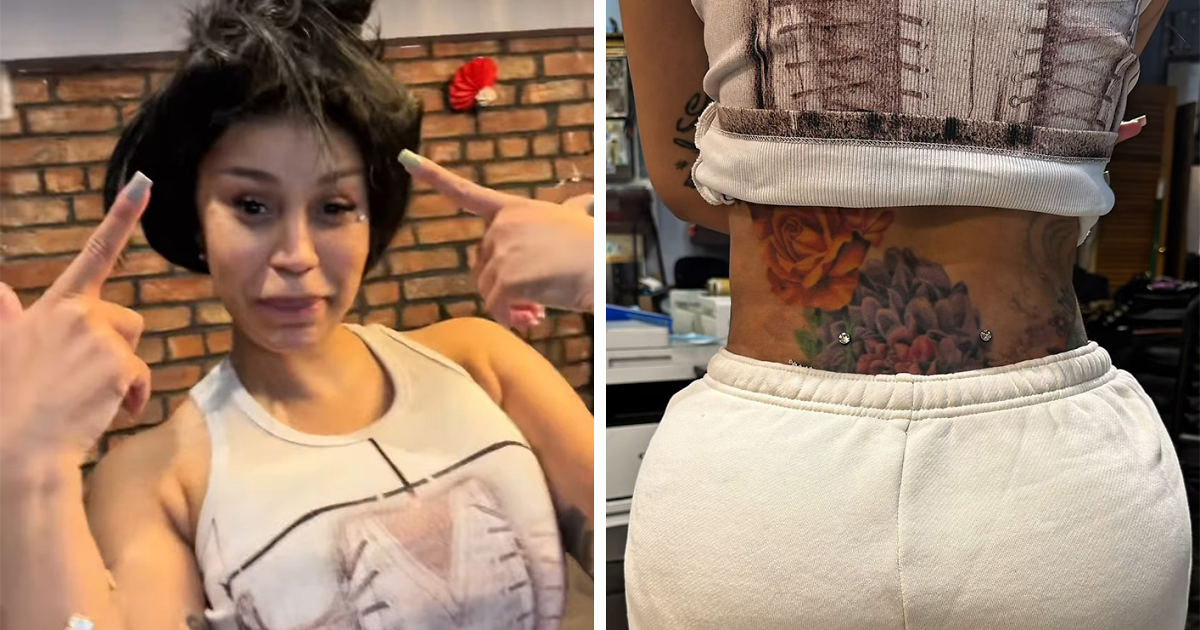
Cardi B has never exactly been the “quietly blend into beige wallpaper” type. From red carpet gowns that deserve their own ZIP code to lyrics that arrive with the subtlety of a champagne cannon, the Grammy-winning rapper has built a career on being loud, bold, and unmistakably herself. So when Cardi B debuted a new set of neck and back piercings, the internet did what the internet does best: stared, gasped, judged, defended, meme’d, and then argued with strangers before lunch.
The phrase “so gross” quickly became part of the reaction cycle after clips and photos showed Cardi B receiving fresh dermal piercings on the back of her neck and lower back. Some fans praised the look as edgy body art. Others called it uncomfortable, unnecessary, or downright bizarre. The debate was not only about jewelry under the skin; it was about celebrity image, beauty standards, body autonomy, motherhood, pain, attention, and why social media can turn a tiny diamond stud into a national town hall meeting.
But beyond the headline shock, Cardi B’s new piercings offer a surprisingly useful look at how modern celebrity beauty culture works. One person’s “gross” is another person’s “iconic.” One fan sees self-expression; another sees a warning label. And somewhere in the middle, a professional piercer is probably begging everyone to stop touching fresh piercings with unwashed hands.
What Happened With Cardi B’s New Neck And Back Piercings?
Cardi B’s new body jewelry appeared in a behind-the-scenes video shared by New York-based piercer Robbie of NYC Piercing. The footage showed the rapper getting small diamond-like studs placed at the nape of her neck and larger dermal pieces added along her lower back area. Another decorative dermal piece was positioned near her hip, complementing her colorful back tattoo and creating a sparkling, almost constellation-like effect across her skin.
The procedure looked painful, and Cardi did not pretend otherwise. In the video, she could be heard reacting to the sensation as the piercer worked. That unfiltered reaction is very Cardi B: glamorous result, chaotic audio, zero attempt to act like pain is a spa day. Afterward, she posed to show the finished look, turning the piercings into part of her larger style story.
The timing also fueled conversation. Reports noted that Cardi had recently welcomed her fourth child, and some commenters immediately connected the new piercings to postpartum self-expression. Others criticized her for making such a bold beauty choice so soon after giving birth. That angle says less about piercings and more about the impossible microscope placed on famous women, especially famous mothers. If they rest, they are lazy. If they dress up, they are vain. If they get piercings, apparently everyone becomes a dermatologist, parenting expert, and cultural historian at once.
Why Did People Call Cardi B’s Piercings “So Gross”?
The backlash came from several directions. Some viewers disliked the placement, especially the lower back and neck areas, because dermal piercings can look more intense than traditional ear or nose piercings. Unlike a hoop or stud passing through a visible entry and exit point, dermal piercings sit on the surface of the skin with an anchor beneath it. For people unfamiliar with the style, the look can trigger a strong “how does that stay in there?” reaction.
Other critics focused on pain and safety. Neck and back piercings may be more prone to catching on clothing, hair, towels, waistbands, or bags. The idea of jewelry being tugged by a shirt collar or a chair back is enough to make some people cross their arms protectively. Even people who love body art may wince at piercings placed in high-movement areas.
Then there is the celebrity factor. Cardi B is not an anonymous person leaving a piercing studio with a new sparkle and a bottle of saline spray. She is Cardi B, which means every beauty decision becomes a public referendum. The same internet that rewards stars for being daring also punishes them for being “too much.” In Cardi’s case, “too much” has practically been a brand pillar since “Bodak Yellow,” so the criticism feels predictablebut still loud.
What Are Dermal Piercings, Exactly?
Dermal piercings, also called microdermal piercings or single-point piercings, are different from standard piercings. A traditional piercing goes through tissue and has two visible points, like an earlobe piercing. A dermal piercing uses a small anchor inserted under the skin, with a decorative top screwed or fitted above the surface. The result looks like a jewel sitting directly on the skin.
That clean floating-jewel effect is why dermal piercings are popular on areas like the chest, cheekbone, collarbone, back dimples, hips, and nape of the neck. They can look elegant, futuristic, rebellious, or all three at once. But they also require careful placement, professional technique, and serious aftercare. This is not a “my cousin has a needle and confidence” situation.
Why Surface And Dermal Piercings Can Be Tricky
Surface-level body jewelry can face a risk of migration or rejection. In plain English, the body may decide the jewelry is an unwelcome guest and slowly push it toward the surface. The signs can include thinning skin around the jewelry, shifting placement, redness, swelling, discharge, or persistent pain. Dermal piercings can also snag, become irritated, or leave scars if removed improperly.
That does not mean every dermal piercing is doomed. Many heal well when performed by a qualified professional and cared for correctly. But the risk profile is different from a simple lobe piercing. With Cardi B’s neck and back piercings, the public concern was not completely random. These are body areas that move, rub against fabric, and come into contact with hair, seats, bedding, and clothing. In other words, they are glamorousbut they are not low-maintenance.
Cardi B And The Art Of Extreme Self-Expression
Cardi B’s new piercings fit neatly into her long-running relationship with bold beauty. She has worn dramatic nails, vivid wigs, elaborate couture, colorful tattoos, and attention-grabbing jewelry for years. Her body art includes a large floral back tattoo that stretches from her upper back down toward her thigh, making her back already one of the most visually recognizable parts of her style identity.
The piercings seem designed to work with that tattoo rather than compete against it. The diamond-like studs catch the light and create a decorated, almost armor-like effect. It is less “random piercing spree” and more “body-as-canvas styling session.” Whether someone likes the final look is subjective, but it is clearly consistent with Cardi’s fashion language: maximal, confident, shiny, and impossible to ignore.
Cardi has also been open about unusual piercings before, including a widely discussed intimate piercing that sparked its own wave of shock and jokes. That history matters because this latest controversy is not a sudden character turn. It is part of a larger pattern in which Cardi uses beauty, humor, discomfort, and spectacle to control the conversation around her image.
Is The Backlash Fair Or Just Another Internet Pile-On?
Some criticism is practical. Viewers are allowed to say dermal piercings make them nervous. Piercing safety is a real issue, and not every trend should be copied without research. A celebrity’s body modification can inspire fans, including younger audiences, to try similar looks. That makes accurate information important.
But some of the backlash crossed into moral judgment. Comments attacking Cardi’s character, motherhood, or worth because of piercings are less about health and more about policing women’s bodies. The internet has a habit of turning personal style into a personality trial. A piercing becomes “proof” of bad taste. A tattoo becomes “proof” of recklessness. A revealing outfit becomes “proof” of poor values. Meanwhile, the person wearing it is often just living their lifeand possibly trying not to snag their new dermal on a hoodie.
Cardi B’s public persona makes her an easy target. She is funny, blunt, flashy, and unapologetic. People who dislike her already have a ready-made reaction to anything she does. But that does not make the reaction automatically meaningful. Sometimes a celebrity controversy is not a scandal. Sometimes it is just a famous person getting sparkly back jewelry while the rest of us argue from couches.
The Bigger Conversation: Beauty, Pain, And Control
Body modification has always lived at the intersection of beauty and pain. Tattoos hurt. Piercings hurt. Waxing hurts. High heels hurt. Certain hairstyles hurt. Even shapewear can make a person feel like a tube of toothpaste being squeezed by destiny. The difference is that some forms of beauty pain are socially accepted, while others are treated as outrageous.
Cardi B’s piercings challenge that line. They are visible enough to shock, luxurious enough to match her brand, and unusual enough to make people debate whether the pain is “worth it.” But worth is personal. For one person, a dermal piercing is art. For another, it is a nightmare with rhinestones. Neither reaction changes the basic principle: adults can choose what to do with their bodies, and audiences can choose whether to look away.
Should Fans Copy Cardi B’s Neck And Back Piercings?
Anyone tempted by Cardi B’s look should slow down and research first. Dermal piercings should be performed by a reputable professional who uses sterile equipment, high-quality jewelry, and proper technique. Aftercare matters. Fresh piercings usually need gentle cleaning, minimal touching, and protection from friction or impact. Swimming pools, hot tubs, heavy sweating, tight clothing, and rough contact can increase irritation or infection risk during healing.
Placement is also important. A dermal piercing on the lower back may look beautiful in photos but could be annoying under jeans, waistbands, gym leggings, or fitted dresses. A nape piercing may catch on hair, collars, necklaces, or towels. Before copying a celebrity trend, it helps to imagine ordinary daily life: sleeping, showering, working out, sitting in a car, carrying a backpack, hugging someone, or wrestling with a sweater that has chosen violence.
The safest takeaway is not “never get dermal piercings.” It is “do not get them casually.” Treat them like a commitment, not a weekend accessory. Ask questions. Check credentials. Understand removal. Know the signs of infection or rejection. And if the piercer seems annoyed by basic questions, that is your cue to leave faster than a group chat after someone says, “We need to talk.”
Experience Section: What Cardi B’s Piercing Drama Teaches Us About Personal Style
Anyone who has ever made a bold beauty choice knows the strange emotional cocktail that comes with it. First comes the thrill: the new haircut, the tattoo appointment, the piercing idea, the outfit that feels slightly too brave but also exactly right. Then comes the mirror moment, when confidence rises like a movie soundtrack. Finally comes the public reaction, which may range from “You look amazing” to “Why would you do that?” to the always unhelpful “I liked you better before.”
That is why the Cardi B piercing controversy feels relatable even if most people are not getting diamond dermals on their lower backs. The scale is celebrity-level, but the experience is human. People judge visible choices. They project their own fears and preferences onto someone else’s body. They confuse “I would not do that” with “nobody should do that.” The difference matters.
Personal style is rarely just about appearance. It can be a reset button, a celebration, a rebellion, a coping mechanism, or a way to reclaim ownership after a major life change. For new parents, post-breakup adults, career changers, or anyone emerging from a stressful season, changing the outside can sometimes help mark a new chapter inside. That does not mean every beauty decision is deep. Sometimes a piercing is just a piercing. But sometimes it is also a tiny flag planted in the ground that says, “I still belong to myself.”
The practical lesson is balance. Admire the look, but respect the maintenance. Love the sparkle, but learn the aftercare. Take inspiration from a celebrity, but adapt it to real life. Cardi B has stylists, professional piercers, beauty teams, and the kind of schedule where dramatic looks are part of the job. Most people have office chairs, laundry baskets, seat belts, and one hoodie drawstring that seems personally committed to causing chaos. A piercing that works for a stage-ready celebrity may not work for someone who carries a backpack every day.
There is also an emotional lesson: not every opinion deserves a seat at the table. If a trusted friend says, “That placement might snag; research it,” that is useful. If a stranger says, “So gross,” that is noise wearing a cheap hat. The internet is full of instant reactions, but instant does not mean insightful. A good personal style decision should involve information, safety, budget, healing time, and genuine desirenot fear of comments from people who will move on to criticizing someone’s eyebrows five minutes later.
Cardi B’s piercings may not be everyone’s taste, and that is perfectly fine. Taste is supposed to vary. The more interesting question is why one woman’s body jewelry can provoke such intense public reaction. Maybe it is because celebrities serve as mirrors. People look at Cardi’s piercings and see confidence, excess, danger, freedom, vanity, creativity, or chaos depending on what they already believe. The jewelry is small. The conversation around it is huge.
In the end, the best response may be surprisingly simple: appreciate the artistry if you like it, research the risks if you want it, and scroll past if you hate it. Cardi B will probably continue being Cardi Bsparkly, dramatic, funny, controversial, and allergic to boring. The internet will continue being the internetloud, divided, and somehow always shocked when a famously bold celebrity does something bold.
Conclusion
Cardi B’s new neck and back piercings sparked a wave of “so gross” reactions, but the story is bigger than one set of dermal implants. It is about how celebrity beauty choices become public debates, how women’s bodies are judged, and how extreme style can be both empowering and risky. The piercings may look stunning to some and uncomfortable to others, but they are undeniably consistent with Cardi’s fearless approach to fashion and self-expression.
For readers inspired by the look, the key is research. Dermal piercings require professional placement, careful aftercare, and realistic expectations about healing, rejection, snagging, and removal. For readers who dislike the look, the key is perspective. Not every trend needs universal approval. Sometimes the healthiest beauty opinion is simply: “Not for me, but carry on.”













