
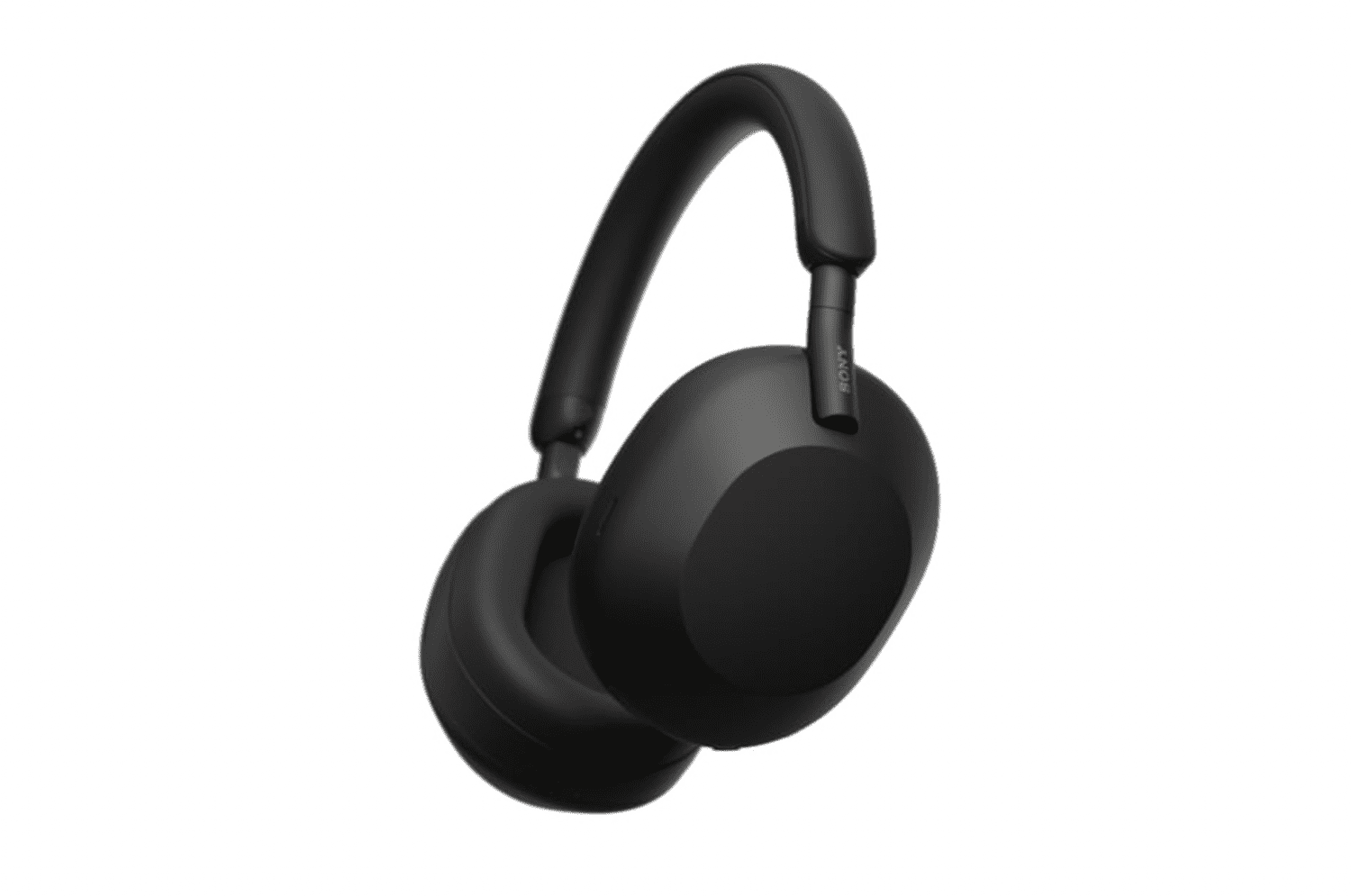
When Sony unveiled the WH-1000XM5, plenty of people had the same first thought: “Those look suspiciously Apple-ish.” That reaction was not exactly subtle. The slimmer headband, the exposed arms connecting the band to the earcups, and the cleaner, more sculpted silhouette made Sony’s flagship noise-canceling headphones feel like they had wandered out of an industrial design studio where someone had pinned an AirPods Max mood board to the wall. Not copied, exactly. But inspired enough that tech fans started squinting, nodding, and raising one eyebrow.
Still, this story is bigger than a visual comparison. The Sony WH-1000XM5 didn’t earn attention just because it looked a lot like the AirPods Max. It mattered because Sony paired that premium redesign with excellent active noise cancellation, strong call quality, lighter weight, long battery life, and a feature set that felt friendly to both iPhone and Android users. In other words, the XM5 didn’t just show up wearing a sharp suit. It also brought résumé, references, and a very confident handshake.
Why the Sony WH-1000XM5 immediately reminded people of the AirPods Max
The visual comparison was easy to understand. Sony moved away from the chunkier, more utilitarian look of the WH-1000XM4 and embraced something more minimal. The headband became thinner. The yokes looked more exposed. The earcups looked smoother and more refined. Instead of folding inward in the old-school travel-headphone way, the cups mostly rotated flat. That single design choice alone made a lot of people think of Apple’s premium over-ear headphones.
And let’s be honest: the resemblance was not just about shapes. It was about attitude. The XM5 looked less like a frequent flyer’s practical tool and more like a lifestyle product that expected to be noticed in coffee shops, airport lounges, and open-plan offices where people say things like “circle back” and “synergy” with a straight face. Sony clearly wanted its flagship headphones to feel more luxurious, more modern, and more visually distinct from the rest of the 1000X family.
The redesign was cleaner, softer, and more fashion-friendly
The older Sony model had a more technical, gadget-first personality. The WH-1000XM5 softened that image. The earcups became more elegant. The lines became simpler. The padding looked smoother. The overall presentation said “premium” more clearly than “please board Group C now.” That shift made the headphones more desirable to shoppers who cared just as much about design language as they did about codec support or microphone placement.
That matters because Apple had already proven there was a market for over-ear headphones that functioned as both audio gear and visual statement. AirPods Max leaned hard into materials, finish, and unmistakable styling. Sony’s move with the XM5 felt like a practical response: keep the comfort and everyday usability people already loved, but give the product a more upscale silhouette that could compete on the shelf and in photos.
But the similarity was mostly skin deep
Here is where the comparison becomes more interesting. The Sony WH-1000XM5 may have looked a lot like the AirPods Max at first glance, but in daily use the headphones felt different. Sony leaned into lighter materials, broader platform support, and more app-based control. Apple leaned into premium build, ecosystem tricks, and a design that still screamed Apple from across the room.
That means the XM5 was never just “Sony’s AirPods Max.” It was more like Sony saying, “We can do elegant too, thank you very much, but we’re still going to make this thing feel like a Sony product.” That distinction matters, especially for shoppers who wanted premium headphones without locking themselves into one ecosystem.
What the WH-1000XM5 offered beyond the good looks
If the redesign got people talking, the performance kept the conversation going. Sony’s WH-1000XM line already had a strong reputation, so expectations were sky-high. The good news for Sony was that the XM5 largely delivered where it counted.
Excellent active noise cancellation
Noise cancellation was the headline feature, and the XM5 came to play. Sony refined its already impressive ANC approach, and reviewers consistently praised the headphones for blocking out a wide range of everyday distractions. Low rumbles from trains and planes were handled well, but so were office chatter, street noise, and the kind of background buzz that slowly eats away at your sanity during a long workday.
That broad effectiveness helped the XM5 stand out. Great ANC is not just about turning an airplane into a meditation retreat. It is also about making life feel less crowded when you are working, commuting, or trying to survive a nearby leaf blower with your dignity intact. The WH-1000XM5 was built for that real-world kind of peace.
Strong sound and very good call quality
Sony also improved the overall audio presentation. The sound was energetic, detailed, and generally crowd-pleasing, with the kind of tuning that made modern pop, hip-hop, podcasts, and streaming playlists sound lively without demanding an engineering degree from the listener. Some reviewers noted that the default tuning leaned a little warm or bass-friendly, but Sony’s app made it easy to tweak the sound if you preferred something more balanced.
Call quality was another win. This is a category where many premium headphones look expensive, sound good, and then completely embarrass themselves the moment you step outside and answer a call near traffic. The XM5 did better than that. Sony focused hard on microphone performance, and the result was a pair of headphones that handled calls clearly enough to feel genuinely useful for work and daily life.
Comfort that made sense for long listening sessions
One reason the WH-1000XM5 kept earning praise was comfort. Sony’s lighter build helped. The headphones felt less heavy and less clampy than some premium rivals, which made them easier to wear for long flights, long work sessions, or long stretches of pretending to be busy while listening to a playlist called “Deep Focus” for the fifth time that week.
Comfort is one of those features people underestimate until they wear headphones for three straight hours and suddenly discover that sound quality alone cannot save sore ears. Sony understood that. The XM5 did not just aim to sound premium. It aimed to disappear on your head in the best possible way.
Battery life and software flexibility helped Sony stand apart
Sony’s official battery estimates were another advantage. The WH-1000XM5 offered up to 30 hours of listening with noise cancellation on, plus support for quick charging. That made the headphones practical for travel, work, and daily commuting in a way that premium buyers care about a lot more than marketing teams sometimes admit.
Then there was Sony’s software ecosystem. The companion app gave users meaningful control over EQ, ambient sound, and personalization features. That flexibility has long been one of Sony’s strongest arguments against Apple. With AirPods Max, you largely buy into Apple’s way of doing things. With the XM5, you get more room to dial in the experience.
Sony WH-1000XM5 vs. AirPods Max: where each one made its case
The fun part of the comparison is that both headphones targeted the premium category, but they approached it from different angles.
Where Sony had the edge
For many buyers, Sony’s advantages were practical and persuasive. The WH-1000XM5 was lighter, more customizable, more flexible across platforms, and easier to recommend to people who used a mix of devices. It delivered strong ANC, long battery life, and a feature-rich app without requiring full devotion to one tech ecosystem. It also came in at a lower launch price than Apple’s over-ear option, which made the value argument easier to win.
That pricing difference mattered because premium audio shoppers are picky, and rightly so. Once you cross into expensive-headphone territory, every detail gets judged. Sony gave people plenty to like without asking them to pay the absolute maximum for the category. That made the XM5 feel premium, but not smug about it.
Where Apple still had bragging rights
Apple, meanwhile, continued to own the “luxury object” part of the conversation. AirPods Max felt more extravagant in materials and finishing. For Apple users, they also brought seamless integration, elegant device switching, and ecosystem-friendly features that made the experience feel polished in a very Apple way. If you are already deep inside the Apple universe, that convenience can be hard to ignore.
So yes, Sony’s new WH-1000XM5 headphones looked a lot like the AirPods Max. But Apple still had its own lane: heavier, flashier, more ecosystem-driven, and more premium in physical feel. Sony countered with lighter comfort, broader compatibility, and the kind of practical excellence that often wins over actual long-term users.
The biggest tradeoff: the non-folding design
Not every change was universally loved. One of the most common complaints about the WH-1000XM5 was portability. Earlier Sony models folded more compactly, which frequent travelers appreciated. The XM5 ditched that folding mechanism in favor of a cleaner, flatter approach. That may have helped the sleeker design and perhaps even long-term aesthetics, but it also made the headphones less compact in a bag.
This was the one area where the “looks like AirPods Max” comparison came with a practical catch. Style can be wonderful. Style can also take up more room in your backpack. If you travel often and obsess over every inch of packing space, that design decision may have felt less “luxury” and more “mildly annoying.” Still, some buyers preferred the simpler structure, especially those tired of hinges that age badly over time.
Why Sony’s design move mattered to the headphone market
The WH-1000XM5 was important because it showed how the premium headphone market had changed. Buyers no longer wanted only technical performance. They wanted a product that looked refined, felt comfortable, photographed well, and still crushed a noisy commute. Sony responded by modernizing not just the tuning and ANC, but the entire identity of its flagship headphones.
That shift also reflected a broader trend: premium headphones had become wearable tech in the most literal sense. They were no longer just tools for listening. They were accessories, work gear, travel companions, and public-facing objects. The WH-1000XM5 embraced that reality without abandoning the fundamentals that made Sony competitive in the first place.
In that sense, the AirPods Max comparison was not an insult. It was proof that Sony understood where the category was headed. The smarter question was never “Did Sony copy Apple?” The smarter question was “Did Sony take the premium design lesson and still build the better all-around headphone for more people?” For a lot of listeners, the answer was yes.
Real-world experiences: what it feels like to live with the WH-1000XM5 after the AirPods Max comparisons
Using the Sony WH-1000XM5 in daily life is where the whole “it looks like the AirPods Max” conversation starts to settle down. You notice the styling right away, sure, but after a few days the design drama fades and the practical experience takes over. On a morning commute, the lightweight feel matters more than internet debates. In a noisy office, the noise cancellation matters more than whether the headband reminds someone of Apple. On a long flight, you stop caring about design comparisons and start caring about whether your ears feel okay after hour three. That is where Sony earns its keep.
The XM5 tends to shine in ordinary moments. You put them on to focus, and the outside world suddenly sounds less pushy. Keyboard clatter softens. HVAC noise drops into the background. Coffee shop chatter becomes less of a group project. That kind of control over your environment feels oddly luxurious, even if you are just sitting in a living room trying to answer emails you should have answered yesterday.
Music listening is equally approachable. The headphones do not demand that you sit perfectly still and analyze every cymbal hit like you are judging a studio session. They are fun. Pop sounds full. Podcasts sound clean. Playlists feel punchy and alive. If the default sound is not exactly your taste, Sony’s app gives you room to adjust it without turning setup into homework. That flexibility makes the XM5 easy to recommend to casual listeners and picky listeners at the same time.
Another real strength is how the headphones fit into mixed-device life. A lot of people use an iPhone, a Windows laptop, maybe an Android tablet, and a smart TV somewhere in the background. Sony’s approach works well in that messy reality. The WH-1000XM5 does not act like it only wants to speak to one brand family at dinner. It is more socially flexible, which is a surprisingly big deal once the honeymoon phase ends and real routines begin.
There are still tradeoffs, of course. The non-folding design is not imaginary. You feel it when you pack a bag. The headphones are not tiny, and the case asks for a bit more space than some travelers would like. If portability is your love language, you may grumble. A little. Possibly a lot. But for many users, that complaint fades because the comfort, ANC, and general polish are so consistently good.
That is the XM5 experience in a nutshell. It may have arrived under a cloud of AirPods Max comparisons, but it built its reputation through everyday competence. It looks premium, sounds strong, feels comfortable, and handles modern life with very little drama. And in the headphone world, “very little drama” is a feature worth celebrating.
Final verdict
Sony’s new WH-1000XM5 headphones looked a lot like the AirPods Max, and that was never hard to see. The slimmer headband, the more elegant profile, and the premium styling all pushed Sony closer to Apple’s visual territory. But the headphones succeeded because the resemblance was only the opening chapter, not the whole story.
The WH-1000XM5 combined premium design with excellent noise cancellation, very good comfort, strong calls, flexible software, and battery life that made sense for real life. The tradeoff was reduced portability, but for many buyers that was an acceptable compromise. If AirPods Max represented premium audio as luxury object, the Sony WH-1000XM5 represented premium audio as smart, stylish, everyday tool. And for a lot of listeners, that made Sony’s answer not just competitive, but more compelling.













