
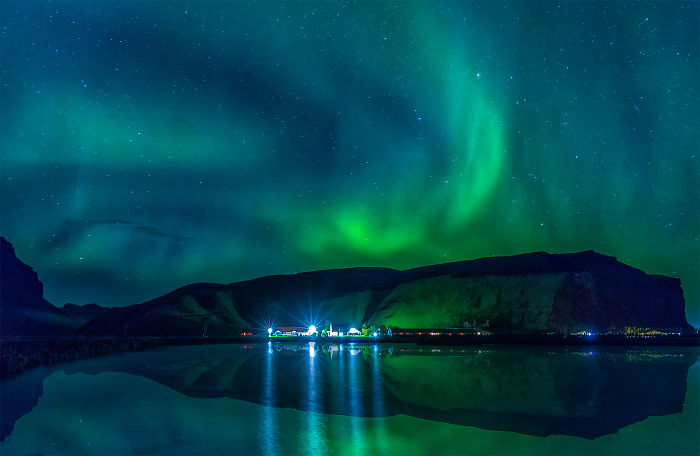
Vík í Mýrdalusually shortened to Víkis the kind of place that makes travelers lower their voices without knowing why. Maybe it is the black sand underfoot. Maybe it is the roar of the Atlantic. Maybe it is the little red-roofed church sitting above town like it has been calmly supervising all this drama for years. Whatever the reason, Vík does not simply offer scenery. It stages spectacular moments.
Set on Iceland’s South Coast, Vík is small in size but enormous in atmosphere. It sits along the Ring Road, surrounded by volcanic beaches, sea stacks, cliffs, glaciers, caves, waterfalls, and skies that can change moods faster than a teenager asked to clean their room. For visitors exploring southern Iceland, Vík is more than a stop between Reykjavík and the glacier lagoons. It is a natural theater where fire, ice, ocean, wind, and folklore all seem to have speaking roles.
This guide explores the most memorable experiences in Vík, from the famous Reynisfjara black sand beach to the cliffs of Dyrhólaey, the wild pull of Katla volcano, and the quiet magic of watching light move across the coast. Whether you are planning a road trip, researching Iceland travel inspiration, or simply daydreaming about a place that looks like it was designed by a very dramatic poet, Vík delivers.
Why Vík Creates Such Spectacular Moments
Vík is often described as Iceland’s southernmost village, but that label barely scratches the surface. The village sits between the North Atlantic and the glacier-capped volcanic world of Mýrdalsjökull, beneath which lies Katla, one of Iceland’s famous volcanoes. This geography gives Vík its signature contrast: black sand beaches below, white ice above, green cliffs in summer, snowy hills in winter, and a sky that frequently looks like it is auditioning for a fantasy film.
The area is part of the wider Katla UNESCO Global Geopark, a region shaped by eruptions, glacial floods, coastal erosion, and volcanic rock. In plain English: the land around Vík is not just prettyit is actively telling the story of how Iceland was built. You can see that story in the basalt columns at Reynisfjara, the sea arch at Dyrhólaey, the black volcanic sand, and the ever-changing coastline.
That is what makes Vík so memorable. The beauty is not polished or predictable. It is raw, moody, and alive. A sunny morning can turn into misty drama by lunch. The ocean can look silver one minute and steel-gray the next. Even the wind seems to have creative opinions.
Reynisfjara: The Black Sand Beach That Steals the Scene
No discussion of spectacular moments in Vík can begin anywhere else. Reynisfjara is one of Iceland’s most iconic black sand beaches, famous for its dark volcanic shoreline, towering basalt columns, sea caves, and the Reynisdrangar sea stacks rising offshore. It is beautiful in the way thunder is beautiful: impressive, unforgettable, and not something to underestimate.
The sand is black because it comes from volcanic rock that has been broken down by waves and weather over time. Against the white foam of the Atlantic, the beach creates a natural contrast so sharp it almost feels edited. Travelers come here for photographs, but the place is far more powerful in person. The sound of the waves, the cold wind, the dark cliffs, and the geometric basalt columns combine into a scene that makes even the most camera-happy visitor pause for a second.
The Basalt Columns
The basalt columns at Reynisfjara are among the beach’s most famous features. Their stacked, hexagonal shapes look almost architectural, as if someone built a giant organ out of stone and then left it beside the sea. In reality, they formed as lava cooled and contracted, creating the geometric patterns that make the cliff face so distinctive.
These columns are a perfect example of why Vík appeals to both casual travelers and geology lovers. You do not need a science degree to appreciate them. You just need eyes, a jacket, and the ability to say, “Wow,” several times without feeling silly.
The Reynisdrangar Sea Stacks
Just offshore, the Reynisdrangar sea stacks rise from the ocean like dark stone towers. Icelandic folklore says they were once trolls trying to drag a ship to shore before being caught by the sunrise and turned to stone. Geology offers a less magical explanation, but honestly, the troll version has better branding.
From the beach or from viewpoints near Vík, the stacks create one of the region’s most recognizable silhouettes. At sunrise, they can appear soft and mysterious. During stormy weather, they look fierce and ancient. At sunset, they become shadows against a glowing horizon. This is one of those rare landmarks that feels different each time you see it.
A Serious Safety Note About Reynisfjara
Reynisfjara is spectacular, but it is also dangerous. The beach is known for sneaker wavesunexpectedly powerful waves that can rush much farther up the shore than visitors expect. The current is strong, the water is cold, and the beach should never be treated like a casual place to stroll near the surf.
The safest way to enjoy Reynisfjara is simple: stay far back from the water, never turn your back on the ocean, follow posted warning signs, and avoid standing close to cliffs where falling rocks can occur. Conditions can change quickly, and parts of the coastline have shifted due to storms and erosion. In Vík, nature is not a theme park employee. It does not care if you “just want one quick photo.”
That warning does not make Reynisfjara less worth visiting. It makes visiting responsibly part of the experience. The best view is the one you can remember afterward.
Dyrhólaey: Cliffs, Puffins, and Big-Sky Views
West of Vík, Dyrhólaey offers another spectacular momentthis time from above. This dramatic promontory is known for its huge sea arch, high cliffs, lighthouse, and sweeping views over black sand beaches and the Atlantic. On clear days, the panorama seems to stretch forever: coastline, mountains, ocean, lava fields, and the distant shape of glaciers.
Dyrhólaey is also a favorite area for birdwatching, especially during the summer puffin season. Puffins are small, colorful, and slightly ridiculous in the best possible way. They look like nature designed a bird and then added a cartoon nose for personality. Seeing them along the cliffs is one of Vík’s gentler but equally memorable moments.
The area may have seasonal access restrictions to protect nesting birds, so travelers should check local signs before visiting. This is especially important in spring and early summer. The views are incredible, but the wildlife is not there to pose for your vacation album. Respecting the space keeps the experience special for everyone.
Vík Church: The Classic View Over the Village
Vík’s red-roofed church is one of the most photographed buildings on Iceland’s South Coast, and for good reason. Perched on a hill above the village, it gives visitors a beautiful view over the town, coastline, black sand beaches, and surrounding mountains. In winter, the white church against snow and dark volcanic land looks almost unreal. In summer, lupines and green hills soften the scene.
This is one of the easiest spectacular moments in Vík. You do not need a tour, a glacier helmet, or a heroic level of fitness. You simply drive or walk up, look out, and let the landscape do what it does best. For photographers, it is especially rewarding around sunrise, sunset, or during clear nights when the northern lights appear.
Katla, Mýrdalsjökull, and the Ice Cave Experience
North of Vík, the landscape rises toward Mýrdalsjökull glacier, which covers the powerful Katla volcano. Guided Katla ice cave tours are among the area’s most popular adventure experiences, offering a chance to enter a world of blue ice, black volcanic ash, and sculpted frozen walls. It is one of the clearest examples of Iceland’s “fire and ice” personality.
These tours should only be done with qualified guides and proper equipment. Ice caves are seasonal, change constantly, and require expert local knowledge. But when conditions are right, the experience can be unforgettable. The contrast of glacier ice and volcanic ash creates textures and colors that feel almost otherworldly.
For many visitors, this is the moment when Vík becomes more than a scenic coastal village. It becomes a gateway into Iceland’s deeper natural forcesthe volcanoes, glaciers, and storms that continue to shape the island.
The Icelandic Lava Show: Fire Without the Frostbite
Vík is also home to the Icelandic Lava Show, an indoor experience that demonstrates molten lava in a controlled setting. For travelers who want to understand volcanic power without standing next to an active eruptiongenerally a wise life choicethis is a memorable stop.
The show helps explain how lava behaves, how volcanic landscapes form, and why Iceland’s geology is so unusual. It is especially useful for families, curious travelers, and anyone who has looked at a lava field and thought, “Okay, but how did this actually happen?” It adds context to everything else you see around Vík, from black sand to basalt cliffs.
Vík as a Base for South Coast Adventures
One reason Vík is so popular is its location. It sits along Iceland’s Ring Road, making it a natural base for exploring the South Coast. To the west are Skógafoss and Seljalandsfoss, two of Iceland’s best-known waterfalls. To the east are vast lava fields, glacier landscapes, and routes toward Skaftafell and Jökulsárlón Glacier Lagoon.
Staying overnight in Vík gives travelers something day-trippers often miss: time. Time to visit Reynisfjara when the light changes. Time to see the church before tour buses arrive. Time to watch clouds move over the cliffs. Time to eat a relaxed dinner instead of inhaling snacks in a parking lot like a travel raccoon.
For road trippers, Vík is also practical. The village has lodging, restaurants, fuel, shops, and tour operators. In a region where weather can change quickly, those practical details matter. Spectacular moments are easier to enjoy when your gas tank is not emotionally empty.
Best Times to Experience Vík
Summer: Long Days and Puffin Season
Summer brings long daylight hours, greener landscapes, easier road conditions, and the chance to see puffins around coastal cliffs. It is also the busiest season, so expect more visitors at Reynisfjara and Dyrhólaey. The reward is flexibility: long evenings, extended sightseeing, and more time to explore without racing the dark.
Winter: Northern Lights and Moody Landscapes
Winter turns Vík into a darker, more dramatic version of itself. Snow may cover the hills, the black beaches look even more intense, and clear nights can bring the northern lights. Weather can be challenging, roads may be icy, and daylight is limited, but winter offers atmosphere that summer simply cannot copy.
Spring and Fall: Fewer Crowds, Big Atmosphere
Spring and fall can be excellent for travelers who want a balance between accessibility and mood. You may get fewer crowds, changing colors, stormy skies, and dramatic coastal light. As always in Iceland, flexibility is the secret ingredient. Build breathing room into your itinerary and let the weather have some creative control.
Photography Tips for Spectacular Moments in Vík
Vík is a dream for photographers, but the best images often come from patience rather than speed. At Reynisfjara, stay safely away from the waves and use the basalt columns, sea stacks, and shoreline as compositional anchors. At Dyrhólaey, wide-angle shots capture the scale of the cliffs, while longer lenses can isolate sea stacks, birds, and distant surf patterns.
The church viewpoint is ideal for classic landscape photos, especially when the village lights glow below or when clouds move across Reynisfjall. For northern lights photography, choose a dark location, use a tripod, and dress much warmer than you think necessary. Icelandic wind has a talent for finding every gap in your clothing like it has been personally trained.
Most importantly, do not chase photos into unsafe places. The landscape is already dramatic enough. You do not need to add “nearly got swept away” to the composition.
How to Travel Vík Responsibly
Vík’s popularity has grown quickly, and responsible travel matters. Stay on marked paths where requested, respect private land, follow local closures, avoid disturbing birds, and never ignore safety signs for the sake of a photo. Iceland’s landscapes may look tough, but many environments are fragile. Moss, dunes, nesting areas, and volcanic terrain can be damaged more easily than they appear.
It is also smart to support local businesses. Eat in town, book local guides, visit the cultural and geological exhibits, and give yourself time to understand the place beyond its Instagram highlights. Vík is not just a backdrop. It is a living village shaped by weather, tourism, history, and the powerful landscape around it.
of Personal-Style Travel Experiences: The Moments That Stay With You in Vík
The most spectacular moments in Vík are not always the ones you plan. You may arrive with a checklistReynisfjara, Dyrhólaey, church, lava show, ice caveand still find that the memory that follows you home is something smaller. Maybe it is the first time you step out of the car and the wind instantly rearranges your hair into modern art. Maybe it is the sound of black pebbles rolling back under a wave. Maybe it is drinking coffee in the village while rain taps the window and the mountains disappear into cloud like they are being erased by a sleepy giant.
One unforgettable Vík experience is standing above town at the church in the early morning. The village feels quiet, the road below is still waking up, and the sea looks endless. From up there, you can understand why people keep stopping in Vík even when their itinerary says they should move on. The view has layers: rooftops, beach, cliffs, sea stacks, sky. It is simple, but it feels complete.
Another powerful moment comes at Reynisfjaranot close to the waves, but respectfully far back, where you can watch the ocean perform without becoming part of the performance. The beach feels alive. Waves arrive with heavy force, spread white across the black shore, and retreat with a sound like applause. The basalt columns stand behind you, cold and precise. The sea stacks wait offshore. Everything seems ancient, but nothing feels still.
Dyrhólaey offers a different kind of wonder. Up on the cliffs, the view opens wide. The coastline bends in both directions, birds ride the wind, and the sea arch looks like a doorway carved for giants. If puffins are present, the mood changes from epic to charming in about two seconds. One minute you are contemplating geological time; the next you are smiling at a bird that looks like it has an important meeting and no idea how to get there.
In winter, Vík can feel even more cinematic. Darkness arrives early, and the village becomes a warm pocket of light between mountains and sea. If the sky clears and the aurora appears, the experience is hard to describe without sounding dramatic. Green light moves above black beaches and snowy ridges, and suddenly every cold finger, delayed plan, and extra layer feels worth it.
Yet Vík’s greatest lesson may be humility. The landscape is beautiful because it is powerful, not because it is convenient. Weather changes. Beaches shift. Roads close. Waves surprise people who should know better. The best travelers in Vík are not the ones who see everything perfectly; they are the ones who listen, adapt, and leave with respect. That respect turns sightseeing into connection. And in Vík, connection is the real spectacular moment.
Conclusion: Why Vík Belongs on an Iceland Itinerary
Vík is not merely a stop on the South Coast. It is one of Iceland’s most concentrated collections of dramatic natural experiences: black sand beaches, basalt cliffs, sea stacks, glacier views, volcanic history, puffins, northern lights, and stormy ocean energy all gathered around a small village. It is easy to reach, hard to forget, and impossible to fully capture in one photograph.
The best way to experience Vík is with curiosity, flexibility, and respect. See Reynisfjara, but take its dangers seriously. Visit Dyrhólaey, but protect the birds and follow closures. Stand by the church and look out over the village. Learn about Katla. Watch the weather move. Let the place surprise you.
Because in the end, the most spectacular moments in Vík are not just about what you see. They are about how small, awake, and wildly grateful you feel while seeing it.














