
Editorial note: The word “obsession” in this title is used as playful editorial shorthand, not as a clinical judgment. Likewise, “smut” refers broadly to Stan Lee’s recurring interest in risqué comedy, adult-oriented animation, pinup-style characters, and deliberately naughty superhero conceptsnot exclusively to explicit pornography.
When most people hear the name Stan Lee, they picture Spider-Man swinging between skyscrapers, the Hulk smashing laboratory equipment, or the Fantastic Four arguing like a family trapped in a cosmic group project. What they probably do not picture is Lee pitching Playboy an erotic comic, developing a crime-fighting stripper with Pamela Anderson, or helping create a secret agent whose main superpower appeared to be surviving wardrobe malfunctions.
Yet adult humor followed Lee through several stages of his career. It appeared in men’s magazines during the 1960s, resurfaced in a remarkably raunchy Playboy proposal in the 1970s, and finally reached television with Stripperella in 2003. He even helped develop a superhero project based around Hugh Hefner and a team of superpowered Playmates.
Calling this a decades-long campaign to “make smut” is undeniably sensational. Still, the basic pattern is real. Lee repeatedly returned to the idea of combining sexuality, comedy, pulp adventure, celebrity branding, and superhero spectacle. Sometimes the result was mildly suggestive. Sometimes it was so aggressively naughty that even Playboy reportedly asked for revisions.
Stan Lee’s Forgotten Career in Men’s Magazines
Long before Marvel became a global entertainment empire, the company existed within a much messier publishing ecosystem. Publisher Martin Goodman did not limit himself to superhero comics. His Magazine Management operation produced romance publications, adventure magazines, humor titles, confession stories, and men’s magazines such as Male and Stag.
This meant that writers and artists associated with Marvel occasionally worked on material designed for adult male readers. The boundaries between respectable superheroes and cheesecake comedy were more porous than modern audiences might assume. A creator could spend one afternoon discussing Spider-Man’s responsibility and the next developing a blonde secret agent who kept misplacing her clothes.
The Adventures of Pussycat
The clearest early example was Pussycat, a black-and-white comedy feature that debuted in Male Annual in 1965. The first installment was drawn by acclaimed artist Wally Wood, with Lee apparently contributing the script and some editorial direction. Later strips involved creators such as Jim Mooney, Larry Lieber, Al Hartley, and Bill Ward. The stories continued appearing in Goodman’s men’s magazines, and several were collected in the 1968 one-shot The Adventures of Pussycat.
Pussycat was a secretary recruited by an espionage organization with the wonderfully subtle name S.C.O.R.E. She battled an enemy group called L.U.S.T., because apparently the Cold War was not providing enough acronyms. Her adventures mixed spy-movie parody, slapstick, double entendres, pinup art, and an impressive number of clothing-related emergencies.
The feature was risqué rather than fully explicit. Its humor owed a debt to Playboy’s Little Annie Fanny and the broader “nudie-cutie” tradition, in which an impossibly glamorous heroine wandered through increasingly suggestive situations while remaining conveniently unaware of the attention around her. Pussycat’s missions were nominally about espionage, but readers were not buying the magazines to study international security policy.
Seen today, the material can feel like an archaeological artifact from the era of martini-swilling spies, bachelor-pad sophistication, and jokes built almost entirely around the male gaze. However, it established a formula Lee would revisit: take a recognizable pulp genre, add an attractive heroine, surround her with outrageous puns, and market the result with a grin wide enough to make criticism bounce off.
The Playboy Pitch That Was Apparently Too Tame
Lee’s most astonishing adult project may be one that was never published. During the 1970s, he collaborated with longtime Marvel artist John Romita Sr. on a proposed erotic comic strip for Playboy. The project has been referred to as Tom Swift or Thomas Swift, and surviving development material is preserved among the Stan Lee papers at the University of Wyoming’s American Heritage Center.
This was not merely Spider-Man with his shirt unbuttoned. According to Romita’s detailed recollection, Playboy wanted material that could compete with increasingly explicit rival publications. The proposal included nude characters, sexually themed machines, phallic visual jokes, and villains whose designs made ordinary Marvel supervillains look like members of a church picnic committee.
Romita said Playboy considered their early effort too mild and requested something raunchier. He attempted revisions but became increasingly uncomfortable with the assignment. Eventually, he told Lee that another artist would be better suited to the material. Lee reportedly declined to continue without him, and the project was abandoned.
The episode is revealing for several reasons. First, Lee was clearly willing to move far beyond the family-friendly image associated with Marvel superheroes. Second, the project was not a quick joke scribbled on a napkin. It reached the proposal and artwork stage. Third, Lee’s interest appears to have combined creative excitement with the prospect of prestigious exposure and additional income.
That last point matters. Lee was an enthusiastic salesman who spent much of his career trying to push comics into new markets. Playboy offered high-quality printing, cultural visibility, adult readers, and a level of mainstream recognition comics rarely enjoyed. An erotic strip was not only a naughty experiment; it was also a potentially lucrative media opportunity.
In other words, Lee did not need to be secretly consumed by forbidden desires to pursue the project. He simply needed to recognize a market, imagine a headline-friendly concept, and believe he could turn it into entertainment. That was practically his professional superpower.
Why Stan Lee Kept Returning to Risqué Ideas
Lee’s adult-oriented projects shared the same basic creative machinery as his superhero work. He liked instantly understandable characters, catchy names, broad personalities, transformation gimmicks, secret identities, and concepts that could be explained in one breath.
A teenager gains spider powers. A scientist becomes a raging green giant. A blind attorney fights crime with enhanced senses. A stripper becomes a secret agent and battles villains between performances.
Whether the final idea was brilliant, ridiculous, or both, Lee understood the value of a pitch people could not forget.
Sex Was Part of the Sales Hook
There is little mystery about why publishers and television networks embraced sexualized entertainment. It attracted attention. Men’s magazines competed through increasingly provocative material, while cable networks in the early 2000s were eager to build recognizable identities around specific audiences.
Lee’s approach was rarely subtle. He did not quietly introduce mature romantic themes and hope critics noticed. He preferred titles, costumes, character names, and publicity hooks that practically arrived carrying their own neon signs.
This is why “smut” may be an inaccurate description of some individual works but an effective description of the marketing strategy. The projects were designed to promise forbidden fun, even when the finished material was mostly puns, parody, and censored animation.
He Also Loved Parody
Lee’s adult concepts were not presented with solemn seriousness. Pussycat spoofed spy fiction. The Playboy proposal exaggerated erotic fantasy until it became cartoon grotesquerie. Stripperella mocked superhero gadgets, secret-agent clichés, elaborate death traps, and comic-book naming conventions.
The humor was often juvenile, but it was knowingly juvenile. Lee’s creative philosophy frequently involved taking an absurd premise, announcing it with complete confidence, and inviting the audience to enjoy the performance. He treated embarrassment as a problem for less enthusiastic people.
Stripperella Brings Stan Lee’s Adult Superhero to Television
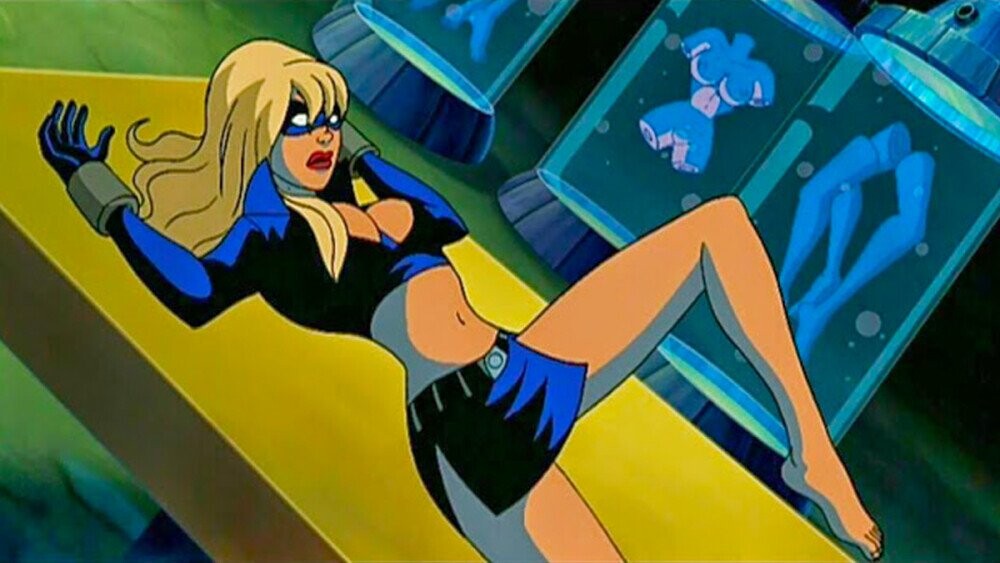
In June 2003, Stripperella debuted on the network then transitioning from TNN into Spike TV. Pamela Anderson voiced Erotica Jones, an exotic dancer who secretly worked as the superhero and special agent Stripperella. The series combined adult animation, superhero satire, spy parody, celebrity casting, and enough anatomical wordplay to exhaust a middle-school notebook.
The show became one of the first major projects from POW! Entertainment, the company Lee formed after the collapse of Stan Lee Media. Trade coverage reported that the premiere attracted approximately two million viewers, outperforming the animated programs that led into it.
Lee described the concept as something different, funny, and exotic. He reportedly imagined the heroine with a Pamela Anderson-like appearance before Anderson became involved. Her casting was not merely artistic inspiration; Lee also understood that her fame could make the project dramatically easier to sell. Anderson voiced the character and participated as a creative consultant.
What Was Stripperella Actually About?
Erotica Jones performed at a club called TenderLoins and worked for a secret agency when she was not onstage. She possessed enhanced strength, reflexes, intelligence, martial-arts skills, unusual gadgets, and hair that could function as a parachute. The villains included characters with names such as Cheapo and Pushy Galore, removing any concern that the show might accidentally develop dignity.
The program leaned heavily on sexual jokes and visual titillation, but it also worked as a parody of Batman, James Bond, and superhero cartoons. Critics disagreed about whether the satire elevated the material or merely gave it somewhere to hide. Entertainment Weekly emphasized its abundant titillation, while animation-industry coverage praised its voice cast and willingness to mock comic-book conventions.
Despite the premise, Anderson reportedly required a no-nudity clause for her animated character. Broadcast versions blurred some imagery, creating the peculiar spectacle of a television show aggressively advertising adult content while carefully negotiating how much of that content viewers could actually see.
The series lasted 13 episodes between 2003 and 2004. Lee originated the central concept and served as its most recognizable promotional figure, while a larger team developed, wrote, animated, and produced the finished program. That distinction is important because Lee’s public persona often encouraged audiences to imagine him personally creating every line, costume, gag, and gadget attached to his name.
Hef’s Superbunnies: The Playboy Superhero Universe That Never Was
Stripperella was not Lee’s only early-2000s attempt to combine superheroes with adult entertainment brands. In 2003, he announced a project with Playboy that would transform Hugh Hefner into the superpowered leader of a team of crime-fighting Playmates. The working title was Hef’s Superbunnies.
The concept sounded less like a television series and more like a parody trailer playing inside another parody. Yet Lee discussed it with his usual promotional enthusiasm. Hefner’s familiar public image would become a secret identity concealing a nobler heroic mission. The project never achieved the visibility of Stripperella, but its development strengthened the pattern running from Pussycat through the Playboy proposal and into Lee’s later career.
Lee kept returning to the same creative cocktail: beautiful women, pulp adventure, broad comedy, celebrity mythology, and superhero branding. He was not merely revisiting one old character. He was repeatedly testing whether adult fantasy could be packaged using the storytelling language he had helped popularize.
Was Stan Lee Really Obsessed With Smut?
“Obsessed” makes a terrific headline, but the evidence supports a more complicated interpretation. Lee did pursue adult-oriented projects across several decades. However, they occupied a relatively small corner of an enormous career that also included superhero comics, newspaper strips, animation, educational projects, lectures, television development, film promotion, and enough licensing ideas to cover every lunchbox in North America.
It is therefore more accurate to describe risqué entertainment as a recurring fascination rather than the central mission of his life.
Lee appeared attracted to adult projects for many of the same reasons he pursued superheroes, celebrity collaborations, cartoons, and multimedia experiments. They offered novelty, publicity, market access, and the possibility of creating another recognizable intellectual property. Sex got people’s attention, and Stan Lee understood attention better than most twentieth-century publishers.
His eagerness also reflected a broader ambition to prove comics could serve every audience. Superhero books had long been dismissed as disposable children’s entertainment. Adult magazines, college readers, television networks, and celebrity partnerships represented ways to escape that boxeven when the escape route involved an astonishing number of cleavage jokes.
How These Projects Look to Modern Audiences
Time has not treated all of Lee’s adult concepts kindly. The sexual politics of Pussycat can feel deeply dated. Stripperella emerged from an early-2000s cable environment that frequently treated objectification as an entire brand identity. Many jokes depend on women’s bodies functioning simultaneously as decoration, plot device, weapon, and punchline.
Modern viewers may also question how much agency the heroines possess. Stripperella is intelligent, capable, brave, and often more competent than everyone around her. At the same time, the camera, dialogue, and marketing constantly reduce her to exaggerated anatomy. The satire mocks sexist entertainment while enthusiastically reproducing ita balancing act performed on a tightrope made of double entendres.
Still, dismissing the projects as meaningless trash would overlook their value as cultural artifacts. They reveal how publishers chased adult readers in the 1960s, how Playboy competed in the 1970s, and how cable television targeted young male audiences in the 2000s. They also show Lee applying his talent for promotion to material far outside the Marvel universe.
The Experience of Revisiting Stan Lee’s Risqué Work
For a modern fan, discovering this side of Stan Lee’s career can be a genuinely strange experience. The public version of Lee has been polished by decades of Marvel movies, convention appearances, inspirational quotations, and cheerful cameos. He became the friendly grandfather of superhero culturethe man who appeared onscreen, delivered a joke, and disappeared before a building exploded.
Then a curious reader encounters Pussycat or learns about the abandoned Playboy strip. Suddenly, the familiar red-tinted sunglasses seem to conceal a far more mischievous publishing history.
The first reaction is often disbelief. Stripperella sounds like a fake program invented for a sitcom. Its title, premise, character names, and association with both Stan Lee and Pamela Anderson feel almost too perfectly early-2000s to be real. Watching it today can resemble opening a time capsule filled with low-rise jeans, cable-network rebranding, celebrity voice acting, and jokes that would cause a modern corporate standards department to burst into flames.
The second reaction is recognition. Beneath the adult humor, the structure is unmistakably Lee. There is a hero with a secret identity, a gallery of flamboyant villains, ridiculous gadgets, breathless narration, memorable terminology, and a premise engineered for immediate publicity. Remove the strip-club setting, and the creative skeleton resembles dozens of superhero stories.
Researching the abandoned Playboy proposal creates a different experience. Because the project was never commercially published, it feels less like a forgotten franchise and more like accidentally finding an alternate timeline. In that timeline, Lee and Romita followed Spider-Man with an internationally distributed erotic comedy. Had it succeeded, it might have changed the way both creators were perceived. Instead, it survives as sketches, correspondence, interviews, and one of the strangest footnotes in comics history.
There is also an important lesson in attribution. Lee’s talent for self-promotion often made him appear to be the sole author of collaborative projects. Looking closely at Pussycat or Stripperella reveals networks of artists, writers, developers, performers, executives, and producers. Lee supplied ideas, editorial direction, public enthusiasm, and a famous name, but the finished works depended on many contributors.
Finally, revisiting these projects makes it easier to understand Lee as a complicated media entrepreneur rather than a spotless mascot. He could advocate moral responsibility in superhero stories while pitching gleefully irresponsible adult comedy. He could talk about comics as modern mythology and then name a secret organization L.U.S.T. He could create heartfelt outsiders and shameless marketing gimmickssometimes during the same decade.
That contradiction does not erase his achievements. It makes his career more human and much harder to package into a single inspirational montage.
Conclusion
Stan Lee’s recurring attempts to produce adult-oriented entertainment stretched from the men’s-magazine character Pussycat in the 1960s to an unpublished Playboy proposal in the 1970s, followed decades later by Stripperella and Hef’s Superbunnies. The projects varied enormously in explicitness, quality, and success, but they shared Lee’s affection for outrageous concepts, catchy branding, pulp adventure, and relentless salesmanship.
Was he truly obsessed with making smut? Probably not in the dramatic sense promised by the title. He was obsessed with ideas that could attract an audience, cross into a new medium, generate publicity, and perhaps become the next profitable franchise. Occasionally, those ideas wore capes. Occasionally, they wore considerably less.
That may be the most Stan Lee conclusion possible. Behind the superheroes, moral lessons, and cries of “Excelsior!” stood a tireless promoter willing to pitch almost anythingas long as the title was memorable and somebody might buy it.














