
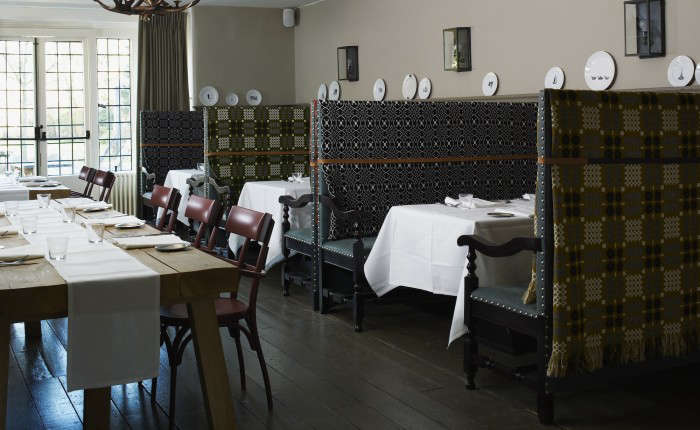
Note: This article is inspired by verified design details from The Olde Bell Inn dining room and translates the look into practical, livable decorating ideas for American homes.
Introduction: A Dining Room That Knows How to Whisper
Some dining rooms shout. They arrive wearing polished chandeliers, glossy tables, and enough formality to make a salad fork feel nervous. The Olde Bell Inn dining room does the opposite. It whispers. It creaks a little. It smells, at least in the imagination, like old timber, wool blankets, candlelight, and something delicious coming from the kitchen. That is exactly why the look works.
Designed by Ilse Crawford and Studioilse, The Olde Bell Inn in Hurley, Berkshire, is not a theme-park version of rustic English charm. It is warmer, smarter, and more quietly modern than that. The dining room blends black-painted beams, dark chairs, sturdy wooden tables, high-back benches, wool textiles, simple lighting, and a neutral palette that feels collected rather than decorated. It is the kind of room that makes you want to order soup even if you came in for coffee.
The good news? You do not need a centuries-old coaching inn, a British postcode, or a resident ghost named Nigel to borrow the mood. You need contrast, honest materials, cozy seating, a disciplined palette, and a willingness to let the room feel human. This guide breaks down how to steal the Olde Bell Inn dining room look for your own homewithout making your dining area look like a pub costume party.
What Makes The Olde Bell Inn Dining Room So Memorable?
1. It Balances Rustic Bones With Modern Restraint
The magic of the Olde Bell Inn dining room is contrast. The space respects history, but it does not drown in nostalgia. Black-painted ceiling beams and dark architectural details create structure. Wooden tables add weight. Traditional silhouettesespecially spindle-back and Windsor-style seatingnod to country dining without feeling fussy.
Then comes the modern part: restraint. The palette is calm. The surfaces are simple. The accessories are few. Nothing screams, “Look at me, I was purchased during a farmhouse emergency.” Instead, each element feels useful and intentional. That is the real secret of rustic modern dining room design: old materials, clean editing, and no decorative clutter fighting for the microphone.
2. The Color Palette Is Quiet but Not Boring
The Olde Bell look relies on a tight color story: chalky whites, warm neutrals, black accents, natural wood, soft gray, leather brown, and small notes of red or woven color when needed. This is not the flat beige of a forgotten waiting room. It is a layered neutral palette, where texture does the heavy lifting.
To copy the effect at home, start with warm white or soft cream walls. Add black through chairs, beams, door trim, picture frames, or light fixtures. Bring in wood through a farmhouse table or bench. Finish with wool, linen, rush, leather, or jute. If the room still feels sleepy, add one tiny spark: a red lamp, a striped cushion, vintage pottery, or a framed print with earthy color.
How to Steal the Look at Home
Start With a Solid Wood Dining Table
The table is the anchor. In an Olde Bell-inspired dining room, it should feel sturdy enough for roast chicken, board games, homework, and one dramatic family announcement per year. Choose a rectangular solid wood table with a natural, oiled, or lightly distressed finish. Oak, ash, pine, and walnut can all work, depending on your budget and room tone.
Avoid anything too glossy. A high-shine finish breaks the spell. The goal is not showroom perfection; it is hospitality. A few knots, grain lines, and small imperfections make the table feel like it has a pasteven if you bought it last Tuesday and assembled it with an Allen wrench while questioning your life choices.
Add Black Dining Chairs for Instant Architecture
One of the most powerful ideas in The Olde Bell Inn dining room is the use of black-painted chairs. Black seating gives a neutral room definition. It outlines the table, sharpens the rustic materials, and keeps the space from floating away into oatmeal-colored softness.
Windsor chairs are the most obvious choice because their spindles create rhythm without visual heaviness. Shaker-inspired chairs, simple ladder-back chairs, or clean-lined black wood chairs can also work. If your table is heavy and rustic, choose chairs with a lighter frame. If your table is simple, chairs with a more traditional silhouette can add character.
Use Benches to Make the Room Feel More Social
Benches are a key part of the inn-style dining experience. They invite people to slide in, squeeze together, and stay a little longer. A bench also softens the formality of a dining room, making it feel more like a gathering place than a showroom.
For the Olde Bell look, consider a high-back wooden bench or a simple long bench against a wall. Add cushions or folded wool blankets for comfort. Leather straps, if used tastefully, can secure throws or cushions and add a practical handmade detail. This is one of those small touches that feels charming because it solves a real problem: blankets wander. Straps politely tell them to behave.
Bring in Wool Textiles and Heritage Patterns
Wool is essential to the mood. A Welsh-style blanket, herringbone throw, plaid cushion, or striped woven textile adds warmth and memory. The Olde Bell Inn dining room uses textiles not as decoration for decoration’s sake, but as comfort. That distinction matters.
In your own dining room, drape a blanket over a bench, add seat pads in natural wool, or use a runner with subtle woven texture. Keep patterns grounded: herringbone, ticking stripes, checks, and muted plaids. Skip anything too cute. No rooster parade. No “Live, Laugh, Loaf” sign. The Olde Bell mood is rustic, not theatrical.
Lighting: Keep It Low, Warm, and Honest
Choose Simple Pendants or Industrial-Inspired Fixtures
Lighting is where many dining rooms accidentally go full ballroom. The Olde Bell Inn look works because the lighting feels practical, warm, and modest. Think simple metal pendants, shaded lights, vintage-inspired fixtures, or understated industrial forms.
Hang a pendant or chandelier roughly 30 to 36 inches above the dining table in a room with standard ceilings. This height usually creates a comfortable pool of light without turning dinner into an interrogation. If you use multiple pendants, space them evenly and keep the shapes simple.
Layer the Glow
A great inn-style dining room should not rely on one overhead light blasting down like a grocery-store freezer aisle. Add layers. A wall sconce, a small lamp on a sideboard, candles, or a shaded corner light can make the room feel deeper and more intimate.
Use warm bulbs rather than cool ones. A soft glow flatters wood, wool, food, and human faces. This is important. Nobody wants to eat mashed potatoes under lighting that says, “minor dental procedure.”
Walls, Floors, and Architectural Details
Paint Beams, Trim, or Doors Black
If you have exposed beams, lucky you. Paint them black or a deep charcoal to echo the Olde Bell dining room’s strong graphic structure. If you do not have beams, do not panic. You can still use black on interior doors, window trim, chair rails, built-in shelves, or picture frames.
The point is to create rhythm. Black details help frame the room and give rustic materials a modern edge. Use them sparingly. Too much black can feel heavy, especially in a small dining room. A little goes a long way, rather like horseradish or advice from your most opinionated aunt.
Choose Natural Flooring or a Textured Rug
Stone, wood, brick, and natural fiber rugs all suit this look. If you have hardwood floors, let them show. If your flooring is less charming, add a jute, sisal, wool flatweave, or vintage-style rug under the table. Choose a rug large enough that chairs remain on it when pulled out.
For practicality, avoid rugs that are too pale or too plush. Dining rooms involve crumbs, spills, and the occasional airborne pea. Texture is welcome; shag is a trap.
Tabletop Styling: Simple, Useful, Beautiful
Use Everyday Pieces That Feel Handmade
The Olde Bell Inn dining room is not about precious tablescapes. The best version of this look uses humble pieces with presence: stoneware plates, clear glass tumblers, linen napkins, wooden boards, iron candleholders, and simple pitchers.
Choose tableware in cream, gray, black, brown, or muted blue. Mix slightly different pieces if they share a common material or tone. The goal is a collected table, not a perfectly matched wedding registry display that still has emotional support tissue paper.
Decorate With Restraint
A low bowl of apples, a bundle of herbs in a jar, taper candles, or a small vase of branches is enough. In an inn-style dining room, the food and people should be the main event. Centerpieces should not require guests to lean sideways to discuss the weather.
Budget-Friendly Ways to Get the Olde Bell Inn Look
Shop Vintage Before Buying New
This style loves age, so vintage shopping is your friend. Look for black chairs, old benches, simple wood tables, stoneware, iron hooks, framed landscapes, and wool throws. Small flaws can make the room better. A scratch on a chair is character. Twelve wobbly chairs, however, is a liability.
If you find mismatched chairs, paint them the same black or charcoal shade to unify the set. If you find a table with a tired finish, sand and oil it rather than making it glossy. If you find an old bench, add a cushion and suddenly it becomes “curated” instead of “found behind a garage.”
Upgrade With Texture, Not Excess
You do not need to renovate the entire room. Add a woven runner, black chairs, a better pendant, linen napkins, and a wool throw, and the mood shifts quickly. Texture is the shortcut. Wood, wool, rush, leather, linen, iron, and pottery create depth even when the palette stays simple.
Common Mistakes to Avoid
Do Not Over-Theme the Room
The fastest way to ruin this look is to turn it into a stage set. Avoid fake pub signs, plastic antlers, novelty beer posters, and anything that says “Ye Olde” unless you are decorating a medieval mini-golf course. The Olde Bell Inn dining room feels authentic because it is rooted in materials, history, and usenot props.
Do Not Make It Too Dark
Black accents are important, but balance them with pale walls, natural light, warm wood, and soft textiles. A dining room should feel cozy, not like a stylish cave where soup goes to contemplate mortality.
Do Not Forget Comfort
Ilse Crawford’s work is known for putting people first, and that lesson matters here. A beautiful dining room that nobody wants to sit in has failed its one job. Choose chairs with good support, add cushions where needed, keep lighting flattering, and leave enough space for guests to move comfortably.
Experiences Inspired by The Olde Bell Inn Dining Room
The best way to understand the Olde Bell Inn dining room look is not by staring at a chair or memorizing paint colors. It is by imagining the experience the room creates. Picture arriving on a cold evening, shoulders slightly hunched from the weather, and stepping into a dining room where the light is low, the wood is dark, and the room seems to exhale. There is nothing flashy greeting you at the door. No giant floral arrangement is blocking your view. No chair looks too delicate for real life. The space simply says, “Come in. Sit down. You look like you could use something warm.”
That emotional welcome is the real design lesson. In a home, an Olde Bell-inspired dining room should make weeknight dinner feel a little more grounded. It should make a simple bowl of stew feel intentional. It should make guests linger after dessert, not because the chairs are impossible to escape, but because the room encourages conversation. The black chairs create a sense of order. The wood table gives everyone a place to gather. The wool blanket on the bench quietly suggests that comfort has been considered.
I would use this look in a home where the dining room needs to work hard: family meals on Monday, laptop sessions on Wednesday, friends on Saturday, and holiday chaos when someone inevitably asks where the extra napkins are. The style is forgiving. A few crumbs on a rustic table do not destroy the atmosphere. A slightly wrinkled linen napkin looks appropriate. A mismatched mug can be charming. This is design that allows life to happen, which is far more useful than a room that looks perfect but makes everyone afraid to touch the furniture.
For a memorable dinner experience, keep the menu as honest as the room. Serve roast chicken, mushroom soup, crusty bread, roasted vegetables, apple crumble, or a big salad in a stoneware bowl. Light candles, dim the overhead fixture, and use real napkins even if the rest of the evening is casual. Put a wool throw over the bench for the person who is always cold. There is always one. Sometimes it is you.
The Olde Bell Inn dining room also teaches patience. This look improves when it is collected over time. A new pendant here, a vintage chair there, a better table when the budget allows, a framed print from a trip, a blanket found at a marketthese layers make the space personal. Instead of copying every object exactly, copy the feeling: warm, grounded, useful, tactile, and quietly stylish. That is the version that will last.
Conclusion: Steal the Feeling, Not Just the Furniture
To steal the look of The Olde Bell Inn dining room, focus on atmosphere before shopping. Start with a warm neutral backdrop, add black architectural accents, choose a solid wood dining table, mix in Windsor-style or simple black chairs, soften the space with benches and wool textiles, and finish with low, layered lighting. Keep the room useful. Keep it comfortable. Keep it edited.
The result is a dining room that feels rustic but not rough, modern but not cold, stylish but not self-important. It is the kind of space where people want to sit, eat, talk, and stay for one more cup of coffee. And really, that is the highest compliment a dining room can receive.













