
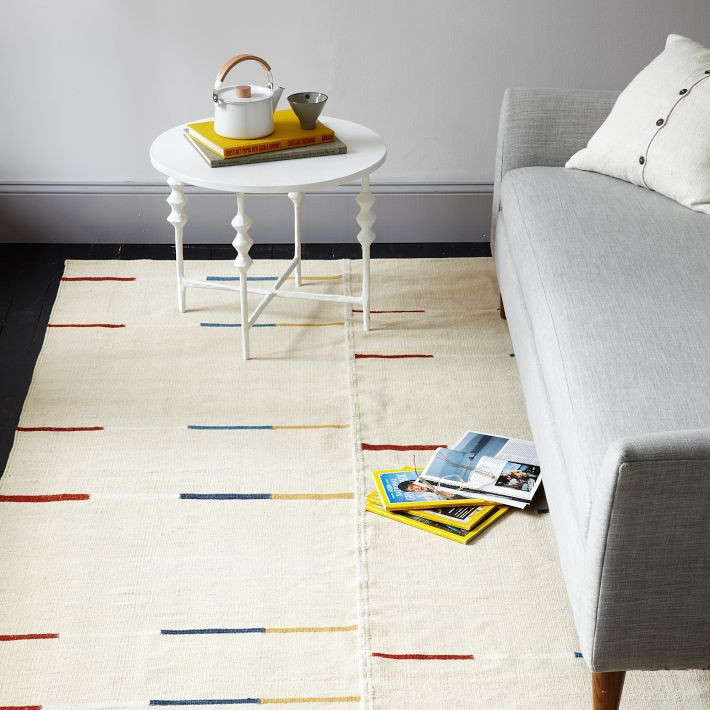
The Steven Alan Aliye Wool Dhurrie is the kind of rug that quietly walks into a room, straightens its collar, and makes the whole space look more intentional. Originally created as part of the Steven Alan collaboration with West Elm, this handcrafted wool-and-cotton dhurrie brought fashion’s relaxed stripe obsession into the home. Instead of loud pattern drama, it offered something more useful: texture, movement, easy color, and a flatwoven profile that could work in a living room, bedroom, hallway, studio apartment, or any space that needed a visual upgrade without turning into a design circus.
At its core, the Aliye Wool Dhurrie is a study in casual sophistication. It was handwoven in India, made from 80% wool and 20% cotton, and designed with two separately woven panels stitched together to create a subtly variegated, slightly offset look. That construction detail matters because it gives the rug character. It does not feel like a printed pattern slapped onto fabric; it feels handmade, human, and just imperfect enough to be interesting. In a world full of rugs that try too hard, the Steven Alan Aliye Wool Dhurrie has the confidence to whisper.
What Is the Steven Alan Aliye Wool Dhurrie?
The Steven Alan Aliye Wool Dhurrie is a flatwoven area rug that was part of the Steven Alan Stripes for West Elm collection. The collaboration translated Steven Alan’s fashion sensibilityespecially his love of stripes, relaxed tailoring, and softened classicsinto home decor. The broader collection included bedding, vases, furniture, pillows, and rugs, with many pieces made by artisans using traditional craft techniques.
The Aliye rug stood out because it combined a clean modern palette with the practical heritage of a dhurrie. A dhurrie is a flatwoven rug, traditionally associated with India, that is made without a thick pile. Unlike plush rugs, which have raised fibers, dhurries are created by interlacing warp and weft threads. The result is thinner, lighter, easier to layer, and often more versatile in everyday interiors.
The Aliye Wool Dhurrie was offered in several sizes, including small accent sizes, runners, and larger room-size options. Its original product descriptions emphasized its handcrafted Indian origin, ivory coloring, wool-cotton composition, 0.25-inch thickness, and recommended use with a rug pad. That thin profile made it especially useful for spaces where a thick rug would be awkward, such as under furniture, near doors, or in rooms where visual lightness matters.
Why This Rug Still Feels Relevant
Some home decor pieces age like milk. Others age like a linen shirt: softer, calmer, and somehow more stylish after a few years of real life. The Steven Alan Aliye Wool Dhurrie belongs to the second group. Its strength is not trendiness; it is restraint.
The rug’s striped, variegated appearance works because stripes are one of interior design’s most dependable patterns. They can make a room feel longer, cleaner, more structured, or more relaxed depending on the scale and color. In the Aliye Wool Dhurrie, the striping is not harsh or graphic in a corporate-lobby way. It has a handmade softness, which means it pairs well with wood, linen, leather, rattan, matte ceramics, white walls, black accents, and vintage furniture.
This is exactly why flatweave wool rugs remain popular in modern interiors. They provide texture without bulk. They bring pattern without visual shouting. They can look polished in a city apartment, breezy in a coastal bedroom, grounded in a farmhouse-style living room, and refreshingly unfussy in a minimalist space. That is a lot of personality for something people are technically going to step on.
Design DNA: Steven Alan Meets West Elm
Steven Alan is known for a casual, American approach to classicsbutton-down shirts, relaxed shapes, and pieces that feel designed rather than overdesigned. When that sensibility moved into home goods, the result was a collection that leaned into stripes, handcrafted details, and globally inspired artisan production.
The West Elm collaboration introduced Steven Alan’s understated fashion language to furniture and textiles. For the Aliye Wool Dhurrie, that meant a rug with a menswear-adjacent sense of order but a handmade textile soul. Think of it like a favorite striped shirt translated into a floor covering: clean, easy, slightly rumpled in the best way, and not afraid of being useful.
The two-panel construction gives the rug its distinctive charm. Because each panel was woven separately and then stitched together, the color and stripe alignment could show subtle variation. That is not a flaw; it is part of the appeal. Machine-perfect symmetry can feel sterile. A handmade rug with slight movement feels alive.
Material Matters: Wool and Cotton in a Flatweave Rug
The Aliye Wool Dhurrie was made with 80% wool and 20% cotton. That blend makes sense for a flatwoven rug. Wool brings resilience, natural texture, warmth, and durability. Cotton helps with structure, flexibility, and a lighter hand. Together, they create a rug that feels substantial enough for everyday living but not so heavy that moving it becomes a two-person workout followed by emotional recovery.
Wool is especially valued in rugs because it can handle regular use, has a naturally springy feel, and tends to hide minor soil better than many lighter synthetic materials. In a flatweave construction, wool does not create the plush sink-in feeling of a high-pile rug, but it adds body and softness. The cotton component helps the weave stay flexible and practical.
The 0.25-inch thickness also matters. A low-profile rug is easier to place beneath sofas, beds, dining tables, or entry furniture. It also helps avoid the awkward “door versus rug” battle, where the door wins every morning and the rug slowly develops a grudge.
Best Rooms for the Steven Alan Aliye Wool Dhurrie
Living Room
In a living room, the Aliye Wool Dhurrie can act as a visual anchor. For a smaller seating area, a 5-by-8-foot version would typically work under a coffee table with the front legs of the sofa and chairs touching the rug. For larger rooms, an 8-by-10 or 9-by-12 size would help connect the furniture and make the room feel intentionally arranged rather than “we pushed everything against the wall and hoped for the best.”
Because the rug has a relatively calm pattern, it pairs well with solid sofas, leather chairs, wood coffee tables, and textured throw pillows. It can also soften more modern furniture by adding handmade character underfoot.
Bedroom
In a bedroom, the Aliye Wool Dhurrie brings softness without making the space feel heavy. A larger version can sit under the bed with enough rug visible on both sides for comfortable morning steps. A smaller size can work at the foot of the bed, beside a nightstand, or layered over a larger natural-fiber rug.
Its ivory-based color and subtle stripe variation make it especially useful in bedrooms that lean calm, coastal, Scandinavian, modern farmhouse, or quietly eclectic. Add white bedding, a wood bench, linen curtains, and a good lamp, and suddenly the room says “boutique guesthouse” instead of “laundry chair with a mattress nearby.”
Hallway or Entry
The runner size is ideal for hallways, narrow entry spaces, or transitional areas. A flatwoven runner adds direction and warmth without becoming a tripping hazard when properly secured with a rug pad. Because dhurries are thinner than pile rugs, they are easier to use where clearance is limited.
For an entry, the key is maintenance. Wool can be durable, but light ivory tones need thoughtful placement. If the entry sees muddy shoes, wet umbrellas, or enthusiastic pets, the Aliye rug might be better slightly deeper inside the home rather than directly at the door.
How to Style the Aliye Wool Dhurrie
The best styling strategy for the Steven Alan Aliye Wool Dhurrie is to let it support the room rather than force it to star in a one-rug Broadway musical. Its beauty is subtle, so it works best with layered materials and balanced contrast.
Pair It With Warm Wood
Natural oak, walnut, teak, and medium-toned woods all work beautifully with an ivory wool dhurrie. The rug’s soft base keeps wood furniture from looking too heavy, while the wood prevents the room from feeling washed out.
Add Black or Charcoal Accents
A black metal floor lamp, charcoal throw, framed art, or dark side table can sharpen the look. Without contrast, ivory rooms can drift into oatmeal territory. Oatmeal is great for breakfast, less exciting as an entire design plan.
Layer With Texture
Because the rug is flatwoven, it plays nicely with nubby blankets, linen upholstery, boucle chairs, woven baskets, and ceramic accessories. The goal is to build depth. If every surface is smooth, the room can feel flat. If every surface is textured, the room can feel like a craft fair had a scheduling conflict with a cabin. Balance is the trick.
Use It as a Quiet Pattern
If your room already has patterned pillows, art, or wallpaper, the Aliye Wool Dhurrie can add structure without competing. Its stripe variation is enough to keep things interesting but not so strong that it fights other design elements.
Choosing the Right Size
Rug size can make or break a room. A too-small rug often makes furniture look like it is floating away from each other in a sea of floor. A correctly sized rug pulls everything together.
For living rooms, the most reliable approach is to place at least the front legs of major seating pieces on the rug. In larger rooms, all furniture legs can sit on the rug with a border of floor visible around the arrangement. For dining rooms, the rug should usually extend far enough beyond the table so chairs remain on the rug when pulled out. In bedrooms, the rug should extend beyond the sides and foot of the bed so it feels generous rather than decorative-only.
If buying the Steven Alan Aliye Wool Dhurrie secondhand, measure carefully. Vintage and previously owned rugs may not always match exact retail dimensions after years of use, cleaning, storage, or natural textile movement. Ask for actual measurements, not just the original size category.
Care and Maintenance
A wool dhurrie is relatively practical, but it still deserves care. Regular vacuuming helps remove dust and grit before they settle into the weave. For a flatweave rug, use a vacuum setting that is gentle enough not to pull or distort the fibers. Avoid aggressive brush rolls if they seem to tug at the surface.
Rotate the rug every few months to distribute wear and sunlight exposure. This is especially important in living rooms where one side gets more foot traffic or in rooms with strong natural light. Direct sun can gradually fade natural fibers and dyes, so consider curtains, shades, or placement adjustments if the rug sits in a very bright spot.
For spills, blot immediately with a clean, dry cloth. Do not rub. Rubbing a spill into wool is basically helping the stain move in and sign a lease. For deeper cleaning, professional rug cleaning is the safest route, especially for older or discontinued rugs. Since the Aliye Wool Dhurrie is no longer a current mass-market item, preserving its condition matters if you own one or find one secondhand.
Why a Rug Pad Is Not Optional
The original product information recommended a rug pad, and that advice is worth taking seriously. A flatwoven dhurrie can shift, wrinkle, or slide without support. A good rug pad improves grip, adds a little cushioning, protects flooring, and reduces friction that can wear down the rug over time.
For a thin flatweave like the Aliye Wool Dhurrie, a low-profile non-slip pad is usually the best choice. It should be slightly smaller than the rug so it stays hidden under the edges. The pad should suit the flooring type, especially if used on hardwood. Some cheap pads can stick, crumble, or mark floors, which is not the kind of surprise anyone wants to discover while rearranging furniture on a Sunday afternoon.
Buying the Steven Alan Aliye Wool Dhurrie Today
Because the Steven Alan Aliye Wool Dhurrie was part of an earlier West Elm collaboration, it is best approached as a discontinued or secondhand design find rather than a product you can reliably buy new at retail. Listings may appear on resale furniture platforms, local marketplaces, auction sites, estate sales, or design resale shops.
When evaluating a used Aliye Wool Dhurrie, look closely at the edges, corners, stitched center seam, stains, discoloration, odors, and any uneven wear. Ask whether the rug has been in a pet-friendly or smoke-friendly home. Request photos in natural light. If possible, ask for close-up images of the weave and underside.
Condition matters more than nostalgia. A rare rug is exciting, but a rare rug with mystery stains and curling edges is a relationship that starts with red flags. Minor wear can add charm; structural damage can become expensive. The center seam is especially important because the Aliye’s two-panel construction is part of its design. The seam should feel secure, not stressed or separating.
Who Should Consider This Rug?
The Steven Alan Aliye Wool Dhurrie is a strong fit for people who like modern design but do not want a cold room. It works for homeowners, renters, stylists, and collectors who appreciate handcrafted textiles, subtle stripes, and neutral palettes with character.
It is also a good choice for anyone who wants a rug that can adapt over time. Because it is not locked into a loud color trend, it can move from bedroom to living room, from apartment to house, or from main rug to layered accent. That flexibility is one of the biggest benefits of a well-designed flatweave.
However, it may not be the best choice for someone who wants plush softness, dramatic color, or a rug that hides every speck of dirt. A flatweave is lower and firmer underfoot than a pile rug. The ivory tone can show spills if neglected. Like many good design pieces, it rewards reasonable care.
Experience Notes: Living With a Rug Like the Steven Alan Aliye Wool Dhurrie
Living with a rug like the Steven Alan Aliye Wool Dhurrie is less about owning a perfect decorative object and more about learning how a room changes when the floor finally gets invited to the design conversation. Many people spend months choosing sofas, lamps, pillows, and wall art, then leave the floor bare and wonder why the room still feels unfinished. A wool dhurrie fixes that problem in a quiet, satisfying way. It does not demand attention; it creates a foundation.
The first thing you notice with a flatwoven wool dhurrie is how visually clean it feels. Unlike a thick shag or high-pile rug, it does not swallow chair legs or create a bulky transition at the edge. Furniture sits naturally on it. Doors behave better around it. Coffee tables feel grounded. Even a simple room with a sofa, two chairs, and a wooden table can suddenly look edited, as though someone made a plan instead of slowly accumulating furniture through a series of “this was on sale” decisions.
The second experience is texture. A rug like the Aliye does not feel plush in the sink-your-toes-in sense. Instead, it offers a firm, woven tactility. That can be surprisingly pleasant, especially in warm climates or rooms where a thick rug would feel too heavy. It gives the floor a softer look while keeping the practical advantages of a low-profile textile. If you are used to fluffy rugs, the first reaction may be, “Oh, this is thinner than I expected.” A week later, you may realize that thinness is exactly why the room feels easier to live in.
Another everyday benefit is flexibility. You can move a flatweave more easily than a heavy tufted rug. You can shake it out, rotate it, reposition it, or layer it with another rug when you want more depth. In a bedroom, it can make the space feel calmer. In a living room, it can define the seating area. In a hallway, it can add rhythm and warmth. If your style changes from minimalist to vintage-modern to “I bought three ceramic lamps and now I have a personality,” the rug can usually keep up.
The most important habit is maintenance. A light wool dhurrie rewards quick action. Vacuum regularly, use a rug pad, rotate it, and blot spills immediately. These small routines prevent bigger problems. The rug will not ask for much, but it does ask you not to treat it like a garage mat. With reasonable care, it can develop the kind of lived-in beauty that makes a home feel personal rather than staged.
Perhaps the best part of a rug like the Steven Alan Aliye Wool Dhurrie is that it makes design feel approachable. It proves that a room does not need loud colors, oversized patterns, or expensive theatrics to feel special. Sometimes the smartest choice is a handcrafted wool-and-cotton flatweave with quiet stripes, good proportions, and enough texture to make the whole room exhale.
Conclusion
The Steven Alan Aliye Wool Dhurrie remains appealing because it sits at the intersection of fashion, craft, and practical interior design. Its handwoven construction, wool-cotton blend, subtle ivory palette, and two-panel stitched design give it a distinctive look without making it difficult to style. It is not just a rug for people who like stripes; it is a rug for people who like rooms that feel calm, layered, and thoughtfully put together.
Whether found secondhand or used as inspiration for choosing a similar wool dhurrie, the Aliye rug offers a useful lesson: good design does not always need to shout. Sometimes it just needs to lie beautifully on the floor, hold the room together, and make your coffee table look like it finally found its purpose.
Note: This article is written as evergreen editorial content based on archived product details, rug-care best practices, and interior design research. Availability, resale pricing, and condition may vary because the Steven Alan Aliye Wool Dhurrie is no longer treated as a standard current retail item.













