
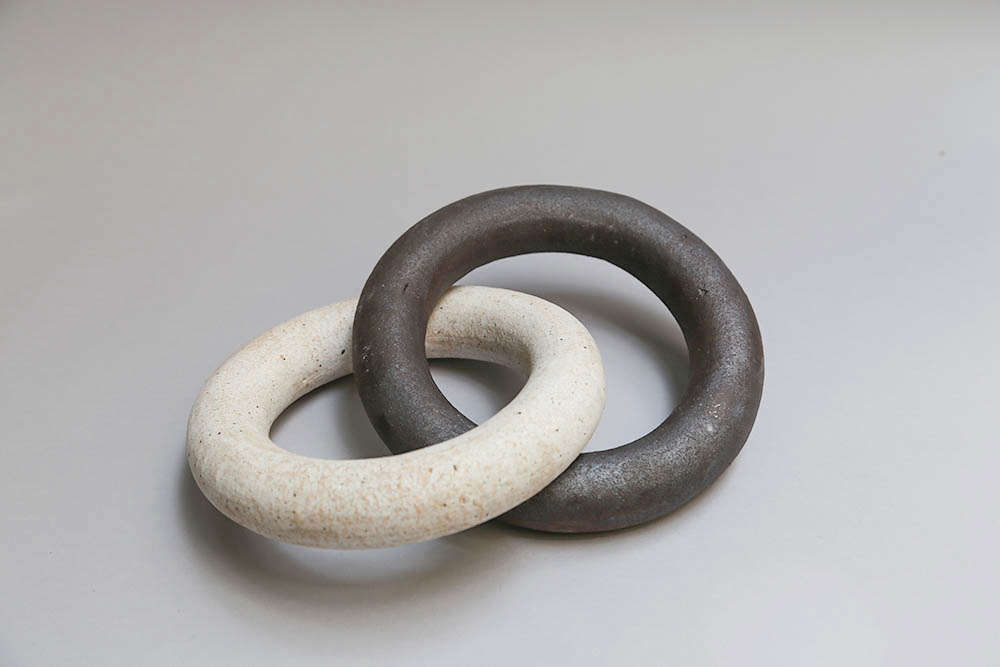
A stoneware chain link is the kind of decorative object that makes people pause, lean closer, and ask the question every successful piece of home décor secretly wants to hear: “How did they make that?” It looks familiar because everyone understands a chain. Yet it also feels surprising because clay is not supposed to behave like metal, rope, or wood. Turning a rigid ceramic material into interlocking links creates a clever visual contradictionsolid but flexible-looking, heavy but airy, ancient in material yet distinctly modern in form.
Used on a coffee table, bookshelf, entry console, dining table, or wall, a stoneware chain link adds shape, shadow, texture, and a little artistic mischief. It can be minimalist, rustic, sculptural, bohemian, monochromatic, or dramatically graphic. More importantly, it can make a room feel considered without making the room look as though it was styled by someone carrying a clipboard.
What Is a Stoneware Chain Link?
A stoneware chain link is a decorative ceramic sculpture made from two or more interlocking clay rings. Depending on the artist or manufacturer, the links may be hand-built individually, connected before firing, assembled with cord, or designed as a longer chain intended for a wall or tabletop display.
Some versions use only two oversized links. Others contain a sequence of links that drape, coil, or hang almost like a ceramic textile. Compact handmade pieces may measure around ten inches across, while larger statement sculptures can extend more than twenty inches. Finishes range from matte white and charcoal black to marbled clay, natural brown stoneware, speckled surfaces, hand-painted symbols, and glossy glazes.
More Sculpture Than Accessory
Although retailers frequently place stoneware chain links in the home-accessory category, the best examples function like small sculptures. They occupy negative space, cast shifting shadows, and appear different from every viewing angle.
Unlike a vase, they do not need flowers. Unlike a bowl, they do not need to hold anything. Their entire job is to be visually interesting, which is refreshingly honest work for an object that never answers emails.
Why Stoneware Chain Link Décor Is So Compelling
A Familiar Shape in an Unexpected Material
Chains normally suggest movement, strength, machinery, jewelry, anchors, or restraint. Stoneware suggests permanence, earth, craftsmanship, vessels, and the intense heat of a kiln. Combining the two creates tension between what the eye expects and what the material can actually do.
The sculpture appears movable even though every fired link is rigid. That contradiction gives it visual energy. Viewers instinctively understand how a chain should behave, so seeing one made from ceramic produces a small but satisfying moment of surprise.
A Symbol of Connection
Interlocking rings can represent continuity, partnership, family, friendship, memory, or the way separate elements become stronger through connection. A two-link sculpture may serve as a subtle symbol of a couple or close relationship. A longer ceramic chain may suggest community, history, or several generations joined together.
Of course, it can also simply look excellent beside a stack of design books. Not every decorative object needs to deliver a philosophy lecture before brunch.
Geometry Without Harshness
The repeated oval or circular shapes introduce structure, but their rounded edges keep the sculpture from feeling severe. Handmade links often have slight variations in thickness, curvature, texture, and color. These irregularities soften the geometry and make the piece feel human rather than mechanically perfect.
This quality is particularly helpful in rooms dominated by straight lines. Sofas, cabinets, tables, shelves, rugs, windows, and televisions are usually rectangular. A stoneware chain interrupts that grid with loops, curves, and open spaces, adding movement without adding clutter.
Why Stoneware Works So Well
Stoneware is a high-fired ceramic that becomes dense, strong, and relatively low in porosity when properly matured. These qualities make it suitable for substantial decorative objects that need to retain their shape and withstand normal household handling.
Compared with many low-fired earthenware bodies, stoneware generally has a heavier, more grounded presence. Its natural colors and textured surfaces also complement the sculptural character of oversized chain links.
It is still ceramic, however, not a tow chain for rescuing a pickup truck. A well-made stoneware sculpture can be durable, but a hard fall onto tile, concrete, or stone may chip or break it. Strength should not be confused with indestructibility.
Stoneware Versus Earthenware and Porcelain
Earthenware is commonly fired at lower temperatures and may remain more porous. It can produce attractive decorative objects, but it often feels lighter and may depend more heavily on glaze for moisture resistance.
Porcelain is usually finer, whiter, and capable of becoming translucent when thin. It can create an elegant, highly refined appearance, but it may lack the earthy visual weight many buyers want from contemporary chain-link sculpture.
Stoneware sits comfortably between those personalities. It can look polished or primitive, smooth or rough, sophisticated or rugged. That flexibility allows a stoneware chain link to work in modern, rustic, coastal, industrial, wabi-sabi, bohemian, and transitional interiors.
How a Ceramic Chain Link Is Made
Making interlocking ceramic links is deceptively challenging. Clay shrinks as it dries and shrinks again during firing. Thick areas dry more slowly than thin areas. Unsupported forms may sag, joined surfaces can crack, and glaze may fuse touching links together inside the kiln.
A sculpture that looks effortless may represent many careful calculations and at least one kiln opening conducted with crossed fingers.
1. Forming the Individual Links
An artist may roll thick coils, build hollow tubular forms, wrap slabs around temporary supports, extrude clay through a shaped die, or sculpt each link entirely by hand.
Solid links feel substantial but require extremely controlled drying because thick clay can trap moisture. Hollow links reduce the final weight, although they demand secure seams and consistent wall thickness.
2. Interlocking the Clay
For a genuine movable ceramic chain, each new link must pass through an earlier link before it is closed. Timing matters. The clay must be firm enough to maintain its shape but soft enough for the ends to be joined securely.
If the clay is too wet, the rings may sag or flatten. If it is too dry, the joined seam may crack. It is pottery’s version of assembling furniture while the furniture is slowly changing size.
3. Slow and Even Drying
The completed sculpture must dry gradually so moisture can escape without creating internal stress. Makers may loosely cover the piece with plastic, rotate it periodically, and support vulnerable sections while the clay becomes leather-hard and eventually bone-dry.
Large or thick links demand patience. Rushing the drying process is an efficient way to transform one promising sculpture into several smaller and considerably less intentional objects.
4. Bisque Firing and Surface Decoration
Many ceramic chains receive an initial bisque firing before glaze, slip, oxide, or underglaze is applied. The sculpture is then fired again at a temperature appropriate for the chosen stoneware clay body.
Artists must prevent glazed contact points from sticking neighboring links together. Some use careful glazing techniques, leave small contact areas unglazed, or emphasize raw clay surfaces instead. Matte finishes are especially popular because they highlight form, texture, and shadow.
Popular Stoneware Chain Link Styles
Matte White
A white stoneware chain link looks clean, architectural, and easy to place. It works particularly well against dark wood, black shelving, colorful walls, or patterned textiles. Its pale surface emphasizes the shadows within and beneath the links.
Black and White
A pair of contrasting black-and-white links creates an immediate graphic statement. This combination feels modern and slightly surreal, especially when the surfaces are matte, rough, or visibly handmade.
Raw, Speckled, or Earth-Toned Clay
Natural clay colors emphasize craftsmanship and pair beautifully with linen, wool, leather, plaster, oak, walnut, travertine, and woven fibers. Speckled surfaces add depth without demanding attention from every other object in the room.
Marbled Stoneware
Marbled links are made by combining differently colored clay bodies so that swirls and veins run through the material itself. The pattern introduces additional movement and ensures that no two pieces look exactly alike.
Hand-Painted or Symbolic Designs
Painted markings, celestial symbols, geometric patterns, and contrasting glazes turn each link into a miniature canvas. These versions are best suited to spaces where the ceramic chain is intended to become a focal point rather than a quiet supporting accent.
Long Hanging Chains
Wall-mounted or suspended stoneware chains create a more dramatic art installation. They may hang from a hook, cascade in grouped lengths, or combine ceramic links with rope, reclaimed wood, bells, and other materials.
Installation hardware must be selected according to the sculpture’s actual weight. A tiny decorative nail intended for a lightweight print may not be prepared for a serious relationship with several pounds of fired clay.
How to Style a Stoneware Chain Link
On a Coffee Table
Place the chain beside or on top of two or three coffee-table books. The flat books create height and stability, while the curved links soften the rectangular stack. Add one smaller object, such as a candle, shallow bowl, or compact vase, and leave part of the table empty.
Negative space allows the chain’s silhouette to remain visible. On a round table, angle the links rather than positioning them rigidly in line with the sofa. On a rectangular table, try an off-center arrangement. Perfect symmetry can make a relaxed living room appear to be awaiting inspection.
On an Entry Console
A stoneware chain can anchor a vignette beneath a mirror, painting, or framed photograph. Pair it with a taller lamp or vase and a low tray for keys. The loops visually connect those horizontal and vertical elements while giving guests an interesting first impression.
On a Bookshelf
Use the chain as a visual break between books, boxes, and framed objects. It can rest flat, lean securely against a stable surface, or partially overlap a short stack of books.
Avoid squeezing the sculpture tightly between other items. The open centers of the links are part of the design and need breathing room.
As a Dining Table Centerpiece
A low ceramic chain makes an effective everyday centerpiece because it does not block conversation. It can sit alone on a wood table or share the surface with candlesticks, a small bowl, or a simple arrangement of branches.
During meals, keep hot serving dishes, sauces, and highly expressive elbows at a respectful distance.
In a Minimalist Interior
Let one substantial chain link be the only decorative object on a surface. The form provides enough interest without requiring a supporting cast. Choose a finish that contrasts with the furniture: chalky white against dark walnut, black against pale oak, or warm speckled clay against cool stone.
In a Bohemian or Collected Interior
Combine the chain with vintage books, carved wood, woven textiles, plants, and collected ceramics. Echo its curves elsewhere through a round mirror, globe lamp, circular tray, or arched shelf. Repeating shapes helps a layered room feel connected rather than crowded.
How to Choose the Right Stoneware Chain Link
Measure the Intended Surface
Check the sculpture’s width, depth, and height before buying. A piece more than twenty inches wide can overwhelm a narrow console, while a compact two-link design may disappear on an oversized dining table.
Leave enough room for everyday activity. A coffee table still occasionally needs to hold coffee, regardless of how committed it has become to contemporary sculpture.
Consider Weight and Stability
Determine whether the links are solid or hollow and check the total weight when that information is available. Heavy stoneware requires sturdy shelving and a stable display surface.
In homes with young children, enthusiastic pets, or furniture that regularly becomes an indoor racetrack, position the sculpture away from exposed edges.
Look for Intentional Craftsmanship
Handmade does not mean mechanically perfect. Slight changes in shape, glaze, color, tool marks, and surface texture may be desirable signs of the process. However, joins should appear secure, the links should feel balanced, and the sculpture should rest safely in its intended position.
Select a Finish That Creates Contrast
Do not automatically match the chain to every other item in the room. A collection of smooth beige furnishings may benefit from a rough charcoal sculpture. A dark room may need a pale matte chain. Contrast in color, sheen, and texture gives the object a clear visual purpose.
Decide Between Studio-Made and Mass-Produced Décor
Mass-produced versions can offer an attractive look at a more accessible price. Studio-made ceramic chains may provide greater individuality, visible handwork, natural variation, and a direct connection to the artist.
Neither choice is automatically correct. The decision depends on budget, desired uniqueness, craftsmanship, and whether the piece is intended as an affordable accent or a collectible ceramic artwork.
Care and Maintenance
Dust a stoneware chain with a clean microfiber cloth or soft brush. Support the sculpture with both hands when moving it, particularly if it contains several links. Do not lift a long ceramic chain by one end unless the maker specifically confirms that it is safe.
A glazed surface may usually be cleaned with a lightly damp cloth and dried immediately. Raw, matte, or highly textured stoneware can absorb oils or cleaning products, so follow the maker’s instructions and test any cleaning method in an inconspicuous area.
Avoid soaking, abrasive pads, harsh chemicals, sudden temperature changes, and contact with greasy products. Place felt pads beneath the sculpture if it rests on delicate wood, lacquer, glass, or polished stone.
Experiences With Stoneware Chain Link Décor
Bringing a stoneware chain link into a room is often less straightforwardand more enjoyablethan placing a conventional vase. The first surprise is usually its physical presence. Photographs emphasize its outline, but in person the sculpture has weight, depth, and shadow. A thick, hand-built link can feel almost architectural. Even a relatively small piece may occupy more visual space than expected because its openings frame whatever sits behind it.
A common first attempt is to place the chain directly in the middle of a coffee table. This is safe, sensible, and frequently a little dull. The object usually becomes more interesting when it is rotated, overlapped with a book, or shifted off-center.
Every position changes the relationship between the loops. From one angle, they appear calm and balanced. From another, they seem to tumble into one another. Styling becomes a small exercise in composition rather than a simple act of setting something down.
Texture is another detail that becomes more obvious over time. A matte link beside polished glass creates a crisp contrast. A rough, speckled chain on reclaimed wood feels quieter because both surfaces share an earthy character. On marble, the stoneware may harmonize with the table’s mineral qualities while providing relief from its polished shine.
This is why the same chain can look highly sophisticated in one room and pleasantly rustic in another. The surrounding materials change the way the ceramic surface is perceived.
Owners also tend to discover that restraint helps. A chain already contains repetition, volume, curves, and negative space. It does not require many companions. Adding a vase, tray, candle, plant, bowl, bead garland, framed photograph, and seven books may produce a display with the emotional intensity of an overpacked suitcase.
Removing two or three accessories often makes the stoneware chainand the entire roomlook more expensive.
Living with the piece also changes how it is handled. At first, someone may treat it like ordinary décor and lift it by the most convenient link. After feeling its weight, most people quickly develop a two-handed approach.
This is particularly important with longer chains, where lifting one end can place unnecessary stress on the lower links. Supporting the piece from beneath reinforces the fact that it is ceramic sculpture, not a flexible metal accessory.
Seasonal styling is relatively easy because the abstract form is neutral but recognizable. During spring, a white link can sit near a small vase of green branches. In summer, it pairs well with linen, light wood, woven trays, and coastal materials.
Autumn brings out the warmth of brown, black, and speckled clay beside brass, leather, or deep-colored books. In winter, a two-link sculpture can look striking with evergreen clippings or candlelight, provided flames remain safely separated from nearby décor.
The chain often becomes a conversation piece without being loud. Guests may ask whether the links were fired together, whether they can move, how they were joined, or whether the design has symbolic meaning. That curiosity is part of its appeal. The sculpture offers enough mystery to invite attention but not so much complexity that it dominates the room.
In smaller homes, the most successful placement may change over time. A chain can move from a coffee table to a bookshelf, from the shelf to an entry console, and from the console to a dining table without losing relevance.
Unlike highly seasonal accessories, its abstract form adapts. The same piece may survive a new rug, a room repaint, different artwork, or a transition from minimalist styling to a more collected interior.
Perhaps the most satisfying experience is noticing that the sculpture makes surrounding materials look better. Wood appears warmer beside cool ceramic. Linen looks softer beside a hard fired surface. Metal seems brighter beside matte clay. Books gain depth when the links cast shadows across their covers.
Good decorative sculpture does more than occupy an empty spot. It improves the visual relationships among the objects already in the room.
Is a Stoneware Chain Link Worth Buying?
For anyone who enjoys sculptural décor, handmade ceramics, abstract forms, or objects that balance simplicity with personality, a stoneware chain link can be an excellent purchase. It is versatile enough to move between rooms, distinctive enough to become a focal point, and neutral enough to remain useful as decorating trends evolve.
The strongest pieces combine sound construction, appealing proportions, tactile surfaces, and a finish that complements the home without disappearing into it. Whether purchased from an independent ceramicist or a modern décor retailer, the object should feel intentional from every angle.
Conclusion
Stoneware chain link décor succeeds because it transforms a universal form into something unexpected. Clay becomes a chain, rigid links imply movement, and empty space becomes an essential part of the sculpture. The result can be bold or quiet, polished or earthy, symbolic or simply beautiful.
Choose a size appropriate for the display surface, give the sculpture room to breathe, and handle it with the respect due a fired ceramic object. Styled thoughtfully, it can introduce texture, contrast, geometry, and character without demanding a complete decorating overhaul.
It is proof that sometimes the missing link in a room is, quite literally, a link.
Note: Handmade stoneware naturally varies in color, dimensions, texture, glaze movement, and surface detail. Always follow the individual maker’s instructions for installation, cleaning, and handling.













