
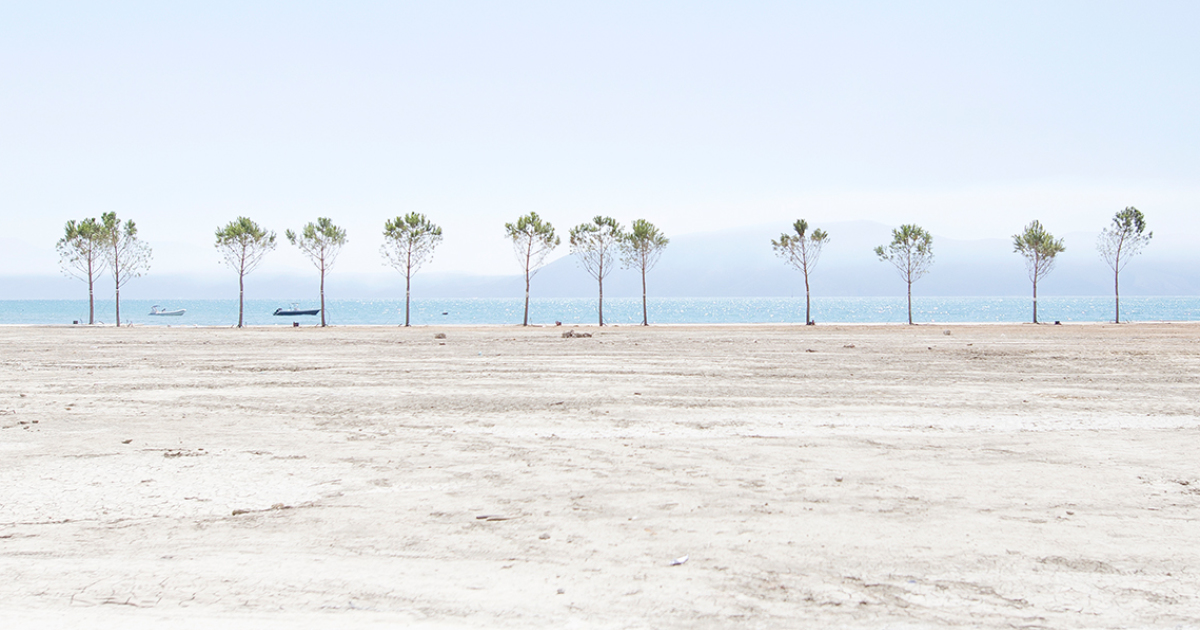
Landscape art has always looked innocent at first. A mountain, a river, a lonely road, a sky doing dramatic sky thingswhat could be controversial? But the moment an artist chooses where to stand, what to include, what to crop out, what color to exaggerate, and what memory to smuggle into the frame, the landscape stops being “just scenery.” It becomes personal. It becomes emotional. It becomes a subjective landscape.
A subjective landscape is not simply a picture of a place. It is a picture of how a place feels, how it is remembered, how it is feared, loved, misunderstood, or transformed by the person looking at it. In painting, photography, film, installation, and digital art, subjective landscapes reveal that the outside world is never truly outside. We carry it around in our heads like a weather system with opinions.
This is why two people can stand in the same desert and make completely different images. One sees silence. One sees danger. One sees spiritual openness. One sees a suspicious lack of coffee shops. The landscape is the same, but the inner response is not. Subjective landscape art lives in that gap between geography and emotion.
What Are Subjective Landscapes?
Subjective landscapes are artistic interpretations of place shaped by personal perception, memory, emotion, imagination, and cultural context. Unlike objective landscape images, which attempt to record a scene as accurately as possible, subjective landscapes use the visible world as raw material for inner experience.
That does not mean subjective landscapes are fake. In fact, they often feel more truthful than straightforward documentation because they admit what every viewer already knows: seeing is never neutral. Light changes. Memory edits. Mood applies a filter before Photoshop even gets invited to the party.
In traditional landscape painting, artists often used scale, atmosphere, color, and composition to create a sense of awe, peace, fear, or national identity. In photography, the camera may appear mechanical, but the photographer’s decisions still guide the emotional temperature of the image. A low angle can make a hill feel heroic. A long exposure can make water look like a ghost with excellent skincare. A tight crop can turn an ordinary field into an abstract meditation on color and form.
The Landscape Is Never Just Land
Landscape has always carried meaning beyond its physical features. In American art history, for example, nineteenth-century landscape painting often reflected ideas about expansion, identity, nature, and power. The land became a stage where cultural hopes and national myths performed in dramatic lighting.
But subjective landscapes move the conversation inward. Instead of asking only, “What does this place look like?” they ask, “What does this place do to us?” A forest might become a symbol of childhood. A river may suggest time passing. A suburb may feel like comfort to one artist and emotional gridlock to another. The same parking lot can be ordinary, lonely, funny, or strangely beautiful depending on who is holding the camera and how much sleep they got.
Memory as a Landscape Tool
Memory is one of the strongest engines behind subjective landscape art. Artists often return to places not because the location is visually spectacular, but because it has emotional gravity. A childhood road, a family farm, a coastal town after a storm, or a city block seen at night can become more than a setting. It becomes a container for lived experience.
This is why some landscape images look quiet but feel loaded. The viewer may not know the artist’s full story, yet the work suggests that something has happened thereor that something is still happening inside the person who made it. In this sense, subjective landscapes are less like postcards and more like diary entries with better composition.
Perception Changes the Place
Perception is not a camera quietly recording reality. It is an active process. We notice some details and ignore others. We respond to color, contrast, scale, weather, texture, and space. Artists use these perceptual habits to make landscapes feel intimate, strange, spiritual, unstable, or dreamlike.
Photography exhibitions exploring light, perception, and cognition have shown how deeply the medium is tied to the science and psychology of seeing. Even when a photograph begins as a record of the world, it can become subjective through timing, framing, printing, sequencing, scale, or digital manipulation. A photograph may start with a tree and end with a feeling.
Subjective Landscapes in Painting
Painting has always been friendly territory for subjective landscapes because paint does not pretend to be neutral. Brushwork, color, surface, and distortion announce the artist’s presence. A painted mountain can be blue because it was blue in the distance, or because the artist felt blue, or because the tube of blue paint was sitting there looking persuasive.
In many traditions, landscape painting is not only about describing nature but about revealing an inner world. In Chinese landscape painting, for instance, mountains and rivers often serve as philosophical and emotional spaces rather than simple topographical records. The scene becomes a way to express the mind, spirit, and relationship between human beings and the larger universe.
Modern and contemporary artists pushed this even further. They broke landscapes into shapes, gestures, textures, and emotional fields. In abstract landscape painting, the viewer may recognize a horizon, a weather pattern, or a sense of depth without seeing a clearly identifiable place. The result can feel more like remembering a landscape than standing in one.
Subjective Landscapes in Photography
Photography complicates the idea of subjectivity because cameras are often associated with evidence. We tend to believe photographs because they look like proof. But anyone who has ever taken twelve photos of the same sunset and kept only the one where the sky looks emotionally employable knows better.
A photographer controls viewpoint, timing, lens choice, exposure, focus, editing, and presentation. These decisions shape meaning. In the history of art photography, Pictorialism emphasized the photographer’s hand and imagination, arguing that photographs could be expressive artworks rather than mechanical copies. Later movements explored sharp realism, abstraction, conceptual approaches, and staged imagery, all expanding what a landscape photograph could be.
Some contemporary photographers use landscapes to explore identity, ecology, memory, family history, or political tension. Others make quiet, poetic images where the land seems to mirror private emotion. A field can suggest grief. A highway can suggest escape. A coastline can become a border between what is known and what is felt.
Objective vs. Subjective Landscape Photography
Objective landscape photography aims to show what a place looks like with clarity and accuracy. It often values detail, natural light, recognizable geography, and technical precision. Subjective landscape photography, by contrast, is more concerned with interpretation. It may use blur, unusual color, abstraction, selective focus, long exposure, collage, or digital alteration to express a personal response.
Neither approach is automatically better. Objective work can be powerful, especially in science, conservation, journalism, and historical documentation. But subjective landscape photography reminds us that emotional truth also matters. A blurry photograph of a street at dusk may communicate loneliness more effectively than a perfectly sharp image of every brick in the wall.
The Role of Abstraction
Abstraction is one of the most useful tools in subjective landscape art. By removing literal details, artists can intensify mood. A photograph of sand, shadow, and a single line may feel more expansive than a wide scenic view. A painting with only a dark band and a glowing upper field may evoke a storm, a memory, or the uneasy feeling of checking your email on vacation.
Abstraction allows the viewer to participate. When a landscape is not fully explained, we bring our own experiences to it. The artwork becomes a meeting place between the artist’s perception and the viewer’s imagination. That is where subjective landscapes become especially interesting: they do not deliver meaning like a package; they invite meaning like a conversation.
Place, Identity, and Belonging
Subjective landscapes often ask questions about belonging. What makes a place feel like home? What makes it feel foreign? Can a city remember us? Can a rural road hold family history? Can a landscape be beautiful and painful at the same time?
Artists who work with personal or cultural memory often use landscape to explore identity. The American South, the desert West, immigrant neighborhoods, industrial ruins, coastlines, and suburban developments can all become emotional maps. These places are not neutral backgrounds. They are shaped by labor, migration, conflict, nostalgia, environmental change, and personal history.
In this way, subjective landscapes can be deeply political without shouting. A photograph of an empty lot may point to displacement. A painting of a damaged forest may speak about climate anxiety. A video of a quiet road may suggest surveillance, absence, or waiting. The landscape speaks softly, but it is not always saying something gentle.
Why Subjective Landscapes Matter Today
In an age of satellite maps, phone cameras, drone footage, and endless travel content, we have more images of the world than ever. We can look up almost any place in seconds. Yet subjective landscapes remain important because they offer something technology alone cannot: a felt interpretation of place.
A map can tell us where a mountain is. A subjective landscape can suggest what it feels like to stand before it after a loss, during a new beginning, or while realizing your hiking boots were a terrible purchase. The emotional layer matters because humans do not experience places as coordinates. We experience them as atmosphere, memory, fear, desire, fatigue, wonder, and sometimes snack-related regret.
Subjective landscapes also help us slow down. Instead of consuming scenery as visual decoration, we begin to ask deeper questions. What am I seeing? Why does this place affect me? What history is hidden here? What is the artist asking me to feel, remember, or reconsider?
How Artists Create Subjective Landscapes
Artists create subjective landscapes through choices that transform place into expression. These choices may be subtle or dramatic, but they all shape how the viewer experiences the work.
1. Color and Light
Color can shift a landscape from realistic to psychological. Warm tones may create nostalgia or comfort. Cool tones can suggest distance, silence, or melancholy. Harsh contrast may introduce tension. Soft light may make a scene feel dreamlike, as if the world has had a long day and needs a blanket.
2. Framing and Cropping
What the artist leaves out can be as important as what remains. A cropped view of a tree trunk may become abstract. A road photographed without its destination may suggest uncertainty. A horizon placed unusually high or low can make the viewer feel grounded, overwhelmed, or off balance.
3. Scale
Large-scale works can make viewers feel physically immersed in a landscape. Small works can feel intimate, like private memories. Scale changes not only how we see the image but how we stand in relation to it.
4. Texture and Surface
In painting, texture can make the land feel rough, wounded, lush, or unstable. In photography, grain, printing methods, paper choice, and digital noise can add emotional depth. Surface becomes part of the subject.
5. Sequencing
In photo books, exhibitions, and digital essays, the order of images can create a journey. A sequence may move from clarity to abstraction, from daylight to darkness, from distance to intimacy. The landscape becomes narrative, not just scenery.
Examples of Subjective Landscape Thinking
Consider a photograph of a fog-covered lake. As a document, it shows water, mist, and perhaps a line of trees. As a subjective landscape, it might suggest uncertainty, grief, peace, or transition. The fog becomes more than weather; it becomes emotional architecture.
Now imagine a painting of an urban skyline where buildings lean slightly, colors vibrate, and the sky presses downward. The city may be recognizable, but the distortion tells us that the artist is not simply reporting architecture. The artist is showing pressure, memory, speed, anxiety, or awe.
Or picture a series of desert images made over several years. The same location appears under different light, seasons, and emotional conditions. Over time, the desert becomes less a place than a relationship. The artist is not photographing “the desert” in general. The artist is photographing a conversation with distance, silence, and change.
How to Read a Subjective Landscape
To understand a subjective landscape, start by noticing your first reaction. Do you feel calm, uneasy, curious, nostalgic, small, free, or slightly confused in an art-gallery way? That first response is useful. Then look at how the artist created it.
Ask what kind of space the work presents. Is it open or closed? Clear or blurred? Natural or constructed? Familiar or strange? Does the image invite you in or keep you at a distance? Does it feel like a real location, a memory, a dream, or a place that exists only when you are half-awake and trying to remember where you put your keys?
Next, consider context. Who made the work? When? Where? What personal, cultural, or historical references may be present? Subjective landscapes become richer when we understand that place is never empty. Every landscape carries traces of human attention, even when no people appear in the image.
Subjective Landscapes and Digital Culture
Digital tools have expanded the possibilities of subjective landscape art. Artists can layer images, alter color, combine real and imagined locations, build virtual environments, or use artificial lighting and 3D modeling to create spaces that feel emotionally true even when they are physically impossible.
This does not make digital landscapes less meaningful. On the contrary, digital culture reflects how many people now experience place: through screens, maps, archives, games, social media, surveillance images, and memories stored in camera rolls. The contemporary subjective landscape may be a photograph, a video, a digital collage, a virtual world, or a hybrid form that refuses to sit politely in one category.
The key question remains the same: what does this place mean when filtered through human perception?
Experiences Related to Subjective Landscapes
One of the most memorable experiences related to subjective landscapes happens when a familiar place suddenly looks unfamiliar. You may walk the same street every day, passing the same houses, fences, trees, and parked cars. Most days, the scene barely registers. It becomes background. Then one evening, the light changes. Rain has just stopped. The pavement reflects the sky. A window glows. A tree leans into the frame like it has finally decided to participate. Suddenly, the street is not ordinary at all. It feels cinematic, private, almost symbolic.
That moment is the heart of subjective landscape experience. Nothing dramatic has happened to the location. The transformation occurs in perception. The place becomes charged because mood, memory, light, and attention arrive at the same time. The landscape did not change its address; it changed its meaning.
Many artists describe similar experiences. A field from childhood may seem larger in memory than it is in reality. A beach visited after many years may feel smaller, brighter, or sadder than expected. A city skyline may represent ambition at one age and exhaustion at another. Subjective landscapes grow from these shifts. They remind us that places are not fixed objects. They age with us. They absorb our stories. They sometimes have the nerve to remain unchanged while we become completely different people.
Creating a subjective landscape can begin with a simple exercise: return to a place you know well and photograph or sketch it according to feeling rather than accuracy. If the place feels lonely, use distance, shadow, or empty space. If it feels energetic, look for movement, sharp angles, reflections, or saturated color. If it feels like a memory, consider blur, soft focus, muted tones, or fragments instead of a full view. The goal is not to lie about the place. The goal is to tell the emotional truth of encountering it.
Another powerful experience is viewing someone else’s subjective landscape and realizing that their interpretation changes your own. A photographer may show you beauty in industrial ruins. A painter may make a highway feel spiritual. A video artist may turn a quiet forest into a place of suspense. Afterward, you may see similar places differently. Art trains attention. It gives perception new habits.
Subjective landscapes are especially meaningful in a time when many environments are changing quickly. Climate change, urban development, migration, tourism, and digital mapping all affect how people relate to place. A subjective landscape can preserve not only what a location looked like, but what it felt like to live near it, lose it, fear for it, or remember it. That emotional record matters. Facts tell us what happened. Art helps us understand what it was like to be there.
In personal creative practice, subjective landscapes also offer freedom. You do not need a famous mountain, a rare location, or a golden-hour miracle that makes photographers whisper respectfully. A backyard, an alley, a bus stop, a window view, or a patch of winter grass can become meaningful if approached with attention. The subject is not only the land. The subject is the relationship between the land and the person perceiving it.
Conclusion
Subjective landscapes remind us that every view is also a viewpoint. Whether made with paint, camera, video, collage, or digital tools, these works transform place into feeling. They show that landscapes are never merely backgrounds. They are emotional, cultural, historical, and psychological spaces where memory and perception meet.
In the end, subjective landscape art does not ask us to choose between reality and imagination. It shows us that we experience both at once. The world is out there, yesbut the version we carry home is edited by mood, memory, desire, and meaning. A mountain may be a mountain. But in art, and in life, it may also be longing, fear, freedom, childhood, silence, or the exact moment we finally looked closely enough to see what had been there all along.













