
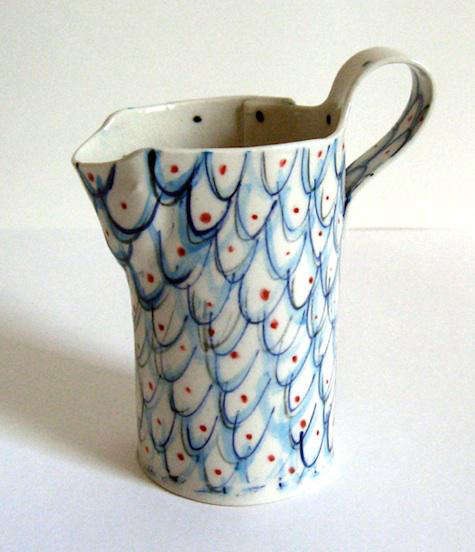
Some tableware politely holds your soup. Alice Garland Ceramics does that, too, but with the quiet confidence of a dinner guest who arrives wearing a hand-painted jacket, brings flowers from the garden, and somehow makes everyone at the table sit up a little straighter. Garland’s porcelain pieces are delicate, functional, playful, and unmistakably human. They are not the sort of objects that disappear under a pile of mashed potatoes. They participate.
In a world where many dinner plates look as though they were designed by a committee during a very serious meeting about beige, Alice Garland Ceramics offers something warmer: handmade porcelain tableware with visible folds, painted pattern, and the kind of irregular charm that reminds you a personnot a robot with a clipboardmade it. Her cups, saucers, jugs, bowls, dishes, and plates belong to the modern tabletop conversation, but they also carry the spirit of old craft traditions: thin material, careful hands, botanical energy, and an eye for pattern that feels both disciplined and delighted.
This article explores Alice Garland’s background, her paper porcelain technique, the appeal of hand-painted ceramics, and why her work fits so beautifully into today’s appetite for expressive, artist-made tableware. We will also look at how to style, collect, use, and care for pieces like these without turning dinner into a museum tour where nobody is allowed to breathe near the plates.
Who Is Alice Garland?
Alice Garland is a Suffolk-based ceramicist known for fine porcelain tableware that is hand built from thin sheets of paper porcelain and decorated with hand-painted pattern. She has been making ceramic work since leaving Camberwell College of Art in London in 2000, and her practice sits at the meeting point of art, design, gardening, and everyday domestic ritual.
That gardening detail matters. Garland has described herself as both a potter and a gardener, and her work often seems to carry that dual rhythm: studio quiet on one side, outdoor movement on the other. The forms are refined, but the patterns have life. They suggest stems, scales, berries, chains, latticework, flowers, dots, loops, and small visual surprises. The result is tableware that feels composed without feeling stiff. Think less “formal banquet with three forks you are afraid to touch” and more “thoughtful table where the jug has better style than most celebrities at brunch.”
Garland has supplied work to galleries and completed significant orders for design retailers, including The Conran Shops in London, Paris, and Japan, as well as Anthropologie New York. Her pieces have also appeared in design publications and ceramics events, including the long-running interest of interiors-focused outlets in distinctive handmade tabletop design.
The Signature Look: Thin Porcelain, Visible Folds, Painted Pattern
The most recognizable feature of Alice Garland Ceramics is the way her porcelain forms appear folded, assembled, and gently animated. Many ceramic pieces are thrown on a wheel, which creates circular symmetry and a particular kind of rhythm. Garland’s work is hand built from sheets of paper porcelain, a method that gives her objects a different visual language. You can often sense the sheet, the edge, the fold, and the pressure of the maker’s hand.
Paper porcelain is porcelain combined with paper fiber or pulp. In ceramic practice, paper clay can improve joining strength, reduce some drying problems, and allow artists to work with delicate or unconventional forms. For a maker like Garland, the material supports thinness, lightness, and construction from sheet-like elements. The paper burns away during firing, leaving the ceramic body behind, but the sense of paper remains in the form. It is a little like a porcelain ghost story, except instead of haunting an attic, it makes tea look excellent.
Her decoration is just as important as her structure. Garland hand-paints patterns on cups, saucers, jugs, bowls, dishes, and plates. Some motifs feel graphic, while others lean floral or botanical. Current and past examples associated with her work include scale patterns, lattice designs, berry motifs, chain-like decoration, arrows, loop-edged dishes, gold details, circus-like cups, and brightly colored jugs. These are not generic decorations pasted onto anonymous shapes. The pattern and form talk to each other.
Why Handmade Porcelain Tableware Still Matters
Porcelain has a long global history, prized for whiteness, translucency, strength, and elegance. Historically, porcelain’s refinement depended on high firing temperatures and materials such as kaolin. For centuries, it was treated as a technical wonder and a luxury object. Today, porcelain is everywherefrom mass-produced dinner sets to collectible studio piecesbut handmade porcelain still has a special pull because it preserves the tension between fragility and usefulness.
Alice Garland Ceramics belongs to that tradition of functional beauty. These are not merely decorative sculptures pretending to be cups. They are tableware: objects meant to be touched, held, washed, displayed, filled, and used. That functional purpose makes them more intimate than many art objects. A painting stays on the wall and behaves itself. A cup meets your lips before coffee has restored your personality.
In American interiors and tabletop culture, handmade ceramics have become increasingly desirable because they add texture, individuality, and a collected feeling. Design editors often recommend mixing handmade or handmade-look pieces with simpler dinnerware, wood, linen, glass, or metal. The reason is easy to understand: hand-built ceramics interrupt perfection in the best way. A slightly irregular rim, a brush mark, or a visible fold gives the table a pulse.
From Gallery Shelf to Breakfast Table
One of the pleasures of Alice Garland Ceramics is that her pieces occupy a sweet spot between art object and daily companion. A jug can hold cream, flowers, or simply sit on a shelf looking superior to the mail pile. A cup and saucer can make afternoon tea feel like a small ceremony. A bowl can serve fruit, nuts, olives, soup, or that “emergency” handful of chocolate almonds nobody needs to know about.
Handmade tableware changes the mood of a meal because it changes the way people pay attention. A factory-perfect plate says, “Dinner is served.” A hand-painted porcelain plate says, “Dinner is served, and someone made this object carefully enough that maybe we should put our phones face down for ten minutes.” That is no small achievement in the age of endless notifications.
Jugs and Pitchers
Garland’s jugs are among her most charming forms. The handle, spout, body, and painted surface create a compact sculpture with a job to do. A small jug can serve milk or dressing; a larger one can become a vase. The best styling approach is to let the object breathe. Place it beside simple glassware, a linen napkin, or plain white plates, and allow the hand-painted pattern to lead the conversation.
Cups and Saucers
A handmade cup and saucer is wonderfully old-fashioned in the least boring way. Garland’s fine porcelain and painted motifs make the pairing feel light, graphic, and personal. Use one for tea, espresso, or a small dessert. A mismatched set can also look more interesting than a perfectly matched one. Uniformity is useful for hotel buffets; personality is better for home.
Bowls, Plates, and Dishes
Bowls and plates offer a larger canvas for Garland’s pattern work. Large bowls can anchor a table, while smaller dishes can hold snacks, jewelry, soap, salt, or keys. The decorative loop edges and gold details seen in some pieces add a festive quality without shouting. They work well in layered tablescapes where color, texture, and shape are built gradually.
How to Style Alice Garland Ceramics on the Table
The easiest mistake with expressive ceramics is to surround them with too many other expressive things. When everything is special, nothing gets a solo. Alice Garland Ceramics looks best when the surrounding table is simple enough to let the painted porcelain sing.
Start with a neutral base: a plain linen tablecloth, a wooden table, woven placemats, or simple cotton napkins. Add Garland pieces as accents rather than forcing every object to match. A hand-painted jug near plain plates can become the centerpiece. A pair of patterned cups can brighten an afternoon tray. A small dish with a gold or lattice motif can sit beside a stack of matte white dinner plates and suddenly the table has a wink.
For color, choose one or two tones from the ceramic pattern and repeat them lightly. If a jug includes yellow and green, add a few lemons, green herbs, or pale flowers. If a dish has orange and gold, use warm-toned napkins or brass flatware. The goal is not to create a theme so strict it needs a project manager. The goal is harmony.
Why Imperfection Makes the Table Better
Handmade ceramics often carry small variations: a slightly uneven edge, a brushstroke that thickens, a fold line, a tiny difference between two cups. These differences are not flaws in the ordinary sense. They are the evidence of making. In a culture trained to equate perfection with value, handmade tableware teaches a more generous way of looking.
Alice Garland’s work is especially persuasive because the irregularity feels intentional and elegant. The forms are delicate, but not weak. The painted patterns are playful, but not careless. There is a balance between control and looseness, between design and touch. That balance is exactly what many modern interiors need. Too much perfection can make a home feel like a showroom where the sofa is emotionally unavailable. Handmade ceramics bring it back to life.
Collecting Alice Garland Ceramics
Because Garland often works in limited numbers, one-offs, small runs, and commissions, collecting her ceramics is less like buying a mass-market dinner set and more like building a personal conversation over time. You might begin with a cup, then add a jug, then discover a plate that makes your existing dishes look suddenly underdressed.
The smartest way to collect artist-made tableware is to begin with pieces you will actually use. A beautiful object hidden in a cabinet has a tragic little life. Choose a form that fits your habits: a morning mug, a small milk jug, a fruit bowl, a serving dish, or a plate that can handle cake with dignity. Once one piece joins your daily routine, you will quickly understand whether you want more.
Collectors should also pay attention to scale. A tiny dish can be just as useful as a large bowl if it solves a daily problem beautifully. A small porcelain dish can hold rings beside the sink, salt beside the stove, or lemon wedges on the table. A large plate may be a showpiece, but a small cup may become the object you reach for every day.
Caring for Handmade Porcelain
Every ceramic artist may have specific care instructions, so the safest rule is simple: check the maker’s guidance when available. In general, fine handmade porcelain deserves gentler treatment than industrial restaurant ware. That does not mean you must carry it around on a velvet pillow while whispering apologies. It means you should avoid sudden temperature shock, aggressive stacking, and dishwasher chaos if the piece has delicate decoration or metallic details.
Wash special pieces by hand with mild soap and a soft sponge. Dry them carefully. Store plates and saucers with a small pad or cloth between them if surfaces are textured or decorated. If a piece has gold detail, avoid microwaving it unless the maker explicitly says it is safe. Gold in the microwave is not “sparkle energy.” It is a tiny domestic thunderstorm waiting to happen.
Good care is not about fear. It is about respect. Handmade ceramics are built for life, but not for careless life. Treat them well, and they become part of the rhythm of your home.
Alice Garland Ceramics in the Larger Tabletop Trend
The renewed interest in handmade dinnerware is not just a design fad. It reflects a broader desire for objects with story, texture, and evidence of human skill. American design publications frequently celebrate handmade place settings, ceramic dinnerware, collected tables, and expressive table styling because these objects make entertaining feel more personal. Meanwhile, craft organizations and museums continue to highlight ceramics as both art and functional design.
Garland’s work fits this movement beautifully because it does not choose between usefulness and artistry. It offers both. The pieces can be displayed, but they do not demand a glass case. They can be used, but they do not fade into the background. They feel modern because they are personal, and they feel timeless because they are rooted in craft.
That combination is powerful. In a home full of devices, screens, cords, chargers, and mysterious remotes nobody can identify, a handmade porcelain cup is refreshingly direct. It has no software update. It will never ask you to accept cookies. It simply holds tea and looks lovely doing it.
Specific Examples of How to Use the Pieces
For a spring brunch, place a hand-painted Alice Garland jug in the center of the table with a few loose garden flowers. Surround it with plain plates, soft napkins, and mismatched vintage glasses. The jug becomes the visual anchor without making the table feel overdesigned.
For afternoon tea, pair a Garland cup and saucer with a small plate of shortbread, fruit, or lemon cake. Because the porcelain is fine and patterned, the simplest foods look more intentional. Suddenly, two cookies become “a composed tea service.” This is useful information for anyone who has ever needed dessert to look more planned than it was.
For a dinner party, use a large bowl or plate as a serving piece rather than trying to build an entire matching set. Handmade ceramics are often strongest as accents. A single distinctive serving bowl on a table of simple dinnerware can look collected, confident, and elegant. It also avoids the pressure of matching twelve settings, which is how people accidentally turn hosting into logistics training.
For everyday use, keep one piece in rotation. A small dish by the sink, a cup on the desk, or a bowl on the breakfast table makes the work part of daily life. The more you use a handmade object, the more meaningful it becomes.
Experience Section: Living With the Spirit of Alice Garland Ceramics
The experience of using tableware like Alice Garland Ceramics begins before food even arrives. It starts when you open the cupboard and choose the piece. A mass-produced mug is often selected by size: big enough for coffee, clean enough to use, not currently hiding in the dishwasher. A handmade porcelain cup asks a different question: What kind of morning is this going to be?
On a slow morning, a patterned cup and saucer can turn tea into a pause. The thin porcelain feels lighter in the hand, and the painted surface gives the eye somewhere pleasant to land. You notice the rim. You notice the handle. You notice that the cup is not identical to every other cup on earth, and somehow that tiny fact improves the beverage. The tea does not become objectively better, of course, but the ritual around it does. And sometimes ritual is half the flavor.
At lunch, a small hand-painted dish can make even ordinary food feel considered. Place a few olives, almonds, berries, or crackers in a porcelain dish with a bright pattern, and the table immediately looks less accidental. It is the difference between “I found snacks” and “I have curated a light refreshment.” Nobody needs to know the almonds came from a bag large enough to require structural engineering.
At dinner, handmade ceramics encourage a looser and more welcoming table. Instead of matching every plate and bowl, you can mix forms and colors. A Garland jug with flowers can sit beside plain plates. A patterned bowl can hold greens or roasted vegetables. A small dish can carry salt, butter, or sauce. The table gains layers: porcelain, linen, wood, glass, food, conversation. It looks collected rather than purchased in one panicked afternoon.
The best experience, however, may come from the way guests respond. People tend to notice handmade ceramics. They ask where a piece came from. They pick it up carefully. They turn it slightly to see the pattern. This creates conversation without requiring the host to perform a speech. A good handmade object does social work quietly. It gives people something to admire, something to ask about, and something to remember.
There is also pleasure in the maintenance. Washing a handmade porcelain cup by hand can feel less like a chore and more like closing the loop on a meal. You used the object, enjoyed it, cleaned it, and returned it to the shelf. In a disposable culture, that small cycle feels grounding. The object remains. It waits for the next cup of tea, the next bunch of flowers, the next dinner where the salad is fine but the bowl is outstanding.
Living with pieces inspired by Alice Garland Ceramics is ultimately about paying attention. Not in a precious, nervous way, but in a generous one. The table becomes more than a surface. It becomes a place where materials, hands, food, and people meet. That is the secret power of handmade tabletop ceramics: they make daily life feel a little less automatic and a little more alive.
Conclusion: A Tabletop With a Human Signature
Alice Garland Ceramics stands out because it brings together fine porcelain, hand-built construction, visible folds, and hand-painted pattern in a way that feels both artistic and usable. These are pieces with personality, but they are not merely decorative. They belong on tables, shelves, trays, breakfast corners, tea moments, and dinner parties where the host understands that beauty can be useful and usefulness can be beautiful.
For anyone interested in handmade porcelain tableware, ceramic tabletop decor, artisan dinnerware, or collected home design, Garland’s work offers a compelling lesson: the most memorable objects are often the ones that reveal the hand behind them. A folded edge, a painted line, a small irregularity, a bright patternthese details are not distractions. They are the point.
In the end, Alice Garland Ceramics reminds us that the table is not just a place to put food. It is a stage for small rituals, shared meals, color, conversation, and the occasional heroic jug. And frankly, every table could use one.
Note: This article is prepared as publishable HTML body content in standard American English, based on verified public information about Alice Garland Ceramics and broader research on handmade porcelain, tabletop styling, and contemporary ceramics.













