
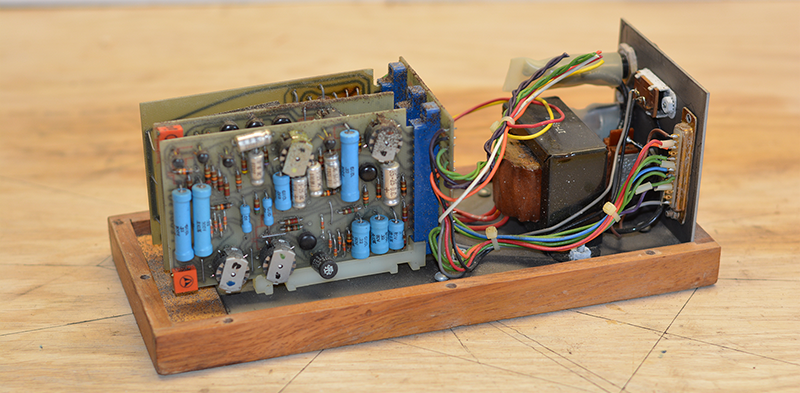
Before Wi-Fi routers blinked in living rooms like tiny confused robots, before fiber internet made everyone impatient with anything slower than “instant,” there was the modem: a box that turned computer data into sounds, pushed those sounds through a telephone line, and hoped nobody in the house picked up the phone to ask, “Are you still on that thing?” A teardown of a 50 year old modem is not just a look inside antique computer hardware. It is a tour through the moment when computers learned to talk over ordinary phone lines.
The star of this story is the vintage acoustic coupler modem, the kind of machine that looks less like networking equipment and more like a small wooden appliance designed by a radio engineer who also enjoyed cabinetmaking. Some early units, including models associated with Livermore Data Systems, used a telephone handset placed into rubber cups. The modem listened to tones from the earpiece, sent tones into the mouthpiece, and translated those squeals into data. Charming? Absolutely. Fast? Only if your idea of speed is watching a sentence arrive one character at a time like it is walking through syrup.
Yet this old modem matters because it shows how early data communication worked before integrated circuits made everything smaller, cheaper, and more mysterious. Pop the case open, and instead of a single black chip doing all the magic, you find discrete transistors, transformers, capacitors, hand-routed boards, mechanical joinery, and a design philosophy that says, “Yes, we can connect a computer to a phone line, but first we must build a polite wooden box for it.”
What Is a 50 Year Old Modem, Really?
A modem is short for modulator-demodulator. Its job is simple to describe and surprisingly clever to execute. Computers speak in digital signals: ones and zeros. Traditional telephone networks were designed for analog voice. A modem bridges that awkward dinner conversation by converting digital data into audio tones and then converting incoming tones back into digital data.
Early acoustic coupler modems avoided direct electrical connection to the telephone network. Instead, they used the telephone handset itself as the interface. The user dialed a remote computer or time-sharing system manually, waited for a tone, then placed the handset into two rubber cups. One cup held a microphone. The other held a speaker. If the connection worked, a carrier light came on, and the user could start typing. It was part computing, part telecommunications, and part ritual sacrifice to the gods of background noise.
Many Bell 103-compatible systems operated around 300 bits per second. That sounds prehistoric now, but it was useful for text terminals. A teletype or early video terminal did not need to stream cat videos, open twenty browser tabs, or update a 4 GB game while you made coffee. It needed to send commands and receive text. At 300 bps, every character had weight. You did not waste words. Even “hello” felt like a bandwidth decision.
The Historical Context: Why Acoustic Couplers Existed
To understand the teardown, you need to understand the telephone rules of the era. For much of early telecommunications history in the United States, the phone network was tightly controlled. Customers generally could not connect random third-party equipment directly to the line. From the phone company’s point of view, this protected the network. From an innovator’s point of view, it was like being told you could own a car but not attach a trailer, roof rack, or fuzzy dice.
Acoustic coupling was a workaround. Since the device was not electrically attached to the phone line, it could communicate through the handset just like a human voice did. The modem made noises. The telephone carried noises. The remote modem interpreted noises. In other words, early data networking was built on carefully organized beeping.
The 1968 Carterfone decision helped open the door for customer-owned equipment to connect to the telephone network as long as it did not harm the system. That shift was important for modems, answering machines, fax machines, and eventually the explosion of consumer telecommunications devices. But before direct-connect modems became common, the acoustic coupler was an elegant and practical bridge between regulation, hardware, and curiosity.
The Outside: A Wooden Box With Serious Intentions
Modern networking gear is usually plastic, anonymous, and styled somewhere between “spaceship pebble” and “insurance office ceiling tile.” A 50 year old acoustic modem can be far more interesting. Some Livermore Data Systems units were built into wooden cases, with careful joinery and a practical layout. The construction was not decorative fluff. It protected the electronics, supported the acoustic coupler, and gave the device enough mass to hold a telephone handset in the right place.
The telephone side typically featured a cradle or acoustic coupler with rubber cups. These cups helped seal the handset against room noise and aligned the speaker and microphone. The data side often used an RS-232-style connection, commonly associated with a DB-25 connector. That serial interface linked the modem to a terminal or computer. In a teardown, the contrast is wonderful: one side belongs to the world of rotary phones and handsets; the other side belongs to computers, serial ports, and blinking status lights.
The case itself tells a manufacturing story. Early production may use more labor-intensive woodworking techniques, while later examples show simpler joints better suited to repeated production. That evolution is visible evidence of a product moving from clever invention toward practical manufacturing. Even the box is giving a lecture on business history, and it did not even need PowerPoint.
Opening the Case: Not a Chip Wonderland
Inside a 50 year old modem, you should not expect the tidy minimalism of modern electronics. A current USB modem or network adapter may hide most of its intelligence inside a few chips. A late-1960s or early-1970s acoustic modem spreads its thinking across boards, components, transformers, and wiring. It is less “system on a chip” and more “system on a small neighborhood.”
A typical teardown of this kind of vintage modem reveals separate functional areas. One board may handle power supply duties. Another may serve as the modulator, turning outgoing data into audio tones. A third may act as the demodulator, listening to incoming tones and translating them back into serial data. This modular arrangement makes the device surprisingly readable. You can follow the signal path in a way that is harder to do with modern black-box electronics.
In documented examples, the circuitry includes discrete transistors rather than a dedicated modem chip. That is the big educational prize. Before specialized integrated circuits became cheap and common, designers built tone generation, filtering, amplification, and detection from individual components. Every resistor, capacitor, transistor, and transformer had a job. Nothing is there for decoration, except perhaps the wood, which is there to look classy while the modem screams at a telephone.
The Modulator: Teaching Data to Sing
The modulator is the part of the modem that takes digital data from a terminal or computer and turns it into tones. In Bell 103-style communication, data is represented using frequency-shift keying, or FSK. Instead of sending voltage pulses directly through the telephone network, the modem sends one audio frequency for one binary state and another audio frequency for the other.
Think of it as a tiny electronic flute with opinions about binary. The computer says “one,” the modem plays one tone. The computer says “zero,” the modem plays another. The remote modem listens and reverses the process. This is why dial-up modem sounds were not random digital screaming. They were structured signals, negotiations, carriers, and encoded data. To human ears, they sounded like a robot falling down stairs. To another modem, they were language.
In a vintage modem teardown, the modulator section often includes oscillator circuitry, switching components, and small transformers. These parts shape the outgoing tone so it can travel through the acoustic path, into the phone handset, through the telephone network, and into the receiving modem. At 300 bps, the design could be relatively simple compared with later high-speed modems, but it still required careful analog engineering.
The Demodulator: Listening Through the Hiss
The demodulator does the opposite job. It listens to incoming audio and decides which tones represent which data bits. This is harder than it sounds because telephone lines are noisy, inconsistent, and sometimes full of surprises. Long-distance connections could add hiss, distortion, volume changes, and other problems. Acoustic coupling added another layer of weirdness because the signal had to pass through speaker, air gap, rubber cup, microphone, and handset plastic.
That is why acoustic coupler design mattered. A good coupler physically isolated the handset from room noise and kept the acoustic path aligned. A door slam, loud conversation, or badly seated handset could ruin the connection. The modem was not fragile in the sense of being delicate; it was fragile in the sense that it was trying to hold a serious business meeting through two rubber cups.
The demodulator board in a 50 year old modem is a lesson in practical analog signal processing. It must amplify the incoming signal, filter it, detect tone changes, and produce usable digital output. Modern engineers often do similar work in software or dedicated chips. Here, the task is visible in hardware. The board becomes a map of decisions: how much gain, what frequency range, what thresholds, what trade-offs.
Power Supply: The Quiet Muscle
Vintage electronics often devote a surprising amount of space to power. That is because stable power matters, especially in analog circuits where noise can masquerade as signal. In a 50 year old modem, the power supply section may be physically separate from the modulator and demodulator. It may include rectifiers, capacitors, regulators or regulation-like circuitry, and connections to a transformer.
For restorers, the power supply is also where caution begins. Old capacitors can dry out, drift, leak, or fail. Carbon composition resistors can drift in value. Connectors oxidize. Insulation ages. A vintage modem may look friendly, but plugging it in without inspection is like waking a sleeping dragon with a fork. It might work. It might smoke. It might teach you new vocabulary.
A responsible teardown does not simply apply power and hope. It documents the device, photographs the boards, checks components, inspects wiring, and considers replacing aged capacitors before serious testing. The goal is preservation, not fireworks.
Why 300 Baud Was Enough
For modern readers, 300 bps sounds unusable. It is slower than a rounding error compared with broadband. But speed must be judged by the job. Early users were often connecting terminals to time-sharing computers, sending commands, reading text, or transferring small files. A 300 baud modem could support interactive text well enough that it changed what remote computing felt like.
At that speed, a 1 MB file would take many hours to transfer under ideal conditions. But nobody was casually downloading 1 MB memes in 1970. Storage was expensive, screens were simple, and computing sessions were purposeful. The connection was not about entertainment overload. It was about access: access to a remote machine, a database, a university computer, a business system, or later a bulletin board service.
This is what makes the old modem fascinating. Its raw speed is laughable, but its impact is not. It helped establish the idea that computers did not need to be isolated islands. They could communicate across ordinary infrastructure. That concept leads directly to dial-up networking, bulletin boards, online services, and eventually the internet habits we now take for granted.
Repair or Preserve?
One of the hardest questions in any vintage modem teardown is whether to restore the device or preserve it as found. Restoration is tempting. Who would not want to hear a 50 year old modem connect again? The sound alone would make any retrocomputing fan grin like they found treasure in a closet.
But restoration can be invasive. Missing parts, such as the acoustic coupler assembly, may be difficult to replace authentically. A 3D-printed coupler might work, but it changes the artifact. Replacing capacitors can improve safety and function, but it alters originality. Rebuilding sections of the circuit may turn the device into a working replica rather than a preserved historical object.
The best approach depends on the condition and rarity of the unit. If the modem is common, incomplete, and already modified, repair may be a good educational project. If it is rare, intact, and historically valuable, careful documentation may matter more than making it beep again. In either case, the teardown itself is valuable because it records construction details, component markings, board layout, and manufacturing choices.
What This Teardown Teaches About Modern Technology
A teardown of a 50 year old modem makes modern technology look both miraculous and slightly boring. Miraculous because today’s devices do far more with far less space, power, and user effort. Boring because so much of the working logic is hidden inside sealed chips and software stacks. The old modem is slower, heavier, and needier, but it is also more legible.
You can see the analog nature of communication. You can see how data becomes tone. You can see why physical design matters. The rubber cups, wooden case, board arrangement, and serial connector are all part of the system. Nothing is abstract. Even the limitations are educational. Noise matters. Standards matter. Connectors matter. Regulations matter. Human patience matters most of all.
That last point may be the most important. A vintage modem reminds us that early networking required attention. Users dialed numbers manually, listened for tones, seated the handset carefully, watched status lights, and accepted that the connection might fail because someone sneezed too enthusiastically near the phone. Today, we complain when a video buffers for three seconds. The old modem would like us to calm down and appreciate the miracle.
The Path From Acoustic Couplers to 56K and Broadband
The acoustic coupler was not the final form of the modem. Direct-connect modems eventually became more practical and faster. The Hayes Smartmodem in the early 1980s helped popularize computer-controlled dialing and the famous AT command set. Instead of manually dialing and placing a handset into cups, software could command the modem to dial, answer, hang up, and report status.
As modem standards evolved, speeds climbed from 300 bps to 1200, 2400, 9600, 14.4K, 28.8K, 33.6K, and eventually 56K. The V.90 standard helped settle a major compatibility fight in the 56K era, making faster dial-up more practical for consumers and internet service providers. Later, DSL and cable internet moved the everyday user beyond the classic dial-up experience.
Still, the old acoustic modem deserves respect. It is part of the same family tree. Without those early experiments in turning data into sound, the culture of remote computing would have grown more slowly. The wooden box with rubber cups may look quaint, but it helped prove a huge idea: the existing phone network could become a data network.
Specific Example: The Livermore Data Systems Style
Livermore Data Systems acoustic coupler modems are especially interesting because they combine early data communication with distinctive physical construction. Documented Model A units show Bell 103 compatibility, RS-232 data-side interfaces, and support for up to 300 bps. Some examples include component date codes from the late 1960s or around 1970, placing them right in the period when acoustic coupling was becoming a practical commercial technology.
Inside, the design can include separate boards for demodulation, modulation, and power. That layout makes the modem a wonderful teaching object. Instead of saying “the chip handles it,” the teardown invites you to ask what each section does. Where does the serial signal enter? Where is the outgoing tone generated? How is the incoming audio detected? How does the power supply feed the analog sections?
The wooden enclosure also adds personality. Many vintage devices are charming because they reveal a time before consumer electronics settled into today’s visual language. This modem does not look like it belongs in a server rack. It looks like it could share a shelf with a hi-fi receiver, a slide rule, and a coffee mug that says “Ask Me About Time-Sharing.”
Hands-On Experience: What Working Around a 50 Year Old Modem Feels Like
Spending time with a 50 year old modem is less like using a gadget and more like interviewing an artifact. The first experience is visual. You notice the weight, the case, the fasteners, the connector, and the way the object expects a telephone handset to become part of its body. Modern devices try to disappear. This one insists on being a procedure.
The next experience is patience. A proper teardown starts slowly. You photograph the exterior before touching anything. You record labels, serial numbers, connector types, screw locations, and any missing pieces. Then you open the case carefully, because old plastic can crack, old wire insulation can crumble, and old hardware has a talent for dropping tiny screws into alternate dimensions.
Once inside, the modem rewards careful looking. The boards are not dense by modern standards, but they are purposeful. Components are spaced in ways that make signal paths easier to follow. Transformers hint at coupling and isolation. Transistors suggest amplification and switching. Capacitors make you wonder which ones are still healthy and which ones have retired quietly without telling anyone. The smell may be a blend of dust, old wood, aged electronics, and history. It is not a candle scent yet, but give the retrocomputing community time.
The most memorable part is realizing how physical communication used to be. Today, “connecting” often means tapping an icon. With an acoustic modem, connecting means aligning a handset, controlling room noise, listening for tones, and trusting that analog circuitry on both ends agrees about what those tones mean. A bad seal around the rubber cup is not a cosmetic flaw; it is a networking problem. A loud room is not just annoying; it is packet loss before packets became a household word.
If you attempt restoration, the experience becomes a balancing act between curiosity and restraint. You may want to power it immediately, but the smarter path is inspection first. Check the power supply. Look for leaking capacitors, burned resistors, cracked solder joints, corrosion, missing connectors, and questionable repairs from decades past. Use current limiting when testing. Bring voltage up carefully if appropriate. Treat the modem less like junk and more like a museum object that may still have one good song left in it.
The emotional payoff is not necessarily making it connect. Sometimes the best result is understanding it. You learn how early engineers solved real problems with limited tools. You see how standards like Bell 103 made interoperability possible. You appreciate why later smart modems felt revolutionary. You also gain a new respect for anyone who used a 300 baud connection productively. Writing code, reading messages, or logging into a remote system at that speed required focus. Multitasking was not opening five apps. It was waiting for the next line of text while considering your life choices.
That is the joy of the teardown. A 50 year old modem is slow, bulky, and impractical by modern standards, but it is deeply understandable. It turns the invisible idea of networking into wood, rubber, copper, solder, and sound. It reminds us that the internet did not appear fully formed from a cloud. It arrived through patient experiments, clever workarounds, and devices brave enough to sing binary into a telephone.
Conclusion
A teardown of a 50 year old modem is more than retro tech nostalgia. It is a close look at the roots of connected computing. The acoustic coupler modem shows how engineers bridged the gap between digital computers and analog phone lines using audio tones, discrete components, careful physical design, and a healthy tolerance for inconvenience.
From Bell 103-style 300 bps communication to RS-232 interfaces and hand-built analog circuitry, these vintage modems reveal the engineering choices that made remote computing practical. They also remind us that technological progress is not only about speed. It is about access, standards, creativity, and the willingness to make a computer talk through a telephone handset like a tiny electronic ventriloquist.
Modern broadband may be faster by absurd margins, but the old acoustic modem still has something to teach. It teaches that every seamless connection has a history. It teaches that elegant solutions often come from constraints. And it teaches that sometimes the most important sound in computing history was not a startup chime, but a strange little squeal coming from a wooden box.
Note: This article is written for web publication in original wording and synthesizes real historical and technical information about acoustic coupler modems, Bell 103-compatible communication, vintage modem teardown practices, and early dial-up networking. Inline source links have intentionally not been included in the article body.














