
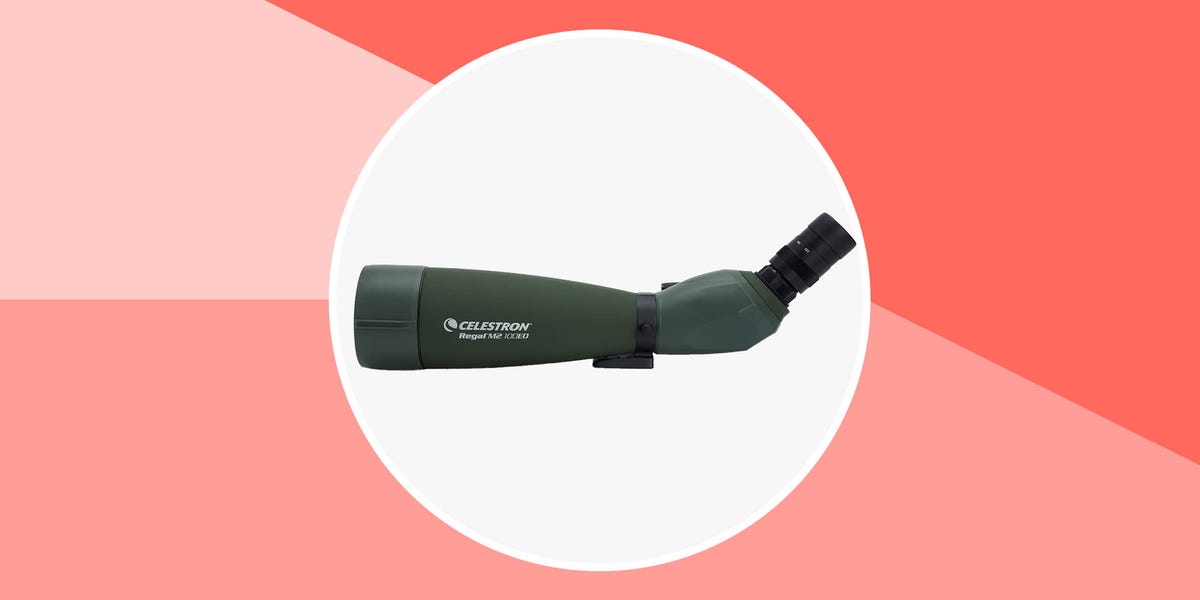
Buying a telescope should feel exciting, not like you accidentally enrolled in an advanced optics exam. Yet the telescope aisle can quickly become a galaxy-sized maze of aperture sizes, focal ratios, GoTo mounts, smart apps, Dobsonian bases, refractors, reflectors, and promises that one small tube can show you Saturn, galaxies, your neighbor’s chimney, and possibly your future.
The good news? The best telescope for stargazing is not always the biggest, flashiest, or most expensive one. It is the telescope you will actually use. A heavy monster scope that lives permanently in the garage is not better than a smaller, well-designed model that gets carried outside every clear night. For most people, the sweet spot is a telescope with solid optics, a stable mount, enough aperture to gather meaningful light, and a setup process that does not require emotional support snacks.
This guide highlights seven excellent telescopes for stargazing, including beginner-friendly models, powerful Dobsonians, computerized GoTo telescopes, portable tabletop scopes, and smart telescopes for people who want the universe delivered to their phone screen. Each recommendation is based on real specifications, practical observing value, and common guidance from astronomy educators, reviewers, and telescope makers.
How to Choose the Best Telescope for Stargazing
Aperture Matters More Than “Power”
The most important telescope specification is aperture, which means the diameter of the main lens or mirror. Aperture controls how much light the telescope gathers. More light means brighter views, sharper details, and better chances of seeing faint objects such as galaxies, nebulae, and star clusters.
Many cheap telescopes advertise wild magnification numbers like 600x. Treat those claims the way you would treat a gas station sushi buffet: with caution. Magnification is useful only when the optics, aperture, eyepiece, mount, and atmosphere can support it. A good 130mm or 200mm telescope at moderate magnification often beats a shaky bargain scope claiming ridiculous power.
Mount Stability Is a Big Deal
A telescope is only as good as the mount holding it. A wobbly tripod can turn Jupiter into a dancing jellybean. Dobsonian mounts are popular because they are simple, sturdy, and offer excellent value. Alt-azimuth mounts move up, down, left, and right, making them easy for beginners. Computerized GoTo mounts can automatically find and track objects, but they cost more and require power.
Think About Where You Will Use It
If you live in an apartment, portability matters. If you have a backyard and garage, an 8-inch Dobsonian may be perfect. If you mostly want photos, a smart telescope might be more satisfying than a traditional eyepiece telescope. The best telescope is the one that matches your lifestyle, patience level, storage space, and willingness to learn the night sky.
The 7 Best Telescopes for Stargazing
1. Sky-Watcher Classic 200P Dobsonian Best Overall Telescope for Stargazing
The Sky-Watcher Classic 200P Dobsonian is the telescope many experienced stargazers recommend when someone says, “I want amazing views, but I do not want to sell my car.” With an 8-inch, or 203mm, aperture and a 1200mm focal length, this Dobsonian gathers enough light to reveal impressive lunar detail, Jupiter’s cloud bands, Saturn’s rings, bright galaxies, globular clusters, and nebulae under decent skies.
Its strength is simplicity. There are no motors to align, no tiny buttons to argue with in the dark, and no app telling you it needs an update while Orion is rising. You place the base on the ground, set the optical tube in place, aim, focus, and observe. The large mirror does the heavy lifting.
This telescope is especially good for visual astronomy. If you want to look through an eyepiece and feel that little “whoa” moment when Saturn snaps into view, the Classic 200P delivers. Its Dobsonian mount is stable and intuitive, which helps beginners spend more time observing and less time fighting equipment.
The trade-off is size. An 8-inch Dobsonian is not tiny. You can move it in two pieces, but it is better suited to a backyard, driveway, or car-based trip than a long hike. Still, for pure stargazing value, it is hard to beat.
Best for:
Beginners and intermediate observers who want powerful visual performance, simple operation, and excellent value.
Key highlights:
- 203mm aperture for strong light gathering
- 1200mm focal length and f/5.9 focal ratio
- Stable Dobsonian base
- Great for the Moon, planets, star clusters, nebulae, and brighter galaxies
2. Apertura AD8 Dobsonian Best Value-Packed 8-Inch Telescope
The Apertura AD8 is another 8-inch Dobsonian that deserves serious attention. Like the Sky-Watcher Classic 200P, it offers a large mirror, simple movement, and excellent deep-sky potential. What makes the AD8 stand out is its generous accessory package.
The AD8 typically includes useful extras such as a dual-speed Crayford focuser, a 9×50 right-angle finder, a cooling fan, a laser collimator, a 30mm wide-angle eyepiece, and a 9mm eyepiece. In normal human language, that means you get more of the tools you need right away instead of buying a telescope and then realizing you also need a small shopping cart of accessories.
For stargazing, the 8-inch aperture is the star of the show. Under dark skies, the AD8 can show the Andromeda Galaxy, the Orion Nebula, the Hercules Globular Cluster, and plenty of open clusters. From suburban skies, it still performs well on the Moon, planets, double stars, and brighter deep-sky objects.
Like most manual Dobsonians, it is not ideal for serious long-exposure astrophotography. You can take quick smartphone shots of the Moon and maybe bright planets, but this telescope is built first for looking, not automated imaging. And honestly, that is part of its charm. It invites you to learn the sky, nudge the tube, and enjoy the old-school magic of photons landing directly in your eye.
Best for:
Stargazers who want maximum visual performance and a strong accessory bundle for the money.
Key highlights:
- 8-inch aperture for bright, detailed views
- Manual Dobsonian design with smooth movement
- Often includes upgraded accessories
- Excellent for lunar, planetary, and deep-sky observing
3. Celestron NexStar 8SE Best Computerized Telescope
The Celestron NexStar 8SE is the telescope for people who want big views and computerized convenience. It combines an 8-inch Schmidt-Cassegrain optical tube with a fully automated GoTo mount. Its database includes more than 40,000 celestial objects, and once aligned, the telescope can automatically slew to targets and track them as Earth rotates.
This is a major advantage for beginners who do not yet know how to star-hop. Instead of spending half the night whispering, “Is that Vega or an airplane?” you can use the controller to locate planets, clusters, nebulae, and galaxies. The 2032mm focal length and f/10 focal ratio make it especially strong for lunar and planetary viewing, while the 8-inch aperture gives it enough light-gathering power for many deep-sky objects.
The compact optical tube is easier to store than a full-size Dobsonian tube, though the complete setup still has weight and bulk. The mount also needs power, so a reliable external battery or power tank is highly recommended. Computerized telescopes are magical when everything works, but they do require alignment, batteries, and a little patience.
For users who want a telescope that can grow with them, the NexStar 8SE is a serious choice. It is not the cheapest option, but it offers a strong blend of aperture, portability, tracking, and automation.
Best for:
Beginners and enthusiasts who want computerized object locating, tracking, and strong planetary performance.
Key highlights:
- 8-inch Schmidt-Cassegrain optical design
- 2032mm focal length and f/10 focal ratio
- GoTo mount with a large object database
- Excellent for planets, the Moon, double stars, and many deep-sky targets
4. Celestron StarSense Explorer DX 130AZ Best App-Assisted Beginner Telescope
The Celestron StarSense Explorer DX 130AZ is one of the friendliest telescopes for beginners who want help finding objects without paying for a fully motorized GoTo system. It uses Celestron’s StarSense smartphone technology to analyze the sky and guide you toward objects. You still move the telescope manually, but the app tells you where to point it. It is like having a patient astronomy friend standing beside you, minus the long lecture about eyepiece collections.
This model uses a 130mm Newtonian reflector with a 650mm focal length and f/5 focal ratio. That combination provides wide-field views, making it good for open clusters, the Moon, brighter nebulae, and casual deep-sky observing. The 130mm aperture is a meaningful step up from tiny beginner scopes and gathers enough light to make early stargazing rewarding.
The DX 130AZ is also more portable than an 8-inch Dobsonian. It comes on an alt-azimuth tripod mount and is easier to carry into the yard or take to a darker location. The tripod is not as rock-solid as a Dobsonian base, but the overall convenience is excellent.
This telescope is a smart pick for beginners who enjoy technology but still want a real optical telescope with an eyepiece. It teaches the sky while reducing frustration, which is exactly what many new observers need.
Best for:
Beginners who want smartphone guidance, real telescope views, and a manageable setup.
Key highlights:
- 130mm aperture Newtonian reflector
- 650mm focal length and f/5 focal ratio
- StarSense app helps locate objects
- Good balance of portability, price, and performance
5. Sky-Watcher Heritage 130P Tabletop Dobsonian Best Portable Telescope
The Sky-Watcher Heritage 130P proves that a telescope does not need to look like a backyard cannon to be useful. This tabletop Dobsonian has a 130mm aperture, 650mm focal length, and fast f/5 focal ratio, all in a compact collapsible design.
Its biggest advantage is portability. You can place it on a sturdy table, stool, crate, or observing platform and start exploring the sky. Because it uses a tabletop Dobsonian base, it avoids many of the shaky-tripod problems found in cheap beginner telescopes. The movement is simple and natural: point, nudge, observe, repeat.
The Heritage 130P is great for families, apartment dwellers, campers, and beginners who want a real telescope without committing to a bulky full-size Dobsonian. It can show the Moon beautifully, reveal Jupiter’s moons, show Saturn’s rings under good conditions, and bring brighter deep-sky objects into view.
There are compromises. You need a stable surface, and the open collapsible tube may benefit from a simple light shroud in bright surroundings. Still, this little telescope punches above its weight. It is the kind of scope that makes people say, “Wait, that tiny thing can show Saturn?” Yes. Yes, it can.
Best for:
Travelers, families, apartment users, and beginners who want compact size without toy-level optics.
Key highlights:
- 130mm aperture with a compact tabletop design
- 650mm focal length and f/5 focal ratio
- Collapsible tube for easy storage
- Excellent grab-and-go stargazing option
6. Celestron NexStar 4SE Best Compact GoTo Telescope for Planets
The Celestron NexStar 4SE is a compact computerized telescope with a 102mm Maksutov-Cassegrain optical design, 1325mm focal length, and f/13 focal ratio. That long focal length makes it especially well suited for the Moon and planets. If your dream is to watch the Moon’s craters slide into sharp focus or spot Saturn’s rings without learning a complicated mount, the 4SE is a compelling option.
Like the larger NexStar 8SE, the 4SE uses a computerized GoTo mount. After alignment, it can locate and track objects automatically. This is useful for families, beginners, and anyone who wants the telescope to do some of the celestial navigation homework.
The 4SE is smaller than the 8SE, which makes it easier to store and transport. However, it has far less light-gathering ability than an 8-inch telescope, so it is not the best choice for faint galaxies or nebulae. Its narrower field of view also makes sweeping wide star fields less satisfying than with a shorter focal length reflector.
Think of the NexStar 4SE as a compact lunar and planetary specialist with computerized manners. It is not the biggest window into the universe, but it is sharp, approachable, and fun to use.
Best for:
Beginners who want a compact computerized telescope mainly for the Moon, planets, and bright objects.
Key highlights:
- 102mm Maksutov-Cassegrain optical tube
- 1325mm focal length and f/13 focal ratio
- Computerized GoTo tracking
- Strong lunar and planetary performance
7. ZWO Seestar S50 Best Smart Telescope for Easy Astrophotography
The ZWO Seestar S50 is not a traditional eyepiece telescope. It is an all-in-one smart telescope that combines optics, camera, tracking, focusing, image stacking, and app control into a compact device. For people who want to capture nebulae and galaxies without building a full astrophotography rig, the Seestar S50 is a wonderfully modern solution.
It has a 50mm triplet apochromatic lens, 250mm focal length, and f/5 focal ratio. Those numbers may sound modest compared with big Dobsonians, but smart telescopes work differently. Instead of relying on your eye alone, the Seestar collects images over time and stacks them digitally, revealing color and detail that casual visual observers often cannot see from light-polluted areas.
The appeal is convenience. You control it from a phone or tablet, choose a target, and let the system align, track, and image. It is especially fun for sharing. Friends who might not wait patiently at an eyepiece will happily gather around a screen as a nebula gradually appears.
The limitation is that it is mainly for imaging, not traditional visual stargazing. You do not look through an eyepiece. It is also not the right tool for detailed planetary observing. But for easy deep-sky photography, outreach, travel, and casual astronomy from suburban skies, the Seestar S50 is one of the most exciting telescope categories available.
Best for:
Beginners and casual astrophotographers who want app-controlled deep-sky imaging with minimal setup.
Key highlights:
- 50mm triplet apochromatic smart telescope
- 250mm focal length and f/5 focal ratio
- Built-in camera, tracking, and image stacking
- Great for nebulae, galaxies, star clusters, and social stargazing
Quick Comparison: Which Telescope Should You Buy?
| Telescope | Best For | Main Strength |
|---|---|---|
| Sky-Watcher Classic 200P | Overall visual stargazing | Big aperture and simple operation |
| Apertura AD8 | Value-packed observing | 8-inch views plus strong accessories |
| Celestron NexStar 8SE | Computerized observing | GoTo tracking and 8-inch aperture |
| Celestron StarSense Explorer DX 130AZ | App-assisted beginners | Smartphone guidance with real optics |
| Sky-Watcher Heritage 130P | Portable stargazing | Compact tabletop Dobsonian design |
| Celestron NexStar 4SE | Moon and planets | Compact GoTo Maksutov design |
| ZWO Seestar S50 | Smart astrophotography | Easy app-controlled imaging |
What Can You See With a Good Stargazing Telescope?
With any of these telescopes, the Moon will be spectacular. Even a modest telescope shows craters, mountain ranges, lava plains, and shadows along the terminator line where lunar day meets night. The Moon is so bright and detailed that it can make a first-time observer gasp, which is astronomy’s polite version of yelling, “Space is real!”
Jupiter is another favorite. With steady air, you can see its four brightest moons and sometimes cloud bands across the planet. Saturn is the classic crowd-pleaser. Its rings look almost fake the first time you see them, like someone inserted a tiny sticker into the eyepiece.
Deep-sky objects depend heavily on aperture and sky darkness. An 8-inch Dobsonian under dark skies can show many star clusters, nebulae, and galaxies. Smaller telescopes can still reveal bright showpieces such as the Orion Nebula, the Pleiades, the Beehive Cluster, and the Andromeda Galaxy. Smart telescopes like the Seestar S50 can image faint objects by stacking exposures, making them surprisingly effective in less-than-perfect skies.
Essential Accessories for Better Stargazing
A Good Star Chart or Astronomy App
Even with a computerized telescope, learning the sky makes observing more rewarding. Apps can help identify constellations, planets, and seasonal targets. A printed plan is also helpful because phone screens can damage night vision unless used in red-light mode.
A Red Flashlight
White light ruins dark adaptation. A red flashlight lets you read notes, change eyepieces, and find dropped lens caps without turning your pupils into tiny offended pinholes.
Extra Eyepieces
Most telescopes include starter eyepieces, but one good low-power eyepiece and one moderate-to-high-power eyepiece can dramatically improve the experience. Avoid chasing extreme magnification. Sharp and steady beats giant and blurry every time.
A Comfortable Observing Chair
This sounds boring until you spend 40 minutes crouched beside a telescope like a confused garden gnome. Comfort matters. When your body is relaxed, your eye sees more detail.
of Real Stargazing Experience and Practical Tips
The first lesson of stargazing is that the sky does not care about your schedule. You can buy the best telescope, charge every battery, make a perfect target list, and then clouds will arrive like uninvited relatives. That is normal. Patience is part of the hobby, and honestly, it makes the clear nights feel more special.
One of the best experiences with a telescope is not necessarily seeing the faintest galaxy. It is learning how much changes when you slow down. The Moon, for example, looks different every night. A beginner might think, “I have already seen the Moon,” but the Moon is never just one object. Along the shadow line, craters appear sharper, mountain peaks catch sunlight, and flat plains reveal subtle textures. A 100mm refractor or 130mm reflector can provide hours of lunar exploring before you even leave Earth’s neighborhood.
Planets teach patience in another way. Jupiter may look soft one moment and suddenly sharpen when the atmosphere steadies. This is called seeing, and it explains why experienced observers wait at the eyepiece. The best view often comes in brief flashes. Saturn is similar. On a steady night, the rings appear clean and separate from the planet. On a poor night, Saturn looks like a beige lentil wearing ears. Do not blame the telescope too quickly. The atmosphere is part of the optical system, and sometimes it behaves like hot soup.
Deep-sky observing is where expectations matter most. Galaxies and nebulae rarely look like colorful space photos through a traditional eyepiece. Your eyes are not long-exposure cameras. Many objects appear as gray smudges, soft glows, or misty patches. But once you understand what you are seeing, the experience becomes powerful. That little oval haze in the eyepiece may be the Andromeda Galaxy, a trillion-star island more than two million light-years away. It will not look like a poster, but the knowledge hits harder than the view.
Dark skies make a huge difference. A small telescope under rural skies can outperform a larger telescope under heavy city light pollution for many deep-sky objects. If you can travel even 30 to 60 minutes away from bright urban lights, do it. Bring warm clothes, snacks, a red flashlight, and more patience than you think you need. Cold nights are often clear, but cold fingers make tiny focuser knobs feel like medieval puzzles.
For beginners, the best observing sessions are planned but flexible. Choose three or four targets: the Moon, one planet, one star cluster, and one nebula or galaxy if conditions allow. Start with low magnification to find objects, then increase power only when the view remains sharp. Let the telescope cool outside before serious observing, especially reflectors and catadioptric designs. Warm optics can create shimmering views.
Most importantly, do not rush to upgrade everything. Use the telescope you have. Learn how it moves, how it focuses, how objects drift, and which eyepiece gives the most pleasing view. Astronomy rewards practice. The more you observe, the more you see. At first, Jupiter may show two bands. Later, you may notice subtle color, moon shadows, or the Great Red Spot. The telescope did not change. Your eye and brain learned the language of faint light.
Final Verdict: The Best Telescope for Stargazing
If you want the best all-around telescope for visual stargazing, the Sky-Watcher Classic 200P Dobsonian is the strongest recommendation for most people. It offers serious aperture, a stable mount, and memorable views without unnecessary complexity. If you want a similar experience with a richer accessory bundle, the Apertura AD8 is excellent. If you prefer computerized tracking, the Celestron NexStar 8SE is a powerful step up.
For beginners who want guidance, the Celestron StarSense Explorer DX 130AZ makes the night sky easier to navigate. For portability, the Sky-Watcher Heritage 130P is a charming and capable tabletop scope. For lunar and planetary convenience, the NexStar 4SE is compact and sharp. And for easy astrophotography, the ZWO Seestar S50 brings the cosmos to your screen with almost suspicious ease.
The best telescope is not the one with the loudest marketing claim. It is the one that gets you outside, looking up, and saying, “Okay, just five more minutes,” until suddenly it is midnight and you are emotionally attached to Saturn. That is when you know you bought the right telescope.
Note: This article is written for web publication and synthesizes current telescope specifications, astronomy buying guidance, and practical stargazing experience. Product availability, prices, and bundles may change over time, so readers should confirm current details before purchasing.













