
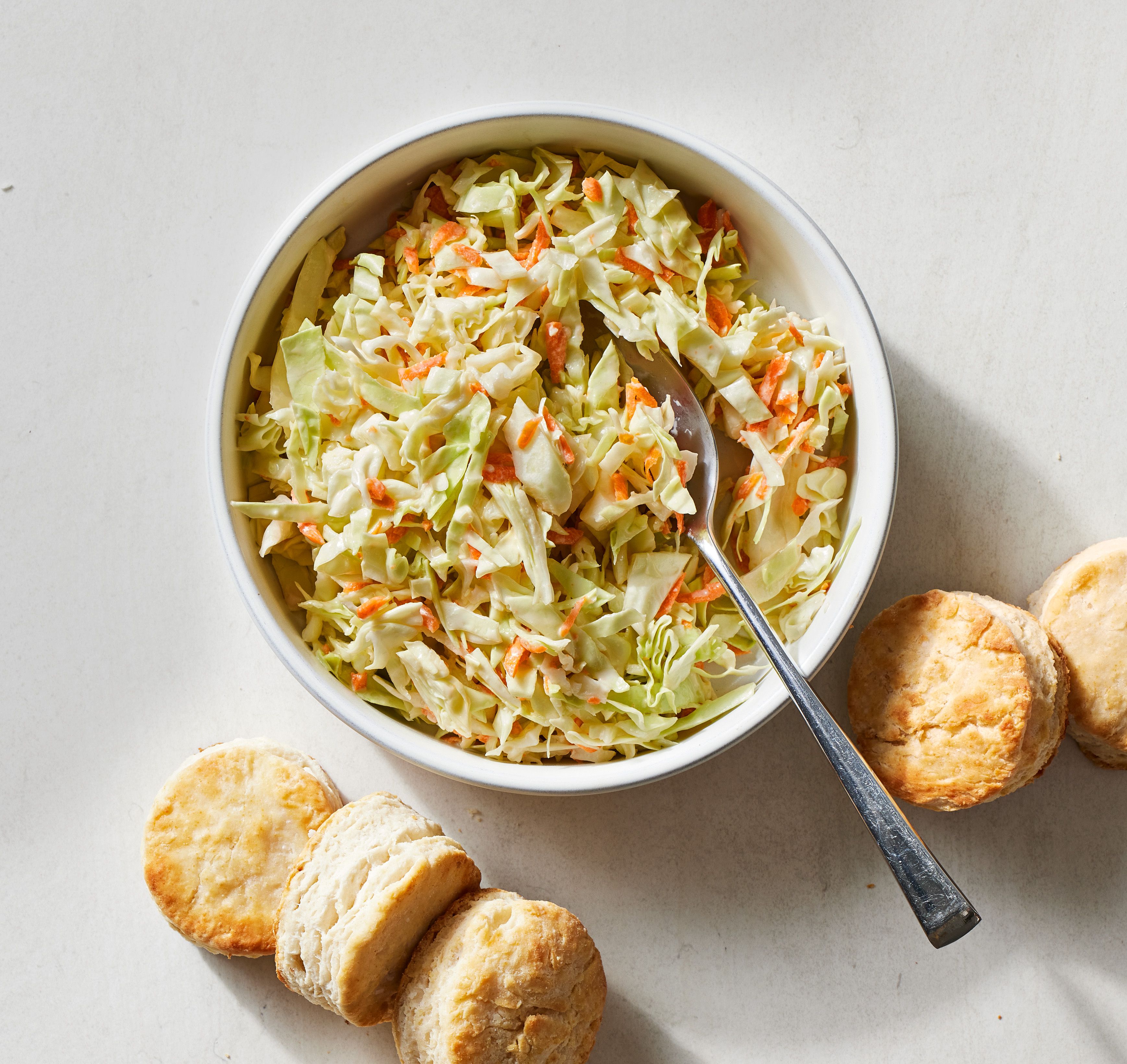
Some side dishes are polite background characters. Coleslaw is not one of them. A truly great slaw is crunchy, creamy, tangy-sweet, and just bold enough to stand up to smoky ribs, fried chicken, and that one uncle who insists his brisket “doesn’t need sauce.”
This is the copycat coleslaw recipe we keep coming back to because it nails that familiar restaurant-style flavor: the kind that tastes like summer cookouts, drive-thru comfort, and “oops, I ate half the bowl while plating the burgers.”
It’s also built to solve the biggest coleslaw heartbreak: soggy slaw. We’re using a quick cabbage prep trick (barely 5 minutes) that helps the dressing stay creamy instead of turning into a watery puddle at the bottom of your bowl. Your coleslaw deserves better than soup.
What Makes a “Copycat” Coleslaw Actually Taste Like the Real Thing?
Most classic restaurant slaws share the same DNA:
- Mayo for creamy richness
- Vinegar + lemon for bright tang
- Sugar for that addictive sweet edge
- A splash of dairy (milk or buttermilk) for a softer, smoother finish
- Very finely cut cabbage so the texture feels like the stuff from your favorite takeout spot
The “best” version is all about balance: sweet but not candy, tangy but not mouth-puckering, creamy but still crisp. This recipe gives you that balanceand shows you exactly how to adjust it if you like yours sweeter, tangier, or extra peppery.
The Best Copycat Coleslaw Recipe
Yield: About 8 servings (great for cookouts)
Prep time: 20 minutes
Chill time: 1–4 hours (worth it)
Total time: About 1 hour 20 minutes to 4 hours 20 minutes
Ingredients
For the slaw
- 8 cups finely chopped green cabbage (about 1 medium head)
- 1/2 cup finely shredded carrot (or 1 medium carrot, grated)
- 2 tablespoons very finely minced onion (yellow or sweet onion)
- 1/2 teaspoon kosher salt (for the quick crunch-prep step)
- 1 teaspoon sugar (for the quick crunch-prep step)
For the creamy copycat dressing
- 1/2 cup mayonnaise
- 1/4 cup buttermilk
- 1/4 cup whole milk (or 2% if that’s what you have)
- 1/3 cup granulated sugar
- 1 1/2 tablespoons apple cider vinegar
- 2 1/2 tablespoons lemon juice
- 1/2 teaspoon celery seed (optional, but very “restaurant slaw”)
- 1/2 teaspoon kosher salt
- 1/8 teaspoon black pepper
- Pinch of cayenne (optional, for a tiny wink of heat)
Step-by-Step Instructions
Step 1: Chop like a restaurant (small = correct)
For the most convincing copycat vibe, chop your cabbage very finely. You’re aiming for thin little pieces that scoop easily and cling to dressing. A sharp knife works, but a food processor (pulsed carefully) is the “fast pass” here.
Step 2: Do the 5-minute crunch trick (goodbye, sogginess)
Toss the chopped cabbage, carrot, and onion with 1/2 teaspoon salt and 1 teaspoon sugar. Let it sit for 5 minutes. This draws out a bit of moisture so your dressing stays thick and your slaw stays crisp.
After 5 minutes, transfer the mixture to a clean kitchen towel (or paper towels), then squeeze gently to remove excess liquid. If you have a salad spinner, it’s also excellent for this job. (Coleslaw should not be doing its best impression of a wet sponge.)
Step 3: Whisk the dressing until glossy
In a large bowl, whisk together mayonnaise, buttermilk, milk, sugar, vinegar, lemon juice, celery seed (if using), salt, pepper, and cayenne. Taste it. Then taste it againbecause copycat slaw lives and dies by flavor balance.
Step 4: Combine, then chill for the “magic”
Add the dried cabbage mixture to the bowl with the dressing and toss until everything is evenly coated. Cover and refrigerate for at least 1 hour (2–4 hours is even better). This rest time helps the cabbage soften slightly and the flavors settle into that classic restaurant-style harmony.
Step 5: Final taste + tiny adjustments
Right before serving, toss again and taste. If it’s too sweet: add a teaspoon more vinegar or lemon juice. If it’s too tangy: add 1–2 teaspoons sugar. If it’s too thick: add a splash of milk. If it’s flat: add a pinch more salt and pepper.
Flavor “Dial” Adjustments (So You Can Make It Your Slaw)
Copycat recipes are supposed to feel foolproof, not fussy. Here’s how to steer this slaw exactly where you want it:
Want it more like fast-food coleslaw?
- Chop cabbage extra fine (almost confetti).
- Keep the dressing sweeter: don’t reduce sugar.
- Use the buttermilk + milk combo for that smooth, mellow tang.
Want it more “BBQ joint” tangy?
- Add 1 extra teaspoon vinegar.
- Use a touch of Dijon (1/2 teaspoon) for a sharper edge.
- Add celery seed (highly recommended for that classic finish).
Want it less rich?
- Replace up to half the mayo with plain Greek yogurt.
- Or use light mayo, but keep the chilling time so flavors still bloom.
Make-Ahead, Storage, and Food Safety (Because Picnics Are Hot)
Coleslaw is a make-ahead champion. In fact, it’s usually better after a little time in the fridge. For best texture:
- Make it 2–4 hours ahead for peak flavor.
- Store covered in the refrigerator.
- Stir before serving to re-coat everything.
For cookouts and potlucks, keep it cold. If it’s sitting out at room temperature for more than 2 hours (or 1 hour in very hot weather), it’s safer to discard it. Coleslaw contains perishable ingredients, and nobody wants their barbecue memories sponsored by stomach regret.
How long does coleslaw last in the fridge? If kept properly chilled, it’s best within about 3 days for texture. It can last longer, but it will gradually soften as the cabbage continues to release moisture.
Common Copycat Coleslaw Mistakes (And How to Avoid Them)
1) Cutting cabbage too thick
Thick shreds can feel more like “salad” than “restaurant slaw.” If you want that classic bite, go thin and small.
2) Skipping the moisture step
Cabbage is basically a crunchy water bottle. If you don’t pull out a little moisture first, it will leak into your dressing and dull the flavor.
3) Serving it immediately
Freshly mixed coleslaw tastes fine, but chilled coleslaw tastes right. Give it at least an hour so it can become the side dish it was destined to be.
4) Overdoing the vinegar
Tang is great. Acid overload is not. Add vinegar in small incrementsespecially after chilling, because cold slaw can taste less sweet.
Variations That Still Feel “Copycat” (But More Interesting)
Dill pickle slaw
Add 2 tablespoons finely chopped dill pickles and 1 tablespoon pickle juice to the dressing. It stays creamy but gains that craveable zing.
Apple crunch slaw
Toss in 1 cup matchstick apples (like Granny Smith). The sweet-tart crunch is incredible with pulled pork sandwiches.
Spicy slaw
Add 1–2 teaspoons hot sauce to the dressing, or a pinch of chipotle powder. It won’t scream “spicy,” but it’ll keep things interesting.
Vinegar-forward (no-mayo) option
If you love Carolina-style barbecue sides, try a vinegar-based slaw with sugar and celery seed. It’s bright, snappy, and perfect on rich meats.
What to Serve With Copycat Coleslaw
Coleslaw plays well with almost anything grilled, fried, smoked, or sandwich-shaped. A few favorites:
- Pulled pork sandwiches (slaw on top is basically mandatory)
- Fried chicken
- Burgers and hot dogs
- BBQ ribs
- Fish tacos (especially with extra lime)
- Brisket or smoked turkey
FAQ: Copycat Coleslaw Questions People Actually Ask
Should I use bagged coleslaw mix or fresh cabbage?
Either works. Bagged mix is convenient and consistent. Fresh cabbage gives you more control over texture (and the ability to chop it ultra-fine for the most “copycat” result).
Why does my coleslaw get watery overnight?
Cabbage releases moisture as it sitsespecially when salt and acid are involved. The quick salt-sugar prep step helps a lot, but some softening is normal over time. Stir before serving.
Can I make this dairy-free?
Yes. Replace the milk and buttermilk with unsweetened dairy-free milk. Add 1 teaspoon extra vinegar to mimic buttermilk tang, then adjust sweetness to taste.
Can I reduce the sugar?
Absolutely. Reduce it by 2–4 tablespoons if you prefer less sweetness. Just keep enough to balance the vinegar and lemon so it still tastes “restaurant-style.”
Kitchen Notes & “Real-Life” Experiences ()
Coleslaw has a funny way of being both extremely simple and mysteriously hard to get perfect. In theory, it’s cabbage + dressing. In reality, it’s a texture-and-balance puzzle that can go from “legendary BBQ side” to “sad watery crunch” faster than you can say, “Who left the bowl next to the grill?”
One of the most common experiences people run into is the first-bite shock: you taste your freshly mixed slaw and think, “This is… aggressive.” The vinegar pops, the sugar feels loud, the cabbage tastes sharp. Then you chill it, come back an hour later, and suddenly it tastes like the coleslaw you meant to make all along. That’s why rest time matters. Cold temperatures mellow the bite of raw cabbage, and the dressing flavors blend into something smoother and more familiar. If your slaw tastes slightly “too much” right after mixing, don’t panicrefrigeration is doing behind-the-scenes diplomacy.
Another classic moment: you serve coleslaw at a cookout, and the first scoop is perfect… then the bowl slowly turns into a puddle. This is where the quick salt-sugar step earns its keep. Cabbage carries a lot of water, and as it sits (especially in an acidic dressing), it releases that moisture. Pulling out just a little liquid before dressing is the difference between “creamy coating” and “dressing that slides off like it’s late for an appointment.” If you’ve ever wondered why restaurant slaw seems thicker and more consistent, moisture control is a big reason.
There’s also the “copycat identity crisis”: you want it to taste like the coleslaw you remember, but you can’t pinpoint what’s missing. In many cases, it’s one of three things: celery seed (that subtle deli-style background note), a dairy splash (milk/buttermilk for the softer finish), or how finely the cabbage is cut. That last one is sneakily important. The smaller the cabbage pieces, the more the dressing clings and the more “restaurant” the texture feels. Big shreds can be delicious, but they read as homemade saladnot copycat slaw.
And finally: the “tweak spiral.” You add more vinegar, then add more sugar, then add more mayo, then wonder how you ended up with enough dressing to paint a small apartment. The better move is small, measured adjustments after chilling. Cold slaw can taste less sweet, so you might think it needs sugar when it just needs time. Start with a teaspoon-level tweak, toss, taste, and repeat only if necessary. Copycat coleslaw is supposed to feel effortlesslike you casually nailed the side dish that everyone fights over.
If you take only one real-life lesson from this: coleslaw is a “chill and taste again” dish. Let it rest, let it meld, and let it become the creamy-crunchy legend it was meant to be.
Conclusion
The best copycat coleslaw isn’t about secret ingredientsit’s about smart technique and perfect balance. Chop it fine, pull out a little moisture, whisk a creamy tangy-sweet dressing, and give it time to chill. That’s how you get the kind of coleslaw that tastes like your favorite restaurant… only fresher, crunchier, and proudly made in your own kitchen.














