
Every stock market year has its celebrities. Some companies quietly compound wealth like a dependable friend who always shows up early. Others rocket higher so fast they make investors wonder whether the chart accidentally swallowed a trampoline. But when people search for the best performing stocks, the smartest first question is not “Which ticker is hottest?” It is “Best over what period, and at what level of risk?”
A stock can be the best performer over one month, one year, five years, or a decadeand those lists can look wildly different. In 2026, market attention has remained centered on artificial intelligence, data infrastructure, energy, health care, and companies tied to powerful earnings growth. Some of the biggest recent winners have included semiconductor, data storage, networking, and AI-related names. Meanwhile, energy stocks have also had moments of leadership as oil prices and inflation worries moved investor behavior.
This article breaks down what makes a stock a top performer, which types of companies have recently appeared on high-performing lists, how investors can evaluate winners without chasing glitter, and why the best stock for a headline is not always the best stock for your portfolio. No crystal ball requiredjust a clear head, a little math, and the ability to resist buying something merely because the internet is yelling about it.
What Does “Best Performing Stock” Actually Mean?
The phrase best performing stocks usually refers to stocks with the highest price return or total return over a specific period. Price return measures how much the share price has risen. Total return includes dividends as well. For many growth stocks, dividends are small or nonexistent, so price return gets most of the spotlight. For mature companies, dividends can meaningfully improve long-term performance.
Timeframe matters. A stock that jumps 80% in six months may still be down over three years. Another stock may look boring this quarter but deliver enormous long-term wealth because it grows sales, earnings, and free cash flow year after year. That is why serious investors often compare performance across multiple windows: year to date, one year, five years, and ten years.
Short-Term Winners vs. Long-Term Compounders
Short-term winners often rise because of a specific catalyst: an earnings surprise, a new product cycle, a regulatory decision, a commodity price move, or enthusiasm around a major trend such as AI. Long-term compounders usually win because they repeatedly turn business advantages into higher revenue, wider margins, strong cash flow, and smarter capital allocation.
The market loves a good story, but performance that lasts usually needs more than a story. It needs numbers. A company can have exciting technology, charismatic leadership, and a logo that looks great on a hoodiebut if revenue growth stalls and profits vanish, the stock may eventually lose its applause.
Recent Examples of Best Performing Stocks
Recent performance lists have highlighted several themes. Data storage and semiconductor-related stocks have been prominent, helped by rising demand for AI infrastructure, cloud computing, memory chips, and high-speed networking. Names such as Sandisk, Western Digital, Micron Technology, Seagate Technology, Ciena, and Lumentum have appeared on strong one-year performance lists. Nvidia, AMD, Broadcom, and other chip-related companies have also remained central to the AI investment conversation.
In year-to-date S&P 500 performance rankings during 2026, companies such as Sandisk, Texas Pacific Land, Moderna, Generac, Corning, Teradyne, Western Digital, Comfort Systems USA, Seagate, and Ciena have been cited among notable leaders at different points in the year. These examples show how diverse “best performers” can be. The list is not only mega-cap technology. It can include energy landowners, biotech names, industrial suppliers, data storage companies, and businesses tied to infrastructure demand.
Looking over longer periods, Nvidia has been one of the most dramatic examples of a long-term winner, driven by graphics processing units, data center demand, AI acceleration, software ecosystems, and expanding market opportunities. AMD, Arista Networks, Micron, and Comfort Systems USA have also appeared on long-term performance screens, showing that outstanding returns can come from different corners of the market.
Why AI Stocks Have Dominated the Conversation
Artificial intelligence has become one of the biggest market themes of the decade. It has lifted demand for chips, data centers, networking hardware, memory, cloud infrastructure, power systems, and software platforms. Investors are not just buying “AI” as a buzzword; they are trying to identify which companies can turn AI demand into real earnings.
Nvidia is the most famous example because its chips became essential infrastructure for AI model training and inference. But the AI trade is wider than one company. Broadcom has drawn attention because of custom AI chips and networking opportunities. Micron has benefited from memory demand. Ciena and other networking companies have attracted interest because AI data movement requires faster and more capable connectivity. Even companies outside classic tech, such as electrical, cooling, and construction service providers, can benefit when data centers expand.
However, AI enthusiasm can also create valuation risk. A great company can become a risky stock if investors pay a price that assumes perfection. When expectations are sky-high, even a solid earnings report can disappoint. The stock market is a strange restaurant: sometimes the food is excellent, but the bill still ruins the evening.
Energy, Health Care, and Industrial Winners
Technology gets the loudest headlines, but it is not the only place where top-performing stocks appear. Energy stocks can lead when oil and natural gas prices rise, when supply concerns increase, or when investors rotate toward inflation-sensitive assets. In 2026, the energy sector has had periods of strong leadership, reminding investors that market leadership can shift quickly.
Health care can also produce big winners, especially in biotechnology, obesity treatments, oncology, immunology, and medical devices. Moderna, Eli Lilly, AbbVie, and other health-related names have attracted investor attention for different reasons. Some offer high-growth pipelines; others provide durable cash flow from established products.
Industrial and infrastructure-related companies can shine when demand for construction, electrification, reshoring, data centers, and grid upgrades rises. Comfort Systems USA is a good example of how a company outside the typical Silicon Valley spotlight can become a powerful performer by serving real-world infrastructure needs. Sometimes the most exciting stock is not the one building the robot brainit is the one installing the cooling system so the robot brain does not melt.
How to Evaluate the Best Performing Stocks
A strong chart is a starting point, not a full investment thesis. Before investing in a top-performing stock, investors should look under the hood. The goal is to understand whether the stock is rising because the business is improving, because investor sentiment is euphoric, or because both are happening at once.
1. Revenue Growth
Revenue growth shows whether demand for the company’s products or services is expanding. Strong revenue growth is especially important for technology, software, semiconductor, and emerging health care companies. But growth should be evaluated in context. A small company can grow quickly from a tiny base; a huge company needs enormous demand to maintain high growth rates.
2. Earnings and Margins
Earnings reveal whether the company can turn sales into profit. Margins show how efficiently it operates. A stock that rises because revenue is growing while margins are expanding may have a stronger foundation than one rising purely on hype. Investors should compare gross margin, operating margin, and net margin with industry peers.
3. Cash Flow
Free cash flow is the money a company generates after funding its operations and capital needs. Strong free cash flow gives management flexibility to reinvest, buy back shares, pay dividends, reduce debt, or make acquisitions. In uncertain markets, cash flow is like oxygen. You may not notice it when everything is fine, but you definitely notice when it disappears.
4. Valuation
Valuation answers the question: “How much are investors paying for this business?” Common metrics include the price-to-earnings ratio, price-to-sales ratio, enterprise value to EBITDA, and price-to-free-cash-flow ratio. High-growth companies often trade at premium valuations, but premiums must be supported by future results. If a stock is priced for flawless execution, even a tiny stumble can hurt.
5. Competitive Advantage
The best long-term stocks often have durable advantages: brand strength, patents, scale, network effects, switching costs, cost leadership, unique data, or superior distribution. Competitive advantage helps a company defend profits when rivals show up with sharp elbows and cheaper prices.
Risks of Chasing the Hottest Stocks
Buying a stock after it has already surged can work, but it can also be dangerous. Momentum can continue longer than skeptics expect, yet it can reverse faster than enthusiastic investors are prepared for. The same stock that looks unstoppable on Monday can become a “valuable learning experience” by Friday.
One major risk is valuation compression. If a company’s earnings grow but its price-to-earnings multiple falls, the stock may stagnate or decline. Another risk is concentration. Investors who put too much money into one hot sector, such as AI, may suffer if that sector corrects. A third risk is narrative fatigue. When everyone already knows the story, the stock may need increasingly spectacular news to keep climbing.
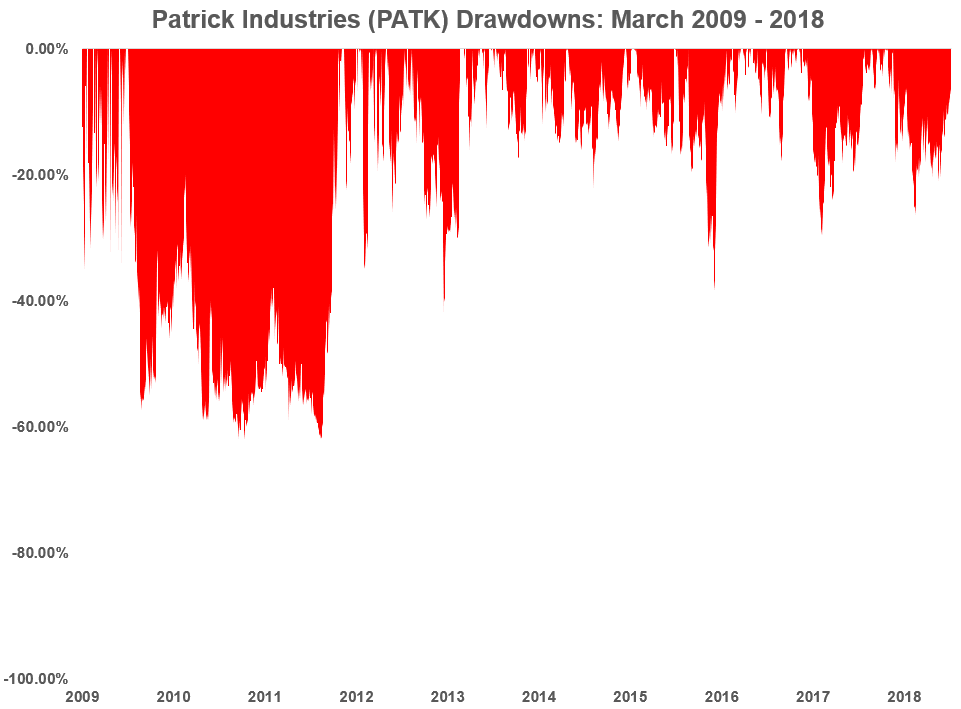
Regulators and major brokerage education resources consistently emphasize diversification, asset allocation, and rebalancing. This does not mean investors must avoid individual stocks. It means they should understand that even excellent companies can suffer large drawdowns. Diversification is not glamorous, but neither is explaining to your future self why one trendy ticker ate the entire portfolio.
Best Performing Stocks by Category
Growth Leaders
Growth leaders are companies expanding revenue and earnings faster than the broader market. Recent examples often include Nvidia, AMD, Broadcom, Palantir, Micron, and other AI or data-related businesses. These stocks can deliver exceptional returns, but they often trade at higher valuations and may be volatile.
Turnaround Winners
Turnaround stocks rise when a struggling company improves operations, restructures debt, launches a successful product, or benefits from an industry cycle. These stocks can post huge percentage gains because expectations were low. The risk is that turnarounds are hard, and not every “comeback story” gets a happy ending.
Cyclical Winners
Cyclical stocks perform well when economic conditions favor their industry. Energy, materials, industrials, travel, housing, and semiconductors can all be cyclical. These stocks may soar during upcycles and struggle during slowdowns. Timing matters more here than with stable compounders.
Dividend Compounders
Some of the best long-term performers are not the flashiest. Dividend growers can deliver attractive total returns by combining steady earnings growth with rising payouts. Companies in sectors such as financials, consumer staples, health care, and industrials may fit this style. They rarely make viral social media posts, but they can quietly do the job.
How Beginners Can Approach Top Performing Stocks
Beginners should avoid treating performance lists as shopping lists. A better approach is to use them as research lists. If a stock is up sharply, ask why. Is revenue accelerating? Are analysts raising earnings estimates? Is the company gaining market share? Is the industry entering a powerful cycle? Or is the stock mostly moving because traders are excited?
Next, compare the company with competitors. A stock may be rising because the whole sector is strong, not because the company is uniquely excellent. Look at balance sheet strength, debt levels, management quality, and valuation. Review quarterly reports, investor presentations, and earnings call commentary. The more you understand the business, the less you are relying on hope wearing a necktie.
For many investors, broad index funds or ETFs can serve as a core portfolio, while individual stocks become smaller satellite positions. This approach allows participation in market growth while limiting the damage if one stock disappoints. It also reduces the pressure to find “the next Nvidia” before breakfast.
Experience-Based Lessons About The Best Performing Stocks
One of the most useful experiences investors can have is watching a stock they almost bought soar without them. It stings. It also teaches an important lesson: missed opportunities are endless. There will always be another chart that makes you question your life choices. The solution is not to chase every winner. The solution is to build a repeatable process.
In practice, the best performing stocks often look obvious only in hindsight. Years ago, many investors saw Nvidia as a gaming chip company, not the backbone of the AI revolution. Some saw AMD as a struggling competitor, not a long-term semiconductor comeback. Others overlooked industrial service companies because they seemed less exciting than software. The market rewards imagination, but it punishes fantasy. Investors must learn to separate a real business inflection from a temporary popularity contest.
Another experience: big winners are rarely comfortable to hold. They rise, fall, get criticized, become expensive, disappoint for a quarter, recover, and then scare everyone again. A stock can produce life-changing returns while causing several emotional thunderstorms along the way. That is why position sizing matters. If a holding is so large that every price move ruins your mood, the position may be too big for your temperament.
Experienced investors also learn that selling is harder than buying. When a stock doubles, should you take profits or let it run? There is no perfect answer. Some investors trim positions to manage risk while keeping exposure. Others hold as long as the business fundamentals remain strong. A practical middle ground is to review why you bought the stock in the first place. If the thesis is stronger and valuation is still reasonable, holding may make sense. If the price has soared far beyond business reality, trimming can be wise.
It is also important to respect taxes, fees, and time horizon. A trader may care about next week’s price action. A long-term investor may care about five-year earnings power. Confusing those two approaches creates chaos. Buying a long-term compounder and checking it every 14 minutes is like planting an oak tree and yelling at it for not becoming a forest by lunch.
The most valuable lesson is humility. The market does not owe anyone a smooth ride. Some of the best performing stocks will come from familiar themes, and others will come from places investors ignored. A disciplined watchlist, diversified portfolio, and clear risk rules are more useful than predictions shouted with confidence. Great investing is not about being right every time. It is about staying solvent, thoughtful, and patient enough to benefit when you are right.
Conclusion
The best performing stocks are not a single permanent group. They change with earnings cycles, technology shifts, interest rates, commodity prices, investor expectations, and plain old market mood. Recent leaders have included AI infrastructure stocks, data storage companies, semiconductor names, energy-related businesses, health care innovators, and industrial firms tied to infrastructure demand.
For investors, the key is to study performance without worshiping it. A soaring stock deserves attention, but not blind devotion. Look for revenue growth, earnings quality, free cash flow, competitive advantage, valuation discipline, and risk management. The best stock is not always the one with the hottest chart. Sometimes it is the one you understand, can hold responsibly, and fits your long-term plan without turning your portfolio into a financial roller coaster with no seatbelt.










