
Choosing between drip irrigation and flood irrigation is a bit like choosing between a precision coffee maker and a garden hose with ambition. Both deliver water. Both can grow crops. Both have been used successfully by farmers, gardeners, orchard managers, and landscape pros. But the way they move water, the amount they use, the labor they require, and the results they produce can be dramatically different.
At the simplest level, drip irrigation delivers small, controlled amounts of water directly near plant roots through tubes, emitters, or drip tape. Flood irrigation, also called surface irrigation in many agricultural settings, allows water to flow across the soil surface by gravity through basins, borders, furrows, or open field flooding. One system whispers, “Here is exactly what your roots ordered.” The other says, “Water is here; everybody line up.”
The best choice depends on crop type, soil texture, water availability, budget, field slope, labor, climate, and management skill. A backyard tomato bed in Arizona may love drip irrigation. A laser-leveled alfalfa field with abundant surface water may still use flood irrigation effectively. The goal is not to crown one universal champion, but to understand where each method shines, where it struggles, and how to avoid turning your field into either a desert spa or a surprise swimming pool.
What Is Drip Irrigation?
Drip irrigation is a low-pressure irrigation method that applies water slowly and directly to the soil near the root zone. Water moves through a network of mainlines, sub-mainlines, laterals, drip tape, tubing, and emitters. These emitters release water in drops or small streams at measured rates, often over a longer period of time.
In home gardens, drip irrigation may look like black tubing running beside peppers, tomatoes, cucumbers, shrubs, or fruit trees. On farms, it may involve long lines of drip tape under plastic mulch or subsurface drip lines buried below the soil. In orchards and vineyards, drip emitters are often placed near each tree or vine.
How Drip Irrigation Works
A typical drip irrigation system includes a water source, filter, pressure regulator, tubing, valves, fittings, and emitters. The filter is especially important because tiny emitter openings can clog from sand, algae, mineral deposits, or organic matter. Think of the filter as the bouncer at the irrigation nightclub: no grit, no slime, no entry.
Because water is applied slowly, it has more time to soak into the soil instead of running away. This makes drip irrigation useful in gardens, vegetable farms, orchards, vineyards, high tunnels, landscapes, and areas where water conservation matters. It also keeps plant foliage drier than overhead watering, which may reduce disease pressure in crops that dislike wet leaves.
What Is Flood Irrigation?
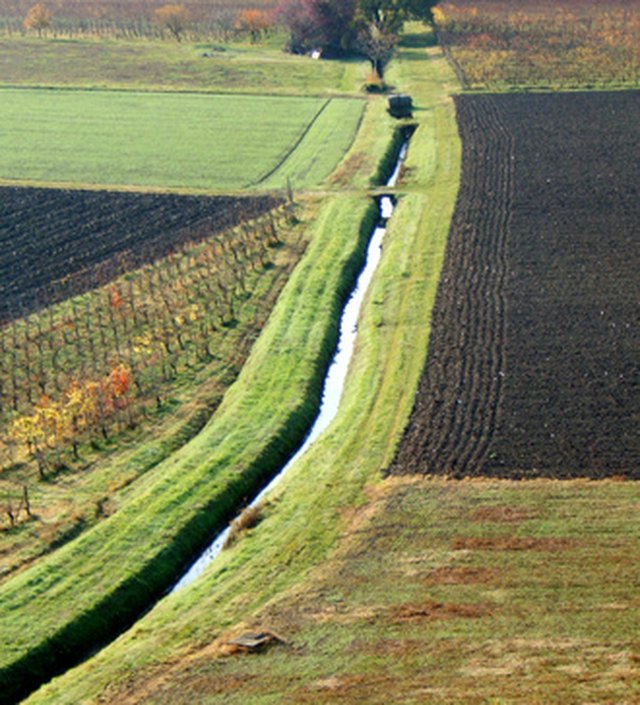
Flood irrigation is one of the oldest irrigation methods in agriculture. It uses gravity to move water over the soil surface. Instead of delivering water through emitters, the grower releases water onto a field or into channels so it can spread, infiltrate, and wet the root zone.
Flood irrigation comes in several forms. Wild flood irrigation lets water flow over a field with little control. Furrow irrigation sends water down small channels between crop rows. Border irrigation uses long strips separated by low ridges. Basin irrigation holds water in level areas surrounded by small borders. All of these methods belong to the broader family of surface irrigation.
How Flood Irrigation Works
Flood irrigation usually requires a water source such as a canal, ditch, reservoir, well, or stream diversion. Water is released at the upper end of a field and moves downhill or across a leveled surface. For the system to work evenly, land grading is often important. If the field has dips, bumps, or surprise mini-mountains, water will behave like a toddler in a toy store: it will go where it wants, not where you planned.
Modern flood irrigation can be improved with laser leveling, gated pipe, surge valves, tailwater recovery systems, shorter furrow lengths, and better scheduling. So while flood irrigation may sound old-fashioned, it is not automatically primitive. Good management can make a big difference.
Drip Irrigation vs. Flood Irrigation: The Core Difference
The biggest difference between drip irrigation and flood irrigation is water placement. Drip irrigation places water near the plant root zone in small, controlled doses. Flood irrigation spreads water across the soil surface and relies on gravity and infiltration to move moisture into the root zone.
This difference affects nearly everything else: water use, evaporation, runoff, labor, energy, cost, weed growth, disease risk, fertilizer management, soil erosion, and crop uniformity.
Water Efficiency
Drip irrigation is generally more water-efficient because it applies water only where plants need it. Less soil surface is wetted, which can reduce evaporation. Less water moves across the field, which can reduce runoff. In well-designed and well-maintained systems, drip irrigation can achieve high application efficiency.
Flood irrigation can be less efficient when water runs off the field, evaporates from broad wet surfaces, or percolates below the root zone. However, efficiency varies widely. A poorly managed drip system with clogged emitters can perform badly, while a carefully leveled and well-managed surface irrigation system can perform surprisingly well. Irrigation is not magic; it is plumbing plus timing plus patience.
Installation Cost
Flood irrigation often has a lower equipment cost than drip irrigation, especially where fields are already graded and water is delivered through existing ditches or canals. The basic idea is simple: move water by gravity.
Drip irrigation usually costs more upfront because it requires tubing, filters, pressure regulators, valves, emitters, and sometimes automation. Subsurface drip irrigation can be even more expensive because the lines must be installed below ground. For high-value crops such as vegetables, berries, orchards, vineyards, and greenhouse crops, the investment may be worth it. For lower-value field crops, the math depends heavily on water cost, yield improvement, labor savings, and system lifespan.
Labor Requirements
Flood irrigation can require significant labor, especially in furrow systems where water must be started, monitored, adjusted, and shut off at the right time. Someone may need to open gates, move siphon tubes, check flow, repair ditches, and prevent runoff. It is not exactly a “set it and forget it” situation. It is more like “set it, watch it, fix it, check it again, and maybe bring boots.”
Drip irrigation may reduce daily labor once installed. Timers, valves, and sensors can automate irrigation schedules. However, drip systems still need maintenance. Filters must be cleaned, lines flushed, leaks repaired, pressure checked, and emitters monitored. The work shifts from moving water physically to managing a system carefully.
Soil Erosion and Runoff
Drip irrigation usually has a lower risk of soil erosion because water is applied slowly. The soil is not hit with large flows moving across the surface. This is especially helpful on slopes, sandy soils, or garden beds where erosion can expose roots and wash away nutrients.
Flood irrigation can cause erosion if water moves too fast or if fields are not properly graded. Furrows can carry soil particles away, and runoff may transport nutrients beyond the crop root zone. Good design can reduce these problems, but the risk is naturally higher when water flows across exposed soil.
Weed Pressure
Drip irrigation can reduce weed pressure because it wets a smaller portion of the soil surface. If only the crop row receives water, weed seeds between rows may be less likely to germinate. This does not mean weeds vanish forever. They are weeds, not polite houseguests. But drip irrigation can make them less enthusiastic.
Flood irrigation wets a much larger surface area. That can encourage weed germination across the field or garden. In some crops, this may increase cultivation, mulching, or herbicide needs. For gardeners, it may simply mean more Saturday mornings spent negotiating with crabgrass.
Plant Disease
Drip irrigation keeps water near the soil and usually avoids wetting leaves. This can help reduce foliar disease pressure in crops such as tomatoes, peppers, potatoes, berries, and many ornamentals. Dry foliage is often healthier foliage, especially in humid conditions.
Flood irrigation also avoids spraying leaves from above, so it may not create the same leaf-wetting issue as sprinklers. However, standing water, saturated soil, and uneven moisture can still contribute to root problems, oxygen stress, and disease in sensitive crops. If soil stays too wet for too long, roots may struggle because roots need both water and air.
Advantages of Drip Irrigation
Precise Water Delivery
The main advantage of drip irrigation is precision. Water is delivered where plants can use it most efficiently. This is valuable in dry regions, areas with water restrictions, and farms where irrigation water is expensive or limited.
Better Fertilizer Management
Drip systems can be used for fertigation, which means applying fertilizer through irrigation water. This allows growers to spoon-feed nutrients during the season instead of applying large amounts all at once. For crops like tomatoes, peppers, melons, strawberries, and greenhouse plants, fertigation can improve nutrient timing and reduce waste when managed correctly.
Useful for Mulch and Plasticulture
Drip irrigation pairs beautifully with mulch. In vegetable production, drip tape is often placed under plastic mulch. This helps conserve soil moisture, reduce weeds, keep fruit cleaner, and warm the soil earlier in the season. It is one of those rare garden partnerships where everybody gets along.
Adaptable to Small and Large Systems
Drip irrigation works for a few patio containers, a raised bed, a vineyard, or hundreds of acres of specialty crops. The scale changes, but the basic principle remains the same: controlled water near the roots.
Disadvantages of Drip Irrigation
Higher Initial Cost
Drip irrigation generally costs more to install than basic flood irrigation. Even a small garden system needs tubing, fittings, emitters, a filter, and a pressure regulator. Commercial systems require design expertise and durable components.
Clogging Problems
Emitters can clog. This is the classic drip irrigation headache. Clogging may be caused by sediment, minerals, algae, bacteria, or fertilizer reactions. A clogged emitter may quietly starve one plant while the rest of the row looks fine. Drip irrigation is efficient, but it does not send apology letters when something goes wrong.
Maintenance and Monitoring
Drip systems must be inspected regularly. Lines can be damaged by rodents, insects, equipment, sun exposure, or accidental shovel attacks. Subsurface lines are protected from sunlight and surface activity, but problems can be harder to detect because the system is buried.
Advantages of Flood Irrigation
Simple and Familiar
Flood irrigation is simple in concept and has been used for thousands of years. Many growers understand it well, and in regions with long-established water delivery systems, it may fit existing infrastructure.
Lower Equipment Costs
Compared with drip systems, flood irrigation may require less specialized equipment. Where land grading, ditches, and water rights are already in place, the upfront cost can be relatively low.
Works for Certain Field Crops
Flood and furrow irrigation can work for crops such as alfalfa, pasture, grains, cotton, and some row crops, especially where water is available and fields are designed for surface irrigation. It may also help leach salts below the root zone in some situations, though salinity management must be handled carefully.
Disadvantages of Flood Irrigation
Potential Water Waste
The biggest criticism of flood irrigation is water loss. Water can evaporate, run off, or move below the root zone before plants use it. In water-scarce regions, this can be a serious concern.
Uneven Distribution
If the field is not level or the soil varies across the site, some areas may receive too much water while others receive too little. Plants at the top of the field may be thirsty while plants at the bottom are wondering whether they should learn to swim.
More Runoff and Erosion Risk
Because flood irrigation moves water across the soil surface, it can cause runoff and erosion. Nutrients may move with the water, reducing fertilizer efficiency and potentially affecting downstream water quality.
Which Irrigation Method Is Better?
Drip irrigation is usually better when water conservation, precise control, disease reduction, and high-value crop production are priorities. It is often the preferred choice for vegetables, orchards, vineyards, berries, raised beds, landscapes, and gardens in dry climates.
Flood irrigation may be better when land is already designed for it, water is available at low cost, the crop has lower economic value per acre, or the grower wants a simpler system with fewer pressurized components. It can also be practical for large fields where converting to drip would require a major investment.
The best irrigation method is not always the fanciest one. It is the one that matches the crop, soil, climate, water supply, budget, and management ability. A drip system that nobody maintains can fail. A flood system that is carefully leveled and scheduled can perform better than people expect.
Practical Examples
Example 1: Backyard Vegetable Garden
A gardener growing tomatoes, peppers, basil, cucumbers, and lettuce in raised beds would usually benefit from drip irrigation. The system can keep leaves dry, reduce weeds between rows, and provide steady moisture during hot weather. Add mulch, and the garden becomes much more water-efficient.
Example 2: Alfalfa Field
A large alfalfa field with access to canal water may continue using flood or border irrigation, especially if the land has already been graded. Drip conversion may not make economic sense unless water is limited, labor is expensive, or yield gains justify the investment.
Example 3: Commercial Tomato Production
A vegetable grower producing fresh-market tomatoes may choose drip irrigation under plastic mulch. This allows precise watering and fertigation, reduces weed pressure, and helps manage fruit quality. In this case, drip irrigation often supports both water conservation and crop value.
Experience-Based Insights: What Growers Learn the Hard Way
One of the most practical lessons about drip irrigation is that installation quality matters more than enthusiasm. Many beginners buy drip tubing, connect it to a faucet, and assume the system will behave like a responsible adult. Then they discover low pressure at the end of the line, clogged emitters, uneven watering, or fittings that pop loose at the worst possible moment. A good drip system needs correct pressure, proper filtration, thoughtful zone design, and regular flushing. When it is designed well, it feels almost luxurious. When it is designed poorly, it becomes a very expensive spaghetti sculpture.
Another real-world lesson is that drip irrigation changes how soil moisture looks. With flood irrigation, the whole surface may look wet, which gives an obvious visual clue. With drip irrigation, the surface may look dry between rows even when the root zone has moisture. This can make new users nervous. The solution is not to panic-water. Instead, check soil moisture near the roots with a trowel, soil probe, or moisture sensor. The plant does not care whether the walkway looks damp. It cares whether its roots can access water.
Flood irrigation teaches different lessons. The first is that timing is everything. If water is shut off too soon, the lower end of the field may not receive enough moisture. If it runs too long, runoff increases and low spots may stay saturated. The second lesson is that field shape matters. A slightly uneven field can cause surprisingly uneven irrigation. Water will always reveal the truth about grading, sometimes with dramatic flair.
Growers using flood irrigation often learn to watch soil texture closely. Sandy soils absorb water quickly but may not hold it long. Clay soils absorb more slowly but can hold water longer and become waterlogged if over-irrigated. Loam soils are usually more forgiving. This means the same irrigation method can behave differently from one field to another. Irrigation advice without soil context is like a recipe that says “cook until done.” Helpful, but not exactly complete.
For gardens and small farms, drip irrigation often wins because it saves time after setup. A gardener can water early in the morning with a timer and avoid dragging hoses around like a reluctant python. Plants receive steady moisture, pathways stay dry, and weeds may be easier to manage. The main challenge is seasonal maintenance: checking leaks, replacing damaged sections, cleaning filters, and storing removable parts before freezing weather.
For larger farms, the decision is more financial. Drip irrigation can improve water control and crop performance, but it requires capital, design, maintenance, and sometimes new management skills. Flood irrigation may be less precise, but it can be economical where water delivery systems already exist. The smartest growers compare not only water savings, but also yield, labor, energy cost, maintenance, crop price, and long-term water availability.
The most useful experience-based rule is this: irrigation should match the root zone, not the calendar alone. Whether using drip or flood, watering every Tuesday because “that is irrigation day” may not work during heat waves, cool spells, rain events, or different crop stages. Soil moisture monitoring, crop observation, and weather awareness make either system better.
Conclusion
The difference between drip irrigation and flood irrigation comes down to control. Drip irrigation delivers water slowly and precisely near plant roots, making it efficient, flexible, and well-suited for gardens, specialty crops, orchards, vineyards, and water-conscious landscapes. Flood irrigation spreads water across the soil surface by gravity, offering simplicity and lower equipment costs but often requiring more land leveling, labor, and careful management to reduce runoff and uneven watering.
Neither method is perfect. Drip irrigation can clog, cost more upfront, and demand careful maintenance. Flood irrigation can waste water, encourage weeds, and create erosion if poorly managed. The right choice depends on your crop, soil, slope, budget, water supply, and how much time you want to spend babysitting water as it makes life choices across your field.
For many modern gardens and high-value crops, drip irrigation is the stronger choice. For certain large fields with established infrastructure, flood irrigation can still be practical. The real winner is not simply drip or flood. The real winner is smart water management.
SEO Tags
Note: This article is written for web publication in original American English and is based on established irrigation principles from U.S. agricultural, water-management, and university extension resources.













