
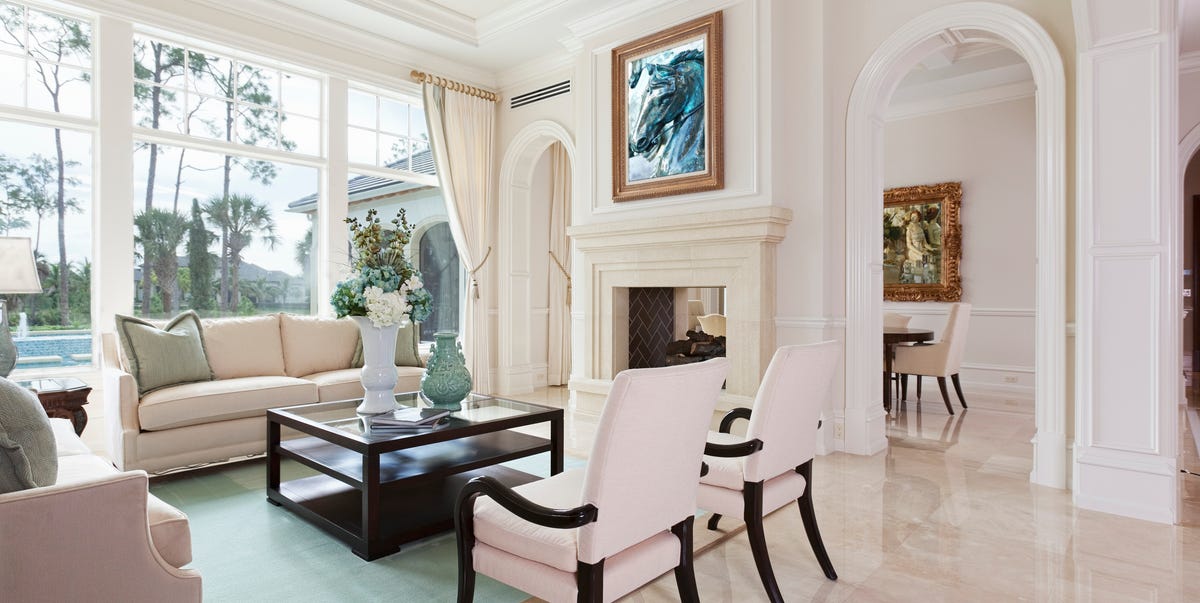
For years, the formal living room held a strange job description: look beautiful, impress guests, and under absolutely no circumstances show evidence that a human being had ever sat in it. It was the room with the “good” sofa, the fancy lamp, and the energy of a museum where someone might yell if you touched a throw pillow.
Designers are increasingly ready to retire that version of the room. Not because elegance is dead, and not because every home now needs a beanbag chair and a giant TV, but because the old-school formal living room often fails the most basic test of good design: it does not work hard enough for real life. Today’s homeowners want spaces that feel inviting, flexible, personal, and actually useful. In other words, they want a living room, not a velvet-covered shrine.
The shift is easy to understand. Homes now do more than ever. One room may host coffee at 8 a.m., Zoom calls at noon, a board game at 7 p.m., and a low-stakes existential spiral over paint swatches by bedtime. In that reality, a room reserved for rare holiday guests starts to feel less luxurious and more like wasted square footage wearing a blazer.
That is why the formal living room design trend is losing ground. Designers are still making beautiful spaces, but they are trading stiffness for comfort, symmetry for conversation, and showroom polish for warmth and personality. The modern living room is no longer about looking expensive from the doorway. It is about supporting how people actually live.
Why the Formal Living Room Feels Outdated Now
It was designed for a different era
The traditional formal living room comes from a time when homes often had separate rooms for separate functions. There was a place for receiving guests, a place for family time, a place for dining, and sometimes a room that existed mainly to prove the homeowner knew what tassels were. That layout made sense when entertaining was more ceremonial and daily life was less fluid.
Today, many homeowners want the opposite. They are looking for rooms that can adapt. Instead of maintaining a rarely used front room, they would rather create a multifunctional living room that supports reading, relaxing, hosting, working, and everyday hanging out. Even in larger homes, there is growing pressure for every room to earn its keep.
People want homes that feel lived in, not staged
One of the biggest reasons this trend is fading is emotional, not just practical. People are tired of spaces that feel untouchable. The old formal living room often prioritized visual perfection over comfort, and that can make a home feel more like a set than a sanctuary.
Designers are responding by embracing a more layered, welcoming look. Think softer seating, richer textures, mixed materials, collected accents, and layouts that invite conversation. The goal is not sloppiness. It is authenticity. A room should feel polished, yes, but it should also feel like someone with a pulse lives there.
The showroom look is losing its charm
Another reason the formal living room is on the way out is that many of its signature moves now read as predictable. Matching furniture sets, overly symmetrical layouts, ultra-stiff seating, and decor chosen mainly to signal taste can make a room feel flat. It may look “finished,” but it rarely feels memorable.
Designers increasingly prefer interiors with more dimension. That means mixing old and new pieces, introducing organic shapes, varying textures, layering lighting, and making space for objects that carry meaning. A room with character usually beats a room that looks like it arrived in one giant truck from the same catalog.
What Designers Want Instead of a Formal Living Room
A living room that multitasks without looking chaotic
The replacement for the formal living room is not necessarily the family room of the early 2000s, complete with towering entertainment center and enough leather to start a rodeo-themed country club. Instead, designers are rethinking the room as a flexible common area that can shift with the day.
A modern living room might include a reading chair near a lamp, a small game table, built-in storage, a desk tucked into one corner, or movable stools that can pull into a conversation zone when guests arrive. The room still looks intentional, but it also supports actual behavior. That is the key difference.
Comfort that still feels elevated
Comfort has become a design priority, but that does not mean the room has to look sleepy. Designers are proving that a cozy living room can still feel sophisticated. Upholstered pieces with softer profiles, curved seating, warm woods, plush rugs, textured drapery, and layered lighting all help create a room that feels relaxed without becoming sloppy.
In fact, this is where many homes are getting it right: they are blending refinement with ease. A tailored sofa can sit next to a vintage chair. A sculptural lamp can live above a well-worn side table. An elegant room no longer has to whisper, “Please don’t touch anything.” It can simply say, “Sit down, stay awhile, and ignore the dog hair if you are a real friend.”
Personality over perfection
One of the clearest shifts in living room design trends is the move toward personality. Designers are using art, books, antiques, handmade pieces, collected objects, and meaningful color choices to make rooms feel unique. This approach replaces the old formal formula with something more human.
That matters because people are no longer chasing a one-size-fits-all luxury look. They want rooms that reflect their routines, interests, and history. A home that feels deeply personal is usually more timeless than one built around whatever the internet declared chic six months ago.
The Old Formal Living Room Habits Designers Are Leaving Behind
If you want to understand why the trend is ending, look at the habits designers are actively moving away from:
- Guest-only layouts: A room no one uses is not aspirational. It is expensive storage for decorative pillows.
- Matching furniture sets: These often create a flat, catalog-like effect instead of a collected, layered room.
- Overly stiff symmetry: Balance still matters, but rigid mirror-image layouts can feel forced.
- Cold minimalism: Sparse rooms with little texture or warmth can read as sterile rather than serene.
- Fragile, impractical pieces: Furniture should survive conversation, coffee cups, and ordinary human behavior.
- Decoration without function: If a room is pretty but frustrating, designers increasingly consider that a miss.
This does not mean every traditional or elegant detail has to go. It means the room should feel curated for life, not staged for applause.
How to Update a Formal Living Room Without Losing Elegance
Start with the layout
The fastest way to modernize a formal living room is to make the layout more conversational. Pull furniture off the walls. Angle chairs toward the sofa. Add a pair of movable stools or ottomans. Make sure the room has surfaces for real use, like drinks, books, and lamps.
A beautiful room is not enough if every seat points at nothing and no one knows where to put a coffee mug. Good layouts quietly tell people how to use a room, and the best ones say, “Come in, sit anywhere.”
Mix the furniture instead of buying a set
If your room still has that overly coordinated look, break it up. Pair a streamlined sofa with vintage wood tables. Add a chair in a different silhouette. Use a rug that brings in softness and depth rather than just filling floor space. The goal is cohesion, not sameness.
This is also where secondary keywords like modern living room ideas and outdated living room trends matter for real design decisions: the updated room usually wins by adding contrast, history, and texture.
Warm up the palette
Designers have been leaning into warmer neutrals, earthy tones, moody colors, and tactile finishes. If your formal room is heavy on cold beige, gray, or sharp black-and-white contrast, it may benefit from a softer palette. Cream, camel, olive, tobacco, rust, muted blue, burgundy, and warm wood tones can all add depth without sacrificing sophistication.
Color is especially effective when paired with texture. Velvet, linen, wool, leather, boucle used in moderation, grass cloth, and natural stone can make a room feel layered and lived in rather than flat and precious.
Give the room a second purpose
One of the smartest updates is to assign the room another job. A formal living room can become a reading room, music lounge, quiet workspace, conversation room, cocktail area, or game room. This is not a downgrade. It is a modern upgrade.
When a room serves more than one purpose, it gets used more often, and once a room is used, people tend to care for it differently. They edit it better, furnish it more thoughtfully, and notice what it actually needs. That usually leads to better design, not worse.
Is the Formal Living Room Completely Dead?
Not exactly. Designers are not arguing that every elegant sitting room should vanish. What they are saying is that the old version of the formal living room, the one that exists only for display, is losing relevance. A formal room can still work if it feels inviting, intentional, and connected to modern life.
That is an important distinction. In some homes, especially traditional ones, a more formal front room still makes sense. But even then, the best versions are softer and more flexible than before. They may include deeper seating, better lighting, a bar cabinet, bookshelves, layered textiles, or a reading nook. They look refined, but they do not feel frozen in time.
So no, designers are not banning beauty. They are simply asking beauty to be useful for once.
The New Luxury: A Room You Actually Want to Be In
The biggest lesson behind this design shift is that luxury has changed. It is no longer just about formal arrangements, pristine upholstery, or rooms reserved for special occasions. Increasingly, luxury means comfort, adaptability, craftsmanship, and emotional ease.
A truly great living room now does more than photograph well. It supports everyday rituals. It welcomes guests without intimidating them. It gives family members a place to gather without making them feel like they need a permission slip to sit on the sofa. It balances style with usefulness and personality with restraint.
That is why the formal living room design trend is over, according to many designers. The room is not disappearing; it is evolving. And honestly, it is about time. Any room that has spent decades protecting its decorative pillows from real life was bound to face a reckoning sooner or later.
Real-Life Experiences With the End of the Formal Living Room Trend
One of the most interesting parts of this shift is how familiar it feels once you notice it. Almost everyone has seen some version of the old formal living room. It was the room you visited at a relative’s house during holidays, where everyone somehow spoke a little more softly. The furniture looked expensive, the coffee table had a book no one had ever opened, and the entire room gave off the vibe of “admire from a safe distance.” It was lovely, sure, but it often felt more ceremonial than comfortable.
Now compare that with the rooms people tend to love most today. They are still attractive, but they feel approachable. There might be a beautiful sofa, but there is also a chunky knit throw someone actually uses. There might be a sculptural side table, but it is holding a cup of coffee and a half-read novel instead of standing there like a tiny marble bodyguard. The room has personality. Better yet, it has proof of life.
Homeowners who update these spaces often describe the same experience: once the room becomes usable, it becomes beloved. The “special occasion” room slowly turns into the “let’s sit in here” room. Morning coffee happens there. Friends drift into it after dinner. Kids sprawl on the rug. Someone lights a lamp in the late afternoon and suddenly the room no longer feels like a formal obligation. It feels like part of the home.
There is also a subtle emotional change that comes with redesigning a formal living room. When a room stops trying to impress and starts trying to welcome, people relax. Guests sit down faster. Conversations last longer. The home feels less divided into “real life” spaces and “presentation” spaces. That may sound small, but it changes how people experience their homes every day.
Designers see this in renovation projects all the time. A homeowner starts by wanting to “freshen up” a formal room, but the deeper goal is usually to make the house feel more connected to daily life. Sometimes that means adding bookshelves. Sometimes it means replacing delicate seating with something deeper and softer. Sometimes it means turning the front room into a reading lounge, a music corner, or a spot for after-dinner drinks. Whatever form it takes, the pattern is the same: the room becomes more useful, and in becoming more useful, it often becomes more beautiful.
That may be the funniest truth about this whole trend. For years, the formal living room tried so hard to be impressive that it often ended up emotionally vacant. Now that designers are loosening the rules, these spaces are becoming richer, warmer, and more memorable. It turns out people are far more charmed by a room with soul than a room with perfect symmetry and absolutely no fingerprints.
So if your living room still feels like it is waiting for a distinguished guest from 1987, consider this your sign. You do not need to strip away every elegant detail. You just need to make the room feel alive. Add comfort. Add texture. Add something personal. Add a reason to go in there on a random Tuesday. Because the most stylish room in the house is no longer the one nobody uses. It is the one everyone quietly ends up in.
Conclusion
The formal living room is not vanishing because people suddenly dislike beauty or tradition. It is fading because modern homes demand more from every square foot. Designers are moving away from guest-only spaces and toward living rooms that feel layered, useful, cozy, and unmistakably personal. The new goal is not to create a room that looks untouched. It is to create one that feels irresistible.
If you are rethinking your own space, the message is simple: keep the elegance, lose the stiffness. Replace the museum energy with real-life comfort. A living room should not feel like a room you are trying not to ruin. It should feel like the room that makes everyone want to stay a little longer.













