
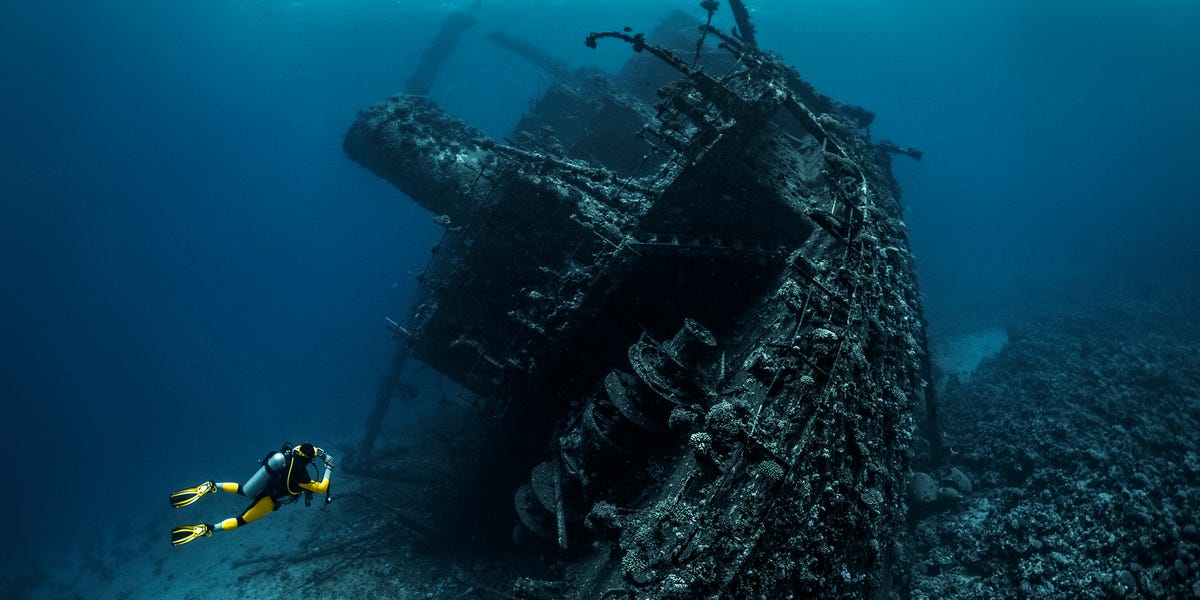
More than them>San José exploded during a Caribbean naval battle, most of its legendary cargo remains scattered across the dark seafloor near Cartagena, Colombia. Scientists have recovered a handful of artifacts, but the gold, silver, emeralds, human stories, and international arguments are far from the surface. The wreck is simultaneously an archaeological time capsule, a maritime grave, a potential multibillion-dollar fortune, and perhaps the world’s most complicated custody dispute.
A Fortune Waiting in the Dark
Somewhere beneath roughly 2,000 feet of Caribbean water lies a wreck that sounds as though it was designed by an unusually ambitious Hollywood producer. There is a Spanish warship, a catastrophic explosion, colonial treasure, secret coordinates, underwater robots, competing governments, Indigenous claims, and a legal fight involving billions of dollars. All that is missing is a villain stroking a cat in a submarine.
The ship is the San José, a Spanish galleon that sank near the Colombian coast in 1708. It has been nicknamed the “Holy Grail of shipwrecks” because historical accounts suggest that it carried an enormous cargo of gold, silver, emeralds, coins, and commercial goods collected across Spain’s American colonies.
Modern estimates frequently place the theoretical value of that cargo somewhere between $10 billion and $20 billion. Those figures make excellent headlines, but they should be treated cautiously. Nobody has counted every coin, inspected every ingot, or produced a tidy underwater inventory with a subtotal and sales tax. The value depends on what was actually aboard, what survived, what can be recovered, and whether culturally important artifacts could ever legally be sold.
What is certain is that most of the wreck and its reported fortune remain underwater. Colombian researchers recovered a small group of objects in November 2025, including a bronze cannon, three coins, a porcelain cup, and porcelain fragments. That was a historic scientific milestone, but it was not the opening scene of a giant treasure auction. The recovered pieces entered conservation and research programs, while the main archaeological site remained on the seabed. tion>
Why the San José Was Carrying So Much Wealth
A Floating Link in Spain’s Imperial Economy
Spanish treasure fleets were not simply ships packed with loose gold and dispatched toward Europe with crossed fingers. They were carefully organized components of a vast imperial trading system. Precious metals, gemstones, taxes, private merchandise, military supplies, official documents, and personal possessions moved through ports in the Americas before crossing the Atlantic.
The San José was built in Spain near the end of the 17th century and entered service as a heavily armed vessel. By 1708, it served as the flagship of a convoy carrying colonial revenue during the War of the Spanish Succession. Spain needed money to support King Philip V and finance an expensive European conflict. War, as history repeatedly demonstrates, is remarkably efficient at turning mountains of silver into smoke.
The galleon’s reported cargo included coins and bullion associated with mining and minting centers in South America. Emeralds and other valuable goods may also have been aboard. Some estimates refer to millions of gold and silver coins, although exact totals vary among historical accounts and modern reports.
The cargo cannot be understood only as glittering treasure. Much of the wealth came from colonial systems that relied on Indigenous labor, forced labor, coercive taxation, and the exploitation of American land and communities. That history complicates any cheerful story about “finding the gold.” To some claimants, the contents represent property. To others, they represent cultural heritage, ancestral labor, colonial violence, or all four at once.
The Fatal Voyage Toward Cartagena
In June 1708, the San José sailed toward Cartagena as part of a Spanish convoy. British forces were waiting. Britain and Spain were on opposing sides of the War of the Spanish Succession, and capturing a treasure fleet could deprive Spain of critical funds while producing a spectacular British payday.
On June 8, a British squadron led by Commodore Charles Wager engaged the Spanish ships near the Barú Peninsula. During the battle, the San José suffered a devastating explosion. The blast sent the vessel, its cargo, and almost everyone aboard to the bottom.
Accounts commonly state that only a tiny number of the roughly 600 people on board survived. The precise cause of the loss remains an important archaeological question. A magazine explosion has long been the dominant explanation, but researchers have also considered whether severe hull damage contributed to the sinking. The distinction matters because the pattern of wreckage can reveal how the ship broke apart and where its cargo may have scattered. tion>
Three Centuries of Mystery
After the battle, the Caribbean closed over the San José. The ship became a legend, while its approximate resting place remained known only through historical records, educated guesses, and the increasingly enthusiastic dreams of treasure hunters.
Locating a wreck in deep water is not like searching for a dropped set of keys in a swimming pool. The search area can be enormous. Sediment, currents, corrosion, darkness, and biological growth can obscure recognizable features. Wooden structures may collapse or disappear, while cannons, ceramics, anchors, and metal fittings spread across the seabed.
During the early 1980s, a private exploration enterprise associated with Glocca Morra and later Sea Search Armada reported finding a promising site. The company argued that it had discovered the San José and claimed economic rights connected to the wreck. Colombia disputed the coordinates and the extent of those rights, launching a legal conflict that would continue for decades.
The official breakthrough came in November 2015. An international team working with the Colombian government surveyed an area off Cartagena using the REMUS 6000 autonomous underwater vehicle. Developed and operated with expertise from the Woods Hole Oceanographic Institution, the vehicle could travel close to the seafloor, map large areas, and capture high-resolution images without placing human divers in extreme conditions.
Distinctive bronze cannons decorated with dolphin motifs helped researchers identify the wreck as the San José. The site was found more than 600 meters below the surface, and Colombia kept its exact location secret to protect it from unauthorized interference. tion>
How Underwater Robots Explore a Shipwreck
There Is No Casual Dive to the Treasure Chest
At approximately 2,000 feet deep, the wreck lies far beyond the practical range of ordinary scuba diving. Water pressure is immense, natural light is absent, and every operation requires specialized equipment. Human access would involve expensive deep-sea submersibles, making robotic systems the safer and more flexible choice.
Autonomous underwater vehicles can survey the seabed using sonar and programmed routes. Remotely operated vehicles, connected to a surface ship, can provide live video, maneuver close to artifacts, and use mechanical arms or collection tools. Scientists may also employ photogrammetry, which combines overlapping photographs to build detailed three-dimensional models.
These digital models allow archaeologists to examine coins, cannons, ceramic vessels, debris patterns, and sediment without immediately disturbing the site. Researchers can measure objects, compare decorative features, identify mint marks, and monitor changes over time. It is archaeology with fewer brushes and more cables.
The technology also helps prevent accidental destruction. A shipwreck is not a pile of independent objects. The position of every artifact may contain evidence about how cargo was stored, where crew members worked, how the ship was damaged, and how it sank. Removing a coin without recording its context can erase part of the story.
Why Recovery Is Only the Beginning
An artifact that has spent centuries in salt water cannot simply be placed on a shelf and admired. Metals may begin corroding rapidly when environmental conditions change. Ceramics can contain soluble salts. Wood, if preserved, may crack, shrink, or collapse as it dries.
Recovered objects therefore require controlled handling, desalination, stabilization, documentation, laboratory analysis, and long-term conservation. The cost and complexity of preserving thousands of artifacts could be enormous. Bringing something to the surface is the dramatic part; keeping it from disintegrating is the part that makes conservators lose sleep.
That is one reason Colombia’s current project has emphasized research rather than large-scale commercial salvage. The first retrieved objects were selected to help scientists study the site and test conservation procedures, not to empty the wreck as quickly as machinery would allow.
Who Owns the San José Shipwreck?
Colombia’s Position
Colombia considers the wreck part of its submerged cultural heritage. It lies within waters under Colombian jurisdiction, and the government has declared the archaeological context an asset of national cultural interest. Colombian officials have repeatedly argued that the site should be investigated for its historical value rather than treated as a warehouse of marketable treasure.
That position does not magically end every dispute, but it determines how Colombia currently manages the wreck. The government controls access, protects the coordinates, directs scientific operations, and decides which artifacts may be recovered.
Spain’s Position
Spain has maintained that the San José was a Spanish state vessel. Under principles commonly applied to sovereign warships, Spain argues that ownership and legal protections do not automatically disappear because a government ship sank in another country’s waters.
Spain has also described the site as a maritime grave because hundreds of sailors and passengers died there. That status strengthens the argument for respectful archaeological management and against purely commercial excavation. Spanish statements have supported preservation of the wreck as underwater cultural heritage and opposed its commercial exploitation. Sea Search Armada’s Claim
Sea Search Armada, a U.S.-based group linked to the earlier exploration claim, says its predecessors located the wreck area in the 1980s. It has pursued compensation or a share of the treasure, arguing that Colombia improperly denied or removed its economic rights.
The dispute entered international arbitration under the United States–Colombia trade framework. Public case records identify the proceeding as Sea Search-Armada, LLC v. Republic of Colombia. The company has sought damages connected to what it considers its interest in the wreck, while Colombia argues that the claimant’s coordinates do not match the official 2015 discovery and that submerged cultural heritage belongs to the nation. As of July 2026, the publicly documented dispute remained a major unresolved part of the San José story. Indigenous and Ancestral Claims
Representatives of Indigenous communities from Bolivia, including the Qhara Qhara people, have also asked to participate in discussions about the cargo. Their argument focuses on the origin of the metals and the people whose labor extracted colonial wealth from places such as the Potosí mining region.
This claim shifts the question from “Who found the ship?” to “Where did the wealth come from?” It is a morally significant change. The treasure did not appear inside the galleon through maritime magic. It was produced within a colonial economy whose costs were carried disproportionately by Indigenous and African laborers. tion>
Why the Treasure May Never Become Spendable Money
The enormous dollar figures associated with the San José can create the impression that someone will eventually receive a check large enough to make a central banker nervous. Reality is much less convenient.
First, estimated value is not the same as recoverable value. Some cargo may be buried, dispersed, damaged, chemically altered, or impossible to retrieve without destroying surrounding evidence. Historical records may also exaggerate or incompletely describe what was loaded.
Second, archaeological objects are not interchangeable with ordinary bullion. A gold coin recovered from a documented location inside a famous wreck has historical meaning that can make preservation more important than sale. Melting it for its metal value would be the cultural equivalent of using an original historical manuscript to wrap a sandwich.
Third, legal restrictions could prevent commercialization. Colombia’s cultural-heritage designation supports preservation and public ownership. Spain’s sovereign-vessel claim, the private arbitration, and demands from ancestral communities further complicate any attempt to divide the cargo.
Finally, recovery and conservation would consume substantial resources. Ships, robotic systems, technical crews, laboratories, security, storage, researchers, lawyers, and museums are not known for operating on spare change. Even a valuable cargo can generate staggering expenses before producing a single public exhibit.
The Real Treasure Is the Complete Archaeological Site
Calling the San José a treasure ship is accurate, but incomplete. The site may preserve information about naval warfare, ship construction, global commerce, diet, medicine, religion, social class, and everyday life at sea during the early 18th century.
Porcelain can reveal trade connections stretching across oceans. Cannons may carry foundry marks linking them to particular workshops. Coins can identify mints and production years. Personal objects can show how officers, sailors, soldiers, merchants, servants, and passengers lived aboard the vessel.
The distribution of wreckage may even help settle the debate over how the ship sank. If an explosion tore through the powder magazine, the debris field should differ from one created primarily by structural damage or flooding. Archaeologists can compare object locations, hull remains, cannon positions, and signs of heat or fragmentation.
Most important, the site is connected to hundreds of lives lost in a matter of minutes. Treating it only as a financial prize would reduce those people to background characters in a treasure-hunting adventure. A responsible project must balance scientific curiosity, public education, cultural memory, and respect for the dead.
UNESCO’s underwater heritage principles generally favor preservation in place when practical and discourage commercial exploitation that separates objects from their archaeological context. Colombia is not a party to every relevant international convention, but those standards continue to influence the global debate surrounding the wreck. tion>
What Happens Next?
The first artifact recovery proved that Colombia has the technical ability to retrieve selected objects from the site. It also demonstrated how slowly a responsible project must proceed. Scientists now have to conserve the recovered material, analyze it, compare it with underwater imagery, and determine what additional interventions would provide meaningful knowledge without causing unnecessary damage.
Future expeditions may retrieve more diagnostic artifacts, expand three-dimensional mapping, inspect the hull structure, and study areas of the debris field that have not been fully documented. Researchers may also learn whether environmental conditions are preserving the site or gradually destroying it.
A large-scale recovery of the entire fortune is far from guaranteed. In fact, the wreck may never be “raised” in the dramatic sense imagined by popular culture. Archaeologists are more likely to conduct a long series of targeted operations while leaving much of the ship in place.
The legal arguments will continue alongside the scientific work. A court or arbitration ruling might resolve one financial claim without settling the broader questions involving Spain, Indigenous communities, cultural stewardship, and human remains.
For now, the San José remains what it has been for centuries: a ship suspended between history and legend, guarded by pressure, darkness, law, and an impressive amount of paperwork.
Experiencing the Story Beyond the Treasure Headlines
Approach It as History, Not a Lottery Ticket
The most rewarding way to experience the San José story is to temporarily forget the largest dollar estimate attached to it. That sounds difficult because “possibly $20 billion” tends to enter a room before every other fact. Still, the story becomes richer when the ship is viewed as a historical crossroads rather than an underwater jackpot.
Begin with a map. Trace the route connecting South American mining regions, colonial mints, ports such as Portobelo and Cartagena, and the Atlantic crossing to Spain. The scattered locations reveal that the galleon belonged to an early global network. Silver mined in the Andes could finance a European war, purchase goods from Asia, pass through Caribbean ports, and influence economies thousands of miles away.
Then study the Battle of Barú from more than one perspective. From the British side, the San José was a strategic target whose capture could weaken an enemy. From the Spanish side, it was a guarded financial lifeline. For the people aboard, however, the encounter was not an elegant diagram of ships and arrows. It was noise, smoke, splintering timber, confusion, fire, and a terrifyingly sudden descent.
Imagine the Archaeologist’s Experience
Watching underwater footage offers a very different emotional experience from seeing polished treasure in a museum case. The seafloor is dark and quiet. Cannons rest where violent movement ended centuries ago. Ceramics appear among sediment and marine growth. Coins may look less like royal riches than small, irregular disks waiting for expert eyes to recognize them.
For researchers, every movement of a robotic arm carries consequences. A poorly chosen grip can damage an artifact. A thruster can disturb sediment and erase relationships among objects. A decision to recover one item may require months or years of conservation afterward.
This slow approach can frustrate anyone expecting a dramatic treasure hunt, but patience is part of the experience. Archaeology is often less like opening a chest and more like solving a mystery in which touching the evidence can change it forever.
Visit Cartagena With the Wider Story in Mind
Travelers interested in the galleon can experience its historical setting in Cartagena without trying to locate the secret wreck site. The city’s fortifications, harbor, museums, colonial streets, and Caribbean geography help explain why Cartagena was so important to Spain and why enemy fleets targeted the area.
Standing near the coast makes the story feel more immediate. The warm surface of the Caribbean gives no visible indication that a battlefield, grave site, and contested fortune lie far below. That contrast is part of the fascination. History does not always announce itself with a plaque. Sometimes it waits beneath hundreds of meters of water.
A responsible visitor should also resist romanticizing colonial wealth. Learning about the people who mined silver, transported cargo, built ships, served aboard fleets, and suffered under imperial systems produces a more honest experience. The gold is visually exciting; the human cost gives it meaning.
Follow the Science Without Expecting a Final Episode
Anyone following the San José should prepare for a story measured in decades rather than news cycles. Conservation results may emerge slowly. Legal cases may produce procedural decisions before final answers. New mapping could raise additional questions instead of resolving old ones.
That uncertainty is not a flaw. It is one of the reasons the shipwreck remains compelling. Each cannon, coin, cup, and fragment can alter what researchers think they know. The wreck is still capable of surprising historians more than 300 years after its sinking.
The best experience, therefore, comes from accepting that there may never be one triumphant moment when the sea gives up everything. The San José is not merely a chest waiting to be opened. It is a damaged historical landscape, and understanding it will require technology, diplomacy, conservation, humility, and perhaps several more generations of extremely patient people.
Conclusion: The Fortune Is Only Part of the Mystery
The San José earned its “Holy Grail of shipwrecks” nickname because of the extraordinary wealth believed to rest among its remains. Yet the most important question is no longer simply whether the treasure can be recovered. It is whether the world can investigate the site without destroying the evidence, ignoring the dead, or repeating the exploitative attitudes that created much of the cargo in the first place.
Colombia’s recovery of a few carefully selected artifacts marked the beginning of a new scientific phase, not the end of the hunt. Most of the galleon, its disputed fortune, and its unanswered questions remain underwater near Cartagena.
The gold may eventually reach the surface in small quantities. The complete story will be much harder to raise.













