
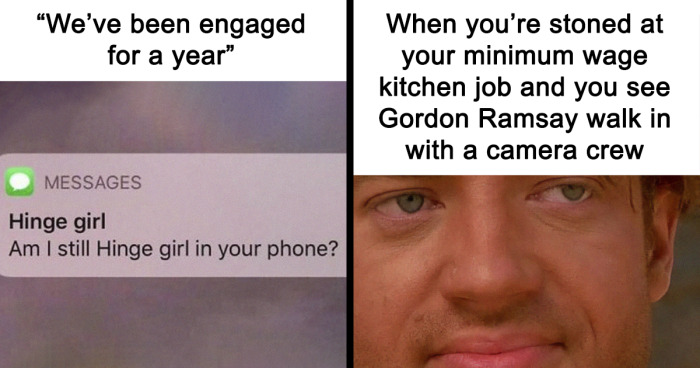
Some Instagram pages look like carefully arranged museums: matching colors, polished captions, and coffee cups that seem to have publicists. Tank Sinatra takes the opposite approach. His feed feels like the internet’s junk drawerchaotic, strangely useful, and guaranteed to contain something that makes you ask, “Why is this here, and why am I laughing?”
The featured collection of 50 hilariously random memes shows why that formula works. One post may touch on relationships, while the next jumps to pets, work, childhood memories, public embarrassment, or a celebrity reaction face. The subjects change constantly, but the emotional rhythm remains steady: recognition, surprise, laughter, and the immediate urge to send the post to one very specific friend.
Who Is the “Michael Jordan of Memes”?
Tank Sinatra is the online persona of George Resch, a Long Island-based creator known for pairing viral visuals with sharp observations about ordinary life. His Instagram bio playfully calls him “The Jay-Z of being the Michael Jordan of memes,” and the account has gathered roughly three million followers along with thousands of posts.
The sports comparison is deliberately over-the-top, which makes it ideal meme language. Yet it also points to real skills: consistency, timing, range, and an instinct for what an audience will recognize immediately. Resch expanded beyond one meme feed into projects such as positive-news content and “Influencers in the Wild,” while interviews have repeatedly highlighted his habit of noticing small absurdities and turning them into shareable jokes.
Why These 50 Random Memes Are So Addictive
A random meme collection should feel incoherent, yet a good one does not. The images may be unrelated, but the emotions connect them. A tired employee, a suspicious cat, a dramatic movie character, and a confused child can all communicate the same message: life is not going according to plan.
They Turn Tiny Frustrations Into Shared Jokes
Many memorable memes begin with experiences too minor for a serious conversation but too irritating to ignore: forgetting why you entered a room, saying “you too” when a server tells you to enjoy your meal, or checking the refrigerator again as though new food might spawn. The meme transforms private embarrassment into group membership. You are not uniquely disorganized; thousands of strangers apparently use the same defective operating system.
The Caption Changes the Image’s Meaning
A basic meme labels a picture. A strong meme reinterprets it. A heroic movie scene becomes a metaphor for carrying every grocery bag in one trip. A peaceful animal becomes the employee trying to remain polite during a meeting that should have been an email. The laugh comes from understanding the image’s original mood and its newly invented context at the same time.
Randomness Protects the Element of Surprise
A page devoted only to dating jokes, office jokes, or cat jokes eventually begins serving the same meal on different plates. Tank Sinatra’s broad range makes the next post difficult to predict. Research on meme diffusion describes image memes as cultural objects that travel across communities, mutate, and gain new meanings. A random meme account benefits from that movement because it can curate many comic dialects instead of depending on one narrow genre.
Every Good Meme Has a Potential Recipient
The most shareable joke is often the one that reminds you of someone. An overpacking meme goes to the friend who brings three bags for a weekend. A phone-call joke goes to the person who watches the phone ring and then texts, “What’s up?” Sharing says, “I know your habits,” “I remember our shared disaster,” or simply, “This is absolutely you.” Studies of online communities and meme-based communication suggest that such exchanges can reinforce belonging and carry emotion efficiently.
The Comic Ingredients Behind Tank Sinatra’s Style
Relatability Without a Lecture
A good caption leaves room for the viewer to finish the joke. It does not explain why grocery shopping is exhausting. It shows one devastated face, adds one precise sentence, and trusts the audience to supply years of supporting evidence. The format can compress a setup, conflict, emotional reversal, and punchline into less time than a website needs to ask whether you accept cookies.
Self-Deprecation That Includes Everyone
The page often treats incompetence as a shared human condition. Everyone procrastinates. Everyone has made a questionable late-night purchase. Everyone has rehearsed a simple sentence and still delivered it like a malfunctioning robot. Because the joke points inward, the audience is invited to laugh at a common weakness rather than enjoy someone else’s humiliation.
Reaction Images With Exact Emotional Temperature
Shocked athletes, devastated actors, suspicious children, and judgmental animals remain dependable meme material because their expressions are dramatically larger than the situations described. Selecting the right intensity is a real skill. A two-word text reply may require confusion; sending a screenshot to the person shown in the screenshot demands full historical-tragedy energy.
Absurdity With One Foot in Reality
The strongest nonsense usually begins with something recognizable and then turns one click stranger than expected. Viral internet history is full of ordinary images or objects that became enormous collective jokes because people enjoyed participating in the absurdity. The humor becomes part amusement, part ritual, and part “I cannot believe we are all doing this.”
What the 50-Meme Collection Says About Internet Humor
Memes Function Like a Visual Language
Internet users learn recurring templates much as speakers learn idioms. A familiar image already carries emotional meaning before a new caption appears. The creator can confirm that meaning, reverse it, or deliberately misuse it. This is why older formats sometimes remain effective: the audience understands the setup instantly, leaving more room for the twist.
Humor Can Offer a Brief Emotional Reset
An Instagram scroll is not medical treatment, but laughter can create a short break from stress. Clinical discussions commonly associate humor with social connection and improved mood, while research on mental-health memes has explored how relatable comic content may help some viewers feel recognized. The benefit depends on the person and context, but the mechanism is easy to understand: the meme acknowledges a problem while changing the viewer’s emotional position toward it.
The Audience Helps Finish the Joke
A meme continues evolving after publication. People tag friends, add stories, rewrite captions, and carry the format into new communities. The comment section becomes a second comedy stage: one person supplies a personal example, another improves the punchline, and a third confidently misunderstands everything.
Good Curation Is Not the Same as Random Reposting
Large meme pages operate partly like magazines. Their value comes from selecting material, matching it to an audience, maintaining a recognizable voice, and posting consistently. Attribution also matters. Meme culture has long struggled with erased watermarks and unclear authorship, so responsible curation should preserve creator credit whenever the original source can be identified.
Why the Michael Jordan Comparison Almost Makes Sense
The nickname works because a long-running meme page depends on four strengths: consistency, fast timing, range across subjects, and an instinct for jokes that feel personal yet widely relatable. ABC News profiled Resch’s approach to viral Instagram humor as early as 2017, when his following was far smaller. That longevity matters because meme formats and platform habits change quickly. Remaining recognizable without becoming frozen in one internet era is harder than producing a single viral hit.
Enjoy the Memes Without Losing the Entire Evening
A 50-meme collection has a finish line; an algorithmic feed does not. One joke leads to another, then to a dog refusing to leave a bathtub, and finally to a heated debate about air fryers. Enjoy meme pages deliberately: save the posts that genuinely make you laugh, send a few to friends, and skip material built on misinformation or cruelty. Satire can be useful, but research also indicates that playful ridicule may damage reputations by reducing people to caricatures. Funny does not automatically mean harmless.
Reader Experience: What a 50-Meme Scroll Feels Like
Imagine opening the collection after a long day. You are not looking for a documentary, a philosophical breakthrough, or a 47-minute video essay titled “The Hidden Economics of Cartoon Sandwiches.” You want something immediate. The first meme earns a small smile because it captures an annoyance you experienced that morning. The second is not personally relatable, but its reaction image is so dramatically inappropriate that it works anyway.
By the fifth or sixth post, a rhythm develops. The page is not asking you to follow a story. It is inviting your brain to perform a series of tiny jumps: work stress, pet behavior, dating confusion, childhood nostalgia, then a celebrity face representing the moment your card is declined for a purchase you did not need. Each jump resets attention and keeps the collection fresh.
Then comes the first meme you immediately send to someone. There is no greeting and no context. You share it with the friend who takes 40 minutes to choose a restaurant and then orders the same thing every time. The friend responds with a skull emoji, which can mean laughter, disbelief, emotional collapse, or “I have no counterargument.” A ten-second joke has reinforced a relationship built over years.
A few posts later, you find a meme that is funny for a less comfortable reason: it recognizes a habit you would prefer to classify as unique. Perhaps it is procrastination disguised as preparation. Perhaps it is opening an email, becoming mildly stressed, and deciding the mature response is to reorganize a drawer. The meme removes your ability to pretend the behavior is strategic. You laugh because you have been identified by a JPEG.
Not every post lands. Humor depends on age, context, taste, cultural knowledge, and whether the viewer has encountered the same template 900 times. One meme may feel dated. Another may require knowledge of a show you never watched. A third may seem designed for someone whose entire personality is arguing in comment sections. You simply keep moving.
The strongest part of the scroll arrives when several different styles work close together. One joke succeeds through sharp writing. Another uses a perfectly selected animal expression. A third is so absurd that explaining it would ruin it. Variety creates momentum and demonstrates that “random” does not mean careless. The posts shift among familiar forms of humor while maintaining a recognizable voice: observant, slightly chaotic, self-aware, and comfortable with silliness.
As the collection approaches 50, the experience becomes less about any individual meme and more about accumulated relief. Nothing in your life has materially changed. The laundry still exists. The meeting remains scheduled. The password created yesterday is still somehow incorrect. Yet the emotional weight has shifted slightly because ordinary problems have been viewed from exaggerated angles.
That is the practical appeal of Tank Sinatra’s page. It does not ask viewers to admire a flawless lifestyle or extract a lesson from every post. It offers shared recognition that people are awkward, pets are unpredictable, technology is occasionally possessed, and adulthood contains a shocking amount of pretending to understand forms.
The best final move is to close the app while you are still laughing. Keep one or two favorites in the group chat. Let the rest drift into internet culture, where old images gain new captions and yesterday’s random joke becomes tomorrow’s oddly specific emotional vocabulary.
Conclusion
“The Michael Jordan Of Memes”: 50 Hilariously Random Memes From This IG Page is more than a pile of unrelated jokes. It demonstrates the basic machinery of internet humor: familiar experiences, unexpected captions, exaggerated reactions, remixing, and social sharing.
Tank Sinatra’s appeal comes from recognizing ordinary absurdity and packaging it with enough precision to feel surprising and obvious at once. The internet may not solve your problems, but it can hand you the perfect reaction image while they are happening. That is not a championship ring, but in the meme world, it is close.














