
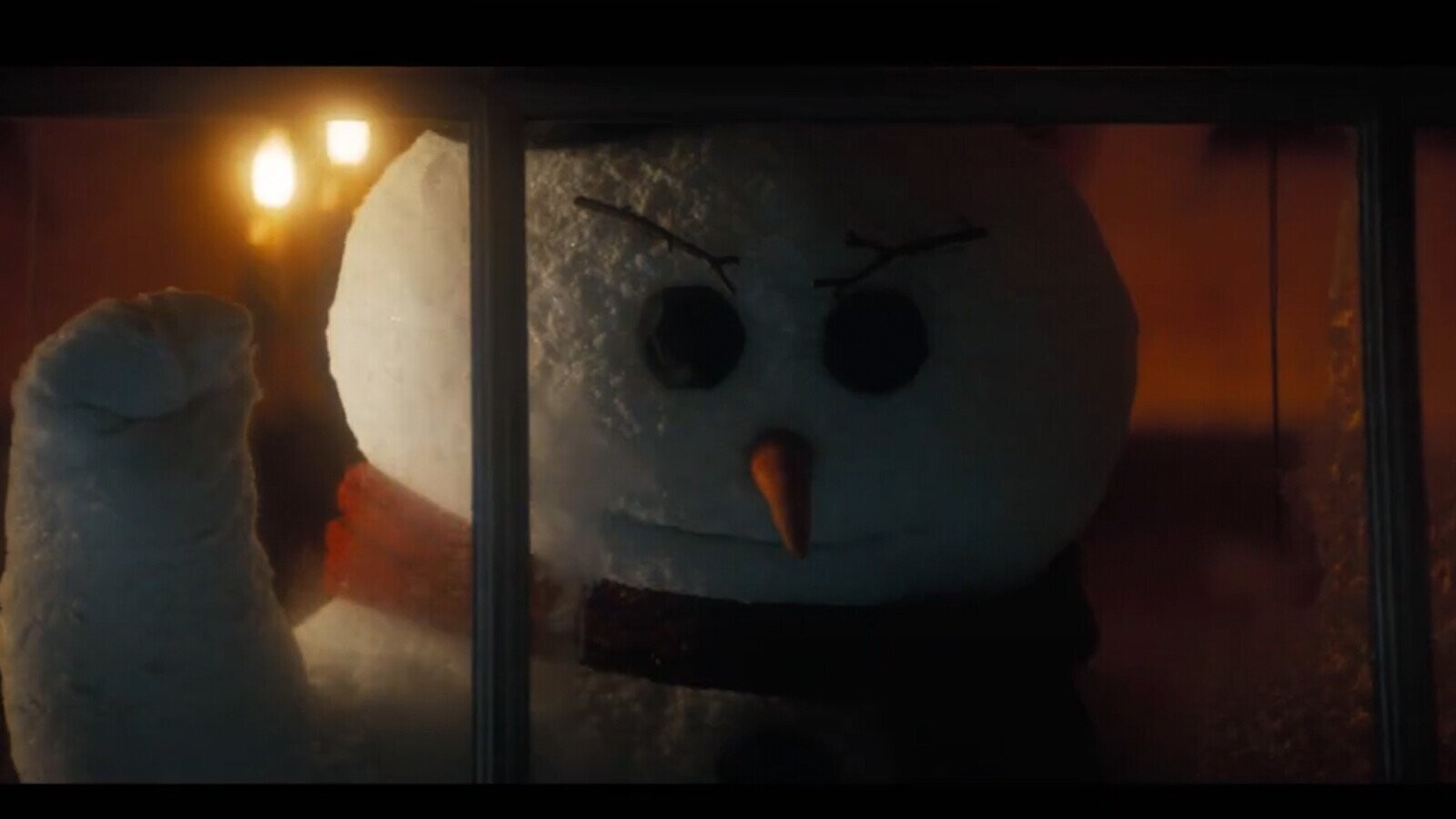
If you had “Liam Neeson, Pamela Anderson, a cursed romantic snowman, and the Jim Henson Company” on your 2025 comedy bingo card, congratulations: please report to Hollywood immediately, because you may be a prophet. One of the strangest, funniest, and most talked-about bits in The Naked Gun reboot is not a throwaway digital gag. The enchanted, horny snowman in the film was created with practical puppetry by Jim Henson’s Creature Shop, the legendary character-building division of the Jim Henson Company.
That detail makes the joke even better. The scene already plays like a romantic montage that got hit in the face with a snow shovel, but knowing that a real performer and puppeteers helped bring the snowman to life adds a wonderful layer of old-school movie magic. In an era when many outrageous comedy sequences are polished into weightless pixels, The Naked Gun chose foam, fabric, mechanics, sweat, timing, and facial expressions. Yes, even the eyebrows matter. Especially the eyebrows.
Why the Snowman Scene Became the Reboot’s Weirdest Calling Card
The 2025 Naked Gun stars Liam Neeson as Lt. Frank Drebin Jr., the son of Leslie Nielsen’s iconic police detective, and Pamela Anderson as Beth Davenport. Directed and co-written by Akiva Schaffer, the movie revives the deadpan, rapid-fire spoof style that made the original franchise famous. It is full of visual gags, wordplay, absurd violence, deliberately dumb logic, and jokes that behave like they have escaped from a locked evidence room.
Still, even in a movie built on nonsense, the snowman sequence stands out. Frank and Beth head to a snowy cabin getaway, where their romance is presented in the language of a glossy 1980s love montage. There is music, soft lighting, cozy winter imagery, and the emotional sincerity of people who have never once wondered whether building a snowman might lead to legal complications.
Then the movie swerves. A spell book enters the picture. The snowman comes alive. The romantic fantasy turns into a surreal three-person entanglement, then into rejection, jealousy, and finally a homicidal winter meltdown. It is bizarre, bawdy, and proudly ridiculous. In other words, it is exactly the kind of impossible joke a Naked Gun movie needs if it wants to prove it is not merely dusting off the old badge.
The Jim Henson Company Connection: Not CGI, But Creature Comedy
The snowman was not simply generated on a computer and dropped into the scene like a frosty screensaver. The character was built as a practical puppet by Jim Henson’s Creature Shop. More precisely, it functioned as an animatronic, walkaround-style character: a performer worked inside the suit, while another puppeteer helped control expressive features such as the face, mouth, and eyebrows.
That physicality is crucial. A digital snowman could have looked smoother, bigger, flashier, and probably more expensive. It also might have been less funny. The humor of the sequence depends on the snowman feeling awkwardly present in the room with Liam Neeson and Pamela Anderson. He is not a majestic fantasy creature. He is a lumpy romantic disaster with a face, a mood, and eventually a weapon. That kind of comedy thrives when the audience can sense the object’s weight and limitation.
Why Practical Effects Make the Joke Land Harder
Practical effects have a special advantage in comedy: they give actors something real to react to. Neeson can play the scene with the severe seriousness he usually brings to action thrillers. Anderson can sell the romantic and absurd beats without appearing to interact with empty air. The snowman can stand there looking both magical and deeply unqualified for romance. Everyone is in the same physical joke.
That is the magic of a good puppet gag. The audience knows it is fake, but it is fake in a way that feels handmade, immediate, and human. A puppet can be clumsy on purpose. It can have an oddly delayed reaction. It can stare too long. It can turn its head with the unsettling sincerity of a mascot who has read one relationship book and misunderstood all of it.
The Eyebrows Are Doing Oscar-Level Nonsense
The snowman’s face is a big part of why the sequence works. Comedy often lives in tiny movements: a glare, a blink, a shift from innocent wonder to jealous rage. The fact that the character had controlled facial features gave the scene more than a prop. It gave the scene a performance.
That is very Henson. The company’s legacy is built on the idea that an artificial character becomes believable when it has personality, rhythm, and emotional clarity. Whether the result is sweet, strange, frightening, or, in this case, a snow-based romantic menace, the principle is the same: make the creature feel alive enough for the audience to accept the joke.
How the Scene Fits the Classic Naked Gun Tradition
The original Naked Gun movies were never just collections of punchlines. They were elaborate machines designed to make stupidity feel elegant. Leslie Nielsen’s Frank Drebin could walk through chaos with the confidence of a man delivering a State of the Union address from inside a revolving door. The jokes worked because the characters rarely admitted they were jokes.
The snowman scene follows that rule. It is not funny because the movie points at it and screams, “Look how random this is!” It is funny because the movie treats the sequence like a sincere romantic passage that happens to involve forbidden snowman magic. The lighting is lush. The mood is earnest. The music cues feel shamelessly sentimental. The characters commit. That commitment turns a ridiculous idea into a full comic event.
The reboot also understands that a legacy sequel needs at least one gag that belongs entirely to itself. Nostalgia can get people into a theater, but it cannot carry a comedy forever. A new Naked Gun needs jokes that viewers will describe later with disbelief. “Remember the snowman?” is exactly the kind of sentence a successful spoof wants people saying in parking lots, group chats, and comment sections.
Akiva Schaffer’s Comedy Instinct Was Right
Akiva Schaffer, known for his work with The Lonely Island and films such as Hot Rod, Popstar: Never Stop Never Stopping, and Chip ’n Dale: Rescue Rangers, has a long history of pushing jokes past their expected endpoint. The snowman sequence feels like that sensibility at full blast. It starts as one kind of joke, mutates into another, then keeps going until the audience is forced to surrender.
Reports around the film indicate that the scene was not universally loved during development. That makes sense. On the page, “romantic snowman threesome turns violent” probably looks less like a guaranteed crowd-pleaser and more like something a studio executive reads before quietly checking whether the conference room has exits. But comedy often depends on instinct. Some jokes sound impossible until they are performed with the right tone, timing, and craft.
In the finished film, the sequence works because everyone behaves as if this is the most natural development in a police comedy. Neeson’s stern authority, Anderson’s playful confidence, the winter-cabin atmosphere, and the Henson-built snowman all combine into something that feels both shocking and weirdly inevitable.
Why the Jim Henson Company Was the Perfect Choice
Jim Henson’s Creature Shop has spent decades creating expressive characters for film, television, theater, commercials, and live events. Its history includes soft puppets, animatronics, digital puppetry, creature suits, and hybrid effects that blend craft with technology. That background makes the company uniquely suited to a gag that needs to be both silly and technically believable.
The snowman is not supposed to look like a slick superhero creature. He is supposed to look like an enchanted snowman that two people could plausibly build during a cabin getaway, while still having enough expressiveness to become a comic character. That is a narrow target. Too realistic, and the joke gets creepy in the wrong way. Too cartoonish, and the actors seem trapped in a sketch. The Henson approach lands in the sweet spot: absurd, tactile, and emotionally readable.
There is also a delightful cultural irony here. The Jim Henson name is associated with childhood wonder, family entertainment, fantasy creatures, and beloved puppet characters. The Naked Gun uses that same tradition of character craft for a very adult, very ridiculous comedy bit. It is not a Muppet moment, but it does carry the DNA of Henson-style performance: a handmade character becomes funny because it behaves like it has feelings.
Reception: From Risky Bit to Audience Favorite
The snowman sequence quickly became one of the reboot’s signature talking points. Critics and viewers singled it out as the kind of bizarre, committed gag that modern studio comedies often avoid. That reaction matters because spoof comedy has become rarer in theaters. For years, big-screen comedy has often been absorbed into action films, superhero banter, animated features, or streaming releases. The Naked Gun arrived with an old promise: come sit in a room with strangers and laugh at something deeply stupid.
Not every viewer loves the same joke, of course. The scene is intentionally polarizing. It is bawdy, strange, and longer than a simple punchline. But that is also why it sticks. Safe jokes evaporate. Dangerous jokes become stories. The snowman scene is the kind of comic swing that reminds people how much fun a studio comedy can be when it stops politely asking for permission.
Experience Notes: What It Feels Like to Watch the Henson Snowman Scene
The best way to experience the snowman scene is with an audience that has no idea what is coming. At first, the room recognizes the setup: a romantic montage, a pretty cabin, two attractive leads, and the familiar rhythm of movie love blooming faster than a credit-card bill after vacation. People settle in because they know the language. Then the snowman comes to life, and the audience begins laughing in stages.
The first laugh is surprise. The second laugh is disbelief. The third laugh is the bigger one, because the movie refuses to back away. That is where the scene becomes memorable. Many comedies introduce a strange idea and immediately apologize for it with a wink. This one doubles down. It lets the snowman become part of the romance, then part of the breakup, then part of the danger. The longer it continues, the more viewers realize they are not watching a single gag. They are watching a miniature comic opera performed by two movie stars and one emotionally unstable winter decoration.
The practical puppet makes that experience warmer and funnier. You can feel the texture of the gag. The snowman’s body has mass. His movements have limits. His face does just enough. When he becomes angry, the effect is not sleek horror; it is handcrafted absurdity. That makes the violence funnier because it is filtered through an object that still looks like it belongs on a front lawn with a scarf and a carrot.
For longtime fans of The Naked Gun, the sequence also creates a familiar feeling: the joy of watching a joke go too far with a straight face. The original films trained audiences to scan the frame for background nonsense, listen for dumb wordplay, and expect sudden shifts in logic. The snowman scene updates that rhythm without simply copying old material. It honors the franchise by being fearlessly silly in a new way.
For younger viewers, the scene may serve a different purpose. It shows why practical comedy effects still matter. A real puppet gives performers something to bounce against. It gives the camera something to frame. It lets the audience share a physical illusion rather than merely admire a post-production trick. The result feels messy in the best possible way. Comedy should sometimes feel like someone in the next room had a terrible idea, built it anyway, and somehow made it work.
That is the lasting experience of the enchanted, horny snowman: not just shock, not just raunch, but craft. The joke is outrageous, but the execution is disciplined. It has structure, escalation, performance, design, and timing. Beneath the ridiculous surface is a very serious lesson about comedy filmmaking: if the audience can feel the commitment, they will follow you into almost any snowbank.
Conclusion: A Snowman, a Puppet, and a Perfectly Dumb Miracle
The enchanted snowman in The Naked Gun is more than a viral oddity. It is a reminder that great comedy often comes from treating a ridiculous idea with absolute seriousness. By turning to the Jim Henson Company’s Creature Shop, the filmmakers gave the scene a tangible, expressive weirdness that pure CGI might not have captured. The snowman is funny because he feels present. He is absurd because he is sincere. He is memorable because the movie dares to let the bit keep escalating.
In a reboot filled with pressure to honor a beloved comedy franchise, this strange Henson-built character became proof that The Naked Gun still understands its most important rule: never merely tell the audience a joke when you can build one, animate it, give it eyebrows, make it fall in love, and then hand it a gun.










