
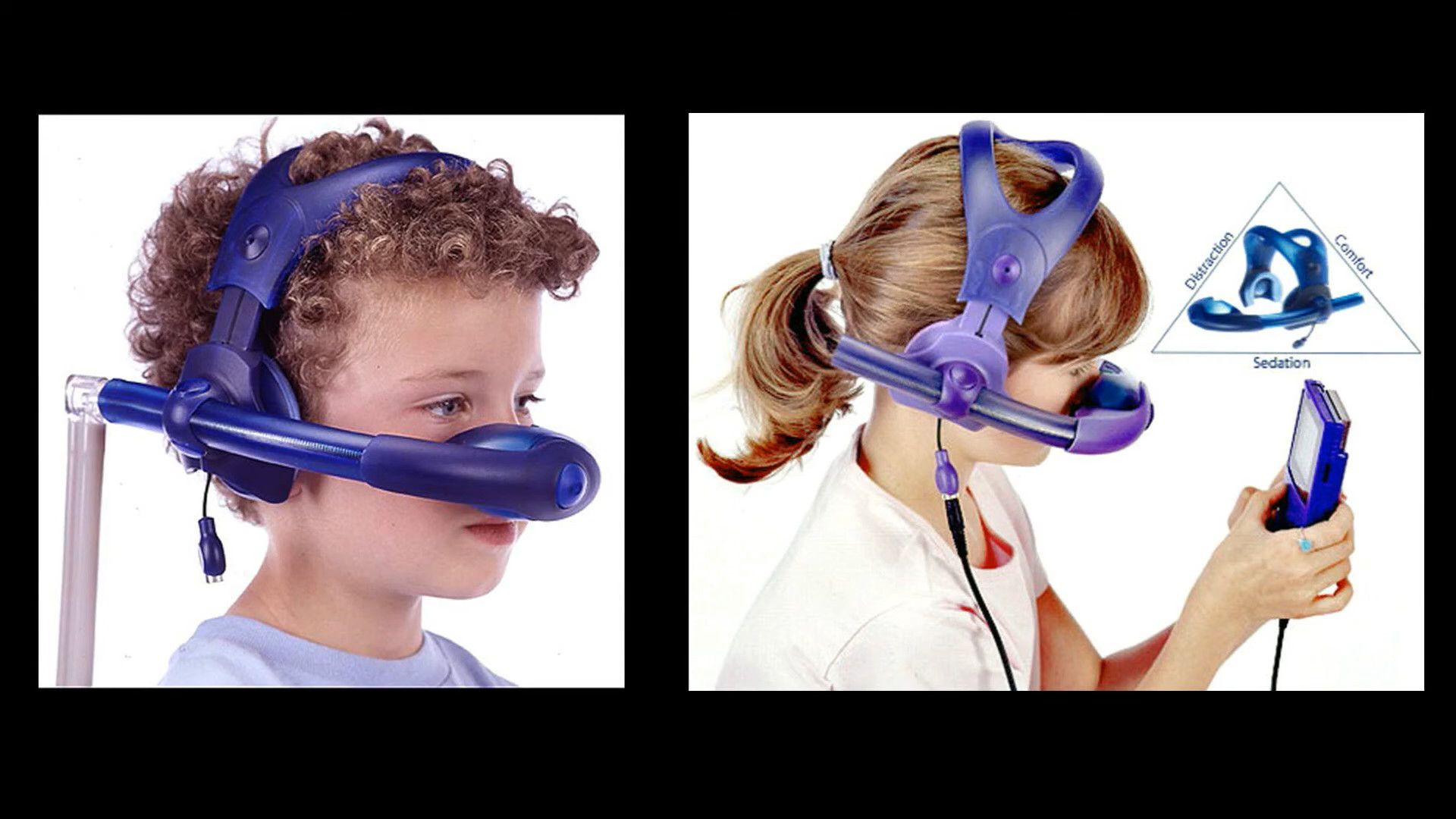
Some medical inventions arrive wearing a white coat. Others arrive looking like a chunky Game Boy accessory from a dentist’s fever dream. The PediSedate belongs proudly in the second category. Designed to help children tolerate medical procedures with less fear, this unusual pediatric sedation device combined two things kids understand very well: video games and breathing through a funny-looking nosepiece.
At first glance, the PediSedate looked less like hospital equipment and more like a colorful pilot headset that wandered into a pediatric clinic and decided to be helpful. But behind the playful design was a serious idea: children are not tiny adults. A medical procedure that feels routine to a grown-up can feel like a spaceship abduction to a 5-year-old. The PediSedate tried to solve that problem by pairing active distraction with inhaled nitrous oxide, commonly known as laughing gas, while also incorporating monitoring features for safer pediatric sedation.
The result was one of the most fascinating examples of child-centered medical design: a device that understood that fear, attention, and cooperation are not side issues in pediatric care. They are the whole ballgame.
What Was the PediSedate?
The PediSedate was a pediatric sedation headset developed for children, especially those between about 3 and 9 years old, who needed to undergo medical procedures that could cause anxiety or require cooperation. Instead of asking a nervous child to stare at a mask, an IV tray, or the ceiling tiles of doom, the device gave the child something familiar and engaging: a video game or audio entertainment.
The headset included earphones, a nosepiece for delivering nitrous oxide mixed with oxygen, and monitoring components such as pulse oximetry and capnography. In plain English, it was designed to keep a child distracted while clinicians administered sedating gas and watched breathing and oxygenation. Not bad for something that looked like it might also let you defeat Bowser.
The genius of the PediSedate was not that it magically replaced anesthesia. It did not. The genius was that it treated pediatric sedation as both a medical and psychological challenge. Children often resist procedures because they are scared, confused, overstimulated, or unable to understand why strangers in scrubs are suddenly very interested in their arm, mouth, or stitches. PediSedate aimed to lower that emotional temperature before the procedure turned into a wrestling match nobody wanted.
How PediSedate Combined Video Games and Anesthesia
The PediSedate concept was built around a simple but powerful principle: attention is limited. When a child is focused on a game, music, or interactive screen, there is less mental bandwidth available for panic. This is why pediatric hospitals use bubbles, cartoons, picture books, tablets, breathing games, and child life specialists. Distraction is not “just entertainment.” In medical settings, it can be a clinical tool.
With PediSedate, the video game component created active distraction. The child had a task: look, listen, respond, press buttons, stay engaged. Meanwhile, nitrous oxide in oxygen was delivered through the nasal piece. Nitrous oxide is valued in pediatric procedural sedation because it acts quickly, wears off quickly, and can reduce anxiety and discomfort when used appropriately by trained professionals.
The device also addressed a practical problem: many children dislike face masks. A mask can feel suffocating, unfamiliar, or threatening. By using a nosepiece attached to a playful headset, PediSedate softened the “medical equipment” vibe. The goal was to make sedation feel less like surrender and more like participating in an oddly official game session.
Why Pediatric Sedation Is So Challenging
Adults usually understand the trade-off of medical care: “This will be uncomfortable, but it helps.” Children often hear, “Hold still while we do something weird.” That gap matters. Pediatric procedural anxiety can lead to crying, movement, refusal, increased pain perception, delayed care, and long-term fear of doctors or dentists.
For clinicians, an anxious child creates a safety problem as well as a comfort problem. A child who pulls away during suturing, IV placement, dental treatment, imaging, or induction of anesthesia can make a procedure longer and riskier. For parents, watching a child panic is emotionally brutal. For the child, the memory can become a tiny horror movie that gets replayed before every future appointment.
PediSedate entered this landscape with a design philosophy that still feels modern: reduce distress first, then let the medicine do its job. It recognized that sedation is not only about molecules. It is about trust, environment, preparation, timing, and the child’s sense of control.
Clinical Evidence Behind the PediSedate
The PediSedate was evaluated in published pediatric anesthesia research. In one clinical case series, researchers studied 100 children between 3 and 9 years old who were scheduled for surgical procedures requiring general inhalational anesthesia. Children used the PediSedate headset while playing a video game and listening through earphones. Nitrous oxide in oxygen was administered through the nasal piece, starting at 50% and increasing in steps when needed.
The findings were promising but realistic. Treatment failure occurred in 18% of children, mainly because some children did not tolerate the device. Among those who completed the study, at least 96% showed an excellent degree of sedation. Side effects occurred in 22%, with nausea and vomiting being the most common. Importantly, the study reported no serious airway obstruction and no hemodynamic instability.
A later randomized clinical trial looked at PediSedate for reducing distress during invasive procedures such as suturing, IV placement, and lumbar puncture. In that study, children assigned to PediSedate had significantly less distress than children receiving standard care. They were also more cooperative, and fewer reported pain. That is the kind of outcome every pediatric care team wants: less fear, less struggle, and fewer adults whispering, “Is there another sticker we can offer?”
The Psychology: Why Games Can Help Kids Cope
Video games are not magic, although any parent who has tried to get a child off a screen may disagree. Their clinical value comes from engagement. A good game demands attention, predicts rewards, creates goals, and provides immediate feedback. That makes it a strong form of active distraction.
Passive distraction, such as watching a video, can help. Active distraction may be even more powerful because the child participates. Pressing buttons, tracking characters, listening to game audio, and making choices can shift the brain away from threat monitoring. Instead of thinking, “What is that needle?” the child is thinking, “Why did my character just fall into lava again?” Progress.
In pediatric care, this matters because anxiety and pain amplify each other. A frightened child may experience a procedure as more painful. A child who feels some control may cope better. PediSedate leaned into that idea by giving children a role beyond “patient.” They became players.
Nitrous Oxide: The Medical Half of the Combo
Nitrous oxide has a long history in medicine and dentistry. It is inhaled through a nosepiece or mask, works quickly, and is commonly used to reduce anxiety and discomfort during minor procedures. In pediatric dentistry, nitrous oxide mixed with oxygen is widely recognized as a useful behavior guidance and anxiolysis option when administered by qualified professionals using appropriate equipment and monitoring.
That said, nitrous oxide is not party confetti for the lungs. It must be used in a controlled clinical environment. Medical nitrous oxide is administered with oxygen, dosing controls, scavenging systems, trained staff, and patient monitoring. Recreational inhalation is dangerous and completely different from supervised medical use.
PediSedate’s design made sense because it did not rely on distraction alone or sedation alone. It blended both. The game calmed the child’s mind; the nitrous oxide helped reduce anxiety and discomfort; the monitoring components helped clinicians observe respiratory and oxygenation status. In theory, it was a thoughtful triangle: play, pharmacology, and safety.
Safety, Monitoring, and the Fine Print
No pediatric sedation device should be discussed without the safety fine print, so here it isminus the tiny font and legal fog machine. Sedation exists on a continuum. A child can move from minimal sedation to moderate or deeper sedation depending on dose, response, age, health status, and procedure type. That is why pediatric sedation guidelines emphasize preparation, trained personnel, emergency readiness, monitoring, and recovery observation.
Pulse oximetry tracks oxygen saturation. Capnography helps monitor ventilation by measuring carbon dioxide in exhaled breath. These tools are especially important because a child receiving supplemental oxygen may maintain oxygen levels for a while even if breathing becomes inadequate. In pediatric sedation, earlier recognition of airway or breathing problems is a major safety priority.
PediSedate’s inclusion of monitoring features made it more than a novelty headset. It was an attempt to integrate child-friendly design with clinical oversight. That integration is exactly where pediatric medical devices must live: fun enough for children, serious enough for clinicians.
Why Didn’t PediSedate Become Common Everywhere?
Given the cleverness of the PediSedate, it is fair to ask why every pediatric hospital is not stacked with them like arcade cabinets. The answer is probably a mix of practical, commercial, clinical, and workflow realities.
First, children vary. Some love gadgets; others hate anything touching their face or head. In the clinical case series, poor tolerance of the device was the main reason for treatment failure. Any pediatric tool must pass the “will a scared preschooler actually wear this?” test, and that is a tougher exam than organic chemistry.
Second, medical devices need manufacturing support, maintenance, cleaning protocols, training, compatibility with hospital systems, and regulatory pathways. A clever prototype is not the same thing as a widely adopted product. Third, the world moved quickly. Tablets, smartphones, portable gaming systems, VR headsets, child life programs, and improved sedation protocols created many competing ways to reduce pediatric distress.
Finally, a combined drug-delivery and entertainment device is inherently more complicated than simply using a separate tablet for distraction and a standard nitrous oxide delivery system for sedation. In healthcare, simple workflows often win.
PediSedate and Today’s Digital Health Tools
The PediSedate now feels like an early ancestor of modern digital therapeutics and hospital distraction technology. Today, pediatric teams use tablets, immersive videos, virtual reality, augmented reality, music therapy, guided breathing apps, and interactive preparation programs. The idea is the same: help children cope by changing the experience, not just the medication.
Virtual reality, for example, has been studied for reducing pain and anxiety during needle procedures and other brief interventions. But modern tools face the same questions PediSedate faced: Does it fit children properly? Is it easy to clean? Does it interfere with monitoring? Is it safe for young kids? Does it help enough to justify training and cost?
PediSedate was ahead of its time because it understood that the patient experience is part of the treatment. A child who feels calmer may require less restraint, less medication, or less procedural time. That is good for the child, the family, and the care team.
Specific Examples: Where a PediSedate-Like Idea Makes Sense
A device inspired by PediSedate could be useful in situations where the procedure is anxiety-provoking but not necessarily extremely painful. Examples include IV placement, blood draws, laceration repair, dental procedures, imaging preparation, dressing changes, and preoperative induction support. In each case, distraction can reduce fear while sedation or analgesia handles discomfort.
Imagine a 6-year-old who needs stitches after a playground crash. Without support, the child may focus on the wound, the needle, and the alarming fact that everyone keeps saying “hold still.” With an interactive game, headphones, calm coaching, local anesthetic, and appropriate sedation when needed, the child may stay more relaxed and cooperative. The procedure becomes less dramatic. Nobody wins a trophy, but everyone gets to keep their blood pressure closer to normal.
Or picture a child at the dentist who is anxious about the sound of equipment. A playful interface and audio distraction can reduce attention to unpleasant sounds. Nitrous oxide can help ease anxiety. The provider can communicate through the process, monitor the child, and complete care with less distress.
What Parents Can Learn From the PediSedate Story
Parents do not need to track down a PediSedate headset to benefit from its lesson. The larger point is that preparation and distraction matter. Before a procedure, parents can ask the care team what comfort strategies are available. Many hospitals have child life specialists who explain procedures using age-appropriate language and coping tools.
Parents can also bring familiar items when allowed: headphones, a favorite playlist, a comfort object, a tablet, or a simple game. The best distraction is usually something the child already likes. A dinosaur-loving child may not care about a puzzle app but may become deeply invested in a cartoon T. rex with suspicious dental hygiene.
Parents should also ask clear questions about sedation: What medication will be used? How long does it last? How will breathing and oxygen be monitored? Who is trained to manage sedation? What should we expect during recovery? These questions are not rude. They are part of good care.
Experience Section: What the PediSedate Teaches Us About Better Pediatric Care
The most memorable thing about PediSedate is not the Game Boy connection, although that is definitely the part that makes the internet stop scrolling. The real lesson is that children experience medical care through emotion first and logic second. A child may not understand the pharmacology of nitrous oxide, but they understand whether the room feels scary. They understand whether adults are rushing. They understand whether something is being done to them or with them.
In practical pediatric care, the best experiences often begin before the procedure starts. A nurse kneels to eye level. A parent is given a role. The child is offered a choice that is medically safe: which arm, which sticker, which song, which game, whether to count or not count. These small choices can restore a sense of control. PediSedate built that concept into hardware. It said, “Let the child do something.” That is powerful.
Anyone who has watched a child prepare for a procedure knows how quickly the mood can shift. One moment the child is calm; the next, a tray appears, and the eyebrows go up like emergency flags. Distraction works best when it starts early, before panic has taken over. PediSedate’s headset format encouraged early engagement. The child put it on, heard the audio, saw the game, and had a job. That timing matters.
There is also an experience lesson for designers. Pediatric medical devices should not simply be smaller adult devices. Children have different bodies, fears, attention spans, and communication styles. A device that looks neutral to an adult may look terrifying to a child. PediSedate made the device itself part of the coping strategy. Its colors, headphones, game connection, and playful identity were not decoration. They were therapeutic design choices.
From a parent’s perspective, the PediSedate idea is comforting because it acknowledges something parents already know: distraction is not cheating. Singing during a shot, playing a game during a blood draw, or watching a cartoon during wound care does not make a child “less brave.” It gives the child a tool. Adults use tools too; we call them podcasts, coffee, and pretending we understand insurance paperwork.
From a clinician’s perspective, the experience is also better when a child is engaged. A calmer child is easier to position, monitor, and treat. Procedures may be completed faster. Staff may need less physical restraint. Parents may leave with more trust in the healthcare system. The child may be less likely to fear the next appointment. Those benefits are hard to measure with a single number, but they shape long-term healthcare behavior.
PediSedate may not have become a universal standard, but its spirit is everywhere in modern pediatric care. It lives in VR goggles used during blood draws, tablets used before anesthesia, child life preparation rooms, interactive breathing games, and dentists who let kids pick a show before treatment. The device was quirky, but the idea was elegant: meet children where they are. Sometimes that place is a hospital bed. Sometimes it is a cartoon universe. Sometimes it is level three of a handheld game, where the boss battle is secretly a medical procedure.
Conclusion: A Quirky Device With a Serious Legacy
The PediSedate remains one of the most unusual and charming chapters in pediatric anesthesia technology. It blended video games, nitrous oxide sedation, child psychology, and monitoring into a single headset designed to make medical procedures less frightening for children. While it never became a household name in hospitals, it anticipated a major trend in healthcare: patient experience is not extra. It is clinical.
For children, fear can be as real as pain. For parents, a calmer procedure can change the entire memory of care. For clinicians, cooperation and safety go hand in hand. PediSedate recognized all of that and wrapped it in a device that looked like it belonged somewhere between an operating room and a 1990s toy aisle.
The winning combination was never just video games and anesthesia. It was empathy and engineering. And in pediatric care, that combination deserves the high score.













