
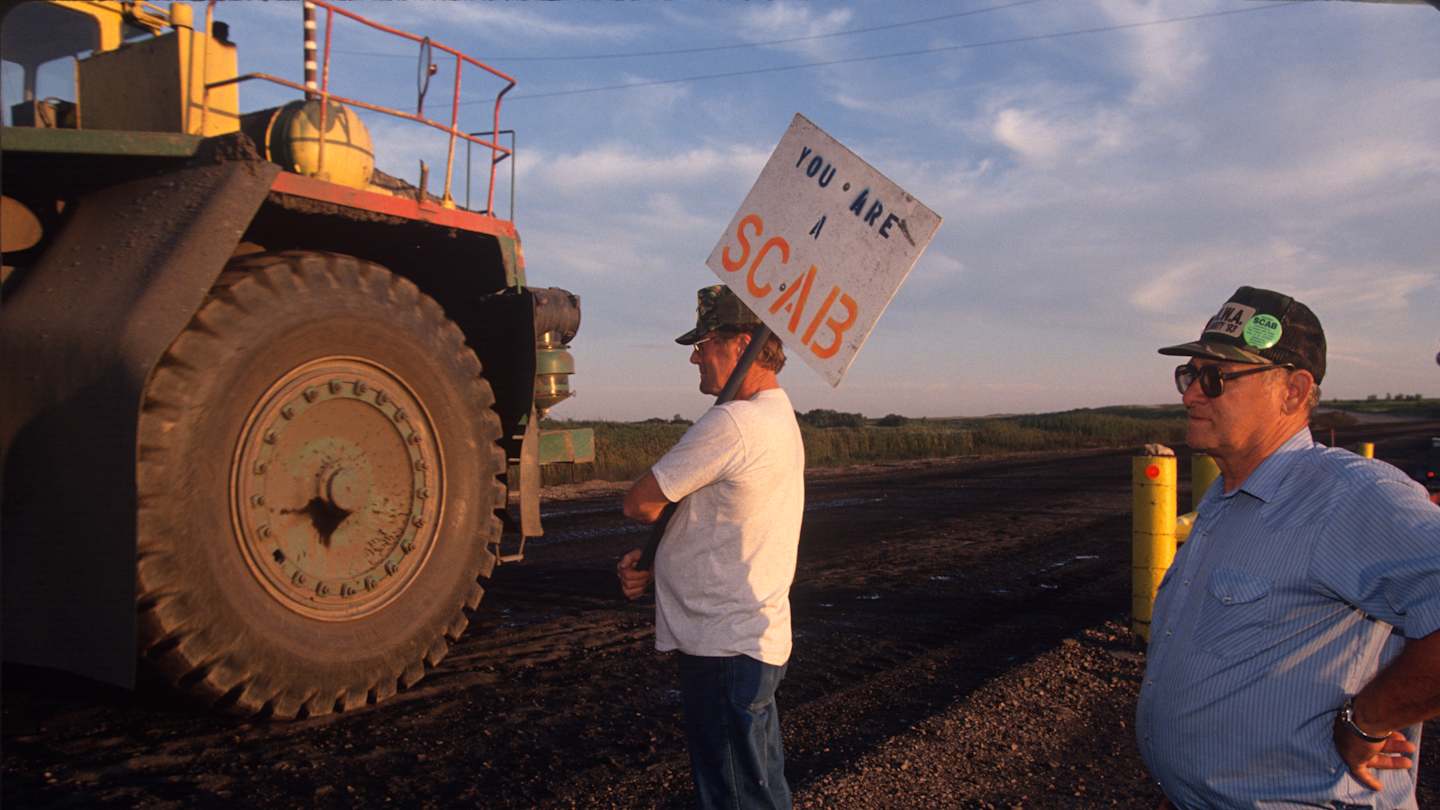
Few words in American labor history can clear a room, raise eyebrows, or make a union meeting suddenly feel like a courtroom drama quite like the word “scab.” It is short, sharp, and definitely not something you want shouted at you while holding a coffee and trying to look invisible near a picket line.
Today, people often use “scab” to describe a worker who crosses a picket line, replaces striking employees, or keeps working while coworkers are striking for better wages, safer conditions, or fair treatment. But the word did not begin in a factory, mine, school, warehouse, or Hollywood studio. It began on the body. Literally.
Originally, a scab was the crust that forms over a wound. Not glamorous. Not poetic. Not exactly the kind of word you stitch onto a tote bag. Over time, English speakers began using “scab” metaphorically to describe a person considered unpleasant, dishonest, or morally diseased. By the early labor movement, that ugly metaphor found a new target: workers who, in the eyes of strikers, helped employers weaken collective action.
So why are people who cross picket lines called scabs? Because unions and striking workers came to see strikebreakers as a kind of social wound: someone covering over an injury without healing the deeper problem. Dramatic? Yes. Historically accurate? Also yes.
What Does “Scab” Mean in Labor?
In labor language, a scab is usually a worker who continues working during a strike or takes the place of someone who is on strike. The term can apply to an existing employee who crosses the picket line, a temporary replacement hired during a strike, or sometimes a nonunion worker brought in so business can continue as usual.
A picket line is more than a group of people holding signs outside a workplace. It is a public message: “We are withholding our labor because something here is unfair.” Strikers may be protesting low pay, unsafe working conditions, unfair discipline, short staffing, unpaid benefits, or an employer’s refusal to bargain in good faith.
When someone crosses that line to work, strikers may see the action as undermining their leverage. A strike works because it interrupts normal operations. If enough replacement labor keeps the company running smoothly, the strike loses power. That is why “scab” is not merely a nickname. It is an accusation.
The Original Meaning: A Wound on the Skin
The oldest meaning of “scab” referred to a crust that forms over a sore, cut, or skin disease. The word has roots in older Germanic and Scandinavian languages and has been used in English for centuries. That original meaning matters because the labor insult depends on the image.
A physical scab is not the wound itself. It is the rough covering that forms after damage has already happened. In labor disputes, workers began using the word as a metaphor for someone who covers over workplace conflict without fixing the injury underneath. The employer may still pay low wages. The dangerous equipment may still be dangerous. The staffing problem may still be sitting there, wearing a tiny hat and causing chaos. But the “scab” allows business to continue as if nothing is wrong.
That is why the word feels so harsh. It suggests not just disagreement, but contamination, betrayal, and moral ugliness. In the world of organized labor, language has always carried emotional weight because strikes are not abstract debates. They affect rent, groceries, medical bills, family stress, and whether someone can keep their dignity at work.
How “Scab” Became an Insult
Before “scab” became famous in labor disputes, it had already taken on a figurative meaning. By the late 1500s, English speakers were using it to mean a low or contemptible person. That shift from skin condition to insult was not unusual. English is full of body-based insults. We call someone spineless, thick-skinned, two-faced, hard-headed, or a pain in the neck. Apparently, the English language looked at human anatomy and thought, “Excellent, a buffet of insults.”
By the late 1700s and early 1800s, “scab” was being used in relation to workers who refused to join unions or who broke strikes. In the United States, the term appeared in labor conflicts involving shoemakers and other early trades. As organized labor grew, the word spread through union halls, newspapers, pamphlets, speeches, songs, and picket lines.
The word stuck because it did several things at once. It identified the person. It condemned the action. It warned others not to do the same. And, perhaps most importantly, it gave workers a compact word for a complicated betrayal.
Why Crossing a Picket Line Is Seen as Betrayal
To understand the emotional force of the word “scab,” you have to understand how a strike works. Workers usually strike after other efforts have failed. They may have negotiated, filed grievances, attended meetings, circulated petitions, held votes, and listened to enough speeches to qualify for a minor in fluorescent-lit conference rooms.
A strike is often a last resort. Workers sacrifice wages in the hope that collective pressure will force change. That sacrifice only works if enough people participate. When someone crosses the picket line, strikers may feel that person is benefiting from the group’s risk while refusing to share the cost.
For example, imagine a group of warehouse workers striking for safer heat protections during summer. If one worker crosses the line, keeps earning pay, and later receives the improved safety benefits won by the strike, coworkers may see that as unfair. The issue is not simply that the person worked. The issue is that they weakened a collective effort while still possibly gaining from its outcome.
Scab, Strikebreaker, Replacement Worker: Are They the Same?
The words overlap, but they are not always identical.
Strikebreaker
A strikebreaker is the more formal term. It refers to someone who works despite a strike or is hired to replace striking workers. This is the word you might see in a textbook, legal article, or serious documentary narrated by someone with a very deep voice.
Replacement Worker
A replacement worker is a neutral business or legal term. Employers may use it to describe people hired to keep operations going during a strike. It sounds tidy and professional, like a label on an office supply drawer.
Scab
Scab is the union-side term, and it is intentionally loaded. It does not merely describe the act; it judges it. Calling someone a scab says, “You are helping management defeat workers who are taking a risk together.”
That difference is important. “Replacement worker” describes function. “Scab” describes social meaning.
Historical Examples: When the Word Became Powerful
American labor history is filled with conflicts where strikebreakers played a major role. One famous example is the Homestead Strike of 1892, a violent labor conflict between Carnegie Steel and workers in Homestead, Pennsylvania. Management used private security forces and replacement labor to break the strike. The conflict became one of the defining episodes in U.S. labor history and helped cement the image of the strikebreaker as someone aligned with corporate power against working people.
In mining towns, railroad disputes, textile mills, docks, meatpacking plants, schools, hospitals, and entertainment industries, the same pattern appeared again and again: workers stopped work, employers tried to continue operations, and anyone who helped keep the workplace running risked being labeled a scab.
The word also entered American literature and legal history. Jack London wrote fiercely about “the scab” in the early 20th century, using the term as a symbol of class betrayal. Decades later, the U.S. Supreme Court addressed the use of “scab” in a labor dispute and treated it as the kind of heated, rhetorical language common in union conflict. In other words, even the courts recognized that this word belongs to the rough-and-tumble world of labor speech, not polite tea-party vocabulary.
Why the Word Still Hurts Today
Some insults fade. Others put on steel-toed boots and keep marching. “Scab” has survived because strikes still happen, workplace inequality still exists, and collective action still depends on trust.
When workers strike, they are asking one another to hold the line. That phrase is not just symbolic. It means standing together even when paychecks stop, bills keep coming, and management applies pressure. Someone who crosses the picket line may have personal reasons: fear of losing a job, financial stress, immigration concerns, lack of union membership, confusion about the strike, or disagreement with union strategy.
Those reasons can be real. Life is expensive, and landlords are famously uninterested in being paid with “principles.” Still, from the striker’s perspective, crossing the line weakens everyone’s bargaining power. That is why the word “scab” remains emotionally charged. It compresses anger, fear, disappointment, and moral judgment into one syllable.
Is It Always Fair to Call Someone a Scab?
This is where the conversation gets complicated. Labor history is full of moral clarity, but real life often arrives wearing muddy shoes.
Some people cross picket lines because they oppose the strike. Others do it because they are misinformed. Some are supervisors ordered to help. Some are temporary workers who may not understand the dispute. Some are economically desperate. Some are deliberately hired by employers because they are vulnerable and easier to pressure.
That does not erase the impact of crossing the line, but it does explain why labor organizers often focus on education before condemnation. A worker may not know what a picket line means. They may not realize that a short-term paycheck can affect long-term wages and conditions for everyone. They may not know that today’s strike could become tomorrow’s safer workplace, higher wage scale, or fairer schedule.
In the strongest labor movements, the goal is not simply to shout “scab” louder. The goal is to build enough solidarity that fewer people are willing to cross in the first place.
The Role of Shame in Labor Language
“Scab” is a shame word. That may sound harsh, but labor movements have often used shame as a tool. When workers have less money and less institutional power than employers, social pressure becomes one of the few weapons available.
A picket line says, “The community is watching.” A chant says, “This dispute matters.” A sign says, “There is a story behind these doors.” And the word “scab” says, “Do not help break this effort.”
Of course, shame can be misused. It can become bullying, personal harassment, or a refusal to see complicated circumstances. But historically, the word grew out of a practical problem: collective action collapses when individuals quietly make private deals that weaken the group.
That is why the word has lasted. It is not polite, but it is efficient. It does in four letters what a 17-page labor relations memo could only dream of doing.
Modern Picket Lines: The Word in Today’s Workplace
The meaning of “scab” has expanded with the modern economy. A picket line may still be outside a factory gate, but it can also appear outside a hotel, university, hospital, coffee shop, logistics hub, newsroom, or streaming studio. In some cases, digital work complicates the question. If freelancers take work from a struck company, are they crossing a picket line? If customers keep buying from a company during a strike, are they helping weaken the action?
Different unions answer these questions differently. Some strikes ask only employees not to cross. Others ask customers, contractors, performers, drivers, suppliers, or community members to support the action. That is why it is important to read what the striking workers are actually asking for. A picket line is not just a line; it is a communication tool.
The word “scab” still appears because the basic conflict remains the same. Employers want operations to continue. Workers want pressure strong enough to force negotiation. The person who crosses the line becomes part of that pressure equation, whether they intended to or not.
Personal and Workplace Experiences Related to “Scabs”
If you have ever walked near a picket line, you know it has a strange gravity. The signs, chants, matching shirts, folding chairs, coffee cups, and tired faces all tell you something bigger than a normal workday is happening. Even if you are not part of the dispute, you can feel the question hanging in the air: “Which side are you on?”
One common experience is confusion. A delivery driver may pull up to a workplace and suddenly realize there are workers outside holding signs. A student may arrive on campus and see dining hall workers on strike. A customer may reach for the door of a store and notice employees asking people not to shop there that day. In that moment, the person is not reading a labor history book. They are making a quick decision with real people watching.
That is why the word “scab” can feel so intense. It turns an ordinary actionwalking through a door, driving through a gate, logging into a shiftinto a moral choice. For the person crossing, it may feel like survival, habit, confusion, or pressure from a boss. For the people on strike, it may feel like a punch to the stomach.
Many workers who have been on strike describe the picket line as both exhausting and bonding. You stand outside in bad weather. You worry about money. You repeat chants until your voice sounds like a broken lawn mower. But you also meet coworkers you barely knew, hear stories from different departments, and realize that your private frustrations are shared by many others. That discovery can be powerful. It turns “my problem” into “our problem.”
Now imagine someone from that same workplace crossing the line. Strikers may remember helping that person cover a shift, lending them tools, training them, or bringing cupcakes to their birthday. Suddenly, the act feels personal. The word “scab” comes from that emotional place. It is not just about economic theory. It is about trust.
There are also experiences on the other side. Some people who cross picket lines later say they felt trapped. They feared retaliation from management, could not miss a paycheck, or did not understand the strike vote. Others say they disagreed with the union or felt excluded from the organizing process. These stories do not make the word less painful, but they remind us that labor conflict often exposes pressure from every direction.
The best lesson from these experiences is simple: ask before you cross. If you see a picket line, pause. Talk to the workers. Read their signs. Search for the union’s statement. Find out whether they are asking the public to stay away, refuse deliveries, boycott services, or simply show support. A five-minute conversation can prevent a long-lasting misunderstanding.
And if you are part of a workplace where a strike might happen, learn the issues early. Know what your coworkers are asking for. Understand what a strike authorization vote means. Ask what support exists for workers who are afraid of losing income. The more informed people are before a strike, the less likely they are to make rushed decisions at the line.
In the end, the experience of a picket line teaches that labor language is never just language. “Scab” survives because workplace solidarity is fragile. It must be built, protected, explained, and sometimes defended with words that are not gentle. Nobody wants to be called a scab. More importantly, nobody wants to work in a place where people feel so unheard that striking becomes the only option left.
Conclusion: A Small Word With a Long Memory
People who cross picket lines are called “scabs” because the word carries centuries of meaning: wound, blemish, scoundrel, strikebreaker, and betrayer of solidarity. It began as a physical term and became one of the most powerful insults in labor history.
The reason it remains powerful is not just tradition. It is because strikes depend on collective sacrifice. When workers stop working together, they are trying to create enough pressure to win something they could not win alone. A person who crosses the picket line may help the employer reduce that pressure. To strikers, that action does not feel neutral. It feels like reopening the wound.
Still, the word should be understood with its full history and complexity. Some people cross because they oppose the strike. Others cross because they are scared, misled, or financially cornered. The term “scab” explains the anger of the picket line, but it also invites a bigger question: what kind of workplace conflict makes people choose between solidarity and survival?
That is why “scab” is more than an insult. It is a reminder that labor rights, fair wages, and safe workplaces have often been won through collective courage. And when the line forms outside the workplace, every step across it means something.














