
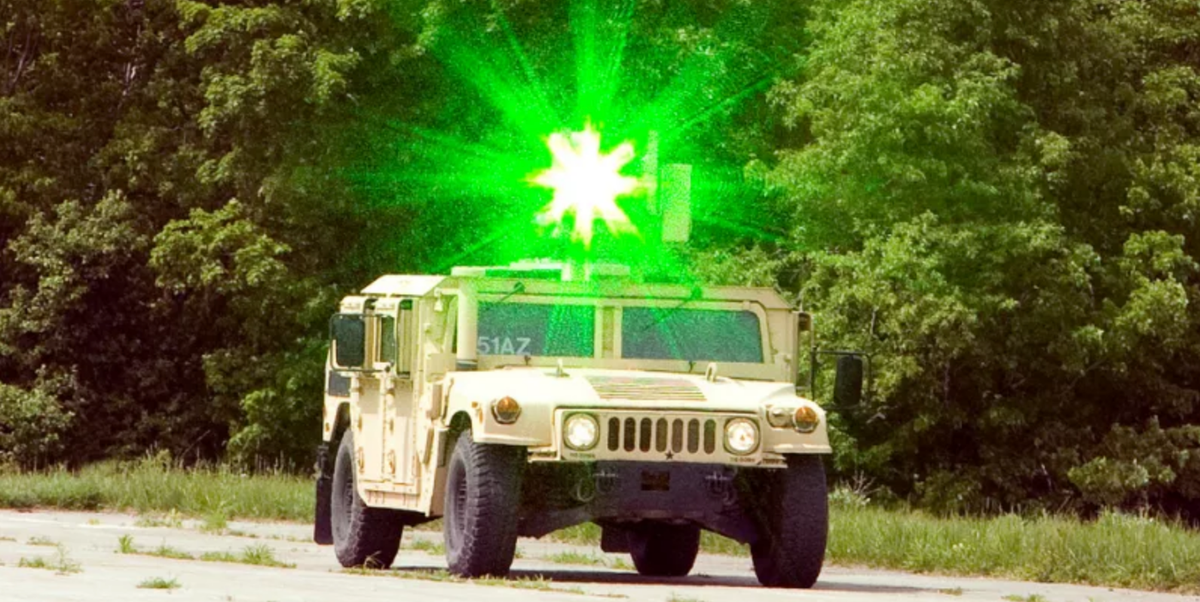
Plasma weapons sound like they belong in the hands of a space marine with questionable insurance coverage. The phrase brings to mind glowing bolts, humming rifles, blue-white lightning, and someone shouting “overload!” exactly three seconds before a console explodes. But the real history of plasma weapons is stranger, quieter, and far more complicated than science fiction suggests.
In the real world, “plasma weapon” is not one single technology. It is a messy family album of ideas involving ionized gas, directed energy, particle beams, laser-induced plasma channels, electromagnetic launch systems, missile defense dreams, and research projects with names that seem to have escaped from a 1990s video game. Some of these concepts were serious military research. Some were laboratory stepping stones. Some were mostly theoretical. And some were promoted with enough futuristic sparkle to make a Pentagon budget meeting feel like Comic-Con in camouflage.
This is the secret history of plasma weapons: not a tale of handheld star-blasters, but a fascinating story of physics, ambition, Cold War anxiety, engineering limits, and the stubborn refusal of hot ionized gas to behave like a polite bullet.
What Is Plasma, Really?
Before we open the secret-history filing cabinet, we need to meet the star of the show: plasma. Plasma is often called the fourth state of matter, after solid, liquid, and gas. It forms when atoms lose electrons and become a mixture of charged particles, including ions and free electrons. Because those particles carry electric charge, plasma responds strongly to electric and magnetic fields.
Plasma is not rare in the universe. Stars are made of it. Lightning is a dramatic earthly example. Neon signs, fluorescent lights, auroras, fusion experiments, and some industrial tools also involve plasma. So yes, plasma is real. It is not just “space magic with better branding.”
The problem begins when people imagine plasma as a neat, self-contained glowing bullet that can fly across a battlefield like a paintball from the Sun. Plasma is hot, energetic, and difficult to confine. In normal air, it expands, cools, interacts with the atmosphere, and loses coherence. That makes the classic sci-fi plasma rifle a very bad engineering student: exciting in theory, disruptive in class, and unlikely to graduate without major help.
Why Plasma Became a Weapon Dream
The attraction is easy to understand. Plasma can carry energy. It can conduct electricity. It can be shaped by magnetic fields. It can create intense heat and electromagnetic effects. If a military planner hears those phrases together, a PowerPoint deck usually appears within minutes.
During the Cold War, the United States and the Soviet Union poured enormous resources into technologies that might change the balance of power. Nuclear weapons had already shown that physics could reshape geopolitics. Lasers, particle beams, high-power microwaves, and plasma systems promised something different: energy delivered at extreme speed, sometimes without conventional explosives.
That promise helped create the larger field of directed-energy weapons. These systems aim to use concentrated electromagnetic energy rather than traditional projectiles. High-energy lasers, high-power microwaves, and particle-beam concepts are often discussed in this category. Plasma enters the story in several ways: as a medium, a channel, a target effect, a propulsion idea, or in rare cases, a proposed projectile.
The Cold War: Where Plasma Dreams Got Their Security Badge
The Cold War gave plasma weapons their first major historical stage. When nuclear missiles became the ultimate strategic nightmare, researchers began asking whether energy beams could stop them. That question fueled decades of missile-defense studies, including programs connected to lasers, particle beams, and advanced electromagnetic systems.
The most famous moment came in 1983, when President Ronald Reagan announced the Strategic Defense Initiative, quickly nicknamed “Star Wars.” The public image was simple: futuristic defenses that could intercept ballistic missiles before they reached their targets. The actual research world was far more complex. Scientists examined sensors, tracking systems, interceptors, lasers, particle beams, and other exotic ideas.
Plasma appeared in this world not as a convenient glowing cannonball, but as part of difficult physics problems. Charged-particle beams, for example, face enormous challenges because charged particles are influenced by magnetic fields and by interactions with the atmosphere. Researchers explored whether laser-created channels or low-pressure environments might help guide beams. That is not a movie blaster. That is advanced physics wearing a lab coat and carrying three calculators.
Particle Beams: Plasma’s Brainy Cousin
Particle-beam weapons are often confused with plasma weapons because both involve charged particles and extreme energy. A particle beam accelerates atomic or subatomic particles, such as electrons or neutral particles, toward a target. The idea is elegant on paper: deliver energy very quickly and precisely.
In practice, particle beams are brutally demanding. They require large power supplies, accelerator technology, beam control, pointing systems, and a solution to atmospheric scattering. In space, some problems change, but others arrive wearing bigger boots. A beam system must still be powered, aimed, cooled, protected, and integrated into a usable platform.
This is one of the recurring themes in the history of plasma weapons: the physics may be valid, but the engineering invoice arrives with too many zeroes.
MARAUDER: The Plasma Weapon With the Best Name in the Room
No secret history of plasma weapons is complete without MARAUDER, one of the most legendary names in the field. The acronym stood for Magnetically Accelerated Rings to Achieve Ultra-high Directed Energy and Radiation. If that title sounds as if someone wanted the acronym first and the sentence second, welcome to defense research.
MARAUDER was associated with U.S. Air Force research into compact toroids: doughnut-shaped structures of plasma and magnetic fields. The broad concept involved forming and accelerating magnetized plasma rings. Public references describe work in the early 1990s, including simulations and experiments connected with compact torus formation and acceleration.
The mythology around MARAUDER grew because the idea sounded spectacular. A ring of plasma! Accelerated by magnetic forces! Possible directed-energy effects! It practically wrote its own paperback thriller. But public information remains limited, and many claims floating around online are far more dramatic than the confirmed record. What can be said safely is that MARAUDER belongs to a real lineage of pulsed-power and plasma-physics experiments, not to the proven battlefield arsenal of laser swords and thunder donuts.
Laser-Induced Plasma Channels: Artificial Lightning, Sort Of
One of the more realistic plasma-related weapon concepts is the laser-induced plasma channel. In simple terms, an intense laser can ionize a path through air, creating a temporary conductive channel. That channel can help guide electrical energy, which is why people often describe the idea as “artificial lightning.”
This is not the same as firing a blob of plasma. Instead, plasma acts like a short-lived pathway. The concept has appeared in research related to disabling electronics, studying lightning, and exploring non-kinetic effects. It is a clever idea, but it still faces serious practical limits: range, weather, power demand, atmospheric behavior, safety, precision, and system size.
In other words, artificial lightning is real enough to be studied, but it is not something you tuck into your jacket pocket unless your jacket is a laboratory building.
High-Energy Lasers: The Cousin That Actually Got a Job
While “plasma guns” stayed mostly experimental or theoretical, high-energy lasers moved further toward deployment. Modern military research has focused heavily on lasers for counter-drone missions, ship defense, sensor dazzling, and short-range air defense. Lasers do not fire plasma; they deliver concentrated light energy. Still, they often get grouped with plasma weapons in popular discussions because both feel futuristic and both belong to the larger directed-energy conversation.
Lasers have advantages that military planners like: speed-of-light delivery, deep magazines as long as power is available, and potentially lower cost per shot compared with missiles. But they are not magic pointers of doom. Atmospheric conditions, dust, smoke, rain, beam quality, target dwell time, power generation, and thermal management all matter. A laser weapon is less “zap and done” and more “hold steady while physics negotiates the contract.”
High-Power Microwaves: Invisible, Unflashy, and Very Important
High-power microwave systems may be less cinematic than plasma bolts, but they are central to the modern directed-energy story. These systems are designed to affect electronics, especially in contexts such as drones or swarms. Unlike a narrow laser beam, microwave energy can cover a broader area, which makes it attractive for certain defensive missions.
Again, the details are complex. Effects depend on the target, shielding, distance, power, and environment. But high-power microwaves show why the real future of “energy weapons” may look nothing like science fiction. The most important systems may be invisible, vehicle-mounted, and aimed at electronics rather than dramatic explosions. Hollywood may be disappointed. Engineers, however, are used to being underappreciated.
Why Handheld Plasma Weapons Remain Science Fiction
The classic plasma rifle has several physics problems stacked on top of one another like a badly packed moving van. First, plasma is not naturally self-contained in air. It expands rapidly unless confined by magnetic fields or other mechanisms. Second, any portable system would need a compact power source capable of producing enormous bursts of energy. Third, the device would need to manage heat, protect the operator, control the plasma, and aim it reliably. Fourth, the atmosphere itself would interfere with the projectile.
That does not mean plasma is useless. It means the popular image is misleading. Plasma can help generate, guide, or interact with energy. It can be used in laboratories, industry, propulsion research, fusion experiments, and specialized defense studies. But a glowing ball that travels across open air like a baseball with anger issues is not how plasma prefers to behave.
The “Secret” Part: Classification, Hype, and Missing Pages
Why does the history feel secret? Partly because some research really was classified or only lightly described in public. Military programs often publish fragments: a conference abstract here, a budget line there, a test announcement with carefully chosen language. That creates gaps, and gaps are where speculation builds condos.
Another reason is hype. Plasma weapons sit at the perfect intersection of real science and cinematic imagination. Say “ionized gas shaped by magnetic fields” and most people nod politely. Say “plasma cannon” and suddenly everyone is paying attention, including the guy in the back who was only there for free coffee.
The final reason is that many related technologies changed names as they matured. A “plasma weapon” in popular language might actually refer to a laser, microwave emitter, particle-beam concept, electrolaser, railgun-related plasma effect, or pulsed-power experiment. The secret history is not one hidden superweapon. It is a family tree with mislabeled branches.
From Cold War Fantasy to Modern Counter-Drone Reality
Today, the most practical directed-energy work is shaped by a very modern problem: cheap drones. Firing expensive missiles at inexpensive unmanned aircraft is not an ideal long-term plan. Directed-energy systems promise a different cost equation. That is why lasers and high-power microwave prototypes have received serious attention for counter-UAS defense.
This shift matters because it shows how futuristic research becomes practical: not by fulfilling every science-fiction dream, but by solving a specific operational problem. Plasma weapons as glowing rifles are still fantasy. Directed-energy systems for defense against drones are much closer to reality. The secret history bends toward boring usefulness, which is exactly how many technologies grow up.
Pop Culture Made Plasma Famous
Science fiction gave plasma weapons their public personality. Video games and movies love plasma because it looks good. A bullet is fast and mostly invisible. A laser should move at light speed, which is inconvenient for dramatic dodging. But a plasma bolt can glow, travel slowly enough for the audience to admire it, and hit with colorful authority. That is entertainment physics, and it has sold many posters.
Pop culture also simplified the vocabulary. “Plasma” became shorthand for advanced energy, even when the fictional weapon behaved more like a laser, rocket, tracer round, or magical fireball. This does not make the fiction bad. It makes it fiction. The danger comes when people assume the same thing exists behind a locked government door, humming patiently next to a coffee machine.
The Real Legacy of Plasma Weapons
The real legacy of plasma weapons is not a secret arsenal of glowing cannons. It is a set of scientific lessons. Researchers learned more about pulsed power, compact plasmas, beam propagation, electromagnetic effects, laser interaction with air, and the limits of directed energy. Many of those lessons feed into non-weapon fields too: fusion energy, space propulsion, materials processing, medical tools, and atmospheric science.
That is the twist. The most useful outcomes of plasma research may not look like weapons at all. They may look like cleaner energy, better spacecraft engines, stronger industrial tools, or deeper knowledge of the Sun. Plasma is bigger than the battlefield. It powers stars. Asking it to behave like a rifle round is honestly a little insulting.
Experience Section: What Researching Plasma Weapons Teaches You
Spending time with the history of plasma weapons feels like walking through a museum where half the exhibits are scientific breakthroughs and the other half are movie props wearing fake mustaches. At first, the topic seems simple: find the secret plasma gun, explain the secret plasma gun, maybe make one joke about aliens, then go home. But the deeper you go, the more the story changes.
The first experience is surprise. Plasma is everywhere in serious science, but almost nowhere in the way pop culture imagines it. Lightning, auroras, fusion devices, solar wind, and laboratory plasmas are real. They are beautiful, powerful, and scientifically important. Yet none of them behaves like a tidy glowing bullet. That gap between imagination and physics is the most interesting part of the subject.
The second experience is humility. Directed-energy research has attracted brilliant people for decades, and many of the problems remain hard. Power supply, beam control, thermal management, atmospheric effects, platform integration, and target identification are not small details. They are the whole game. Reading about these programs is a reminder that “possible in principle” and “useful in the field” live in different zip codes.
The third experience is amusement. Defense history has a gift for dramatic names. MARAUDER sounds like something painted on the side of a villain’s armored train. Strategic Defense Initiative became “Star Wars,” whether officials liked it or not. High-energy laser programs often carry names that suggest either advanced physics or a heavy-metal festival. The naming culture is half acronym, half thunderstorm.
The fourth experience is caution. Because some programs are classified and public details are incomplete, plasma weapons attract speculation. A missing page becomes a rumor. A conference abstract becomes a superweapon. A lab test becomes a conspiracy theory with dramatic lighting. A careful reader learns to separate confirmed information from internet fog. Real secrecy exists, but not every shadow contains a plasma cannon.
The fifth experience is respect for boring progress. The most realistic modern systems do not look like colorful space rifles. They look like shipboard laser demonstrators, vehicle-mounted counter-drone systems, high-power microwave prototypes, test ranges, cooling hardware, beam directors, and control software. That may sound less glamorous, but it is how technology actually matures. The future often arrives not with a glowing blast, but with a maintenance checklist.
Finally, researching plasma weapons changes how you watch science fiction. You can still enjoy the glowing bolts. You can still cheer for the hero. But somewhere in the back of your mind, a tiny physicist whispers, “That plasma would disperse.” And strangely, that makes it more fun. Knowing the real science does not ruin the fantasy; it gives the fantasy better shadows.
Conclusion: The Secret Was Never Just the Weapon
The secret history of plasma weapons is not a simple story of hidden superguns. It is a long, tangled path through plasma physics, Cold War missile defense, directed-energy ambition, laser research, particle-beam dreams, and modern counter-drone needs. The most dramatic ideas often remained experimental, while the less flashy technologies became more practical.
Plasma weapons fascinate us because they sit between science and imagination. Plasma is real. Directed energy is real. Laser and microwave systems are real. But the handheld plasma blaster remains mostly a beautiful myth with terrible thermal management.
And perhaps that is the best ending. The real universe already has plasma weapons of a sort: stars, lightning, auroras, solar storms. Humanity’s challenge is not merely to weaponize plasma, but to understand it. Because once you study the fourth state of matter, you realize it does not need a trigger to be impressive.
Note: This article is written for educational and historical context only. It discusses plasma weapons and directed-energy research at a high level and does not provide instructions for building, modifying, or using any weapon.













