
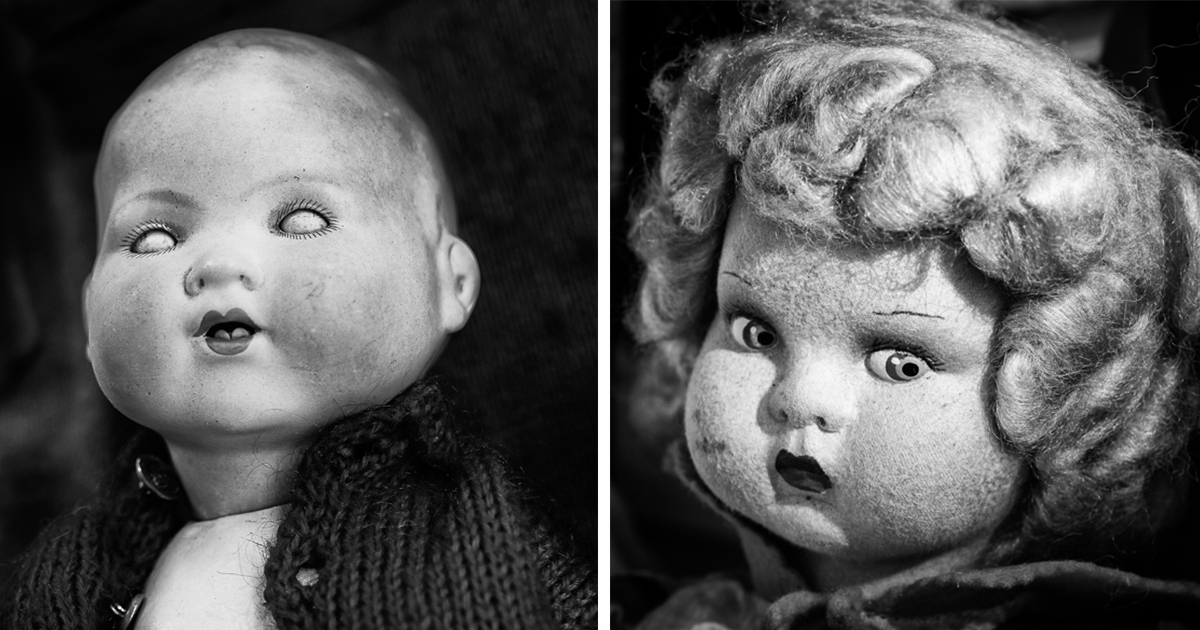
A cracked porcelain face in a dusty window. One glass eye staring from beneath a collapsed ceiling. A cloth doll sitting patiently in an empty classroom, as if recess ended decades ago and nobody remembered to come back. Few subjects turn an ordinary photograph into a horror-movie poster faster than an abandoned doll.
But the strange power of abandoned doll photos is not really about curses, haunted toys, or a tiny plastic villain waiting to borrow your kitchen knife. It is about memory, absence, decay, and the unsettling feeling that something made to be loved has been left behind. These eerie images pull on childhood nostalgia with one hand and ring the alarm bell with the other.
Why Abandoned Dolls Feel So Unsettling
Dolls are built to represent people, especially children. They have faces, eyes, clothes, names, and sometimes elaborate backstories. They sit in bedrooms, ride in strollers, attend tea parties, and receive more dramatic haircuts than most adults receive in a lifetime. When a doll is abandoned, damaged, or photographed in an empty place, that familiar role changes immediately.
Instead of looking like a companion, the doll starts to look like evidence. It becomes a clue that a family once lived there, a child once played there, or a room once had laughter in it. The empty setting does most of the emotional heavy lifting. A doll on a store shelf is merchandise. A doll on a broken windowsill is a mystery.
Dolls have long carried cultural, emotional, and historical meaning beyond simple play. Museum collections document dolls as objects connected to identity, memory, family life, fashion, cultural traditions, and childhood imagination.
The Uncanny Valley Effect
The fear response often comes from what psychologists and designers call the uncanny valley. This idea describes the uneasy reaction people can have when something looks almost human but not quite human enough. Dolls fall right into that uncomfortable neighborhood. Their faces resemble ours, but their expressions never change. Their eyes shine, but they do not blink. Their smiles stay frozen longer than a family reunion argument.
Research on the uncanny valley suggests that human-like objects can feel disturbing when their appearance creates uncertainty about whether they are alive, artificial, familiar, or somehow “wrong.” Scientists still debate exactly why this happens, but near-human faces, odd proportions, vacant eyes, and damaged features can all intensify the effect.
Damage Makes the Story Darker
Time is a talented horror stylist. It can yellow plastic, crack porcelain, fade fabric, loosen hair, stain clothes, and turn a cheerful toy into something that looks like it survived three ghost stories and a plumbing disaster. Old dolls were made from a wide range of materials, including wood, cloth, wax, papier-mâché, china, metal, and early plastics. Each material ages differently, and those signs of deterioration can give a doll an unexpectedly dramatic appearance.
A missing eye can look sinister, but it may simply be the result of moisture, impact, glue failure, or years of careless storage. Peeling paint is usually chemistry, not possession. A doll with tangled hair is often the work of humidity, dust, pests, and gravity. The supernatural explanation is more entertaining, of course, but mold has been ruining atmospheres long before haunted houses had gift shops.
What Scary Doll Photos Really Capture
The best abandoned doll photos are rarely frightening because of the doll alone. They are frightening because the photograph captures a collision between childhood and abandonment. A toy is supposed to suggest safety, imagination, and care. An empty building suggests interruption, neglect, and disappearance. Put them together, and the image practically writes its own creepy soundtrack.
The Empty Room
A doll in an abandoned nursery, schoolroom, bedroom, or hospital corridor instantly creates a question: who left it there? The viewer does not need an answer. The unanswered question is the engine of the image. The doll becomes a stand-in for a missing child, even when the real explanation may be much less cinematic.
The Staring Eyes
Doll eyes are especially powerful in photographs because they reflect light differently from fabric, wallpaper, wood, and dust. A pair of glass eyes can catch a flash, flashlight beam, or window reflection and appear to glow. The effect may look paranormal, but it is often basic lighting doing its best impression of a low-budget thriller.
The Wrong Place
A doll in a toy chest is normal. A doll sitting in a rusted bathtub is not. A doll hanging from a tree branch, lying beside a broken television, or perched on a stairway creates visual tension because it seems misplaced. Photography loves contrast, and abandoned doll images use contrast like a haunted house uses fog machines.
The Human Clue
An abandoned doll can also serve as a quiet document of real life. Historic sites and museum collections show that children’s toys often survive as clues to domestic life, family routines, class, popular culture, and changing ideas about childhood. Archaeologists may find durable toy fragments more easily than cloth or wood objects, which deteriorate more quickly in the environment.
The History Behind Old Dolls and Their Creepy Reputation
Not every old doll was designed to look cute by modern standards. In the nineteenth century, many dolls had adult-like faces, stiff bodies, tiny painted mouths, glass eyes, and formal clothing. To a modern viewer raised on soft plush toys and animated characters with giant sparkly eyes, these dolls can look severe before they even begin collecting dust.
Some historical dolls also came with eerie names and stories. “Frozen Charlotte” dolls, for example, were small one-piece figures associated with a folk ballad about a young woman who froze during a winter carriage ride after refusing to dress warmly. The dolls were manufactured in the nineteenth and early twentieth centuries, and their expressionless forms can look especially strange when photographed alone.
Other dolls were never meant to be creepy at all. Dolls can preserve cultural knowledge, represent communities, teach traditions, and help children understand family roles or social expectations. Indigenous dollmaking traditions, handmade dolls, paper dolls, and collectible dolls all carry stories that are much bigger than a scary photograph.
This context matters. A damaged doll is not automatically a horror prop. It may be a handmade object, a family heirloom, a cultural artifact, or the last surviving piece of a child’s playroom. The creepy mood belongs to the image, not necessarily to the doll.
How to Read an Abandoned Doll Photograph
When looking at scary photos of abandoned children’s companions, pay attention to more than the doll’s face. The setting often tells the better story.
Look at the Background
Is the doll in a house, a school, an amusement park, a hospital, a basement, or an outdoor space? Peeling wallpaper, water damage, old furniture, broken toys, and abandoned clothing can reveal whether the place was slowly forgotten or suddenly left behind.
Look at the Position
A doll sitting upright may have been carefully placed. A doll face-down in debris may have fallen. A doll positioned in the center of a hallway may be staged by a photographer. There is nothing wrong with staged photography, but it is worth recognizing the difference between documentary images and deliberate horror art.
Look at the Light
Low light, flashlight beams, flash photography, and long shadows can make even a cheerful toy look menacing. Reflections in plastic eyes may resemble pupils. A cracked face can appear deeper under side lighting. Before deciding a doll is haunted, blame the lighting department first.
Look for Evidence of Time
Dust, corrosion, water stains, plant growth, insects, and sun bleaching all help tell the story of abandonment. A doll covered in dirt may have spent years in a garage. A doll with faded clothes may have sat near a window. A doll with moss nearby may simply have lost a battle with nature, which is undefeated and not particularly sentimental.
Photographing Abandoned Dolls Responsibly
The eerie abandoned doll aesthetic is popular online, but responsible photography matters more than getting a spooky social-media post. Do not enter unsafe buildings, trespass on private property, climb through broken structures, disturb wildlife, or move objects in a historic location just to create a better composition.
The most powerful images often come from observing what is already there. Photograph the doll where you found it. Capture the surrounding room. Notice the dust, light, texture, and distance. Avoid adding fake blood, breaking objects, or rearranging personal belongings. A real abandoned space has enough atmosphere without turning it into a Halloween clearance aisle.
If a doll appears to be historically significant, handmade, culturally important, or part of an estate, do not remove it. Local historical societies, museums, archives, and preservation groups may be able to help identify or document the object. Library and museum collections preserve photographs and material culture because ordinary objects often become meaningful records of everyday life.
Tips for a Strong Abandoned Doll Photo
- Use natural light when possible to preserve the real mood of the space.
- Photograph the doll from a child-height perspective for a more immersive feeling.
- Include environmental details instead of zooming in on the face every time.
- Use shadows carefully, but avoid editing so heavily that the image loses credibility.
- Take a wide shot, a medium shot, and a close-up to tell a fuller visual story.
- Write captions that explain the setting without inventing paranormal claims.
Why We Keep Looking at Creepy Doll Images
People are drawn to abandoned doll photos because they sit between comfort and discomfort. We recognize the object immediately. Many of us owned dolls, saw them in relatives’ homes, found them in thrift stores, or watched them stare from a shelf during a childhood sleepover. The doll is familiar enough to trigger memory but strange enough to trigger suspicion.
These images also remind us that childhood does not last forever. Toys age. Homes change owners. Schools close. Families move. A doll left behind can become a tiny monument to a moment that has passed. That is what makes the strongest photographs more sad than frightening.
The horror is not necessarily that the doll has a soul. The horror is that it once belonged to someone who did.
Conclusion: The Real Story Behind the Souls of Dolls
Scary photos of abandoned dolls work because they turn familiar childhood companions into symbols of mystery, memory, and loss. Their cracked faces, faded clothes, glass eyes, and lonely settings create an instant emotional reaction. Yet behind every eerie image is usually a more human story: a forgotten room, an aging object, a changing neighborhood, or a child who simply grew up.
The next time you see an abandoned doll staring from a dusty corner, enjoy the chillsbut remember that the most haunting part may not be the doll itself. It may be the silence around it.
A Composite Experience: Encountering an Abandoned Doll
The following section is a fictionalized composite experience inspired by common visual details in abandoned-place photography. It is not presented as proof of paranormal activity.
The first thing you notice is not the doll. It is the silence.
The house looks ordinary from the outside: faded siding, one broken gutter, weeds reaching toward the porch steps like they are applying for permanent residency. The windows are cloudy, but not completely dark. Afternoon light slips through the glass in thin yellow strips, giving the place a tired, half-awake appearance.
Inside, every step feels louder than it should. Floorboards complain. Dust rises in slow little storms. A curtain hangs from one window by a single hook, moving just enough to make the room look occupied without actually being alive. That is the trick abandoned houses play on people: they make ordinary movement seem suspicious.
The doll is sitting in a small wooden chair near the far wall.
At first, it looks like a bundle of fabric. Then your eyes adjust. You see the pale face, the faded blue dress, the bent arm resting across its lap. One shoe is missing. Its hair is tangled into a dusty knot, and its left eye is slightly tilted, giving it the expression of someone who has just heard a very disappointing secret.
You do not touch it. Not because you think it will move, but because touching it would change the story. The doll has been sitting there longer than you have been standing in the room. It belongs to the silence now.
You take a photograph from the doorway first. The doll appears small against the stained wallpaper and collapsed ceiling tiles. Then you move closer, careful not to step on the scattered picture books and broken plastic blocks around the chair. The closer you get, the less frightening it becomes. The face is scratched. The dress is frayed. The doll is not watching you. It is only damaged.
Still, the room feels heavy.
You start imagining who owned it. Maybe a child carried it from room to room. Maybe it sat on a bed. Maybe someone packed everything else when they moved and forgot this one object in the corner. Maybe the doll was not forgotten at all. Maybe it was left because nobody knew what to do with something that carried too many memories.
When you look at the photo later, the image is not as terrifying as the moment felt. There is no shadowy figure in the doorway. No glowing eyes. No mysterious hand in the mirror. Just a worn doll in a quiet room.
And somehow, that is enough.
The photograph becomes unsettling because it records an absence. It shows a companion without a child, a chair without a room full of noise, and a toy without the person who once made it important. The doll does not need to be haunted. The house does not need a ghost. Time has already done all the haunting.













