
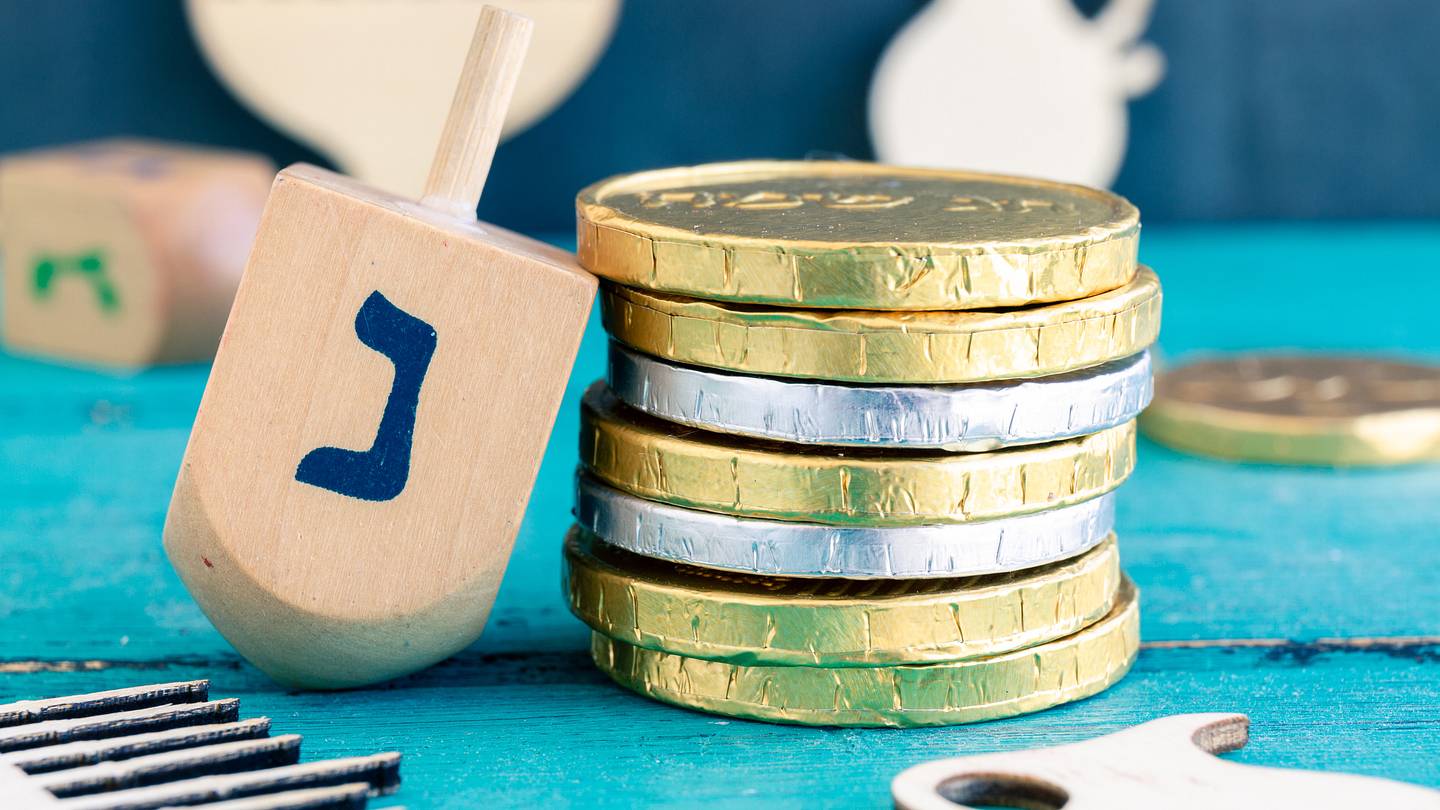
Small, square, and suspiciously good at stealing chocolate coins, the Hanukkah dreidel is one of the most familiar symbols of the Festival of Lights. But its backstory is far twistier than most people expect.
A Tiny Top With a Big Reputation
The Hanukkah dreidel looks simple enough: a four-sided spinning top, usually decorated with Hebrew letters, passed around a table while players gamble with pennies, nuts, raisins, or the true currency of childhood diplomacy: chocolate gelt. It is the kind of object that fits in a coat pocket, rolls under furniture, and somehow becomes the loudest thing in the room the moment it starts wobbling.
Yet behind this humble Hanukkah toy is a surprisingly layered history. The dreidel is connected to Jewish memory, European folk games, Yiddish language, family rituals, holiday food, and a long tradition of turning ordinary objects into carriers of meaning. It is not just a toy. It is a spinning little archive.
Many people grow up hearing that the dreidel began during the time of the Maccabees, when Jewish children supposedly used spinning tops to hide their Torah study from Seleucid-Greek authorities. It is a powerful story: brave students, secret learning, danger at the door, and a toy that becomes a clever disguise. The only problem? Historians generally do not find evidence that dreidels existed in that ancient setting. The story is better understood as beloved folklore than documented history.
The real history of the dreidel may be even more interesting. Instead of beginning as a purely Jewish ritual object, it appears to have developed from older European spinning-top games, especially gambling games known as teetotum or “put and take.” Over time, Jewish communities adapted the game, gave its letters Yiddish meanings, connected it to Hanukkah, and eventually wrapped the whole thing in miracle-language. In other words, the dreidel did what Jewish culture has done many times: it took something from the surrounding world, transformed it, and made it speak in a Jewish accent.
What Is a Dreidel?
A dreidel is a four-sided spinning top traditionally played with during Hanukkah. Each side bears a Hebrew letter. Outside Israel, those letters are nun, gimel, hey, and shin. In Israel, the shin is commonly replaced with pey. Today, the letters are usually explained as an acronym for the Hebrew phrase Nes gadol hayah sham, meaning “A great miracle happened there.” On Israeli dreidels, the phrase becomes Nes gadol hayah po, meaning “A great miracle happened here.”
The “great miracle” refers to the Hanukkah story: the rededication of the Second Temple in Jerusalem after the Maccabean revolt and, in later Jewish tradition, the miracle of a small amount of oil lasting eight days. The dreidel therefore sits comfortably among the holiday’s most famous symbols: the hanukkiah, candles, latkes, sufganiyot, and gelt.
How the Game Works
The rules are easy enough for children and dangerous enough for adults who care too much about chocolate. Every player starts with an equal number of tokens. Everyone contributes to a central pot. Then players take turns spinning the dreidel. If it lands on nun, the player does nothing. If it lands on gimel, the player takes the whole pot. If it lands on hey, the player takes half. If it lands on shin, the player puts one token in.
The game continues until one player wins the pile, everyone loses patience, or the dog discovers that chocolate coins are not actually for dogs. It is part game of chance, part math lesson, part family comedy, and part reminder that holiday traditions do not need to be solemn to be meaningful.
The Popular Legend: Secret Torah Study Undercover
The most famous dreidel origin story says that, during the rule of Antiochus IV Epiphanes, Jewish learning was forbidden. According to the legend, children and teachers gathered secretly to study Torah. When soldiers approached, they quickly hid their scrolls or lessons and pulled out spinning tops, pretending to gamble or play.
It is easy to understand why this story has lasted. It gives the dreidel drama. It turns a toy into a symbol of resistance. It also fits beautifully with Hanukkah’s larger themes: religious freedom, survival, courage, and the refusal to let a powerful empire erase Jewish practice.
However, historians have not found ancient evidence for the dreidel as a Maccabean-era object or as a tool used to conceal Torah study. The story appears much later in Jewish writing. That does not make it worthless. Folklore can carry emotional truth even when it is not literal history. The tale expresses how Jewish communities understood themselves: clever, resilient, devoted to learning, and capable of turning even play into preservation.
So the legend should not be thrown into the historical trash bin with burnt latkes and broken menorah bulbs. It should be appreciated for what it is: a meaningful story about Jewish endurance, not a verified origin report filed by ancient eyewitnesses.
The Older European Game Behind the Dreidel
The more historically grounded story begins not in ancient Judea, but in Europe. Long before dreidel became a Hanukkah staple, people in England, Ireland, Germany, and other places played spinning-top gambling games. One version was called teetotum. Like the dreidel, it used a top marked with letters that told players what to do with the pot.
In English versions, letters could stand for instructions such as take all, take half, put down, or do nothing. German-speaking versions used similar concepts. When Jewish communities encountered and adapted these games, the instructions naturally moved into Yiddish, a Jewish language closely related to German and written with Hebrew characters.
From German Instructions to Hebrew Letters
This is where the dreidel gets especially fascinating. The letters on the dreidel were not originally chosen because they spelled out “A great miracle happened there.” They likely began as game directions. Nun stood for nisht or nit, meaning nothing. Gimel stood for gants, meaning all. Hey stood for halb, meaning half. Shin stood for shtel or a similar phrase meaning put in.
In practical terms, the dreidel was a tiny casino with better holiday branding. The letters told players whether to take, leave, split, or contribute. The miracle acronym came later as a religious reinterpretation. That later meaning was so memorable that it eventually became the explanation most people know today.
This shift is not unusual. Traditions often gather meaning over time. A song, food, object, or game may begin in one context and later become attached to a holiday, community, or memory. The dreidel’s history shows culture in motion: spin, adapt, reinterpret, repeat.
When Did the Dreidel Become a Hanukkah Tradition?
The dreidel appears to have entered Jewish holiday life in Europe, especially among Ashkenazi Jews. Hanukkah usually falls near Christmas, and spinning-top games were popular winter amusements in parts of Europe. Jewish communities adapted the game, and over time it became linked with Hanukkah gatherings.
That timing mattered. Hanukkah was already a home-centered holiday filled with candle lighting, songs, food, and family storytelling. A small game using coins or tokens fit perfectly into the atmosphere. It gave children something to do besides ask whether the latkes were ready. It gave adults a low-stakes way to join the fun. And it connected naturally with Hanukkah gelt, the tradition of giving money or chocolate coins.
Gelt, Children, and the Holiday Table
Hanukkah gelt has its own long history, but in modern family life it pairs almost inseparably with dreidel. The coins become game pieces, rewards, bargaining chips, and occasionally emergency dessert. Chocolate gelt also made the game more child-friendly. A gambling-style game that once involved coins could become a sweet holiday activity.
By the time many Jewish families encountered dreidel in modern America, it had become one of the easiest Hanukkah traditions to pass down. You did not need special training. You did not need a large budget. You needed a dreidel, a few players, and something small to put in the pot. That simplicity helped it survive.
Why Israeli Dreidels Are Different
One of the best-known details about the dreidel is the difference between dreidels used in Israel and those used elsewhere. Outside Israel, the letters nun, gimel, hey, and shin are interpreted as Nes gadol hayah sham: “A great miracle happened there.” In Israel, the shin is usually replaced by pey, producing Nes gadol hayah po: “A great miracle happened here.”
This small letter change says a lot. For Jews in the diaspora, the Hanukkah miracle is remembered as something that happened “there,” in the Land of Israel. For Jews in Israel, the miracle happened “here.” The dreidel becomes a geography lesson, a theology lesson, and a tiny spinning passport stamp all at once.
The Hebrew name for dreidel, sevivon, comes from a root meaning to turn or spin. The Yiddish word dreidel is also connected to turning. Both names remind us that the object’s basic action is central to its identity. It turns. It wobbles. It falls. Then someone shouts, “Gimel!” as though they have just conquered a kingdom.
The Dreidel Song and American Hanukkah Memory
In the United States, the dreidel became even more famous through children’s music, especially the song commonly known as “I Have a Little Dreidel.” Its cheerful clay-dreidel imagery helped turn the toy into a staple of Hebrew school classrooms, family parties, and public Hanukkah programs.
The song is simple, catchy, and almost impossible to remove from your brain once it enters. That is part of its power. Many American Jews first encountered the dreidel not through a history lesson, but through a classroom chorus, a paper craft, or a game played on a plastic tablecloth while adults discussed whether the applesauce or sour cream faction was winning the latke debate.
American Hanukkah culture also gave the dreidel a visual role. It appears on greeting cards, wrapping paper, cookies, ornaments, classroom posters, sweaters, and decorative displays. Sometimes it is accurate; sometimes the letters look as if they were designed by someone who once walked past a Hebrew school at high speed. Either way, the dreidel has become shorthand for Hanukkah joy.
What the Dreidel Teaches About Jewish History
The surprising history of the Hanukkah dreidel teaches an important lesson: traditions do not always begin in the form we inherit them. Some are ancient. Some are medieval. Some are modern. Some are borrowed, reshaped, argued over, sung into popularity, and covered in chocolate.
The dreidel’s likely path from European gambling top to Jewish holiday game does not make it less meaningful. In fact, it may make it more meaningful. Jewish history is full of adaptation. Communities lived among many cultures, spoke many languages, faced pressure and persecution, and still found ways to preserve identity. They took local materials and gave them Jewish meaning. Food became memory. Songs became theology. Toys became symbols.
The dreidel also shows how playful customs can carry serious themes. Hanukkah is about rededication, courage, light, and survival. A spinning top may seem too silly for such ideas, but silliness is part of survival too. A community that can laugh, play, teach children, and gather around a table is a community still alive.
The Beauty of Later Meaning
Some people feel disappointed when they learn that the dreidel’s famous miracle acronym probably came after the game letters. But later meaning is not fake meaning. It is added meaning. Traditions often become sacred because generations keep investing them with memory, affection, and interpretation.
The dreidel did not need to begin as a Maccabean spy device to become a Hanukkah symbol. It became one because Jewish families used it, explained it, sang about it, laughed over it, and placed it beside candles in the warm center of the holiday.
Common Dreidel Myths, Spun Carefully
Myth 1: The Dreidel Definitely Comes From Ancient Judea
This is the dramatic version, but the evidence points elsewhere. While spinning tops are ancient, the specific dreidel game with Hebrew-letter instructions appears much later. The strongest historical case connects it to European gambling tops adapted by Ashkenazi Jews.
Myth 2: The Letters Always Meant “A Great Miracle Happened There”
Today that is the most familiar interpretation, but the letters likely began as Yiddish game instructions. The miracle phrase is a later religious explanation that beautifully connected the game to Hanukkah.
Myth 3: Dreidel Is Only for Children
Children may be its most enthusiastic ambassadors, but dreidel is for anyone willing to risk emotional devastation over a pile of foil-wrapped chocolate. Adults often rediscover the game’s charm because it is quick, communal, and just competitive enough to expose Uncle Mark’s secret intensity.
Myth 4: A Dreidel Is Always Fair
Not necessarily. Dreidels can be unevenly weighted, poorly shaped, or suspiciously loyal to one letter. Anyone who has watched the same plastic dreidel land on shin six times in a row knows that physics sometimes has a sense of humor.
Experiences Around the Dreidel: What the Little Top Does at the Table
The best way to understand the dreidel is not only to study it, but to watch what happens when it enters a room. A family gathers after candle lighting. The menorah glows in the window. Someone brings out a bowl of gelt, and suddenly everyone becomes a negotiator. The youngest child wants the shiny blue-wrapped coins. A grandparent insists that pennies are more traditional. A cousin suggests using almonds, which is noble until someone starts eating the game pieces.
Then the dreidel spins. For a few seconds, everyone leans in. The room gets quiet in that funny, temporary way holiday rooms do. The top wobbles, steadies itself, wobbles again, and finally drops. If it lands on gimel, the spinner becomes a champion. If it lands on shin, the spinner groans and pays the pot. The stakes are tiny, but the reactions are theatrical. That is the magic.
Many people remember dreidel less as a game of strategy and more as a game of atmosphere. It smells like frying potatoes, candle wax, sugar, and winter coats piled near the door. It sounds like laughter, arguments about rules, and someone asking whether hey means half rounded up or rounded down. It looks like children sitting cross-legged on the floor, adults pretending not to care, and chocolate wrappers slowly multiplying like festive confetti.
In classrooms, the dreidel becomes a teaching tool. Children learn Hebrew letters without feeling as if they are taking a quiz. They practice counting, sharing, taking turns, and losing gracefully, at least in theory. Teachers can use the game to explain the Hanukkah story, the difference between diaspora and Israeli dreidels, and the way Jewish traditions develop over time. It is history disguised as recess.
In interfaith families or diverse communities, dreidel often becomes an accessible doorway into Hanukkah. A guest who may not know the blessings or the historical background can still join the game. The rules take about one minute to explain. The laughter starts almost immediately. That openness matters. A small top can make a holiday feel welcoming without flattening its meaning.
There is also something deeply human about the dreidel’s motion. It spins with confidence, then loses balance. It keeps going longer than expected, then suddenly collapses. People do that too. Families do that. Communities do that. Hanukkah itself is a holiday about light lasting beyond reasonable expectation. The dreidel echoes that idea in miniature: a little motion, a little suspense, a little hope that the next turn lands well.
Modern dreidel experiences have expanded beyond the kitchen table. There are oversized dreidels at community events, handmade wooden dreidels sold by artisans, glittery classroom crafts, online dreidel games, and novelty versions that barely spin but look excellent on a shelf. Some families create house rules, such as donating the pot to charity, playing with compliments instead of coins, or letting the youngest player spin twice. These adaptations continue the dreidel’s long history of reinvention.
What makes the dreidel endure is not that it is ancient in every detail, but that it is easy to love. It gives people something to do with their hands while stories are told. It lets children own a piece of the holiday. It turns Hebrew letters into action. It makes memory playful. And when it finally falls, it leaves everyone ready to spin again.
Conclusion: The Dreidel Keeps Turning
The surprising history of the Hanukkah dreidel is a reminder that tradition is rarely frozen in place. The dreidel likely began as part of a European spinning-top gambling game, moved into Jewish life through Yiddish-speaking communities, became attached to Hanukkah, and eventually gained the miracle-rich meaning we recognize today.
That journey does not weaken the dreidel’s Jewish identity. It strengthens it. The object itself tells a story of adaptation, creativity, and reinterpretation. It shows how Jewish communities turned play into memory and memory into ritual. It proves that even a toy small enough to disappear under the sofa can carry centuries of language, migration, folklore, and faith.
So the next time a dreidel spins across the table, watch it closely. It is not just deciding who gets the chocolate. It is performing a tiny history lesson: Europe to Yiddish, game to symbol, folklore to family tradition, there to here. Not bad for something that can fit in your palm.













