
Note: This article is formatted for web publishing, and the SEO tags appear at the end in JSON format.
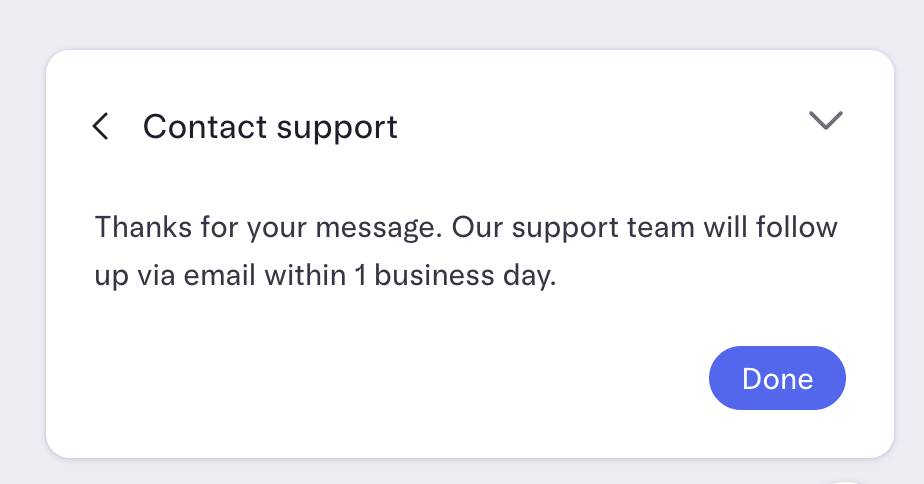
Once upon a time, “We’ll get back to you in 1 business day” sounded perfectly reasonable. It was the corporate equivalent of “the check is in the mail” vague, familiar, and oddly comforting if you didn’t think about it too hard. But that was before AI started summarizing tickets, routing inquiries, drafting replies, surfacing knowledge base answers, qualifying leads, and handling common requests faster than a caffeinated intern with three monitors.
Today, that old promise feels less like a service standard and more like a confession. It tells customers, prospects, and partners that your company still treats speed like a luxury instead of a basic expectation. And in a market where people can get instant answers from AI assistants, compare products in seconds, and book demos without talking to a single human, “one business day” can sound suspiciously like, “We haven’t modernized yet.”
To be clear, this is not an argument that every business should replace humans with bots and let the machines run the front desk like a sci-fi receptionist with perfect posture. It is an argument that AI has fundamentally changed what “reasonable response time” means. If a request is simple, repetitive, or clearly documented, there is no credible excuse for making people wait until tomorrow. In the age of AI, the new standard is simple: instant for straightforward issues, fast for complex ones, and honest about the difference.
Why “1 Business Day” Became Normal in the First Place
Let’s give old-school businesses one small courtesy: the delay used to be real. Support teams were buried in inboxes. Sales reps manually sorted leads. Service agents had to hunt through internal documents, Slack threads, old macros, and a knowledge base that looked like it was last updated during the Obama administration. Every question had to be triaged by a human, assigned by a human, answered by a human, and sometimes translated from “customer panic” into “actual issue” by a human.
In that environment, a one-business-day response window felt practical. It gave teams breathing room. It reduced risk. It kept expectations low enough that anything faster looked impressive. And frankly, it protected companies from promising speed they could not deliver consistently.
But what used to be a capacity problem is now often a systems problem. Many companies still operate as if every message must begin from zero, even though AI can now classify intent, detect urgency, pull context, draft an answer, recommend next steps, and route the issue to the right person almost immediately. That means the old delay is no longer inevitable. In many cases, it is optional. And optional friction is a terrible brand strategy.
What AI Changed and Why the Clock Is Ticking Faster
AI made first response time dramatically easier to improve
The most obvious shift is speed. AI tools can acknowledge requests the moment they arrive, summarize what the customer is asking, detect tone, and suggest a next action before a human even opens the ticket. That alone changes the game. Customers do not always need a fully solved problem in ten seconds. But they do want proof that your business has heard them, understood them, and started moving.
A modern response no longer has to be “Thanks for your message, please wait.” It can be:
- “We found your order.”
- “Your refund request matches policy X.”
- “Your issue looks urgent and has been escalated to billing.”
- “Here are the two steps that usually fix this problem.”
- “You can solve this immediately here, or speak to a human now.”
That is a completely different experience from a generic auto-reply. One feels useful. The other feels like a polite digital shrug.
AI turned knowledge retrieval from scavenger hunt into instant context
Before AI, many teams were not slow because they were lazy. They were slow because the answer lived in six different places, three of which were outdated and one of which required permissions nobody had. AI systems can now search structured and unstructured knowledge, summarize the relevant answer, and hand it to an agent in seconds.
That means fewer delays caused by “Let me check with another team,” and fewer moments when a customer gets bounced between departments like a confused pinball. In practical terms, AI shrinks the time between inquiry and clarity. And clarity is what customers have really been buying all along.
AI gave businesses 24/7 presence without 24/7 headcount
Here is the brutal truth: your customer does not care that your support team works East Coast hours, your sales manager is in a meeting, and your “urgent inbox” is actually just Greg refreshing Outlook between lunch and coffee. Customers live online. They shop, compare, cancel, complain, and ask questions whenever the need appears not whenever your team is emotionally ready.
AI does not get sleepy, disappear for a long weekend, or mysteriously “circle back” five days later. It can provide round-the-clock coverage for common requests and create a smoother handoff for the issues that still need a person. That does not eliminate humans. It makes the humans more valuable by reserving their time for nuance, judgment, empathy, and exception handling.
Why Customers No Longer Accept the Wait
Expectations do not rise in a vacuum. They rise because people compare every business interaction with the best digital experiences they have elsewhere. If a bank app can detect fraud in real time, a retailer can surface order status instantly, and a calendar tool can schedule meetings without a dozen emails, customers start asking a very fair question: Why is this company still making me wait a day just to acknowledge a basic request?
The modern customer has been trained by search engines, messaging apps, food delivery platforms, and AI assistants to expect immediacy. Not perfection. Immediacy. That difference matters. People understand that some problems are genuinely complex. They do not expect a bot to rewrite a contract, reverse a fraud investigation, or diagnose a medical issue without human review. What they do expect is momentum.
And momentum is where many brands still fail. A customer asks a simple pricing question, requests a return label, wants to reschedule a demo, or needs a password reset link. Instead of a near-instant answer, they get a sterile auto-response promising help “within 1 business day.” By then, they may have already solved the problem themselves, chosen a competitor, or decided your company is slower than your homepage claims.
In sales, the cost of delay is even more painful. Interest cools. Context disappears. Competitors slip in. The buyer who filled out your form at 10:14 a.m. wanted to act at 10:14 a.m. not sometime after lunch tomorrow when your CRM spits out a reminder. AI does not magically close deals, but it can dramatically reduce the dead time that kills them.
The Real Problem With “We’ll Get Back to You”
It signals operational drag
Customers hear more than the sentence itself. They hear the process behind it. “We’ll get back to you in 1 business day” often translates to:
- We do not have instant access to our own information.
- We have not automated the obvious parts of this workflow.
- We are treating every request like it requires the same slow path.
- We expect you to be more patient than the market requires.
None of those messages help conversion, trust, or loyalty.
It wastes human talent on low-value work
Highly skilled people should not spend their day copying snippets, rewriting the same three answers, triaging routine tickets, or manually routing leads that AI can classify in seconds. When businesses leave simple work untouched by automation, they do not protect quality. They bury quality under repetitive labor.
The result is predictable: slower teams, frustrated employees, inconsistent customer experiences, and a creeping sense that everyone is busy but nothing is actually moving. AI, used well, does not just speed things up. It clears the runway for better work.
It creates a trust gap when the rest of your brand promises speed
This is where things get awkward. Plenty of companies market themselves as innovative, seamless, customer-centric, and “frictionless.” Then a prospect asks a simple question and gets told to wait a full business day. That is not frictionless. That is a digital velvet rope.
If your product is modern but your responsiveness is prehistoric, customers notice. And they remember.
What Smart Companies Should Say and Do Instead
Replace passive acknowledgment with active progress
The first response should not merely confirm receipt. It should move the interaction forward. That means using AI to identify intent, provide relevant self-service options, ask only necessary follow-up questions, and route the issue intelligently. Good automation reduces effort. Bad automation just gives the delay a friend.
A better default message looks like this:
“We’ve reviewed your request and found the most likely solution. You can fix it now with the steps below, or reply ‘agent’ to speak with a specialist. If this involves billing, fraud, legal review, or account security, we’ll prioritize human follow-up.”
That message sets expectations, offers action, and respects the customer’s time. Fancy that.
Use a tiered service model
Not every inquiry deserves the same workflow. Smart organizations separate requests into categories:
- Tier 1: simple, repetitive, rules-based questions that AI should answer instantly
- Tier 2: moderate issues where AI can draft or assist, but a human should confirm
- Tier 3: sensitive, high-risk, emotional, or highly customized issues that need people from the start
This structure is practical, scalable, and sane. It avoids the two bad extremes: “AI for everything” and “AI for nothing.”
Measure the metrics that actually matter
If teams still celebrate “responded within 24 hours,” they are using a ruler from the wrong century. The better questions are:
- How fast did the customer get a useful answer?
- How often was the issue resolved without extra effort?
- How quickly did a human step in when nuance was needed?
- Did the interaction increase trust or quietly destroy it?
In other words, optimize for progress, not paperwork.
To Be Fair, Some Things Still Shouldn’t Be Instant
There are exceptions, and they matter. Regulated industries, legal approvals, security investigations, clinical decisions, financial exceptions, and sensitive escalations should not be rushed just because AI makes speed possible. Fast is not the same as reckless.
But even in those cases, the customer experience should improve. AI can gather context, verify identity steps, explain the process, estimate next steps, and help human teams respond with more confidence. The right standard is not “instant everything.” The right standard is “no unnecessary waiting.”
That is the key distinction. AI should remove avoidable delay, not thoughtful judgment.
What This Looks Like in Real Life: of Experience From the Front Lines
The easiest way to understand this shift is not through a dashboard, but through everyday experiences. Think about the last time you asked a company a simple question. Maybe you wanted to know whether a product was in stock, whether a trial would auto-renew, whether your invoice had gone through, or whether a feature worked with the software you already used. In the past, that question often disappeared into a support void. You got a reference number, a canned reply, and the emotional thrill of waiting around like you had mailed a letter by horse.
Now compare that with the businesses getting it right. You ask a question in chat and the system instantly recognizes what you mean. It pulls up your account, shows the current status, answers the obvious part, and gives you a clean path to a human if the issue is unusual. You do not have to restate your problem three times. You do not have to explain your order number like it is an ancient prophecy. And you definitely do not have to come back tomorrow for a basic update that software could have provided in five seconds.
The difference is not just convenience. It changes how the entire brand feels. Fast, relevant responses make a company look organized, competent, and respectful. Delayed, generic responses make the same company feel cluttered, fragmented, and slightly allergic to urgency.
This becomes even more obvious in B2B settings. Imagine a buyer exploring a software vendor. They visit the pricing page, compare features, and finally submit a request asking whether the platform supports SSO, a particular integration, or a compliance framework their procurement team cares about. That buyer is warm right now. They are researching right now. Their budget discussion is happening right now. So when the vendor responds with “Thanks for contacting sales. We’ll get back to you in 1 business day,” the buyer learns something important: the company’s systems are slower than the buyer’s decision process.
In contrast, an AI-assisted revenue team can acknowledge the inquiry immediately, surface the relevant documentation, suggest the right rep, and book a meeting without turning the prospect into a temporary pen pal. That does not eliminate the human relationship. It clears the useless delay that used to sit in front of it like a folding chair blocking a freeway.
There is also an internal experience that businesses often ignore. Employees feel the difference too. When AI handles repetitive questions, summarizes context, drafts replies, and recommends next steps, agents and reps stop spending their best hours on copy-paste labor. They get to solve actual problems. Morale improves because work feels more meaningful. Consistency improves because the team is not reinventing the wheel for every simple inquiry. And managers gain visibility into where humans are truly needed instead of assuming everything is urgent because the inbox looks dramatic.
None of this means perfection. AI still needs guardrails, oversight, good knowledge sources, and an easy off-ramp to a human. But once a company has those basics in place, the old “one business day” promise starts looking less like prudence and more like inertia wearing a name tag.
Conclusion
The age of AI has not erased the need for human judgment, empathy, or accountability. It has erased the excuse for slow handling of simple, predictable, low-risk interactions. Customers no longer judge you only against direct competitors. They judge you against the fastest, clearest, least annoying digital experience they had this week.
That is why “We’ll get back to you in 1 business day” no longer sounds responsible. It sounds outdated.
The winning standard now is straightforward: answer simple questions immediately, move complex cases forward quickly, be transparent when human review is required, and stop treating preventable delay like professionalism. Because in the age of AI, speed is not just an efficiency metric. It is part of the product, part of the brand, and part of the trust equation.
In other words: if your business can automate the hold music, it can probably automate the waiting excuse too.














