
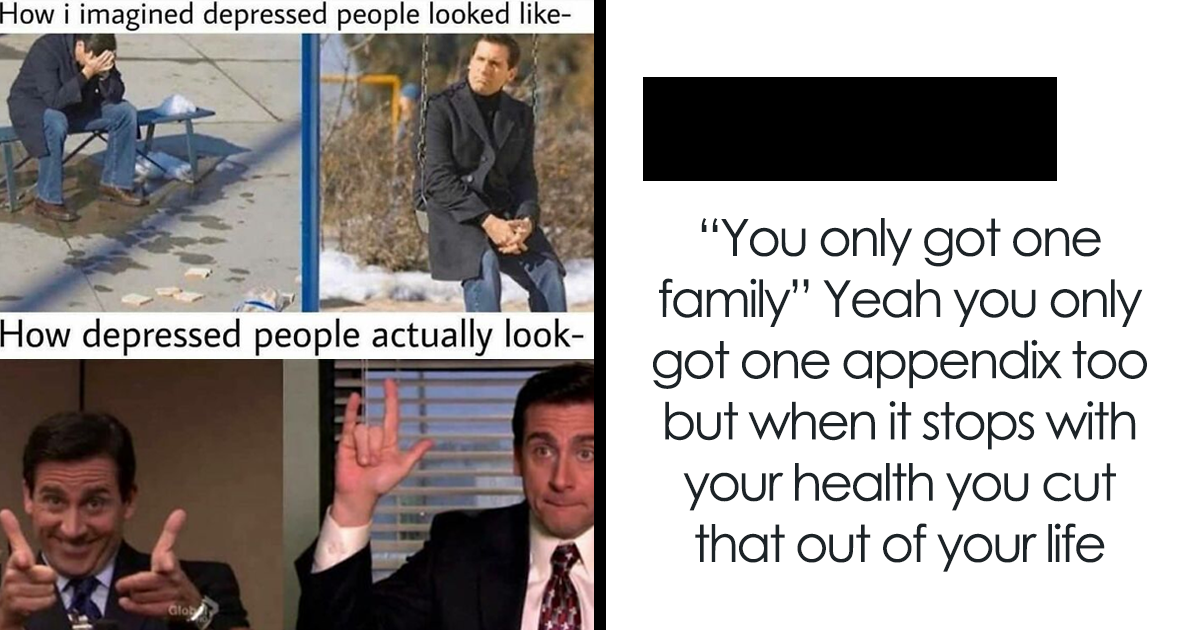
Some memes make you laugh. Others make you laugh, stare silently at the wall, and wonder whether your childhood should receive a formal performance review.
The Instagram page Anxiety Within specializes in the second kind. Its mental health memes transform overthinking, social anxiety, emotional exhaustion, perfectionism, and other uncomfortable experiences into jokes that feel suspiciously personal. The humor is playful, but the recognition behind it is real. One minute, you are admiring a nervous cartoon animal. The next, the cartoon animal has summarized your entire relationship with uncertainty.
The page gained wider attention through a 50-picture collection featuring anxiety-related posts that range from gently relatable to magnificently unhinged. Rather than presenting mental health as an inspirational journey accompanied by perfect lighting and herbal tea, these memes acknowledge the messier reality: healing is rarely linear, coping can look ridiculous, and sometimes “doing your best” means replying to one email before lying horizontally for an hour.
Why Mental Health Memes Feel So Personal
A good mental health meme compresses an entire emotional experience into one image and a few words. It can explain a feeling that would otherwise require a notebook, several diagrams, and a patient friend willing to hear the phrase “It’s complicated” twelve times.
Research suggests that humorous memes may help some people create emotional distance from stressful subjects. In one study highlighted by the American Psychological Association, people who viewed memes related to a stressful public event reported feeling calmer and more content than participants who viewed other forms of content. Research reviews on mental health memes have also found that many people experiencing psychiatric symptoms describe their interactions with such memes positively.
That does not mean an Instagram carousel is secretly a licensed clinician. Memes can provide validation, reframing, and community, but they can also oversimplify conditions, encourage casual self-diagnosis, or turn “laughing it off” into permanent avoidance. The healthiest interpretation is somewhere between “this meme cured me” and “humor has no value whatsoever.”
50 Painfully Relatable Meme Moments
Anxiety and the Olympic Sport of Overthinking
- The unanswered-message investigation: A friend takes eight minutes to reply, so your brain opens a full detective agency and immediately suspects abandonment.
- The conversation replay: You revisit something mildly awkward from 2017 as though new evidence has been submitted to the court.
- The imaginary argument: You rehearse a confrontation so thoroughly that your fictional opponent apologizes, grows emotionally, and starts a podcast.
- The suspiciously peaceful afternoon: Nothing is wrong, which naturally convinces anxiety that something enormous must be preparing backstage.
- The email subject line crisis: “Quick question” sounds too aggressive, “Hello” sounds cold, and “Greetings, fellow human” raises unrelated concerns.
Social Anxiety in Its Natural Habitat
- The canceled-plan celebration: You wanted to see everyone, but now you can remain home wearing pants that have never met a zipper.
- The doorway hesitation: You arrive at a party, hear cheerful voices, and briefly consider beginning a new life in another state.
- The phone-call emergency: A ringing phone feels less like communication and more like a surprise oral examination.
- The wrong-wave tragedy: You wave at someone who was greeting the person behind you and immediately apply for witness protection.
- The group-chat disappearance: You type a thoughtful response, delete it, send a reaction emoji, and call that meaningful participation.
Productivity, Procrastination, and Other Complicated Relationships
- The five-minute task: The task takes five minutes, but worrying about it consumes three business days and several snacks.
- The productivity ritual: Before working, you must clean the desk, organize the folders, choose music, refill water, and investigate a mysterious crumb.
- The motivational burst: At 11:48 p.m., you suddenly decide to reinvent your career, body, apartment, and personality before breakfast.
- The reward-first system: You give yourself a treat for considering the possibility of eventually beginning the task.
- The open-tab museum: Your browser contains 46 tabs, including one article you sincerely planned to read during the previous presidential administration.
Perfectionism Wearing a Tiny Business Suit
- The impossible standard: If the result cannot be flawless, perfectionism suggests producing nothing and feeling guilty about it instead.
- The compliment rejection: Someone praises your work, and you respond by presenting a detailed list of everything they failed to notice.
- The beginner problem: You attempt a new hobby and are devastated to discover that you are not immediately an internationally recognized master.
- The feedback spiral: Nine positive comments disappear behind one neutral suggestion wearing a flashing neon sign.
- The accidental success: You accomplish something impressive and decide it was luck, timing, lighting, or perhaps an administrative error.
Emotional Exhaustion With Excellent Comic Timing
- The low-battery personality: You still have 12% energy, but every available unit has been reserved for staring blankly into the refrigerator.
- The “I’m fine” translation: The phrase technically means you are functioning, although several internal departments have stopped answering calls.
- The weekend recovery plan: You intend to rest for two days and somehow become tired from attempting to rest correctly.
- The tiny inconvenience: After handling major problems calmly, a crooked sock becomes the final villain in your emotional origin story.
- The social hangover: You had fun yesterday, so today your nervous system demands silence, carbohydrates, and absolutely no unexpected visitors.
Intrusive Thoughts and the Brain’s Unsolicited Newsletter
- The midnight memory: Your brain waits until you are comfortable before presenting “Top Ten Embarrassing Events You Thought You Had Forgotten.”
- The worst-case presentation: One minor uncertainty inspires a complete slideshow featuring disaster, humiliation, unemployment, and oddly specific weather.
- The forbidden thought: The harder you try not to think about something, the more your brain promotes it to permanent homepage status.
- The staircase scenario: You walk safely down three steps while your imagination produces an unnecessarily cinematic accident sequence.
- The random existential question: You are buying toothpaste when your brain suddenly asks whether anyone has ever truly understood you.
People-Pleasing and Boundary Confusion
- The automatic yes: You agree to help before your schedule, energy level, or remaining patience can join the discussion.
- The apology reflex: Someone bumps into you, and you apologize for occupying a physical location in the universe.
- The boundary rehearsal: You practice saying no in the mirror, then meet the actual person and offer to do twice as much.
- The emotional weather report: You detect a tiny change in someone’s tone and immediately assume responsibility for the entire atmospheric system.
- The post-boundary guilt: You make one healthy decision and spend the afternoon wondering whether you have become a heartless corporate villain.
Sleep, Except the Brain Has Other Plans
- The bedtime energy surge: You feel exhausted all day, then become spiritually prepared to reorganize the kitchen at midnight.
- The pillow debate: Your body wants sleep, but your mind would like to review finances, mortality, and something weird you said in high school.
- The alarm negotiation: Morning You and Night You continue a hostile labor dispute over the number of necessary snoozes.
- The revenge bedtime: You remain awake to reclaim personal time, accidentally stealing that time from tomorrow’s exhausted version of yourself.
- The almost-asleep interruption: Just as you drift off, your brain remembers an urgent task that will not actually be urgent for six months.
Therapy Language Escaping Into Everyday Life
- The inner-child committee: A small disappointment becomes a meeting attended by every age you have ever been.
- The attachment-style analysis: A delayed text leads to forty minutes of research and an unofficial diagnosis of everyone involved.
- The trigger vocabulary problem: Sometimes something is a genuine trigger; sometimes it is simply an irritating person chewing with confidence.
- The healing-journey expectation: You hoped growth would feel peaceful, but much of it involves noticing your own behavior and saying, “Oh. That again.”
- The coping-skill collection: You know twelve grounding techniques and use none because apparently panicking remains your brain’s preferred classic.
Existential Humor for People Who Are Technically Functioning
- The adulting surprise: You complete several responsible tasks and remain disappointed that no supervising adult arrives with a certificate.
- The identity loading screen: You know what you do for work and what snacks you like, but the larger question remains buffering.
- The Sunday-evening portal: Around 6 p.m., time accelerates and Monday begins staring through the window.
- The grocery-store revelation: You become overwhelmed by cereal choices and briefly understand why ancient philosophers moved into barrels.
- The final therapeutic meme: You laugh because it is relatable, save it because it is accurate, and send it to a friend instead of explaining how you feel.
Why Dark Humor Can Be a Healthy Coping Mechanism
It Creates Emotional Distance
Humor changes the angle from which people view a stressful experience. The problem does not disappear, but it may feel less enormous for a moment. Psychological research describes humor as a strategy that can help people distance themselves from difficulties, reduce tension, and approach stressful situations from a more flexible perspective.
That distance matters. Saying, “I am experiencing intense anticipatory anxiety about a routine appointment” may feel heavy. Sending a meme of a frightened raccoon wearing office clothes can communicate something similar without requiring a formal emotional presentation.
It Turns Private Feelings Into Shared Language
Mental health struggles often feel isolating because people assume everyone else is coping more gracefully. A relatable anxiety meme interrupts that illusion. Thousands of likes and comments can demonstrate that a supposedly strange habitrehearsing phone calls, replaying conversations, or avoiding an emailis not uniquely yours.
Studies of meme use have connected shared humor with collective coping and community-building. Memes allow people to exchange experiences and emotional meaning quickly, often without exposing every private detail. They become tiny digital signals that say, “I recognize this feeling too.”
It Can Make Difficult Conversations Easier
A meme can act as an emotional doorway. Someone who cannot begin a serious conversation with “I have been struggling lately” may be able to send a post and add, “This is basically me.” The joke lowers the conversational temperature, allowing vulnerability to enter disguised as a cartoon.
Shared laughter may also strengthen social bonds. SAMHSA guidance notes that humor and laughter can relieve stress and build connection when shared with other people. Mayo Clinic and Cleveland Clinic resources similarly describe laughter as capable of activating and then easing the body’s stress response.
When the Meme Stops Helping
Dark humor is most useful when it helps a person process reality, not permanently avoid it. If every painful emotion is converted into a joke before it can be examined, humor may become less of a coping tool and more of an escape hatch with excellent graphic design.
Mental health memes can also flatten complicated conditions into catchy stereotypes. Feeling distracted does not automatically mean someone has ADHD. Enjoying a tidy desk is not the same as having obsessive-compulsive disorder. Disliking an ex does not qualify anyone to diagnose that person with narcissistic personality disorder. Memes are built for instant recognition, while mental health assessment requires history, context, severity, duration, and professional judgment.
Online content deserves additional care because social media can both support connection and expose users to harmful or misleading material. U.S. public-health guidance emphasizes that the effects of social platforms depend partly on the type of content viewed, how it is used, and the circumstances of the user. Pew Research Center findings likewise show that young people describe both benefits and drawbacks, including entertainment and connection alongside concerns about sleep, productivity, and emotional well-being.
Signs That It May Be Time to Go Beyond Memes
Consider seeking qualified support when anxiety, low mood, intrusive thoughts, or emotional exhaustion consistently interfere with sleep, school, work, relationships, self-care, or basic daily responsibilities. The same applies when humor no longer provides relief, when disturbing content repeatedly worsens your mood, or when you feel unable to discuss what is underneath the jokes.
A meme can help begin the conversation. It should not be expected to complete the treatment plan.
What Scrolling Through All 50 Memes Feels Like: A Reader’s Experience
Opening a gallery of therapist-worthy memes feels harmless at first. You expect familiar jokes about canceled plans and nervous introverts. Perhaps there will be a cat hiding under a blanket. Perhaps the cat will be wearing glasses. The internet has trained us to associate emotional crisis with surprisingly well-accessorized animals.
Then the recognition begins.
The first few images are funny in a comfortable way. You laugh at a joke about procrastinating because you have also turned a five-minute chore into a weeklong psychological miniseries. You send it to a friend who responds immediately with three skull emojis, the modern punctuation mark for “This is painfully accurate.”
A few posts later, the tone changes. A meme about apologizing too much reminds you of how often you say sorry before expressing a perfectly reasonable need. Another captures the strange panic of receiving a simple message reading, “Can we talk?” Your logical mind knows the sender may want to discuss lunch plans. Your anxious mind has already packed a small suitcase and drafted a public apology.
The experience becomes a cycle of laughter, discomfort, and recognition. Some jokes feel broad enough to belong to everyone. Others seem unreasonably specific, as though the page administrator has been hiding inside your kitchen cabinets taking notes.
That specificity is part of the appeal. The memes give language to experiences that can be difficult to explain. “I am tired” may actually mean “I have spent six hours predicting every possible outcome of a situation I cannot control.” “I do not feel social” may mean “I want connection, but my nervous system has classified casual conversation as an extreme sport.”
Sharing the posts adds another layer. Sending a meme is easier than composing a vulnerable paragraph. It allows you to reveal something without standing emotionally uncovered in the middle of the chat. The recipient can laugh, relate, or ask a question. Even a simple “same” can feel reassuring.
However, the gallery may also reveal how easily emotional honesty gets outsourced to humor. Saving a post about burnout does not create rest. Liking a meme about boundaries does not establish one. Forwarding a joke about overthinking does not interrupt the thought cycle. The content can illuminate a pattern, but recognition and change remain different activities.
The healthiest outcome is not to stop laughing. It is to become curious about what caused the laugh. Was the meme merely entertaining? Did it make you feel understood? Did it reveal something that has been affecting your daily life? Is there a conversation you have been avoiding because a joke feels safer?
By the fiftieth image, the collection feels less like a random assortment of internet humor and more like a crowd-sourced emotional glossary. Its entries are written in screenshots, reaction images, awkward animals, and exaggerated captions. The definitions are imperfect, but many readers recognize themselves in them.
You may close the page feeling lighter. You may send ten posts to your closest friend. You may also realize that one particular joke was funny because it touched something that deserves more than a double tap.
And that is the strange power of mental health memes: they can make difficult feelings easier to approach, even when they cannot tell us what to do next.
Conclusion: Laugh, Relate, and Stay Curious
The popularity of therapist-worthy memes is not difficult to understand. They transform anxiety, overthinking, burnout, people-pleasing, and emotional confusion into a language that feels immediate and communal. They remind users that other people also panic over emails, rehearse ordinary conversations, and require a recovery period after attending brunch.
Humor can provide relief, perspective, and connection. It can reduce the emotional weight of a difficult moment and help someone begin an honest conversation. It can also become a mask when every serious feeling is converted into a punchline.
Enjoy the memes. Share the ones that make your friends feel understood. Laugh at the nervous raccoon who appears to have your exact coping style. Just remember that the most revealing jokes may be invitations to look beneath the humor. Sometimes the meme is simply funny. Sometimes it is the first sentence of a conversation worth continuing.
Note: This article provides general cultural and educational commentary. Mental health memes are not diagnostic tools and cannot replace individualized care from a qualified professional.













