
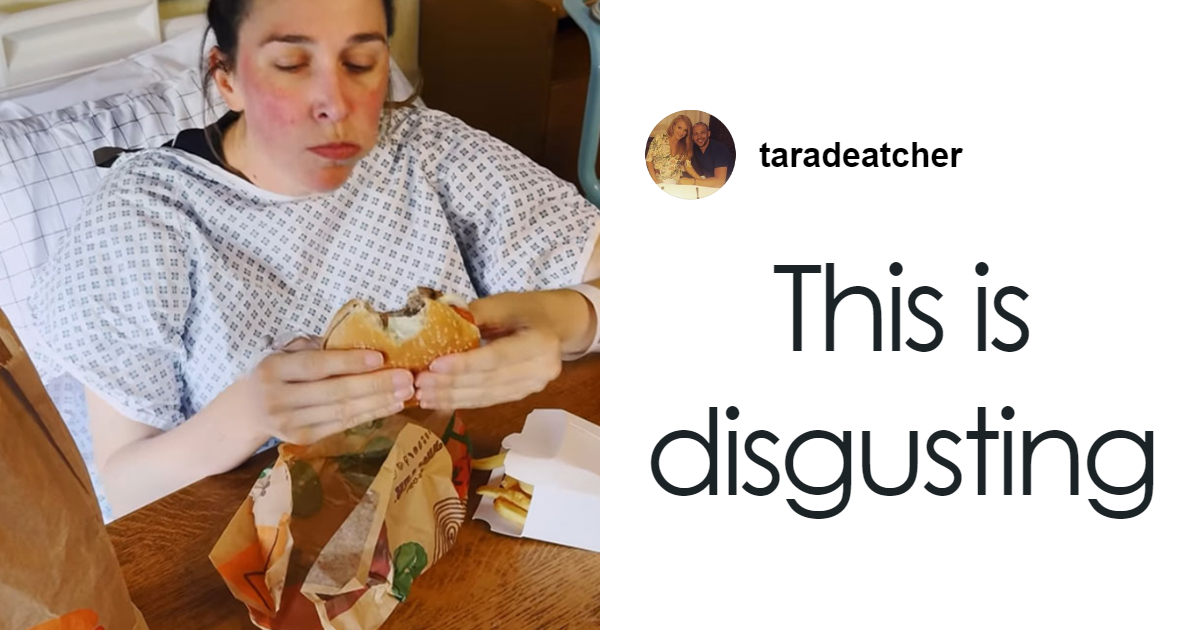
Few things on the internet can unite people faster than a baby photo. Few things can divide them faster than placing that baby photo next to a Whopper. Burger King UK learned this the spicy way when its “Bundles of Joy” campaign showed real new mothers eating burgers shortly after giving birth. Some viewers saw a funny, honest, deeply relatable celebration of postpartum hunger. Others saw an irresponsible fast-food brand dragging childbirth into the drive-thru lane.
The reaction was instant, loud, and very internet: applause, outrage, jokes, think pieces, marketing debates, and the familiar comment-section Olympics where everyone suddenly becomes a nutritionist, advertising ethicist, and maternity ward supervisor before breakfast.
At the center of the debate was a simple image: a tired, glowing, freshly postpartum mother holding her newborn and eating a Burger King meal. For some parents, that picture said, “Yes, finally, someone gets it.” For critics, it screamed, “Should a fast-food chain really be selling burgers through one of the most vulnerable moments in a woman’s life?”
So, was the Burger King childbirth ad disgusting, brilliant, tone-deaf, empowering, or all of the above with extra fries? Let’s unwrap the bun.
What Was the Burger King “Bundles of Joy” Campaign?
The campaign, created for Burger King UK, was called “Bundles of Joy.” It featured real images of mothers who chose a Whopper or Burger King meal as their first post-birth food. The ads leaned into the emotional and physical intensity of childbirth, framing that first meal after labor as a moment of “food fulfillment.”
According to campaign materials and industry coverage, the idea was based on research involving more than 2,000 mothers. The survey found that many women remember their first meal after giving birth with surprising clarity. More specifically, burger and fries ranked among the most desired post-birth indulgences, with 39% of surveyed mothers saying they would have appreciated that kind of meal after delivery.
That insight makes sense to many parents. Childbirth is physically demanding. Labor can take hours, sometimes much longer. Food may be limited before or during delivery, depending on medical guidance. By the time the baby arrives, many mothers are not politely peckish. They are “I could eat the hospital menu and the laminated cover” hungry.
Burger King did not simply run a polished studio shoot with actors pretending to be postpartum. The brand used raw-feeling images of real mothers in hospital beds, holding newborns, with the timing of the meal emphasized. The campaign also included a social film and a special hotline concept offering free Whoppers to new mothers in select circumstances.
In other words, this was not a random burger ad. It was a calculated attempt to attach Burger King to a very specific emotional truth: after giving birth, some mothers want comfort food, and they want it immediately.
Why Did People Call the Ad “Disgusting”?
The backlash focused on three main concerns: health, exploitation, and taste. And no, not burger taste. Advertising taste.
1. Critics Said New Mothers Need Nutrition, Not Fast Food
Some viewers argued that the ad promoted calorie-heavy, sodium-heavy food at a time when mothers need recovery-focused nutrition. After childbirth, the body is healing. For breastfeeding mothers, nutritional needs can increase. Health organizations commonly recommend balanced meals with protein, whole grains, fruits, vegetables, healthy fats, hydration, and key micronutrients.
From that perspective, a burger-and-fries campaign felt irresponsible to critics. Their argument was not that a mother should be forbidden from eating a burger. It was that a major fast-food brand should not turn postpartum recovery into a fast-food marketing opportunity.
This is where the debate got heated. Supporters replied: “One burger is not a postpartum meal plan.” Critics answered: “Advertising normalizes behavior.” The internet then did what it does best: placed everyone in separate corners and handed out digital megaphones.
2. Some Felt Childbirth Was Being Used as a Sales Tool
Childbirth is intimate. It is emotional. It is personal. It is also one of the few life events where everyone involved is simultaneously exhausted, amazed, terrified, joyful, and probably wearing socks they did not choose.
For critics, Burger King’s campaign crossed a line by using that intimate moment to sell Whoppers. The images did not show a generic happy family at home. They showed mothers shortly after delivery, in a hospital setting, with newborns in their arms. That made the ad feel raw and authentic to some viewers, but invasive and commercialized to others.
This is the central advertising dilemma: authenticity works because it feels real, but the more real it feels, the easier it is for audiences to ask, “Should this moment be in an ad at all?”
3. The Visuals Broke the Usual Rules of Motherhood Marketing
Most ads about new motherhood are soft, pastel, and suspiciously well-lit. The mother is usually serene. The baby is peaceful. The home is clean. Nobody looks like they have been awake for 37 hours while negotiating with a tiny person who communicates entirely through crying.
Burger King’s campaign rejected that fantasy. It showed mothers eating real food in a real postpartum context. Supporters loved that. Critics found it jarring. The ad broke the polished motherhood script, and when advertising breaks a script, someone always reaches for the word “disgusting.”
Why Many Mothers Defended the Burger King Ad
While some critics saw the campaign as gross or cynical, many mothers saw something else: recognition.
Post-birth hunger is not a cute little snack craving. For many women, it is intense. After hours of labor, medical procedures, stress, and adrenaline, the first meal can feel legendary. Some mothers remember that meal years later with the emotional clarity usually reserved for wedding vows, first apartments, and the moment they found out how expensive strollers can be.
That is why many parents defended the campaign so strongly. To them, the ad did not say, “Ignore nutrition forever.” It said, “A woman who just gave birth can eat what she wants without a committee meeting.”
Supporters also pointed out the double standard. Society often claims to celebrate mothers, but it can become strangely controlling the moment a mother expresses a desire that is not perfectly selfless, organic, low-sodium, and served in a bowl made of moral superiority. A postpartum mother wanting a burger is not exactly a national emergency. It is lunch with dramatic lighting.
For many viewers, the criticism sounded less like concern and more like policing. After pregnancy, during which women are often told what not to eat, what not to drink, how to move, how to sleep, how to look, and how to behave, the idea that strangers also want to judge the first meal after delivery felt exhausting.
The Real Issue: Is This About Burgers or Control?
The Burger King ad debate became bigger than fast food because it tapped into a cultural nerve: how society talks about mothers’ bodies.
Pregnancy and childbirth often turn women into public property in the eyes of strangers. People comment on their size, food choices, birth plans, feeding choices, recovery speed, work decisions, and emotional state. After the baby arrives, the judgment does not stop. It simply changes outfits.
That is why a burger ad could spark such a big reaction. The image was not just about a Whopper. It was about whether a new mother is allowed to be hungry, messy, funny, indulgent, imperfect, and human in public.
Of course, public health concerns are not imaginary. Fast food is not a magic recovery food. A balanced postpartum diet matters, especially for healing, energy, breastfeeding, and mental well-being. But there is a difference between saying “new mothers need nutritious support” and saying “this individual mother should be shamed for eating a burger after labor.”
The first statement is useful. The second one should be returned to sender with no fries.
Postpartum Nutrition: What New Mothers Actually Need
After childbirth, the body needs fuel. That fuel should ideally include protein for tissue repair, iron-rich foods if blood loss was significant, fiber to support digestion, fluids for hydration, and enough calories to prevent energy crashes. Breastfeeding mothers often need additional daily calories and a variety of nutrients, including calcium, vitamin D, iodine, choline, and B vitamins.
A nourishing postpartum plate might include eggs and whole-grain toast, chicken soup, salmon with rice, beans and vegetables, yogurt with fruit, oatmeal with nuts, or a hearty sandwich with lean protein. None of that cancels out the fact that a burger can be deeply satisfying after labor. The practical answer is not “burger or broccoli.” It is “eat enough, recover well, and do not build an entire health philosophy out of one hospital-room meal.”
There is also the reality of access. Not every hospital has great food. Not every birth happens at a convenient hour. Not every partner, friend, or family member can produce a homemade nutrient-dense meal like a postpartum fairy godmother with a slow cooker. Sometimes the open option is fast food. Sometimes the mother wants the burger because it is warm, filling, familiar, and available.
And honestly, availability matters. A perfectly balanced meal that exists only in someone’s Pinterest board does not help a person who has been awake all night and needs food now.
Was Burger King Being Clever or Cynical?
From a marketing standpoint, the campaign was sharp. It identified a real behavior, connected it to an emotional moment, and created conversation. That is advertising gold. Or, in Burger King terms, flame-grilled gold.
The best brand campaigns often come from specific truths. Not “people like food,” but “some mothers remember the first meal after birth as one of the most satisfying meals of their lives.” That is a narrow, memorable insight. It gives the campaign personality.
But clever does not automatically mean harmless. Brands must be careful when entering sensitive life moments. Childbirth is not the same as promoting a burger during a football game. It involves health, vulnerability, family, medical settings, and powerful emotions. The more intimate the moment, the higher the responsibility.
Burger King’s defenders would say the campaign reflected real mothers’ choices and gave visibility to an honest postpartum experience. Its critics would say the brand borrowed the emotional weight of childbirth to sell ultra-processed food. Both readings can exist at the same time.
That is what made the ad effective and controversial. It was not bland. Bland ads do not get debated. Bland ads disappear into the wallpaper of modern life, right next to banner ads for mattresses and software no one remembers signing up for.
Why the Ad Felt So Different From Traditional Baby Marketing
Traditional baby marketing often centers the newborn. The baby is the miracle, the product, the star, the tiny CEO of the household. The mother is usually presented as a soft-focus supporting character.
Burger King flipped that. The mother’s hunger was the story. The baby was present, but the ad’s emotional punch came from the mother’s relief and satisfaction. That shift made some people uncomfortable because it gave the mother a desire that was not entirely about the baby.
That discomfort is revealing. A mother eating a burger after childbirth should not be shocking. But in a culture that often expects mothers to perform endless sacrifice with a smile, even a sandwich can look rebellious.
The campaign essentially said: here is a woman who just gave birth, and she is allowed to enjoy something for herself. That message may be wrapped in corporate branding, but it still landed with many mothers who felt seen.
The Social Media Firestorm: Why Everyone Had an Opinion
The ad was built for social media debate. It had babies, bodies, food, health, gender politics, and a famous brand. That is not a campaign; that is a comment-section buffet.
Some users praised the ad as funny and truthful. Others argued it promoted poor health habits. Some accused critics of shaming mothers. Others accused the brand of exploiting motherhood. Marketing professionals debated whether the campaign was brave or irresponsible. Parents swapped stories about their own post-birth meals, from burgers and fries to sushi, pizza, toast, soup, chocolate, tacos, and whatever could be delivered before everyone fell asleep.
The strongest reactions often came from personal experience. People who had given birth understood the hunger. People focused on public health saw the ad as normalization of junk food. People interested in advertising ethics saw a case study in how far brands should go when using real-life moments.
And then there were the people who simply said, “Let her eat.” Sometimes the internet produces wisdom by accident.
Specific Examples of Why the Debate Resonated
Imagine a mother who has spent nine months avoiding certain foods, managing nausea, dealing with cravings, attending appointments, and listening to everyone from doctors to distant relatives explain what she should do. She gives birth, finally gets a quiet moment, and wants a burger. To her, the ad may feel less like marketing and more like documentary footage.
Now imagine a public health advocate looking at the same ad. They see a global fast-food brand connecting childbirth with a high-calorie meal. They worry about how brands normalize unhealthy food during meaningful life events. To them, the ad may feel manipulative.
Now imagine an advertising strategist. They see a culturally sticky insight, bold visuals, earned media, and a campaign people cannot stop discussing. To them, the ad may look like a creative win, even if it comes with a side order of outrage.
All three reactions are understandable. That is why the Burger King postpartum ad did not disappear after one news cycle. It gave different audiences different things to argue about.
What Brands Can Learn From the Burger King Backlash
First, realness is powerful, but it is not risk-free. When brands use real people in vulnerable moments, they must handle the story with care. Audiences can sense when authenticity is being honored and when it is being squeezed for sales like the last packet of ketchup.
Second, motherhood is not a neutral marketing theme. It comes loaded with expectations, judgments, and cultural baggage. A campaign that shows mothers as hungry, tired, funny, and human may be praised by one group and criticized by another.
Third, controversy is not always failure. The campaign generated massive conversation because it touched something real. But brands should not confuse attention with trust. A viral debate can boost awareness while also raising questions about values.
Finally, consumers are smart. They know Burger King sells burgers. They know a Whopper is not a medical recovery plan. What they are really debating is whether the ad respects mothers or uses them. That distinction matters.
Experiences Related to the Topic: The First Meal After Birth Is Often Unforgettable
Ask parents about the first meal after childbirth, and many will answer with the detail of a courtroom witness. They remember the room, the time, the smell, the person who brought the food, and whether the fries survived the trip. The baby’s arrival is the headline, of course, but that first meal becomes a tiny emotional landmark: the first ordinary pleasure after an extraordinary event.
For some mothers, the ideal post-birth meal is homemade soup, warm rice, fruit, eggs, or a family dish connected to tradition. For others, it is pizza eaten from the box, a deli sandwich they avoided during pregnancy, a milkshake, tacos, sushi, or yes, a burger with fries. The meal does not have to be fancy. It has to feel satisfying. After labor, comfort can matter as much as presentation. Nobody is asking whether the plating has height.
Many families also learn that birth plans rarely include enough snack planning. People prepare hospital bags with baby clothes, chargers, documents, blankets, and tiny hats that make newborns look like adorable retired fishermen. But food often becomes an afterthought. Then the baby arrives at 2:17 a.m., the cafeteria is closed, everyone is tired, and suddenly the most romantic sentence in the room is, “I found a place that delivers.”
This is why the Burger King campaign struck a nerve. It reflected an experience that many parents recognize but rarely see in advertising. The postpartum period is usually shown as glowing and peaceful. Real postpartum life can be beautiful, but it is also sweaty, hungry, emotional, and logistically chaotic. A mother eating a burger in a hospital bed may not match the greeting-card version of motherhood, but it may match reality more closely than a spotless nursery and a woman smiling serenely over herbal tea.
At the same time, the debate reminds families to think practically. A satisfying first meal can be both comforting and nourishing. A burger might be part of the story, but so might water, fruit, yogurt, soup, nuts, whole grains, or a protein-rich meal later. The goal is not to turn childbirth recovery into a nutrition exam. The goal is to support the person who just gave birth with food, rest, kindness, and fewer unsolicited opinions.
The best postpartum food experience is not decided by strangers online. It is decided by the mother, her medical needs, her preferences, her culture, her appetite, and what is realistically available. If that means a carefully prepared balanced meal, wonderful. If that means a burger after one of the most physically demanding days of her life, maybe the correct response is not outrage. Maybe it is simply: congratulations, here are extra napkins.
Conclusion: A Whopper-Sized Debate About Motherhood, Food, and Freedom
The Burger King ad sparked debate because it was about more than burgers. It was about postpartum hunger, maternal autonomy, fast-food marketing, public health, and the way society reacts when mothers are shown wanting something for themselves.
Was the campaign provocative? Absolutely. Was it designed to get attention? Of course. This is Burger King, not a shy poetry club. But the strongest defense of the ad is also the simplest: many mothers recognized the moment. They knew that first post-birth hunger. They knew the craving for something warm, salty, filling, and immediate. They knew what it felt like to finally eat after giving everything.
The strongest criticism is also worth hearing: brands should be careful when commercializing vulnerable life moments, especially when health and recovery are involved. A postpartum burger should not be framed as nutrition advice, and no fast-food campaign should replace real support for new mothers.
In the end, the most reasonable take may be this: new mothers deserve nourishment, respect, rest, and the freedom to choose their first meal without being turned into a battleground. Sometimes that meal will be leafy greens and salmon. Sometimes it will be a Whopper. Either way, the person who just delivered a baby has probably earned the right to eat before the internet grades the menu.
Note: This article is based on publicly reported details about Burger King UK’s “Bundles of Joy” campaign, related marketing discussion, postpartum nutrition guidance, and public reactions to the ad.













