
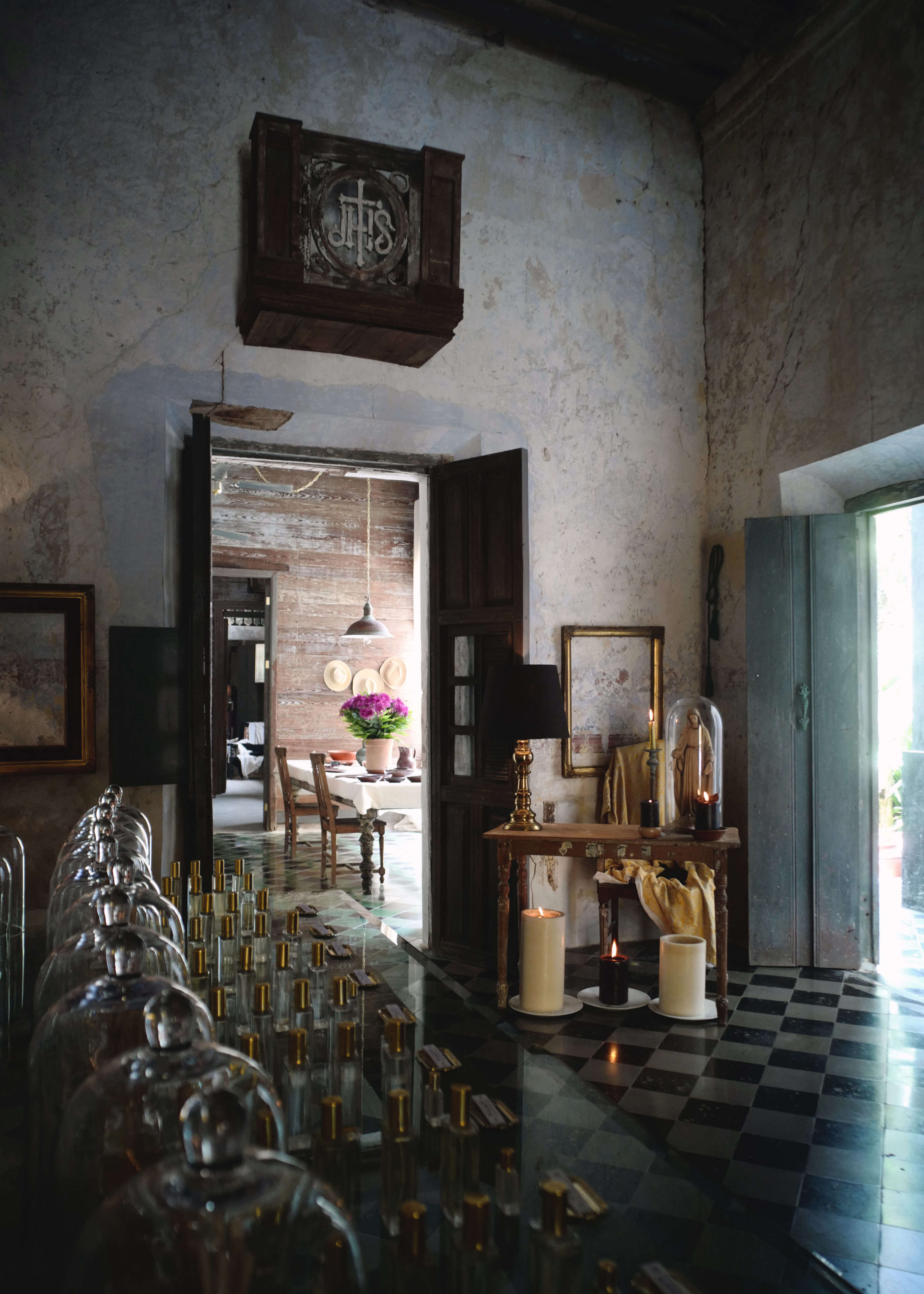
Some hotels greet you with a lobby. Casa de los Santos by Coqui Coqui greets you with a mood, a fragrance, a hush, and the sneaking suspicion that your phone should be placed on silent out of respect for the walls. Set in Izamal, Mexico’s glowing Yellow City, this one-suite boutique hideaway is less “standard hotel stay” and more “sleepover inside a poetic travel magazine that somehow smells like tropical flowers and old stone.”
Casa de los Santos belongs to the refined, deeply atmospheric world of Coqui Coqui, the Yucatán-born perfumery, residence, and lifestyle brand known for turning historic spaces into sensory travel experiences. In Izamal, the concept feels almost inevitable. The town is famous for its yellow-ochre buildings, Maya heritage, colonial architecture, religious symbolism, artisan traditions, and quiet streets where time seems to walk instead of sprint. Casa de los Santos takes that spirit and distills it into one intimate address: part guesthouse, part perfumery, part private retreat, and part design daydream.
This is not the kind of place where you ask, “Does the room have a vibe?” The room is the vibe. The courtyard is the vibe. The antique saint figurines are definitely the vibe. Even breakfast seems like it might arrive carrying a tiny secret from the 17th century.
What Is Casa de los Santos by Coqui Coqui?
Casa de los Santos is a boutique residence in Izamal, Yucatán, created by Coqui Coqui. It is known for its extreme intimacy: the property is often described as having just one exclusive suite, giving guests the rare feeling of occupying a private historic home rather than checking into a conventional hotel. That alone makes it stand out in a travel world where “boutique” can sometimes mean “small lobby, large bill.” Here, boutique actually means personal, cinematic, and carefully curated.
The residence is set within a restored colonial building that reflects Izamal’s layered identity. The town is often called the City of Three Cultures because Maya, colonial Spanish, and contemporary Yucatecan life coexist in the same walkable center. Casa de los Santos leans into that layered atmosphere with aged walls, antique furniture, religious objects, old-world textures, and Coqui Coqui’s signature perfumed sensibility.
The result is not glossy luxury in the “everything is polished until it looks terrified” sense. It is romantic, weathered, tactile luxury. The kind where peeling frescoes and stone surfaces are not flaws; they are character actors delivering award-winning performances.
Why Izamal Is the Perfect Setting
Izamal is one of the most distinctive destinations in the Yucatán Peninsula. Nearly all of its central buildings are painted in warm yellow and white, creating streets that seem permanently lit by late-afternoon sun. The town is also one of Mexico’s Pueblos Mágicos, a designation given to places with exceptional cultural, historical, or symbolic value. In Izamal’s case, “magical” is not doing much heavy lifting. The town earns it before breakfast.
For travelers, Izamal offers a rare blend: impressive Maya ruins, colonial churches, artisan workshops, local markets, carriage rides, regional food, and a slower rhythm than larger Yucatán destinations such as Mérida, Valladolid, or Cancún. It is close enough to major travel routes to be accessible, yet quiet enough to feel discovered. That combination makes it ideal for a residence like Casa de los Santos, where the goal is not to overwhelm guests with entertainment but to invite them into atmosphere.
The Yellow City Effect
Izamal’s famous yellow facades are not merely pretty backdrops for vacation photos, though they perform that job with suspicious ease. The color gives the entire town a unified visual identity. Walk through the center and you see ochre walls, bright white trim, cobblestone streets, iron lamps, shaded arcades, and splashes of bougainvillea. The palette is simple, but the emotional impact is enormous.
At Casa de los Santos, this same color story continues. The property’s setting within the Yellow City makes its interiors feel connected to the streets outside. You do not simply “stay near Izamal”; you stay inside its aesthetic language.
Design: Sacred, Sensual, and Wonderfully Unhurried
The design of Casa de los Santos is one of its biggest draws. It has been admired by design-focused publications for its mystical, antique-rich atmosphere. Expect frescoed walls, decorative tiles, old wooden doors, candelabra, chandeliers, rustic furniture, glass cloches, devotional objects, and soft shadows doing very dramatic things in corners.
Rather than creating a museum-like environment, Coqui Coqui makes the space feel lived in, scented, and deeply sensory. It is the kind of interior where every object seems chosen for texture, story, and mood. A saint figure under glass is not random decoration; it is part of the residence’s conversation with Izamal’s religious history. A worn wall is not neglected; it is allowed to remember.
The Convent Suite
The best-known accommodation at Casa de los Santos is often referred to as the Convent Suite. The name fits the setting, but the experience is far from austere. The suite has been described with details such as a crown-topped four-poster bed, floral tiles, chandeliers, candelabra, a private terrace, and twin roll-top bathtubs. In other words, if minimalism is a whisper, this suite is a candlelit confession with excellent taste.
Because there is only one suite, guests enjoy a level of privacy that larger hotels rarely provide. There is no parade of strangers outside your door, no elevator small talk, no accidental breakfast competition over the last croissant. It feels more like borrowing the keys to an extraordinary private residenceassuming your friends casually own a historic perfumed hideaway in the Yucatán, which, frankly, would be a useful social circle to cultivate.
The Courtyard and Pool
Casa de los Santos also features the kind of courtyard that makes travelers rethink their life choices. Stone walls, greenery, checkered floors, and a narrow pool create a refuge from the heat of the Yucatán. It is not a giant resort pool with inflatable flamingos and a DJ named Chad. It is quiet, architectural, and intimate.
After walking Izamal’s sunny streets, returning to the courtyard feels like slipping into a cool chapter of the same story. The pool is less about laps and more about atmosphere. It is where you pause, cool down, and wonder whether your daily routine back home has been tragically underusing stone, shadow, and silence.
The Coqui Coqui Perfume Connection
Coqui Coqui began as a perfumery and evolved into a broader world of residences, spas, shops, and travel experiences. Its fragrance identity is essential to Casa de los Santos. The brand is known for scents inspired by tropical botanicals, regional ingredients, and the atmosphere of the Yucatán. That means the property is not only visual; it is olfactory. You remember it with your nose as much as with your camera.
This matters because scent is one of the strongest triggers of memory. A beautiful room may impress you, but a beautiful room with a distinct fragrance can follow you home. Guests often associate Coqui Coqui spaces with perfume bottles, oils, candles, and apothecary-style displays. At Casa de los Santos, that world feels especially appropriate because Izamal itself has a spiritual, ceremonial, and historic identity.
What to Do Near Casa de los Santos
Casa de los Santos is a destination in itself, but Izamal rewards wandering. The town center is compact enough to explore on foot, and the pace is gentle. Bring comfortable shoes, sun protection, and a willingness to stop every six steps because yet another yellow wall is flirting with your camera.
Visit the Convento de San Antonio de Padua
The Convento de San Antonio de Padua is one of Izamal’s most important landmarks. Built on the base of a former Maya structure, the convent symbolizes the town’s layered spiritual history. Its broad atrium, arches, church, and golden-white color palette dominate the center of town. Whether you are interested in architecture, history, religion, or simply impressive open spaces, the convent is essential.
Climb Kinich Kakmó Pyramid
Kinich Kakmó is one of Izamal’s major Maya pyramids and one of the best places to see the town from above. The climb can be hot, uneven, and humbling in the way ancient stone steps often are. But the reward is a sweeping view over yellow buildings, church towers, trees, and the flat Yucatán landscape. It is a reminder that Izamal is not just a colonial town with ruins nearby; it is a living city built among and around Maya monuments.
Explore Artisan Shops and Local Markets
Izamal has long been associated with craft traditions, including hammocks, woodwork, ceramics, and regional textiles. Local markets and small shops offer a more grounded counterpoint to the design fantasy of Casa de los Santos. This is where you see daily life moving along: vendors arranging produce, families eating lunch, artisans selling handmade goods, and the occasional dog acting as mayor of the sidewalk.
Eat Yucatecan Food
Yucatán cuisine is one of Mexico’s great culinary treasures, and Izamal is a fine place to taste it. Look for regional dishes such as sopa de lima, papadzules, cochinita pibil, panuchos, salbutes, relleno negro, and local sweets. The flavors are bright, earthy, citrusy, smoky, and often powered by ingredients such as achiote, sour orange, corn, beans, pumpkin seeds, and habanero chile.
A good Izamal meal does not need to be fancy. In fact, part of the charm is sitting somewhere casual, ordering something traditional, and realizing that the simplest plate on the table has more personality than many formal tasting menus wearing tiny tweezers as a personality.
Who Should Stay at Casa de los Santos?
Casa de los Santos is ideal for travelers who care about design, history, intimacy, and atmosphere. It is especially appealing for couples, solo travelers seeking quiet beauty, photographers, writers, architecture lovers, and anyone who prefers a small, memorable stay over a large resort experience.
It may not be the best fit for travelers who want nightlife, extensive hotel facilities, multiple restaurants, kids’ clubs, or a packed entertainment schedule. This is a retreat for people who find joy in details: tile patterns, candlelight, old doors, local food, and the sound of a quiet town settling into evening.
Best Travel Style for This Stay
The best way to enjoy Casa de los Santos is to slow down. Stay at least two nights if possible. Arrive before sunset. Give yourself time to walk the town, return for a swim, enjoy breakfast, visit the pyramid, shop for perfume, and sit without trying to optimize every minute. The property is not designed for travelers treating Mexico like a checklist with a carry-on bag. It is designed for presence.
Practical Tips for Visiting Izamal
Izamal is commonly visited from Mérida and can also fit into broader Yucatán itineraries that include Valladolid, Chichén Itzá, cenotes, haciendas, or the Gulf Coast. Travelers may arrive by car, bus, tour, private transfer, or via routes connected to the Tren Maya. Driving gives the most flexibility, especially if you want to combine Izamal with nearby towns or countryside stops.
The climate is warm, and the sun can be intense. Lightweight clothing, a hat, sunscreen, and water are not optional accessories; they are your supporting cast. Streets are walkable, but midday heat can turn even a short stroll into a dramatic survival documentary starring your forehead. Plan outdoor exploring for morning or late afternoon when possible.
Because Casa de los Santos is highly intimate, availability can be limited. Travelers who have their heart set on staying there should book early, confirm current amenities directly, and check any minimum-stay requirements. Boutique properties with one suite do not have “plenty of rooms left.” They have either “yes” or “sorry, someone with excellent taste got there first.”
Why Casa de los Santos Feels Different
Many beautiful hotels are designed to impress. Casa de los Santos is designed to linger. Its power comes from restraint, intimacy, and a clear relationship with place. It does not try to import generic luxury into Izamal. Instead, it listens to the town: the yellow walls, the sacred history, the Maya foundations, the colonial arches, the tropical heat, the devotional objects, and the craft traditions.
That is what makes the residence compelling. It is not simply pretty. It is contextual. Every strong travel experience has a center of gravity, and here the gravity is wonder: wonder at how old and new can share a wall, wonder at how scent can shape memory, wonder at how a single suite can feel bigger than many resorts because it gives you space to notice things.
Experiences Inspired by Casa de los Santos in Izamal, Mexico
To understand Casa de los Santos, imagine arriving in Izamal in the late afternoon, when the sun turns the town from yellow to almost gold. The streets feel calm, but not empty. A bicycle passes. A horse-drawn carriage waits near the plaza. Somewhere nearby, lunch is becoming dinner in the slow, magical way it does in Mexico. You step through the doorway of Casa de los Santos, and the temperature seems to drop by several degrees. The scent changes first. It is subtle, warm, botanical, and elegant, as though the building has been quietly perfuming itself for centuries.
The first experience is visual. Your eyes adjust to shadows, candles, antique objects, worn walls, and textures that modern buildings spend a fortune trying to imitate and never quite manage. Nothing feels rushed. The property encourages you to look closely: at the faded colors in the plaster, at the shape of a chair, at the way curtains move in the courtyard air. This is slow travel in physical form.
The second experience is emotional. Casa de los Santos has a sacred undertone, but not in a heavy or inaccessible way. The saint figurines, devotional references, and convent-inspired design create a sense of ceremony. You do not need to be religious to feel it. The space simply asks for a softer voice, a slower step, and maybe fewer urgent emails. Honestly, your inbox can survive without you for one evening. It has been dramatic before.
The third experience is sensory. After a hot walk through Izamal, the pool and shaded courtyard feel almost theatrical. You hear water, birds, distant street sounds, and the occasional murmur of daily life beyond the walls. Breakfast feels personal because the property is so small. A cup of coffee in that setting becomes more than caffeine delivery; it becomes a little ritual. You begin to understand why Coqui Coqui places fragrance, architecture, and hospitality in the same sentence.
The fourth experience is exploration. From the residence, you can step into Izamal’s historic center and move easily between cultures and centuries. One hour may bring you to the Convento de San Antonio de Padua; the next may find you climbing Kinich Kakmó Pyramid for a view over the Yellow City. Later, you might browse local crafts, taste sopa de lima, or pause in the plaza while the evening light softens every wall in sight.
The final experience is memory. Casa de los Santos is the sort of place that becomes more vivid after you leave. You may forget the exact order of your itinerary, but you will remember the color of Izamal, the coolness of stone, the hush of the suite, and the scent of Coqui Coqui lingering in the air. Some hotels give you a receipt. This one gives you a mood you will try, unsuccessfully, to recreate at home with a candle and a very determined houseplant.
Conclusion
Casa de los Santos by Coqui Coqui in Izamal, Mexico, is not just a boutique hotel; it is a carefully composed travel experience. With its one-suite intimacy, historic setting, perfumed atmosphere, and deep connection to the Yellow City, it offers something rare: luxury with a soul, design with a memory, and quiet with real texture.
For travelers seeking the best boutique hotel in Izamal, a romantic Yucatán escape, or a design-forward stay rooted in local history, Casa de los Santos is a remarkable choice. It invites you to step away from fast travel and enter a slower, more fragrant world where walls tell stories, mornings unfold gently, and Mexico’s cultural layers are not displayed behind glass but lived, breathed, and beautifully preserved.













