
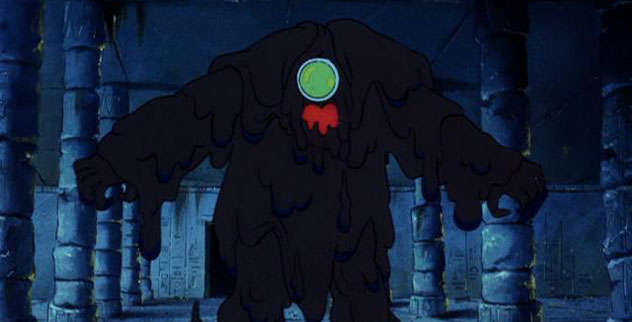
If there is one iron law in the Scooby-Doo universe, it is this: behind every glowing ghost, shrieking robot, swampy monster, or suspiciously athletic mummy, there is usually a very tired adult with a real estate scheme. Since 1969, Scooby-Doo has turned fake monsters into pop-culture comfort food. The formula is simple, lovable, and somehow immortal: Mystery Inc. arrives, Shaggy and Scooby panic, Velma notices a clue, Fred builds a trap that may or may not work, Daphne survives danger with style, and the villain ends up blaming “those meddling kids.”
But not all Scooby-Doo villains are created equal. Some are genuinely creepy. Some are iconic. Some are so strange that you can almost hear the writers asking, “Can we make a faceless zombie, a robot amusement-park employee, and a glowing space skeleton all work in the same franchise?” The answer, naturally, is yes. This list ranks the top 10 oddest villains from Scooby Doo, focusing on memorable monster designs, bizarre motives, unforgettable episodes, and the wonderfully weird logic that makes the franchise so fun.
For this ranking, “villain” refers mostly to the monster persona, not just the person under the mask. After all, nobody puts “local land speculator in uncomfortable boots” on a lunchbox. Fans remember the Spooky Space Kook, the Ghost Clown, Charlie the Robot, and the Phantom Virus because they are visual, theatrical, and delightfully unhinged. Let’s hop in the Mystery Machine and investigate the strangest suspects in Scooby history.
What Makes a Scooby-Doo Villain “Odd”?
A classic Scooby-Doo villain needs a disguise, a motive, and a willingness to run through hallways for an unreasonable amount of time. An odd Scooby-Doo villain goes further. These characters feel like they were assembled from five different Halloween aisles, a county fair, and one box labeled “science, maybe.” The oddest villains are the ones that make you pause and ask, “Who approved this plan?”
Oddness can come from design, like a faceless pink-robed robot. It can come from concept, like a computer virus that becomes a physical monster. It can come from motive, like sabotaging an amusement park because you think the robot might be too dangerous for children, which is noble in theory but terrifying in execution. It can also come from performance: the laugh, the walk, the glowing eyes, the dramatic cape work. Scooby-Doo villains are basically theater kids with felony-level commitment.
Top 10 Oddest Villains from Scooby Doo
10. The Miner Forty-Niner
The Miner Forty-Niner earns a spot because he is one of the earliest examples of Scooby-Doo turning an old local legend into a rubber-mask nightmare. Appearing in “Mine Your Own Business,” this creaky, bearded miner stomps around an abandoned mining town as if he has been waiting decades to complain about property values. He is not the flashiest villain in the franchise, but his oddness comes from his simplicity. He is basically a haunted prospector with a grudge and excellent cardio.
What makes him funny is how practical the disguise is. No lasers, no advanced robotics, no cursed digital software. Just a miner outfit, some spooky atmosphere, and the confidence to scare people away by acting like history’s angriest underground tour guide. The Miner Forty-Niner represents the foundation of the Scooby-Doo formula: a local legend, a hidden motive, and a villain who probably spent way too much time practicing his “I came from the old mine” walk in a mirror.
9. The Wax Phantom
The Wax Phantom from “Don’t Fool with a Phantom” is the kind of Scooby-Doo villain who feels creepy even before the chase music starts. A living wax figure is already an unsettling idea. Wax museums are strange enough in daylight. Add shadows, empty hallways, and a villain who looks like he was left too close to a radiator, and you have a recipe for premium cartoon anxiety.
The oddness here comes from the texture of the threat. Ghosts float. Robots clank. Werewolves howl. The Wax Phantom melts into the imagination. He looks artificial, but he moves like he has a plan. That combination is deeply Scooby-ish: fake supernatural horror dressed in just enough theatrical mystery to make Shaggy consider moving to a safer genre. The Wax Phantom also works because he turns a familiar tourist attraction into a nightmare. After this episode, even a celebrity wax figure of a smiling movie star seems like it might steal your wallet and chase you into a storage room.
8. The No-Face Zombie
The No-Face Zombie is one of those villains whose name does exactly what it promises. He has no face. That is the pitch. That is the horror. That is also why he is so bizarrely memorable. Featured in “The No-Face Zombie Chase Case,” this villain wears a pink robe and shuffles around like someone forgot to finish drawing him. In a franchise full of ghosts and monsters, a blank face can be more unsettling than fangs.
The twist makes him even stranger: the No-Face Zombie is a robot operated by Mr. Dilly. That detail pushes the character from spooky into wonderfully absurd. Why build a faceless robot? Why dress it like a haunted bathrobe? Why make it rob a coin shop? These are questions best answered by the sacred Scooby-Doo principle: because it makes a great chase scene. The No-Face Zombie is odd because he is both minimalist and overcomplicated. His design says “nothing,” while his scheme says “several engineering meetings were involved.”
7. The Ghost Clown
The Ghost Clown from “Bedlam in the Big Top” is not just odd; he is unsettling in a way that still works decades later. Clowns already live rent-free in the attic of American pop culture. Make one ghostly, give him a hypnotic coin, place him in a circus after dark, and suddenly the Mystery Machine feels like the only reasonable emergency shelter in town.
Harry the Hypnotist uses the Ghost Clown disguise to get revenge on the circus, and his method is both theatrical and deeply weird. He hypnotizes people, sabotages performances, and generally behaves like a one-man haunted carnival lawsuit. The gold coin is the key detail. It turns the villain from a simple scary clown into a mind-control stage magician with a revenge agenda. That is a lot of personality for one bald clown head.
The Ghost Clown also stands out because he weaponizes performance. Many Scooby-Doo villains pretend to be monsters. The Ghost Clown pretends to be an entertainer pretending to be a ghost while using hypnosis as a tool. That is not a disguise; that is a graduate thesis in creepy showmanship.
6. The Jaguaro
The Jaguaro from “Jeepers, It’s the Jaguaro!” may be one of the strangest creature concepts in classic Scooby-Doo. The legend describes it as a beast with the body of an ape and the head of a sabertooth tiger. In other words, it looks like a museum exhibit had a disagreement with a jungle gym. The result is ridiculous, memorable, and exactly the kind of monster that could only thrive in the Scooby-Doo ecosystem.
What makes the Jaguaro odd is its hybrid design. It is not simply a tiger, an ape, or a ghost. It is a mash-up creature that seems designed to confuse both zoologists and costume departments. The episode places the gang in a jungle adventure setting, which gives the villain room to leap, roar, and loom dramatically from the trees. It is big, primal, and strangely theatrical.
The Jaguaro is also a reminder that Scooby-Doo villains often reflect the setting. Put Mystery Inc. near a mine and you get a ghost miner. Put them in a circus and you get a ghost clown. Crash them near a jungle legend and you get a sabertooth tiger-ape. It is almost as if criminals in this universe choose disguises by spinning a location-based monster wheel.
5. Charlie the Robot
Charlie the Robot from “Foul Play in Funland” is one of the oddest villains because he is not really a man in a mask. He is an actual robot built to help run an amusement park. That alone makes him unusual in the early Scooby-Doo lineup. While most villains rely on costumes and trickery, Charlie is a walking machine with a blank expression, enormous strength, and the silent determination of a malfunctioning vending machine.
The episode’s strangeness comes from the reveal. Sarah Jenkins sabotages Charlie because she fears he may be dangerous to children. That motive is oddly sympathetic, even though the method is questionable. If you think a robot might harm kids, making it go berserk around an amusement park is perhaps not the strongest safety memo.
Charlie is odd because he blurs the usual Scooby-Doo rules. The gang is not simply chasing a fake monster. They are dealing with a real technological threat manipulated by a human. That makes the episode feel ahead of its time. It also gives Charlie a weird charm. He is not evil in the traditional sense. He is more like a metal employee trapped in a terrible workplace incident. Honestly, in today’s economy, Charlie might deserve a labor union.
4. The 10,000 Volt Ghost
The 10,000 Volt Ghost is a villain name that sounds like a warning label and a wrestling persona at the same time. Appearing in later Scooby-Doo media and remembered strongly from “Scooby-Doo 2: Monsters Unleashed,” this electric menace is visually loud, dangerous, and wonderfully excessive. A glowing ghost made of electricity is not subtle. It is the Scooby-Doo equivalent of someone entering a room with a fog machine, guitar solo, and unpaid utility bill.
What makes the 10,000 Volt Ghost so odd is that he takes the franchise’s fake-monster tradition and charges it with superhero-level spectacle. Classic Scooby villains scare people with footprints, projections, and spooky groans. This one feels like he could knock out the city grid if he sneezed. The design is dramatic, with a skeletal face, crackling energy, and a sense of danger that feels more physical than many of the older villains.
He also shows how Scooby-Doo villains evolved over time. The franchise began with grounded hoaxes and gradually embraced bigger, brighter, more fantastical monsters, especially in movies and specials. The 10,000 Volt Ghost is odd because he is both a Scooby villain and a comic-book disaster waiting to happen.
3. The Spooky Space Kook
The Spooky Space Kook is one of the most beloved strange villains in Scooby-Doo history, and for good reason. He looks like a glowing skeleton astronaut, laughs like a haunted modem, and stomps around an airfield leaving eerie prints. In the original episode, the disguise belongs to Henry Bascomb, who uses the Space Kook persona to scare people away from valuable land. Because apparently nothing says “real estate negotiation” like dressing as a radioactive space skeleton.
The Space Kook’s oddness is elite. He combines science fiction, ghost stories, Cold War-era space fascination, and classic haunted-house theatrics. His laugh alone deserves its own museum exhibit. It is not just scary; it is weirdly musical, like a robot goose discovered villainy.
Visually, the Spooky Space Kook is unforgettable. The skull inside the helmet, the glowing effects, the blue spacesuit, and the phantom spacecraft imagery make him feel bigger than a normal local scam. He represents the moment Scooby-Doo realized that monsters did not have to come from castles, swamps, or graveyards. They could come from outer spaceor at least from a neighbor with a projector, phosphorescent footprints, and a very dramatic imagination.
2. The Phantom Virus
The Phantom Virus from “Scooby-Doo and the Cyber Chase” is one of the oddest villains because he modernizes the classic Scooby formula for the digital age. Instead of a ghost in a mansion, he is a computer virus that appears in the real world and later menaces the gang inside a video game. That concept is delightfully early-2000s, when every computer problem felt like it might either delete your homework or summon a neon monster.
The Phantom Virus was created by Bill McLemore, whose jealousy over a science fair project becomes the motive behind a wildly dangerous scheme. That is peak Scooby-Doo logic: academic envy plus advanced technology equals full-blown digital horror. The villain is odd because he feels both supernatural and technical. He glows, snarls, manipulates the game world, and turns ordinary computer anxiety into a monster with claws.
He also stands out because he challenges the gang in a setting where the usual rules are scrambled. In cyberspace, Mystery Inc. cannot simply pull off a mask in a hallway. They have to survive levels, meet cyber versions of themselves, and navigate a world where clues behave like game mechanics. The Phantom Virus is strange, smart, and very much a villain for anyone who ever feared clicking the wrong pop-up ad.
1. The Chickenstein
At the top of the list is Chickenstein, a villain concept so odd that the name alone deserves applause. Chickenstein appears in the Scooby-Doo universe as a bizarre monster idea combining barnyard absurdity with classic Frankenstein energy. It is exactly the type of creature that sounds fake until you remember this is Scooby-Doo, where “faceless zombie robot” and “glowing astronaut skeleton” are already normal business operations.
Chickenstein’s brilliance is in how ridiculous it sounds while still fitting the franchise perfectly. Scooby-Doo has always balanced spooky atmosphere with comedy, and Chickenstein leans hard into that balance. It is not merely a monster; it is a pun wearing feathers. The idea transforms a familiar horror reference into something sillier, stranger, and more family-friendly. Frankenstein’s monster is tragic and literary. Chickenstein sounds like he escaped from a haunted county fair concession stand.
Why rank Chickenstein above more famous villains? Because oddness is not the same as fame. The Spooky Space Kook is iconic. The Phantom Virus is creative. Charlie the Robot is fascinating. But Chickenstein represents the franchise at its most gloriously unserious. Scooby-Doo works because it can deliver a spooky chase while winking at the audience. Chickenstein is that wink turned into a full costume.
Why Scooby-Doo Villains Still Work
Scooby-Doo villains continue to work because they are built on a perfect mix of fear, humor, and explanation. The monsters are spooky enough to create tension, but the reveal makes the world feel safe again. Kids get the thrill of a scary story without being abandoned in true horror. Adults get to enjoy the comedy of villains who invest in elaborate costumes when a normal business plan might have been less expensive.
The oddest villains are especially memorable because they push the formula into unexpected territory. A ghost pirate is classic. A robot with workplace safety issues is stranger. A computer virus with a personality is stranger still. The franchise has survived for generations because it can adapt its monsters to the times. Haunted mansions gave way to cyber worlds, movie monsters, amusement parks, space-themed hoaxes, and increasingly creative forms of nonsense.
These villains also reveal something important about Mystery Inc. The gang does not defeat monsters by being fearless. Shaggy and Scooby are famously terrified. They win because they keep moving, keep noticing clues, and somehow turn panic into problem-solving. That is oddly inspiring. You do not need to be brave every second. Sometimes you just need to run in the right direction while holding a sandwich.
of Viewing Experience: Growing Up with Scooby-Doo’s Weirdest Villains
Watching Scooby-Doo is a unique experience because the show trains you to be scared and skeptical at the same time. As a kid, the villains can feel genuinely frightening. The Spooky Space Kook’s laugh seems to echo from another planet. The Ghost Clown’s hypnosis trick feels like something that should not be allowed near children’s television. The No-Face Zombie is disturbing because a blank face leaves your imagination to fill in the worst possible details. But even when these villains are scary, the show quietly teaches viewers to look for the zipper on the monster suit.
That is one reason the oddest villains stay with fans. They are not just monsters; they are puzzles. When Charlie the Robot storms through Funland, the question is not only “How do they escape?” but also “Why is this robot acting this way?” When the Phantom Virus appears, the mystery becomes technological as well as spooky. When the Jaguaro leaps through the jungle, the viewer begins wondering who benefits from keeping everyone afraid. Scooby-Doo makes fear interactive. It invites the audience to investigate instead of just hiding behind the couch.
There is also a comforting rhythm to the experience. Every episode feels like entering a haunted house where you know the exit exists somewhere. The chase scenes are chaotic, but they are also funny. Shaggy and Scooby react the way many of us would react if a faceless zombie shuffled into the room: loudly, dramatically, and with immediate interest in snacks. Their fear makes the show relatable. Fred may be planning traps, Velma may be analyzing clues, and Daphne may be walking directly into danger with impressive confidence, but Shaggy and Scooby are the emotional truth of the franchise.
Rewatching the oddest villains as an adult adds another layer of enjoyment. You start noticing how wildly inefficient the schemes are. Henry Bascomb could have pursued a normal land deal, but he chose glowing footprints and a skeleton spacesuit. Harry the Hypnotist wanted revenge, so he became a ghost clown and sabotaged a circus, which is dramatic even by villain standards. Sarah Jenkins feared Charlie was unsafe, so she secretly made him more unsafe. The logic is ridiculous, but that is the charm. Scooby-Doo villains are rarely lazy. They are committed, theatrical, and completely allergic to simple solutions.
The best viewing experience is probably a rainy afternoon marathon, when the outside world already feels a little mysterious. Scooby-Doo episodes are short, colorful, and easy to revisit. The odd villains make every episode feel like opening a surprise box from a haunted thrift store. You might get a ghost, a robot, a pirate, a mummy, a tiger-ape, or a digital nightmare. Whatever appears, you know the gang will chase it, question it, trap it, unmask it, and leave the audience with the same satisfying lesson: fear often looks bigger before you investigate it.
Conclusion
The top 10 oddest villains from Scooby Doo prove that the franchise has never been afraid to get weird. From the creaky Miner Forty-Niner to the glowing Spooky Space Kook, from Charlie the Robot to the Phantom Virus, these villains show why Scooby-Doo remains one of the most flexible mystery-comedy franchises ever made. It can handle haunted mines, abandoned amusement parks, digital worlds, jungle legends, circus revenge plots, and even Chickenstein without losing its heart.
The real magic is not just the monsters. It is the reveal. Scooby-Doo teaches viewers that the scariest thing in the room may be a person with a plan, a costume, and terrible judgment. That message still works because it is funny, reassuring, and endlessly repeatable. The villains may be odd, but the appeal is crystal clear: mystery, comedy, friendship, snacks, and the joy of watching fear get unmasked.
Note: This article is written as original commentary and analysis based on real Scooby-Doo franchise characters, episodes, and villain personas. It is intended for web publication and contains no unnecessary citation placeholders or copied source text.














