
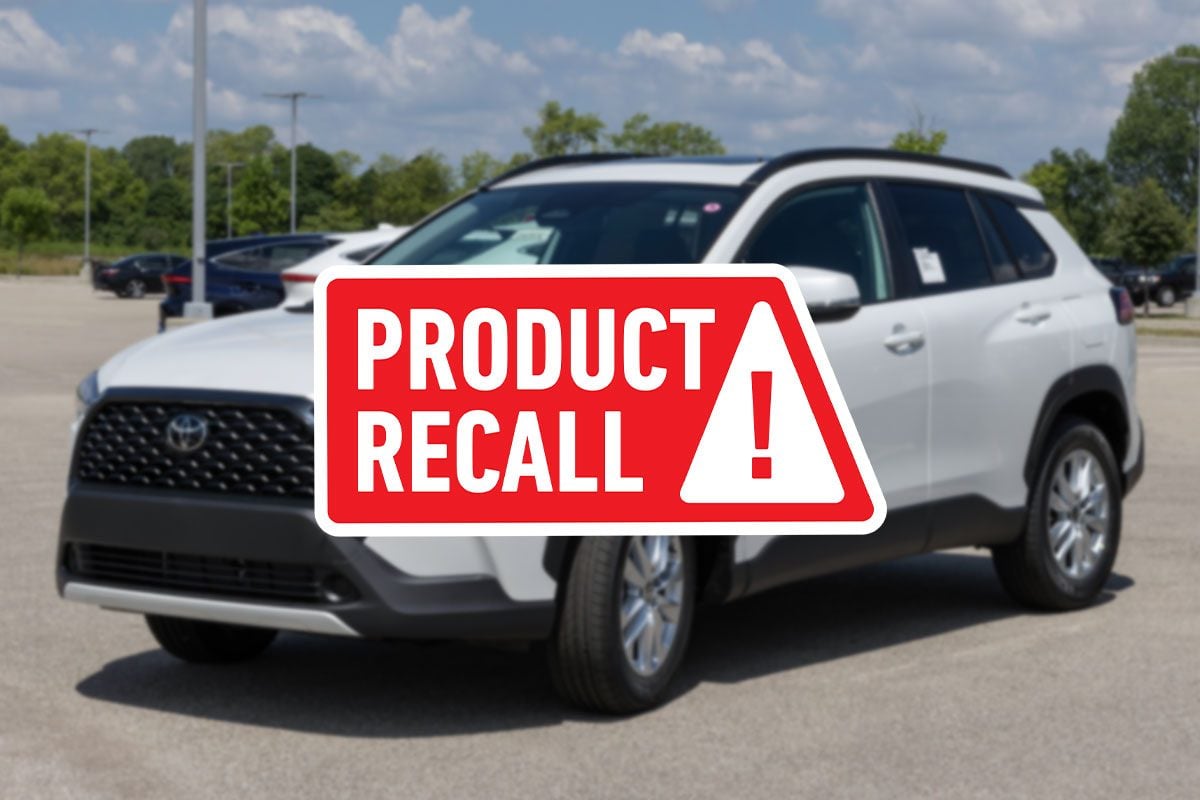
Note: This article is based on official U.S. recall information from Toyota and the National Highway Traffic Safety Administration. Owners should always confirm recall status by entering their VIN on Toyota’s recall page or NHTSA’s recall lookup before scheduling service.
The Toyota Corolla Cross Hybrid has been one of those practical, fuel-sipping small SUVs that makes a lot of sense on paper: all-wheel drive, strong fuel economy, Toyota reliability, and enough cargo room for groceries, backpacks, dog gear, or the mysterious pile of “car stuff” that somehow grows in every family vehicle. But even sensible cars can have very unsensible moments. That is why Toyota issued a safety recall for certain 2023-2024 Toyota Corolla Cross Hybrid vehicles due to a brake-related software issue.
The recall, identified by Toyota as 24TA11 and by NHTSA as 24V-708, focuses on the vehicle’s skid control Electronic Control Unit, or ECU. In plain English, this is software that helps manage the braking system. In certain driving situations, especially when braking while turning a corner, the software may not control brake fluid pressure as intended. The driver may temporarily experience a hard brake pedal and reduced braking force, which can increase stopping distance and raise the risk of a crash.
That is not the kind of surprise anyone wants while turning into a parking lot, entering a curved ramp, or easing through a neighborhood corner. A brake pedal should feel like a trusted handshake, not like a gym machine set to “professional wrestler.” Fortunately, Toyota’s fix does not require a major mechanical teardown. Dealers will update the skid control ECU software free of charge.
What Is the Toyota Corolla Cross Hybrid Recall About?
The 2023-2024 Toyota Corolla Cross Hybrid recall involves certain vehicles built from early June 2022 through early September 2024. According to Toyota’s remedy notice, approximately 42,200 Corolla Cross Hybrid vehicles are covered by this safety recall in the United States, including about 500 vehicles distributed to Puerto Rico. Toyota also placed a stop-sale on affected new dealer inventory until the repair was completed.
The problem is not the brake pedal itself, the tires, or the driver’s imagination. The issue is tied to the brake actuator assembly and the skid control ECU software. The system coordinates hydraulic braking and regenerative braking, which is especially important in a hybrid vehicle. Regenerative braking helps recover energy when slowing down, while the hydraulic brakes provide traditional stopping force. Normally, the driver does not need to think about this high-tech dance. You press the pedal, the vehicle slows, and everyone continues pretending they are not late.
In affected Corolla Cross Hybrid vehicles, the software may respond incorrectly in limited circumstances when the brake pedal is applied during cornering. If the system does not manage brake fluid pressure properly, the brake pedal can feel unusually hard and braking force can be reduced. That can make the vehicle take longer to stop than expected.
Which Vehicles Are Affected?
The recall applies to certain 2023 and 2024 Toyota Corolla Cross Hybrid vehicles. Not every Corolla Cross Hybrid from those model years is automatically affected, and not every vehicle built during the production window was sold in the United States. That is why Toyota and NHTSA recommend checking by VIN rather than guessing based only on model year.
Key recall details
- Model: Toyota Corolla Cross Hybrid
- Model years: 2023-2024
- Toyota recall number: 24TA11
- NHTSA recall number: 24V-708
- Approximate affected Corolla Cross Hybrid vehicles: 42,200
- Production period: Early June 2022 through early September 2024
- Main issue: Temporary hard brake pedal during cornering
- Repair: Skid control ECU software update
- Cost to owners: Free
There is also a separate later recall involving certain 2023-2025 Corolla Cross Hybrid vehicles related to pedestrian warning sound volume when reversing. That is a different issue from this brake-related recall. Because multiple recalls can exist for the same model family, owners should use a VIN lookup instead of relying on headlines alone.
Why the Brake Software Matters
Modern vehicles are computers on wheels, except the wheels are expensive and the computers can ruin your weekend if they are not programmed correctly. The Corolla Cross Hybrid uses electronic control systems to blend regenerative braking with hydraulic braking. This is common in hybrid and electric vehicles because the system can recover energy and improve efficiency while still providing predictable stopping power.
The skid control ECU plays an important role in this process. It helps manage braking behavior and vehicle stability. When everything works as intended, the transition between regenerative and hydraulic braking should feel natural. Most drivers never notice it. The only clue is better fuel economy and fewer guilt trips at the gas pump.
However, when software logic does not respond correctly under certain conditions, a driver may feel a hard brake pedal. That sensation can be alarming because the pedal may require more pressure than expected. Even a temporary reduction in braking force can be serious, especially during low-speed turns in traffic, downhill curves, busy intersections, or tight parking areas where pedestrians and other vehicles are nearby.
What Drivers May Notice
Toyota described the condition as a temporary hard brake pedal during brake application while turning a corner. Drivers may notice the vehicle does not slow as quickly as expected. The issue is not described as a complete loss of braking, but rather reduced braking force that may increase stopping distance.
In real-world terms, imagine turning into a driveway, parking garage, or side street and pressing the brake pedal as usual. Instead of the smooth, predictable response you expect, the pedal may feel stiff for a moment. That moment matters. Cars are heavy, pavement is unforgiving, and the laws of physics do not accept apologies.
Possible warning signs include:
- A brake pedal that suddenly feels harder than normal during a turn
- The vehicle taking longer to slow down than expected
- A brief feeling that braking assist has been reduced
- Concern during cornering, parking-lot driving, or curved low-speed maneuvers
Even if you have never experienced these symptoms, you should still check whether your vehicle is included. Recalls are not based only on complaints from individual owners. They are based on the possibility that a defect could occur in affected vehicles.
How Toyota Is Fixing the Problem
The repair is straightforward: an authorized Toyota dealer will update the programming of the skid control ECU software for the brake actuator. Toyota says this will be done free of charge. The remedy does not require owners to pay for parts, labor, or diagnostic work related to the recall.
Toyota’s dealer materials indicate the software update takes approximately 45 minutes. That does not always mean you will be in and out in exactly 45 minutes, because dealership schedules have their own mysterious ecosystem. Between service lane traffic, paperwork, technician availability, and the person ahead of you who wants to explain a “tiny rattle” using interpretive dance, it may be wise to plan for a longer visit.
Owners of affected Corolla Cross Hybrid vehicles were scheduled to receive notification letters in November 2024. If you bought the vehicle used, moved recently, or never received a letter, do not assume you are in the clear. Recall notices can miss people when registration records are outdated. A VIN check is the best shortcut.
What Owners Should Do Now
If you own a 2023 or 2024 Toyota Corolla Cross Hybrid, start by checking your VIN. The VIN is a 17-character vehicle identification number usually found on the driver-side dashboard near the windshield, inside the driver-side door jamb, on insurance documents, and on registration paperwork.
Once you have the VIN, check Toyota’s recall lookup tool or NHTSA’s recall database. If the recall appears as open, contact an authorized Toyota dealer and schedule the free software update. You do not need to return to the dealer that sold you the vehicle. Any authorized Toyota dealer can perform the recall repair.
Simple owner checklist
- Find your VIN.
- Check Toyota or NHTSA recall status online.
- If recall 24TA11 or 24V-708 is open, call a Toyota dealer.
- Ask whether the skid control ECU software update is available.
- Schedule the repair and keep the completed service record.
- If you live in California, retain any proof-of-correction form provided by the dealer.
California owners should pay special attention. Toyota’s FAQ notes that California may require completion of safety recalls or service campaigns on emissions-related parts before vehicle registration renewal. In this case, the skid control ECU is treated as such a part. After the campaign is completed, the Toyota dealer should provide a Vehicle Emissions Recall Proof of Correction Form. Keep it somewhere safer than the glovebox black hole that eats napkins, expired insurance cards, and one lonely ketchup packet.
Is the Corolla Cross Hybrid Still Safe to Drive?
A recall does not automatically mean every affected vehicle will experience the problem tomorrow morning. It means the manufacturer and safety regulators have identified a defect that could increase risk and needs correction. Toyota has not instructed owners to stop driving the vehicle entirely in the recall materials, but owners should treat brake-related recalls seriously and schedule service promptly.
Until the recall repair is completed, drivers should be extra mindful when braking during turns. Keep more following distance, approach corners smoothly, and avoid last-second braking whenever possible. That is good advice for any car, but it becomes especially relevant when a brake-assist issue is part of an open recall.
If you experience a hard brake pedal, unusually long stopping distance, warning lights, or any braking behavior that feels unsafe, stop driving as soon as it is safe to do so and contact a Toyota dealer or roadside assistance. Brakes are not a “wait and see” system. A squeaky cupholder can wait. Brakes get promoted to the top of the list.
Why Recalls Happen Even to Reliable Brands
Toyota has a long-standing reputation for reliability, but no automaker is immune to recalls. Modern vehicles combine mechanical components, sensors, software, supply-chain parts, safety systems, and regulatory requirements. A small software issue can create a meaningful safety concern, especially when it affects braking behavior.
That does not mean the Corolla Cross Hybrid is a bad vehicle. It means owners should respond responsibly. In fact, recalls are one of the ways vehicle safety improves after vehicles reach the road. Manufacturers monitor field reports, warranty claims, engineering data, and regulatory feedback. When a defect is identified, a recall creates a structured path to fix it.
For shoppers considering a used 2023 or 2024 Corolla Cross Hybrid, this recall should be part of the pre-purchase checklist. Ask the seller for service records, run a VIN recall check, and confirm that recall 24TA11 has been completed if the vehicle is affected. A completed recall repair is not usually a deal-breaker. An ignored brake recall, however, deserves a raised eyebrow and possibly a slow walk back to your current car.
How This Recall Affects Used-Car Buyers
The Corolla Cross Hybrid remains attractive in the used market because it offers Toyota’s hybrid efficiency in a compact SUV package. But used-car buyers should be careful with any vehicle that has open recalls. A clean-looking vehicle history report does not always mean all recalls are closed.
Before buying, ask for the VIN and check it yourself. If the seller refuses to provide the VIN, consider that a red flag. It is not a secret family recipe; it is printed on the car. If the recall is open, ask the seller to complete the repair before purchase or negotiate accordingly. Since the repair is free, there is little reason for an owner or dealer to leave it unresolved.
For dealership purchases, confirm in writing that all open safety recalls have been addressed. For private-party purchases, make an appointment with Toyota after the sale if the recall remains open. This is especially important if the vehicle will be used for commuting, teen drivers, ride-share work, or family transportation.
How to Talk to the Dealer
When calling the Toyota dealer, be direct and specific. Tell the service department you own a 2023 or 2024 Corolla Cross Hybrid and want to check recall 24TA11 for the skid control ECU software update. Provide your VIN and ask whether the remedy is open and available.
You can also ask how long the appointment is expected to take, whether you need to wait or drop off the vehicle, and whether the dealer provides shuttle service or loaner options. Because this is a software update, the actual repair may be relatively quick, but service logistics vary by location.
Useful questions to ask
- Is recall 24TA11 open for my VIN?
- Do you have everything needed to perform the software update?
- How long should I plan to leave the vehicle?
- Will I receive documentation showing the recall was completed?
- For California owners: Will I receive the proof-of-correction form?
Keep the completed repair paperwork with your vehicle records. It may help later with resale, registration, or peace of mind. Also, it is satisfying to have one piece of adult paperwork that is not a bill.
Experience-Based Notes for Corolla Cross Hybrid Owners
Living with a hybrid crossover like the Corolla Cross Hybrid is usually about convenience. You enjoy fewer fuel stops, a higher seating position, and the quiet satisfaction of getting into a compact SUV that does not behave like a thirsty moving van. But recalls introduce a different kind of ownership experience: the moment when your dependable appliance-on-wheels suddenly asks for a little attention.
For many owners, the first reaction to a recall notice is mild panic. That is understandable, especially when the word “brake” appears in the same sentence as “safety recall.” But the practical response is simple: verify, schedule, repair, document. Do not overthink it, and definitely do not let the letter sit on the kitchen counter until it becomes part of the decor.
A common owner experience with recall repairs is that the process is easier than expected. You call the dealer, provide your VIN, book a service slot, bring the vehicle in, and the technician performs the update. Since this recall involves software programming, the appointment may not feel dramatic. There may be no pile of removed parts, no scary photos, and no mechanic emerging from the service bay holding a mysterious object like a surgeon in a TV drama. The fix is mainly about updating the logic that controls the braking system.
Still, owners should not treat “software update” as code for “not important.” In modern vehicles, software is deeply connected to safety. It controls braking, stability, airbags, cameras, driver-assistance features, charging behavior, and more. A software update can be as important as replacing a physical part. The Corolla Cross Hybrid recall is a good reminder that vehicle maintenance is no longer just oil changes, tire rotations, and occasionally pretending you know what a cabin air filter looks like.
Drivers who have experienced an unexpectedly hard brake pedal often describe it as unsettling because it interrupts muscle memory. Most of us brake by feel. We know how much pressure should slow the car at a certain speed. When the pedal suddenly feels stiff or the vehicle does not slow as quickly as expected, the brain needs a split second to process what is happening. That split second is exactly why recalls like this matter.
For daily commuters, the best approach before the repair is to drive with extra margin. Leave more space ahead, brake earlier, and be smooth when entering curves. This does not mean you need to drive like there is a wedding cake balanced on the hood, but a little extra caution is wise. For parents handing the Corolla Cross Hybrid to a teen driver, it is worth checking the VIN immediately and completing the repair before the vehicle becomes the household school-and-sports shuttle.
For road-trip drivers, the recall should be handled before a long journey. A Corolla Cross Hybrid is exactly the kind of vehicle people like to take on weekend getaways, national park drives, and “let’s avoid airport prices” family trips. Before loading the snacks, charging cables, and emotional-support coffee, check the VIN and close any open recall. Long drives add unfamiliar roads, curves, traffic, weather changes, and fatigue. That is not the time to wonder whether your brake software is waiting for a plot twist.
Used-car shoppers should also make recall checking a habit. The Corolla Cross Hybrid may look great on a dealer lot, but a shiny exterior does not tell you whether recall work has been completed. Ask for documentation. If the seller says, “I’m sure it’s fine,” translate that into “please verify with the VIN.” A responsible seller should have no problem helping you confirm the status.
The good news is that Toyota’s recall remedy is free, clear, and dealer-supported. Owners do not need to diagnose the issue themselves or pay an independent shop to guess at the problem. The official repair is the official repair: update the skid control ECU software. Once completed, keep the paperwork and move on with your life, preferably with properly functioning brakes and a playlist that does not include stress noises.
In the bigger picture, this recall is a practical ownership lesson. Reliable vehicles still need attention. Hybrid systems are efficient, but they are also complex. Safety recalls are not personal insults to your buying decision; they are part of the modern automotive lifecycle. The smartest owner is not the one who never receives a recall notice. It is the one who handles it quickly, keeps records, and keeps driving with confidence.
Conclusion
The Toyota recall for certain 2023-2024 Corolla Cross Hybrid vehicles is important because it involves braking behavior during cornering. A software issue in the skid control ECU may temporarily create a hard brake pedal and reduced braking force, increasing stopping distance and crash risk. Toyota’s solution is a free software update at authorized dealers.
Owners should not rely on guesswork. Check the VIN, confirm whether recall 24TA11 or NHTSA recall 24V-708 applies, and schedule the free repair if the recall is open. The Corolla Cross Hybrid remains a practical and efficient small SUV, but like any modern vehicle, it depends on software as much as hardware. When the fix is free and the system involved is braking, the best time to handle it is nownot after three more reminders, two oil changes, and one awkward moment at a stop sign.














