
Note: This article is based on publicly reported entertainment history, cast interviews, and industry coverage. No source links are embedded, per publishing requirements.
Television history is packed with strange little accidents. A show gets canceled, a pilot gets rejected, an actor gets frustrated, somebody buys a camera, and suddenlysomehowwe end up with one of the longest-running live-action sitcoms in American TV history. That is basically the chaotic origin story of It’s Always Sunny in Philadelphia, a show that feels like it was discovered under a bar stool, handed a production budget, and told, “Try not to get us sued.”
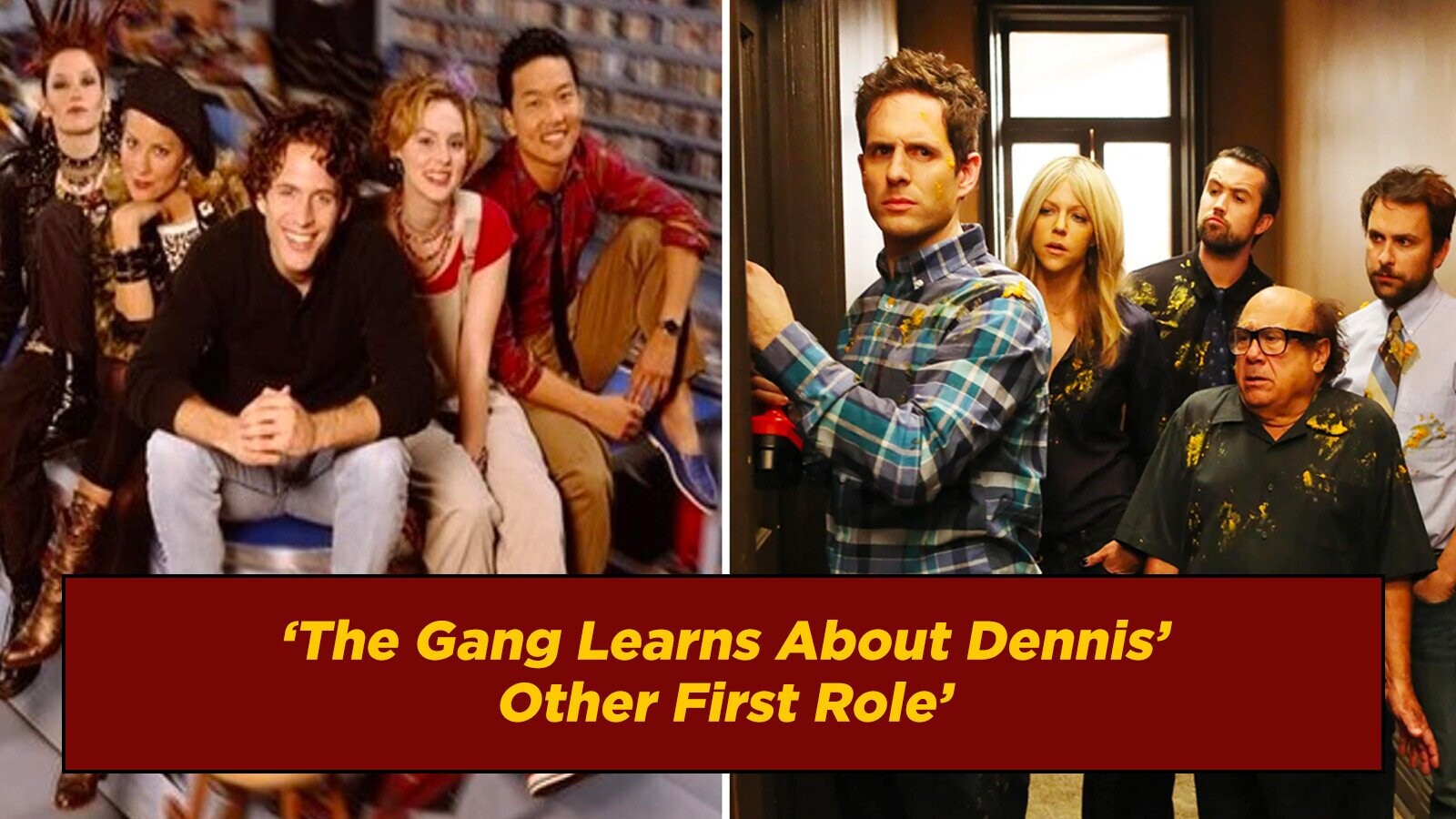
The funny twist is that one of the most important stepping stones toward Sunny was not a prestige comedy workshop, a network development lab, or a perfectly polished pilot season. It was That ’80s Show, the short-lived Fox sitcom connected in spirit and creative DNA to That ’70s Show. It starred a young Glenn Howerton years before he became Dennis Reynolds, the most self-admiring man to ever weaponize a button-down shirt.
Calling That ’80s Show a “spinoff” is common shorthand, though the accurate version is a little more complicated. It was not a direct continuation featuring familiar That ’70s Show characters moving into a new decade. Instead, it was a companion-style project from much of the same creative world, built around the idea that another decade could become another nostalgia-fueled sitcom playground. Same general flavor, different cast, different city, different decade. Unfortunately, audiences did not exactly race to embrace it like a long-lost mixtape.
Yet without that failed experiment, we might not have It’s Always Sunny in Philadelphia. That is not just fan trivia. Glenn Howerton has credited the experience with helping him financially and creatively. The money he earned from That ’80s Show helped him afford the camera used for the early Sunny pilot. Even more importantly, the experience taught him what kind of comedy he wanted to makeand what kind of creative control he wanted to have.
The Failed Sitcom That Accidentally Helped Build Paddy’s Pub
That ’80s Show premiered on Fox in January 2002, at a time when That ’70s Show was still a major network success. The idea made sense on paper. If viewers loved watching teenagers navigate bell-bottoms, basements, and classic rock in the 1970s, maybe they would also enjoy young adults navigating record stores, new wave fashion, and Reagan-era pop culture in 1984. Network executives probably saw dollar signs wearing shoulder pads.
The show followed Corey Howard, played by Glenn Howerton, a struggling musician living in San Diego. It featured record stores, punk attitudes, 1980s references, and plenty of “remember this?” jokes. The problem was that nostalgia alone is not a personality. That ’70s Show worked because its cast chemistry felt loose, specific, and lived-in. That ’80s Show often felt more like a theme party where everyone arrived in costume before figuring out whether they actually liked each other.
The sitcom lasted only one season and 13 episodes. In television terms, that is not a run; it is a polite cough. But short-lived shows can have long shadows. For Howerton, That ’80s Show was not just a failed credit on a résumé. It was an education in what happens when an actor has ideas but not enough power to shape the final product.
Glenn Howerton Before Dennis Reynolds
Today, Glenn Howerton is inseparable from Dennis Reynolds, a character so vain, brittle, and delusional that he seems personally offended by the existence of other human beings. But before Dennis, Howerton was a young actor trying to find his lane in Hollywood. That ’80s Show gave him a lead role on a network sitcom, which is the kind of opportunity most actors would happily accept before asking whether the scripts sparkle.
The experience was valuable, but not always satisfying. Howerton later reflected that he had comedic instincts and opinions about how scenes should work, but he did not yet have the confidence or authority to push those ideas through. That frustration mattered. It planted a seed. If he wanted comedy to feel sharper, stranger, more precise, and less sanded down by committee, he would eventually need to help build the machine himself.
That is where It’s Always Sunny in Philadelphia enters the story, not as a polished network package but as a scrappy, self-made project. Rob McElhenney, Charlie Day, and Glenn Howerton filmed an extremely low-budget pilot with a tiny crew, a few cameras, and the kind of creative hunger that cannot be faked. The earliest version was not even set in Philadelphia. It began as a story about self-absorbed actors in Los Angeles, which, to be fair, is the one natural resource Los Angeles produces in unlimited quantities.
From a Cheap Pilot to a TV Institution
The original Sunny pilot was famously inexpensive. Depending on which version of the story is being told, the budget is often described as shockingly lowmore pizza-and-tape money than “television production.” What mattered was not the price tag. It was the voice. The pilot introduced a style of comedy that was fast, mean, uncomfortable, and weirdly magnetic. The characters were not lovable in the traditional sitcom sense. They were selfish, insecure, loud, petty, and deeply committed to making every situation worse.
FX saw something in that raw material. The network helped reshoot the concept professionally, but one major change was needed: the show could not simply be another Hollywood story about actors trying to make it. That premise was already overused. So McElhenney moved the setting to Philadelphia, his hometown, and the characters became owners of Paddy’s Pub, a dive bar where employment is flexible, morality is optional, and every business plan seems to involve fraud, vanity, or both.
That shift was crucial. Philadelphia gave the show a distinct identity. Paddy’s Pub gave the gang a home base. The bar created a believable reason for these people to remain stuck together while doing almost no actual work. It also gave the series a grimy, local texture that separated it from glossy network sitcoms. It’s Always Sunny in Philadelphia did not look like a show designed by a focus group. It looked like something that crawled out of a basement with a legal pad full of bad ideasand that was its charm.
Why Failure Was the Best Thing That Could Have Happened
The connection between That ’80s Show and It’s Always Sunny in Philadelphia is not just “one actor moved from one sitcom to another.” It is a case study in how failure can become fuel. If That ’80s Show had been a hit, Howerton might have stayed locked into a more traditional network-comedy path. He might have spent years playing a safer, softer, more conventional character. Instead, the show ended quickly, and he carried forward two important things: experience and dissatisfaction.
Experience gave him a look at how professional television worked. Dissatisfaction gave him a reason to do it differently. That combination is powerful. Plenty of people leave a failed project with only disappointment. Howerton left with a better sense of his comedic instincts, a little more industry knowledge, andfamouslythe financial ability to help buy the camera that captured the first spark of Sunny.
There is something beautifully appropriate about that. It’s Always Sunny is a show about people who constantly fail upward, sideways, and occasionally into traffic court. Its behind-the-scenes origin story also contains a form of failure turned into momentum. A canceled nostalgia sitcom helped make possible an anti-nostalgia sitcom: a show that did not want to warmly remember a decade, teach a lesson, or hug it out before the credits. It wanted to ask, “What if every character learned absolutely nothing?”
The Anti-Sitcom Sitcom
Part of what made Sunny so refreshing was its refusal to behave like a normal sitcom. Traditional comedies often rely on growth, reconciliation, and a comforting reset. Sunny uses the reset button too, but not to restore emotional harmony. It resets so the gang can be terrible again next week with renewed confidence.
Dennis, Mac, Charlie, Dee, and Frank are not role models. They are cautionary tales with bar tabs. The comedy comes from watching them misunderstand the world, inflate their own importance, and turn tiny problems into social disasters. Dennis believes he is a system. Mac constantly rebuilds his identity around whatever will make him feel powerful that day. Charlie operates by dream logic and cheese. Dee wants respect but usually finds humiliation. Frank, once Danny DeVito joined in Season 2, became the show’s wild card: rich, shameless, and ready to crawl through the moral sewer with a grin.
This approach was risky in 2005. A sitcom full of aggressively selfish characters could have alienated viewers. Instead, the show found a devoted audience that understood the joke was not “these people are correct.” The joke was that these people are disasters, and the show is smart enough to let them expose themselves.
How That ’80s Show and Sunny Represent Two Opposite Comedy Models
That ’80s Show was built around a recognizable network idea: take a successful format, change the decade, repeat the magic. That does not mean nobody involved was talented. The cast included performers who would go on to bigger things, and the creative team had real sitcom credentials. But the concept leaned heavily on the assumption that a decade itself could carry a comedy.
It’s Always Sunny in Philadelphia came from the opposite direction. It did not begin with a marketable nostalgia hook. It began with a comic attitude. The characters were the engine. The tone was the brand. The setting supported the chaos rather than replacing it. That is why the show could keep evolving for years while still feeling like itself.
The lesson for writers and producers is simple but brutal: a premise can get attention, but a voice builds longevity. A show about “the 1980s” needs more than leg warmers and pop references. A show about five morally broken bar owners can last for decades if the writing has a strong point of view. That is the kind of television math that makes executives nervous and fans very happy.
Why the Camera Story Still Matters
The camera detail has become a beloved piece of Sunny lore because it makes the show’s origin feel tangible. It turns a huge career pivot into an object you can picture: a camera bought with money from a job that did not work out, used to film a pilot nobody could guarantee would matter. That is not glamorous. It is better than glamorous. It is practical.
Creative success often depends on unromantic tools. A camera. A blank script. Friends willing to show up. Enough money for food. Enough confidence to make something strange before anyone gives permission. Howerton’s That ’80s Show paycheck did not magically create Sunny, but it helped make the first version possible. That is a wonderful reminder that even disappointing jobs can become part of a larger creative ecosystem.
In another timeline, That ’80s Show becomes a respectable multi-season sitcom, Glenn Howerton remains on a traditional network track, and Dennis Reynolds never darkens the doorway of Paddy’s Pub. Thankfullyor frighteningly, depending on how you feel about the gangour timeline chose chaos.
Experience Section: What This Story Teaches About Creative Detours
The story behind It’s Always Sunny in Philadelphia is especially relatable because almost everyone has had a “That ’80s Show moment.” Maybe it was a job that looked perfect on paper but felt wrong in practice. Maybe it was a school project, creative collaboration, audition, internship, business idea, or first draft that did not become what it was supposed to be. At the time, failure can feel like a locked door. Later, it sometimes turns out to be a hallway.
That is the most useful way to look at Howerton’s path. That ’80s Show did not give him the defining role of his career, but it helped sharpen his sense of what he wanted. It showed him the limitations of being only a performer inside someone else’s system. It gave him a professional credit, a paycheck, and a close-up view of how a sitcom is assembled. Most importantly, it seems to have left him with the feeling that he had stronger instincts than he had allowed himself to express.
For anyone trying to make somethingan article, a film, a business, a YouTube channel, a podcast, a comedy sketch, even a weird little website built at 2 a.m.that lesson matters. You do not always get clarity from success. Sometimes success tells you, “Great, keep doing this.” Failure asks harder questions. What bothered you? What would you change? What did you learn? What do you never want to repeat? Those answers can become the blueprint for the next project.
The Sunny origin also proves that polish is not the same thing as personality. The early pilot was rough, cheap, and imperfect. But it had a pulse. Viewers, executives, and collaborators can often forgive low production value if the idea feels alive. That does not mean quality is unimportant. It means a strong point of view can survive humble packaging. Sometimes a tiny project made with friends can say more than an expensive production designed to please everyone.
There is also a teamwork lesson hiding inside the madness. McElhenney, Howerton, and Day did not wait for the industry to hand them ideal roles. They created a vehicle for themselves. That move required nerve, trust, and probably a high tolerance for awkward conversations. It also required them to understand what each person brought to the table. The chemistry that later made the gang so watchable began with real creative collaboration.
Finally, this story is a reminder that entertainment history is rarely clean. We like to imagine big shows arriving fully formed, as if success were a straight road. In reality, it is usually a pileup of accidents, false starts, lucky breaks, rejected ideas, and lessons learned the embarrassing way. It’s Always Sunny in Philadelphia exists partly because a different sitcom did not work. That is both hilarious and oddly encouraging. Sometimes the project that fails is not the end of the story. Sometimes it buys the camera.
Conclusion: The Failed Spinoff That Helped Create a Comedy Monster
So yes, in a delightfully sideways sense, we only have It’s Always Sunny in Philadelphia because of a failed That ’70s Show-adjacent experiment. That ’80s Show gave Glenn Howerton money, experience, frustration, and perspective. Those ingredients helped him move toward a show where he would not merely perform someone else’s idea of comedy. He would help define the tone himself.
The result was a sitcom that broke the rules by understanding them, a comedy that trusted viewers to laugh at terrible people without endorsing them, and a series that turned a tiny homemade pilot into television history. That ’80s Show may have vanished quickly, but its accidental legacy lives on every time the gang at Paddy’s Pub turns a simple plan into a five-alarm ethical emergency.
Failure rarely gets a standing ovation. But in this case, it deserves at least a suspicious toast from a dirty Philadelphia bar. Without that short-lived Fox sitcom, there may have been no camera, no pilot, no Paddy’s Pub, and no Dennis Reynolds declaring himself the center of the universe with terrifying confidence. Not bad for a canceled show that barely made it past 13 episodes.













