
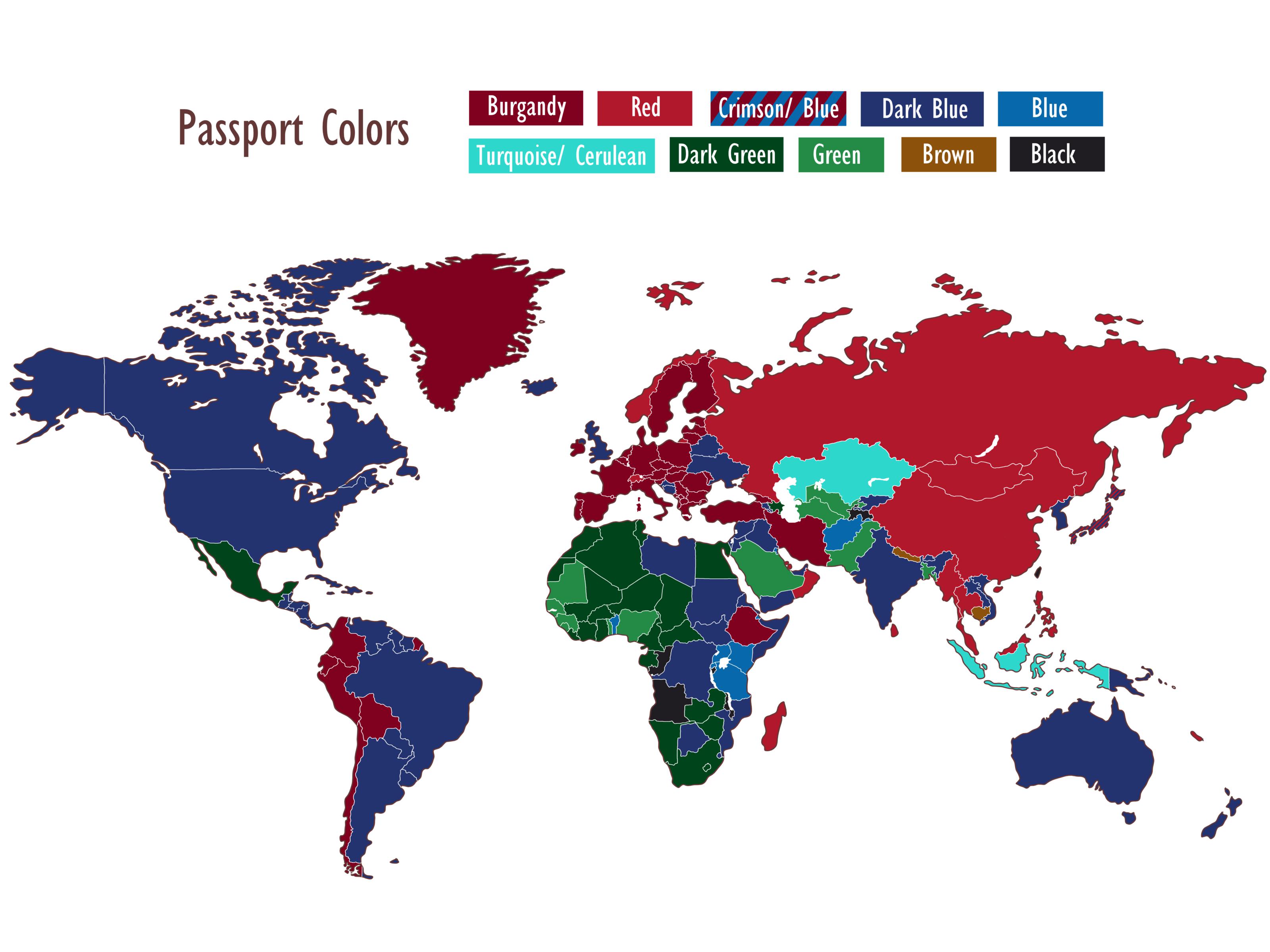
If you have ever stood in an airport line and noticed a sea of little booklets in blue, burgundy, green, and black, you may have wondered whether passport colors actually mean something, or whether the world simply agreed that neon orange would be a little too chaotic before coffee.
The answer is a fun little mix of both symbolism and bureaucracy. Passport colors do matter, but not in a neat, universal code where blue means one thing everywhere and green means another in every country. Instead, passport cover colors usually reflect a country’s history, politics, religion, geography, regional alliances, or the type of passport being issued. In other words, your passport color can tell a story, but it is not a magic decoder ring.
This travel guide breaks down what different passport colors usually mean, why certain shades appear again and again, and what travelers should actually care about before heading to the airport. Spoiler: your passport’s expiration date matters a lot more than whether the cover looks moody and mysterious.
Do Passport Colors Actually Mean Anything?
Yes, but only loosely. There is no single worldwide rule that assigns fixed meanings to passport colors. Countries choose their own designs, and while most passports fall into dark shades of blue, red, green, or black, the reasons behind those choices vary.
That is why a black passport might be diplomatic in one country, ordinary in another, and an emergency or travel document somewhere else. Likewise, blue may suggest the Americas in one case, a service passport in another, and plain old national branding somewhere else.
The smartest way to read passport colors is this: they usually suggest patterns, not absolutes. Think of them as travel clues, not travel laws.
Why Passport Covers Usually Stick to Dark Colors
Passport offices are not trying to win a design award at a trendy stationery expo. Most countries stick with darker colors for practical reasons. Dark covers look official, photograph well, age better, and hide dirt, scuffs, and the general chaos of international travel. A passport spends years getting shoved into bags, airport trays, hotel safes, jacket pockets, and that one backpack compartment where gum wrappers mysteriously multiply.
Darker colors also project seriousness. Passports are legal identity documents, not beach reads. Governments want them to look formal, durable, and easy to recognize at a glance. So while there are beautiful design differences between countries, the palette usually stays conservative.
Blue Passports: The “New World” Look and a Popular Global Choice
Blue passports are often associated with the Americas and the Caribbean, though the color shows up far beyond those regions. The United States uses a blue passport for ordinary citizens, and blue is common across several Caribbean nations as well. In some places, blue is tied to regional identity, maritime geography, or national symbolism. In others, it is simply the preferred official shade.
Blue also has a certain diplomatic charm. It feels stable, familiar, and unmistakably government-approved without looking too severe. It is the navy blazer of passport colors: reliable, classic, and never really out of style.
That said, blue does not mean the same thing everywhere. In some countries, blue is reserved for official or service passports rather than ordinary ones. Nepal, for example, uses blue for official passports while green is used for regular passports. Oman uses blue for service passports, while Micronesia uses dark blue for its regular passport. So if you were hoping for a neat one-color, one-meaning system, the passport world would like to respectfully decline.
Red and Burgundy Passports: Europe, Tradition, and Political History
Red and burgundy passports are among the most recognizable in the world. Burgundy, in particular, is strongly associated with Europe because European Union member states typically use a common burgundy style with “European Union” on the cover. That visual consistency gives EU passports a shared look, even though each country still includes its own national name and details.
Outside the EU, red passports can also reflect political history, especially in countries with communist pasts or present-day communist systems. China’s regular passport is dark red, which often gets mentioned in discussions about how politics can influence passport design. But red is not only political. It can also be historical, regional, or simply aesthetic.
Some countries use multiple shades in this family. Burgundy often feels more European and standardized, while brighter or darker reds can signal national tradition or a different passport class. Romania, for instance, uses red for its regular passport, while Oman uses red for its ordinary passport. Meanwhile, some countries reserve red for diplomatic documents.
So, does red mean power, politics, prestige, or paperwork? Depending on the country, yes. Also no. Welcome to international document design.
Green Passports: Religion, Region, and Government Categories
Green passports are frequently linked to Islam because green carries deep religious and cultural significance in many Muslim-majority countries. That is why green appears often in places such as Pakistan and Saudi Arabia. It is one of the clearest examples of passport color reflecting identity beyond pure administration.
Green is also common in parts of Africa, where it may reflect regional groupings, national symbolism, or established administrative practice. South Africa’s regular passport is green, and Nepal uses green for its regular passport as well. In some countries, green is not the citizen passport at all but a service, official, or temporary travel document. Oman’s laissez-passez is green, for example, and Angola uses green for service passports.
In other words, green can suggest faith, geography, or government function. It can feel symbolic, but it can also be deeply practical.
Black Passports: Rare, Formal, and Hard to Generalize
Black passports have a reputation for being rare, elegant, and a little intimidating, like a document that definitely knows more about customs regulations than you do. Black covers often look sleek and can hide wear extremely well, which may be part of their appeal.
But black is the hardest color to pin down. In some places, black is used for diplomatic passports. In others, it is used for official passports, travel documents, or even regular passports. Angola uses black for regular passports. Romania uses black for diplomatic passports. Oman uses black for diplomatic passports too. Micronesia uses black for official passports. Nepal uses black for a travel document rather than a standard regular passport.
This is a good reminder that passport color often tells you more about national administration than some universal travel hierarchy. A black passport may look important, and sometimes it is. Other times it is simply the color the issuing authority chose for that document type.
What Passport Color Does Not Tell You
Passport color can be interesting, but it does not tell you the most important things travelers tend to assume it does. A cover color does not automatically tell you:
- how powerful that passport is for visa-free travel
- whether the holder has diplomatic immunity
- whether the passport is biometric or non-biometric
- whether the traveler will breeze through immigration
- whether the destination country requires a visa
Those answers depend on nationality, passport type, bilateral agreements, visa policy, technology, and destination-specific entry rules. Color is visible. Power is legal. The two are not the same thing.
Why Countries Use Different Colors for Different Passport Types
One of the clearest meanings behind passport colors has less to do with symbolism and more to do with classification. Many countries use one color for regular citizens and another for official, diplomatic, service, emergency, or limited-validity documents. This makes life easier for consular staff, airlines, border officers, and government agencies that need to recognize document types quickly.
Here is where things get especially interesting. Dominica uses blue for regular passports, green for official passports, and red for diplomatic passports. Saint Vincent and the Grenadines uses blue for regular, green for official, and burgundy for diplomatic. South Africa uses green for regular, navy blue for official, and maroon for diplomatic. Nepal splits its travel documents into green, blue, red, and black categories. Oman goes even further with red, black, burgundy, blue, and green assigned to different passport and travel-document classes.
That means the same country can use several different passport colors at once, which is one more reason broad generalizations only get you so far.
What Travelers Should Actually Check Instead of Obsessing Over Passport Color
Passport color is fun trivia. Border rules are less fun, but much more important.
Before any international trip, pay attention to these practical details:
1. Passport validity
Many countries require your passport to be valid for at least six months beyond your travel dates. Airlines may also refuse boarding if you do not meet the destination’s validity rule.
2. Blank visa pages
Some destinations require a certain number of empty visa pages. South Africa, for example, requires consecutive blank visa pages for entry.
3. Condition of the passport
A damaged passport can cause serious trouble. Water damage, ripped pages, unofficial markings, or a chewed corner courtesy of your dog can all create travel headaches you did not budget for.
4. Passport type
If you carry an official, diplomatic, service, temporary, or emergency passport, your visa requirements may differ from those for a regular tourist passport. Never assume all passport classes are treated the same.
5. Name match
Your airline ticket, visa, and passport should match exactly. Immigration officers are not known for their love of creative spelling.
Traveler Experiences: What Passport Color Feels Like in Real Life
Passport color becomes most interesting when it leaves the trivia category and enters real travel experience. For many travelers, the first moment they notice passport color is not while reading an article like this one, but while waiting in an immigration line and seeing a dozen different covers appear like a tiny United Nations meeting in paperback form.
Imagine standing in line after a long overnight flight. You are half awake, holding your boarding pass like it contains the meaning of life, when you notice that the family ahead of you has dark blue passports, the business traveler behind you has a burgundy one, and the government delegation in the fast lane is carrying a different shade entirely. In that moment, passport color feels less abstract. You realize each booklet is a quiet signal of citizenship, government status, or travel category, even if the exact meaning is not obvious to the casual observer.
At embassies and consulates, passport colors can matter in a more administrative way. Staff often recognize document types quickly by cover color before they even read the fine print. A regular passport may go into one workflow, while an official or diplomatic passport may require a different visa process. Travelers who use temporary or emergency documents sometimes discover that their unusual passport color sparks extra questions, longer processing, or closer inspection, not because anything is wrong, but because the document is less common.
There is also a social side to it. In hostel lounges, airport gates, and study-abroad orientation sessions, passport color becomes an easy conversation starter. Someone says, “Whoa, your passport is green?” and suddenly there is a whole discussion about where everyone is from, how visa rules differ, and why one person needed four extra documents just to get a transit visa while another breezed through with an online form. Passport color becomes a doorway into larger conversations about mobility, national identity, and the very unequal reality of global travel.
Then there is the emotional experience of renewal. Many travelers get oddly sentimental when a passport color changes in meaning, design, or personal significance. Maybe your first passport felt like freedom because it meant your first study-abroad trip. Maybe your second one felt more serious because now you were traveling for work. Maybe the same blue or burgundy cover now carries years of stamps, delays, jet lag, reunions, and stories that smell faintly of airport coffee.
And if you have ever traveled with a damaged, limited-validity, or emergency document, you know the passport experience changes fast. Suddenly, color is not just design. It can signal that your document is temporary, special-purpose, or subject to different rules. That is when travelers learn the golden rule of passport reality: the cover gets attention, but the category and conditions inside the document matter much more.
So yes, passport color is symbolic. But for real travelers, it is also tactile, emotional, practical, and sometimes hilariously stressful. A passport may be a small booklet, yet it somehow manages to hold bureaucracy, identity, luck, and adventure all at once. Quite a workload for something that fits in a jacket pocket.
Final Boarding Call
Different passport colors do have meaning, but not in a rigid, one-size-fits-all way. Blue, red, burgundy, green, and black covers often reflect regional traditions, religion, political history, national branding, or passport class. The real lesson is not that one color always means one thing. It is that passport design tells a country’s story in miniature.
For travelers, the smarter move is to enjoy the symbolism without confusing it for hard immigration law. Your passport color may be interesting, elegant, and fun to compare at the airport. But the details that truly matter are validity, condition, blank pages, visa requirements, and whether you are carrying the right document for the trip.
In short, admire the cover, but respect the fine print. That is the most passport thing imaginable.













