
Share buybacks are one of those stock market topics that sound painfully boring until you realize they help explain why some companies look stronger, richer, and shinier than they actually are. A share buyback, also called a stock repurchase, happens when a company buys back its own shares from the market. Fewer shares remain outstanding, which can lift earnings per share, support the stock price, and send investors a message: “We have extra cash, and we think our stock is worth owning.”
But like most things on Wall Street, the message is not always that simple. Sometimes buybacks are a healthy sign of corporate confidence. Sometimes they are financial window dressing with a very expensive frame. And sometimes they tell us more about the broader stock market than a dozen dramatic headlines about “investor sentiment,” “macro uncertainty,” or whatever phrase analysts are using this week to sound calm while staring at red charts.
So, what do share buybacks really tell us about the stock market? They tell us where corporate cash is going, how confident executives feel, whether valuations may be stretched, and which companies have enough financial muscle to return capital without starving the business. In other words, buybacks are not the whole storybut they are a very useful clue.
What Are Share Buybacks?
A share buyback is when a publicly traded company repurchases its own stock. The company can do this in the open market, through accelerated share repurchase agreements, or through tender offers. In the United States, open-market buybacks are often conducted under SEC Rule 10b-18, which provides a voluntary safe harbor if companies follow conditions related to timing, price, volume, and manner of purchase.
Think of a company’s shares like slices of pizza. If the company buys back some slices and removes them from the box, the remaining slices represent a bigger portion of the whole pizza. Investors love bigger slices. They especially love them when the pizza is fresh, profitable, and not being financed with questionable toppings.
When a company reduces its share count, earnings per share can rise even if total net income does not grow much. That is why buybacks can make financial metrics look better. A company earning $10 billion with 1 billion shares has earnings per share of $10. If it repurchases enough stock to reduce the share count to 900 million, earnings per share rises to about $11.11, even if total earnings stay flat. Magic? No. Accounting? Yes. Wall Street’s favorite card trick? Also yes.
Why Companies Buy Back Their Own Shares
1. They Believe the Stock Is Undervalued
The cleanest reason for a buyback is simple: management believes the company’s shares are trading below intrinsic value. If executives are right, buying back stock can be an excellent use of capital. Berkshire Hathaway has long treated buybacks this way, repurchasing shares only when management believes the stock trades below a conservative estimate of value. That approach makes buybacks a valuation signal, not just a routine habit.
2. They Have More Cash Than Immediate Investment Opportunities
Mature companies often generate more cash than they can profitably reinvest. Apple is a classic example. Its enormous cash flow has allowed it to invest heavily in products, services, supply chains, dividends, and buybacks. For companies with durable profits, repurchases can be a flexible way to return excess capital to shareholders without committing to a permanent dividend increase.
3. They Want to Offset Stock-Based Compensation
Many companies issue shares to employees as compensation. That can dilute existing shareholders. Buybacks can offset this dilution, keeping the share count from expanding too much. This is not always bad, but investors should check whether buybacks are actually reducing shares outstanding or merely cleaning up after generous stock grants.
4. They Want to Support Earnings Per Share
Buybacks can increase EPS by shrinking the denominator. This is one reason critics argue that repurchases may encourage executives to focus on short-term market optics instead of long-term investment. If management compensation is tied heavily to EPS or share price, investors should pay close attention. A buyback should create value, not just polish the dashboard.
What Buybacks Tell Us About the Broader Stock Market
At the market level, buybacks can reveal corporate confidence. When companies are aggressively repurchasing shares, it usually means profits are strong, balance sheets are healthy, and executives feel comfortable returning cash. Recent data from S&P Dow Jones Indices showed S&P 500 companies spending hundreds of billions of dollars per quarter on repurchases, with the 12-month period through September 2025 reaching more than $1 trillion. That is not pocket change; that is “build a small moon base” money.
Strong buyback activity can also act as a source of demand for stocks. When companies buy their own shares, they become steady buyers in the market. This does not guarantee rising stock prices, but it can provide support, especially during periods when investor sentiment is shaky. In 2025 and early 2026, strategists frequently pointed to buybacks as one of the forces helping support U.S. equities alongside earnings growth and corporate cash flow.
However, heavy buybacks can also suggest that fewer attractive internal investment opportunities exist. If companies are choosing repurchases over factories, research, hiring, or acquisitions, investors should ask why. Sometimes the answer is healthy discipline. Other times, it may mean growth is slowing and management is using financial engineering to keep shareholders interested.
The Bullish Interpretation: Buybacks Signal Confidence
The optimistic view is that buybacks show confidence. Management has inside knowledge about the company’s pipeline, customers, margins, and risks. If executives choose to buy back shares, they may be telling the market that they believe future cash flows are strong and the stock is attractive.
Buybacks also increase each remaining shareholder’s ownership percentage. If a company buys back 5% of its shares and retires them, long-term investors own a larger piece of the business without lifting a finger. It is the financial equivalent of getting a bigger sandwich because someone else left the lunch table.
For high-quality companies, buybacks can compound value over time. A profitable business that repurchases shares at reasonable prices can steadily increase per-share earnings, per-share free cash flow, and per-share intrinsic value. This is why some investors prefer “shareholder yield,” which combines dividends and buybacks, rather than focusing only on dividend yield.
The Bearish Interpretation: Buybacks Can Hide Weakness
The skeptical view is that buybacks can be used to make results look better than they are. A company with flat revenue and flat net income can still show EPS growth if it reduces the share count. That may please the market for a while, but it does not solve deeper business problems.
Buybacks can also be poorly timed. Companies sometimes repurchase aggressively when profits are high and stock prices are expensive, then slow down or stop when recessions hit and shares are cheaper. That is exactly the opposite of what a disciplined investor would do. Imagine waiting until winter coats are full price in December, buying ten of them, and then ignoring the clearance rack in March. Congratulations, you have joined a corporate finance committee.
Debt-funded buybacks deserve extra caution. If a company borrows money to repurchase shares while its core business is weakening, the buyback may increase financial risk. Low interest rates once made debt-funded repurchases more attractive, but higher-rate environments make that strategy less forgiving. A buyback financed by genuine free cash flow is usually more reassuring than one financed by a balance sheet doing push-ups in a thunderstorm.
Buybacks vs. Dividends: What Is the Difference?
Both dividends and buybacks return capital to shareholders, but they work differently. Dividends provide direct cash payments. Buybacks reduce the number of shares, potentially increasing the value of each remaining share. Dividends are usually more predictable, while buybacks are more flexible.
Companies hesitate to cut dividends because investors often interpret a dividend cut as a distress signal. Buybacks, however, can be increased, paused, or reduced with less drama. That flexibility is useful, especially during uncertain economic periods. A company can slow buybacks without sending the same panic signal that comes from cutting a dividend.
For taxable investors, buybacks may also be more tax-efficient because shareholders are not forced to receive income unless they sell shares. However, U.S. tax policy has changed. The Inflation Reduction Act introduced a 1% excise tax on stock repurchases by publicly traded corporations, and the IRS has issued regulations clarifying how the tax applies. The tax does not eliminate buybacks, but it slightly changes the math.
How Buybacks Affect Valuation
Buybacks matter most when price and value are aligned. Repurchasing shares below intrinsic value can create wealth for remaining shareholders. Repurchasing shares above intrinsic value can destroy value. This is the part many glossy press releases politely avoid mentioning.
For example, if a company worth $100 per share buys back stock at $70, remaining shareholders benefit. The company is buying dollars for seventy cents. But if it buys back at $140, it may be destroying value, even if EPS rises. The share count drops, but corporate cash also disappears. Investors should never judge a buyback only by its size. A $50 billion repurchase can be brilliant or foolish depending on valuation, opportunity cost, and business quality.
What Investors Should Look For in a Buyback Program
Free Cash Flow Comes First
The best buybacks are funded by durable free cash flow after necessary reinvestment. If a company is buying back shares while neglecting its core business, the market may cheer today and regret tomorrow.
Share Count Should Actually Fall
Investors should compare total repurchase spending with the change in diluted shares outstanding. If the company spends billions but the share count barely moves, stock-based compensation may be absorbing much of the benefit.
Debt Levels Matter
A company with modest debt and strong cash flow has more flexibility. A company with rising leverage, falling margins, and aggressive repurchases may be trying to win a beauty contest while the house is on fire.
Valuation Is Critical
A buyback is not automatically smart because the company announced it. The most important question is whether the stock is being repurchased at an attractive price relative to long-term value.
Specific Examples: Apple, JPMorgan, and Berkshire Hathaway
Apple shows how buybacks can become a central part of capital return. The company has used massive repurchases for years while continuing to invest in its ecosystem. Investors watch Apple’s buybacks not because they are flashy, but because they affect per-share earnings, cash allocation, and shareholder returns at enormous scale.
JPMorgan Chase offers a banking-sector example. In 2025, the firm authorized a large common share repurchase program while also planning dividend increases. For banks, buybacks often reflect regulatory capital strength. A bank cannot simply throw money at shareholders like confetti at a parade; it must consider capital requirements, stress tests, credit risks, and economic conditions.
Berkshire Hathaway provides the opposite lesson: sometimes the most important buyback signal is restraint. Berkshire reported no share repurchases in 2025, suggesting management did not view the stock as meaningfully undervalued during that period. Later reporting showed Berkshire resumed buybacks in 2026, which investors interpreted as a renewed valuation signal under new leadership. In this case, both buying and not buying said something.
Do Buybacks Cause the Stock Market to Rise?
Buybacks can support stock prices, but they do not single-handedly drive the market. The stock market is influenced by earnings, interest rates, inflation, liquidity, investor psychology, geopolitics, and the occasional viral panic with a chart attached.
Still, repurchases can be a meaningful source of demand. When corporate America is buying hundreds of billions of dollars of its own stock, that demand matters. It may reduce volatility, support valuations, and help explain why markets sometimes remain resilient despite gloomy headlines.
But investors should avoid the lazy conclusion that “buybacks equal bullish.” The quality of buybacks matters. Broad market buybacks funded by strong profits are healthier than buybacks funded by debt or concentrated in a few mega-cap companies. If only a small group of large firms is driving most repurchase activity, the market may be narrower than headline numbers suggest.
What Share Buybacks Really Tell Us
Share buybacks tell us that companies have cash, confidence, or at least a desire to look confident. They tell us management may believe the stock is undervalued. They tell us companies may prefer flexible capital returns over permanent dividend commitments. They also tell us investors need to read the footnotes, because the headline number rarely tells the full story.
At the stock market level, buybacks can reveal the health of corporate profits and the willingness of companies to support shareholder returns. Heavy buyback activity can be a bullish sign when it comes from strong free cash flow and disciplined valuation. But it can be a warning sign when it masks weak growth, offsets excessive dilution, or substitutes for necessary investment.
The best way to interpret buybacks is not with applause or outrage. It is with curiosity. Ask who is buying, why they are buying, what price they are paying, how they are funding it, and whether the business still has enough capital to grow. That is where the real story lives.
Experience-Based Perspective: Reading Buybacks Like a Market Detective
After watching market cycles, earnings seasons, and corporate announcements, one lesson becomes clear: buybacks are most useful when treated as clues, not conclusions. A company announcing a repurchase program may sound impressive, but the announcement itself is only the opening line. The real story appears over time in cash flow statements, share counts, debt levels, and management behavior.
One practical experience investors often have is seeing a stock jump after a buyback announcement. The market may react positively because the announcement suggests confidence. But that first reaction can be misleading. Some companies authorize huge buyback programs and then use them slowly. Others announce repurchases but reduce them when conditions change. An authorization is permission, not a promise. It is like saying, “I may go to the gym this year.” Admirable, yes. Evidence of actual exercise, not yet.
Another experience is discovering that not all buybacks reduce dilution. Technology companies, for example, often issue stock-based compensation to employees. That can be perfectly reasonable, especially when talent is critical. But if the company spends billions on buybacks and the diluted share count barely declines, shareholders should understand that part of the repurchase program is simply offsetting compensation dilution. The buyback may still be useful, but it is not as powerful as the headline spending figure suggests.
Long-term investors also learn that the best buybacks tend to feel boring. They are funded by free cash flow, executed consistently but not blindly, and paired with ongoing investment in the business. These companies do not need dramatic press releases. They simply generate cash, reinvest where returns are attractive, and return excess capital when appropriate. Over years, that discipline can quietly improve per-share value.
The worst buybacks often feel exciting at first. A struggling company announces a large repurchase to “unlock shareholder value.” The stock pops. Commentators cheer. Then the business continues to weaken, debt becomes heavier, and the buyback looks less like confidence and more like camouflage. In those cases, the company may have used cash to support the stock instead of fixing the engine. Spoiler: the market eventually checks under the hood.
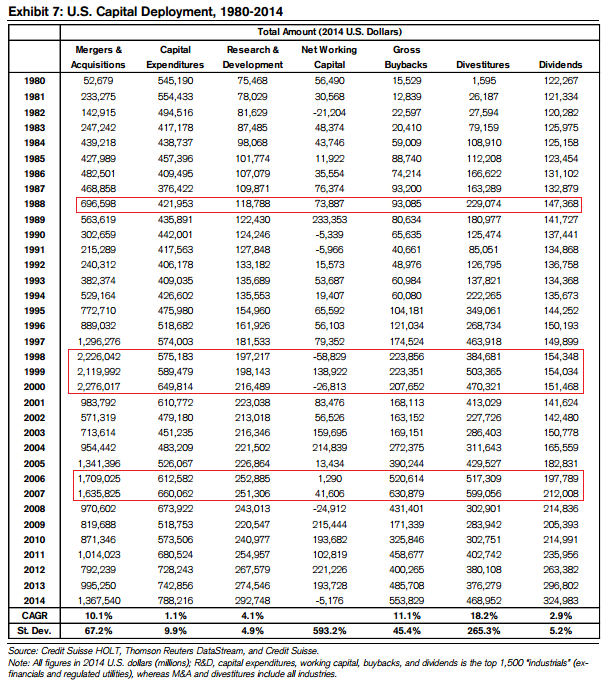
A useful habit is to compare buybacks with capital expenditures, research and development, and acquisitions. If a company is repurchasing shares while still investing enough to protect its competitive position, that can be healthy. If buybacks are crowding out essential investment, the future may be paying for the present. A retailer that buys back stock while stores become outdated, a manufacturer that delays equipment upgrades, or a tech company that underinvests in innovation may enjoy temporary EPS support but lose long-term strength.
Investors should also watch timing. Great capital allocators buy more aggressively when their stock is undervalued and become cautious when it is expensive. Poor capital allocators do the opposite, repurchasing heavily at market peaks because profits are high and cash is plentiful. The irony is painful but common: companies often have the most money to buy back stock when their shares are least attractive.
In personal market analysis, buybacks are best used alongside other indicators. Rising buybacks plus rising earnings, strong margins, healthy balance sheets, and reasonable valuations can be a constructive signal. Rising buybacks plus falling revenue, rising debt, and shrinking investment deserve skepticism. The same action can mean different things depending on context.
Ultimately, share buybacks tell us something important about the stock market’s plumbing. They show how corporate cash flows into equity demand, how executives think about valuation, and how companies balance growth with shareholder returns. But investors should never let a buyback announcement do all the thinking. Buybacks are a chapter in the story, not the whole book. And as every experienced investor eventually learns, the footnotes are where the plot twists hide.
Conclusion
Share buybacks are neither heroes nor villains. They are tools. In the hands of disciplined management, they can increase long-term shareholder value, improve per-share economics, and signal confidence. In the hands of short-term thinkers, they can disguise weak growth, inflate EPS, and waste cash at inflated prices.
For the stock market, buybacks reveal the strength of corporate cash flow, the confidence of executives, and the level of demand companies themselves are adding to equities. But the smartest investors look beyond the headline. They study valuation, free cash flow, debt, dilution, and opportunity cost. That is how a simple buyback announcement becomes useful market intelligence instead of just another shiny headline wearing a suit.













