
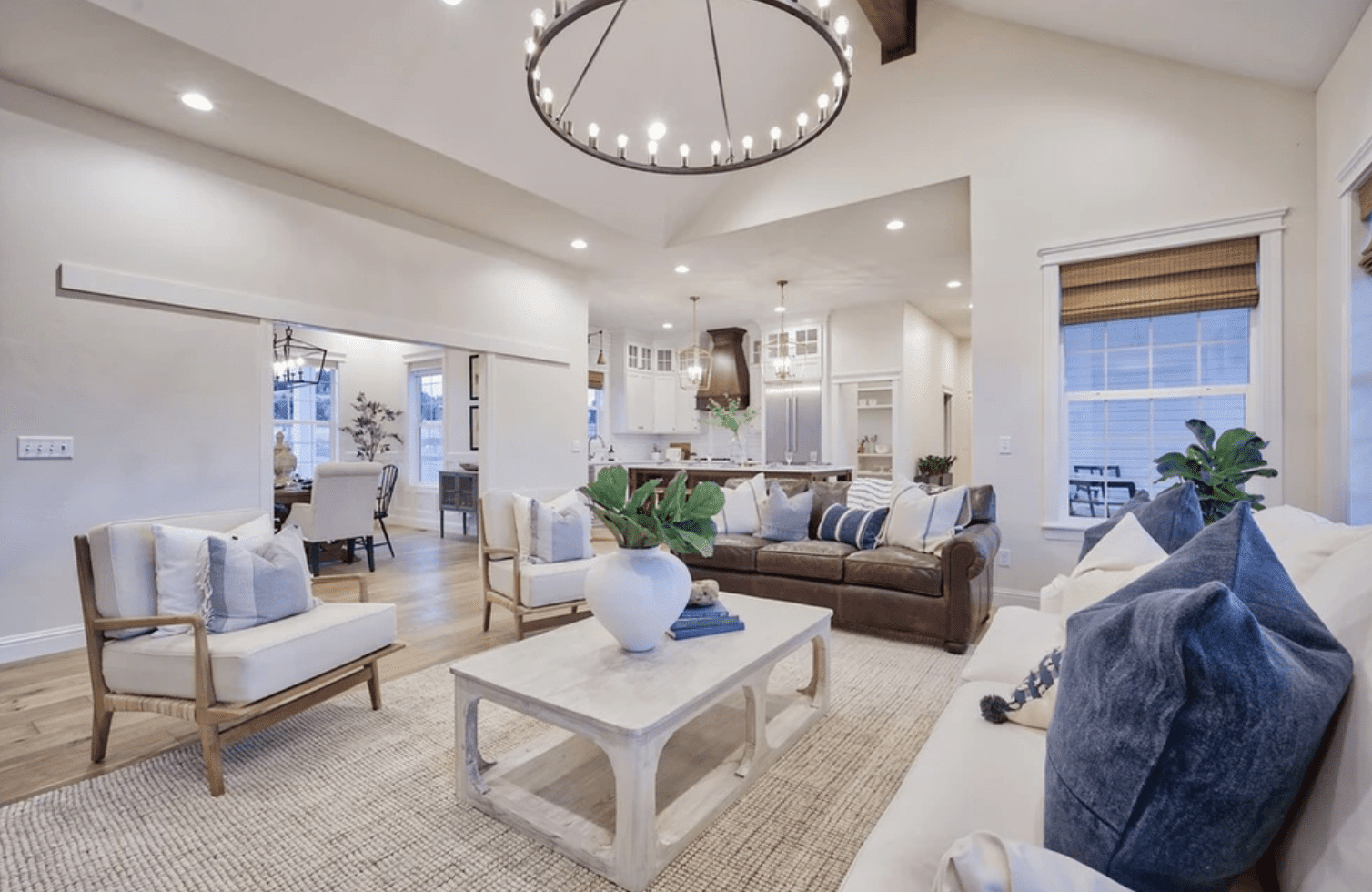
Recessed lighting is the home-design equivalent of good background music: when it is done well, everyone notices how great the room feels, but nobody points at the ceiling and says, “Wow, those cans are really carrying this conversation.” That is exactly why living room recessed lighting is so popular. It can make a room feel bigger, cleaner, and more polished without shouting for attention. But here is the catch: recessed lights are only subtle when they are placed well. Put them in the wrong spots, and your cozy living room starts looking like an interrogation room for decorative pillows.
If you are wondering where to place recessed lighting in a living room, the answer is not “everywhere.” Good placement depends on ceiling height, room size, furniture layout, focal points, window locations, and how you actually use the room. A TV room needs a different lighting plan than a formal sitting room. A space for reading, lounging, and the occasional dramatic blanket burrito also needs more thought than a random row of downlights marching across the ceiling.
In this guide, we will break down exactly how to plan a recessed lighting layout for a living room, how far lights should be from walls, how far apart they should be, where to avoid placing them, and how to combine them with lamps and accent lighting so the room feels warm instead of washed out.
Start With the Real Job of the Room
Before you mark a single hole in the ceiling, decide what your living room lighting actually needs to do. Recessed lighting can handle general ambient light, but it should not be expected to do every job alone. A good living room usually needs at least three lighting roles:
1. Ambient lighting
This is the overall illumination that lets people move around comfortably, find the coffee table before their shin does, and keep the room usable after sunset. Recessed lights are often used for this layer.
2. Task lighting
This covers activities like reading, puzzles, knitting, laptop work, or pretending to read while actually scrolling on your phone. Floor lamps and table lamps usually do this better than ceiling cans alone.
3. Accent lighting
This is the fun layer. It highlights artwork, fireplaces, shelves, textured walls, plants, or architectural details. Recessed lighting can absolutely help here, especially with adjustable trims or carefully placed perimeter lights.
The biggest mistake homeowners make is using recessed lighting as a giant one-layer blanket. That creates flat, dull light. A better plan is to use recessed lights to support the room, then let lamps, sconces, and natural light add personality.
The Basic Rule for Recessed Light Spacing
A common rule of thumb for recessed lighting placement is to divide the ceiling height by two to estimate the distance between fixtures. So if your ceiling is 8 feet high, start with lights roughly 4 feet apart. If the ceiling is 10 feet high, start around 5 feet apart.
This is not sacred design scripture carved into drywall, but it is a very useful starting point. It helps create even coverage without packing the ceiling so tightly that the room looks like a landing strip. In many living rooms with 8- to 10-foot ceilings, recessed lights often end up around 4 to 6 feet apart for general illumination.
That said, spacing changes depending on the beam spread, brightness, trim type, and whether the lights are meant for ambient lighting or accent lighting. Narrower beams may need tighter placement for consistent coverage, while wider beams can be spaced farther apart. Always treat the half-the-ceiling-height rule as the first draft, not the final verdict.
How Far Recessed Lights Should Be From the Walls
If you remember only one thing from this article, make it this: do not line recessed lights right along the center of the room and call it a day. You need to think about the perimeter.
For general living room lighting, recessed fixtures are often placed about 2 to 3 feet away from the walls. This helps spread light into the room without creating awkward scallops, harsh shadows, or that strange effect where the ceiling looks lower because all the brightness is concentrated in weird places.
However, if you are intentionally trying to highlight artwork, shelves, stone, or a fireplace wall, perimeter placement may move closer, sometimes around 12 to 18 inches from the wall. That closer distance is more common for wall washing or accent lighting, especially when you want the light to rake across a vertical surface instead of dropping straight down like an exhausted spotlight.
So the short version is this:
- For general ambient lighting: start about 2 to 3 feet from the walls.
- For accent lighting or wall washing: start closer, often around 12 to 18 inches from the wall, then adjust based on beam spread and what you want to highlight.
How to Lay Out Recessed Lighting in a Living Room
Once you know your spacing range, build the layout around the room itself instead of the ceiling as an empty rectangle. Furniture and focal points matter more than geometric perfection.
Center the layout on how the room is used
Look at the seating group first. Where is the sofa? Where are the chairs? Is there a fireplace? A TV? A gallery wall? A reading corner? Your recessed lights should support these zones instead of ignoring them.
For example, in a living room with a sofa facing a fireplace, you might place a row of recessed lights along the seating side for ambient light and another closer to the fireplace wall for accent light. If the room also has built-ins, you may shift one or two fixtures so they illuminate shelves rather than shining uselessly into open air like tiny confused moons.
Avoid placing lights directly over where people sit
One of the fastest ways to make a living room feel uncomfortable is to put a recessed light directly above the main sofa or armchair. That overhead beam can create unflattering shadows and visual glare, especially if the person sitting there enjoys having a face.
Instead, place recessed fixtures slightly in front of or around the seating area so the light reaches the space without spotlighting people from straight overhead. For reading chairs, a floor lamp is often a better choice than trying to force a recessed can to do all the work.
Do not create a perfect grid unless the room truly needs one
A strict ceiling grid can work in some rooms, especially large open-concept spaces. But in many living rooms, a perfect grid feels mechanical. A more thoughtful layout follows the architecture and the furnishings. Symmetry is great when the room is symmetrical. If the room is not, forcing symmetry can make the lighting feel awkward.
Sample Recessed Lighting Layouts for Common Living Rooms
Small living room with an 8-foot ceiling
In a compact room, you may only need four recessed lights for ambient lighting, especially if you also use lamps. A simple rectangular layout with fixtures about 4 feet apart and roughly 2 to 3 feet off the walls often works well. Add a floor lamp beside the sofa and a table lamp near a chair, and suddenly the room has layers instead of “bright ceiling, dark people.”
Medium living room with a fireplace
A medium-size room may do well with six recessed lights. You might place four for ambient coverage and two aimed to support the fireplace wall or built-ins. If art hangs above the mantel, adjustable gimbal trims or carefully placed accent cans can help highlight it without creating glare.
Large open-concept living area
In a larger space, resist the urge to flood the ceiling with downlights. Instead, divide the room into zones. Use recessed lighting to define the conversation area, support circulation paths, and emphasize architectural features. Then add pendants, sconces, or lamps where needed. In big rooms, zoning matters more than counting cans like you are solving a suspiciously expensive math problem.
Where Not to Place Recessed Lighting
Sometimes the smartest lighting decision is knowing where not to put a fixture.
Do not place lights too close to the TV
If the living room includes a television, avoid placing recessed lights where they create screen glare or hot spots. Dimmers help, but layout matters more. Keep fixtures away from direct reflection angles and use softer side lighting or lamps during movie time.
Do not ignore ceiling details
Coffered ceilings, beams, plaster medallions, moulding, and tray ceilings change where recessed lighting should go. You may need smaller fixtures, directional trims, or a different type of lighting entirely. Recessed lights should work with the architecture, not punch random holes through its best features like a design villain with a hole saw.
Do not place fixtures without checking joists and obstructions
The ceiling plan always gets a vote. Joists, ductwork, insulation, and shallow framing can limit fixture locations. In some cases, slim canless fixtures or shallow housings are a better fit than traditional cans. Plan the layout early so the lighting and structure can remain on speaking terms.
Choosing the Right Recessed Lights for a Living Room
Size matters
Smaller apertures often look cleaner and more modern in living rooms, especially with lower ceilings. Larger trims can still work, but many homeowners prefer the quieter appearance of smaller LED recessed fixtures. The “best” size depends on ceiling height, room scale, and style.
Warm color temperature feels better in living spaces
For most living rooms, a warm light works best. That usually means a color temperature in the 2700K to 3000K range. It feels comfortable, flattering, and relaxed. Cooler light can work in task-oriented areas, but in a living room it can drift into office-break-room territory faster than you think.
Dimmers are not optional if you want a room with mood
If your recessed lighting is bright enough for cleaning, game night, reading, and hosting, it is almost certainly too bright for relaxing all the time. A dimmer gives you flexibility and keeps the room from feeling harsh at night. This is one of the simplest upgrades with the biggest payoff.
Trim type affects comfort
Baffle trims are popular because they help reduce glare. Reflector trims boost brightness. Adjustable or gimbal trims are useful when you want to highlight art, shelving, or a fireplace. In plain English: choose trims for what you want the light to do, not just what looks fine on the product page at 11:47 p.m.
How Much Light Does a Living Room Need?
A useful benchmark for ambient lighting is around 20 lumens per square foot across the room as a whole. So a 250-square-foot living room may need roughly 5,000 lumens total from all sources combined. The key phrase there is all sources combined. You do not need to cram all that output into recessed cans alone.
That is why layered lighting works so well. Recessed lights can provide a chunk of the ambient lighting, while table lamps, floor lamps, wall lights, and accent lighting fill in the rest. The result is a room that feels intentional and comfortable, not overlit from one direction.
Energy, Safety, and Installation Details That Matter
If your ceiling has an unconditioned space above it, such as an attic, recessed fixtures should be chosen carefully. In many cases, you want fixtures that are IC-rated for insulation contact and airtight. That helps with safety and energy performance, especially when insulation is present above the ceiling.
Also look for quality LED downlights that are dimmable and offer good color quality. Today’s residential recessed fixtures often come with selectable color temperature settings, but unless you have a special reason to go cooler, warm white is usually the living-room winner.
And yes, this is the part where your friendly article gently says: if electrical work, insulation contact, or code issues are involved, bring in a licensed electrician. Drywall is not the place to discover your inner chaos goblin.
The Best Recessed Lighting Strategy for Most Living Rooms
If you want the simplest practical answer to where to place recessed lighting in a living room, here it is:
- Start with the ceiling height and use half that number as a rough spacing guide.
- Place perimeter lights about 2 to 3 feet from walls for general illumination.
- Move lights closer to 12 to 18 inches from walls only when you want to wash a wall or highlight a feature.
- Avoid putting lights directly over the main seating positions.
- Use recessed lights for ambient support, not as the only source of light.
- Add dimmers, warm color temperature, and lamps for a softer, more usable room.
That combination gives you a living room that looks brighter, feels more comfortable, and works for everyday life. Which, honestly, is the whole point. Good lighting should make the room more beautiful and more livable at the same time.
Real-Life Experiences With Recessed Lighting in a Living Room
One of the most common experiences homeowners share after installing recessed lighting is that they thought the project would be mostly about brightness, but it ended up being more about balance. A living room can be technically bright and still feel wrong. That usually happens when the lights are centered too aggressively, the spacing is too tight, or every fixture points straight down without helping the walls, shelves, or conversation area. People often describe the result as “clean but cold,” which is a polite way of saying the room feels like a fancy waiting area where nobody wants to nap.
On the other hand, when recessed lights are placed with intention, the room changes in a way that feels almost sneaky. The ceiling looks taller. Corners stop feeling gloomy. Artwork suddenly has presence. A fireplace wall becomes more dramatic in the evening. And the room starts working for different moments: bright enough for guests, soft enough for movie night, and flexible enough for Sunday afternoons when half the household is reading and the other half is arguing over what counts as “light cleaning.”
Many homeowners also discover that recessed lighting works best when it supports furniture placement rather than fighting it. For example, if the main sofa floats in the middle of the room, lights placed slightly in front of the seating area often feel better than lights centered directly above heads. This keeps faces better lit and reduces the cave-shadow effect that can happen with badly placed overhead fixtures. It is a small adjustment, but it changes how the whole room feels when people are actually using it.
Another common experience involves the television. Plenty of people install recessed lighting, flip everything on, sit down for a movie, and immediately realize the screen now reflects the ceiling like a glossy lake at sunset. That is when dimmers become the heroes of the story. But even before that, smart placement matters. Shifting fixtures away from direct reflection paths makes the room much more enjoyable. People are often surprised that one or two badly placed cans can be more annoying than an entire lamp setup that looked “busier” on paper.
There is also the emotional side of the project. Lighting changes how a living room feels at the end of the day. A warm, dimmable recessed layout paired with table lamps makes the room feel finished and welcoming. A harsh, cool, all-downlight plan can make even beautiful furniture look tired. Homeowners who love the final result usually say the same thing in different words: the room became easier to live in. Not just prettier. Easier. More adaptable. More flattering. More usable in real life.
And then there is the lesson almost everyone learns eventually: more recessed lights do not automatically mean better recessed lighting. In fact, adding too many can flatten the room and make it less interesting. The best experiences usually come from restraint. A few well-placed recessed fixtures, a dimmer, and some layered light sources tend to beat an overlit ceiling every time. In other words, the goal is not to turn your living room into the surface of the sun. It is to make it look and feel like a place where people actually want to spend time.
Conclusion
Knowing where to place recessed lighting in a living room comes down to strategy, not guesswork. Start with the room’s purpose, use ceiling height to estimate spacing, keep general fixtures a sensible distance from the walls, and reserve closer placement for accent lighting. Avoid shining directly over seating, be careful around TVs, and remember that recessed lights work best as part of a layered plan.
When you combine thoughtful placement with warm LEDs, glare-reducing trims, and dimmers, your living room becomes more flexible, more comfortable, and much more attractive. That is the sweet spot: lighting that looks polished, feels natural, and never makes guests squint while complimenting your throw pillows.













