
Research note: This article synthesizes current billionaire counts and wealth trends from Forbes, together with research on self-made and inherited fortunes from UBS.
forbes.com
+2
forbes.com
+2
Its entrepreneurship, capital-gains, wealth-distribution, investing, diversification, and fraud-prevention context draws on the SBA, B
Forbes
+2
Forbes
+2
stor.gov.
SEC
+5
SBA Advocacy
+5
Bureau of Labor Statistics
+5
on well-being, work autonomy, entrepreneurial risk, and philanthropy incorporate research and guidance from Harvard Business School, NBER, the Giving Pledge, and Philanthropy Roundtable.
Philanthropy Roundtable
+3
Harvard Business School
+3
National Bureau of Economic Research
+3
>
Almost everyone has imagined the moment: the banking app loads, the number has too many commas, and suddenly nobody can tell you that guacamole costs extra. Becoming a billionaire sounds like the final level of financial successfreedom, status, influence, and perhaps a yacht large enough to need its own zip code.
Reality is less cinematic. A billion-dollar fortune is usually not a billion dollars sitting in cash. It is an estimated net worth based on ownership of companies, stock, real estate, intellectual property, and other assets, minus debts. The number can rise or fall dramatically without the owner buying a single sandwich.
So, who wants to be a billionaire? Plenty of people. The better question is whyand whether the sacrifices required would improve the life the money was supposed to fix.
What People Really Want From a Billion Dollars
Freedom From Financial Anxiety
Money removes many ordinary pressures. Housing becomes a choice rather than a monthly cliffhanger. A medical bill is manageable. Bad jobs become easier to leave. Yet most of this freedom arrives long before billionaire status. An emergency fund, low debt, reliable income, insurance, and consistent investing can transform daily life without requiring a private island.
Control Over Time
Wealth can buy help, privacy, convenience, and the ability to decline obligations. Research involving wealthy individuals suggests that autonomyespecially control over work and leisurecan matter more to well-being than endlessly acquiring possessions.
Status and Proof
For some founders and investors, money becomes a scoreboard. Revenue, valuation, and net worth provide visible proof that an idea worked. The danger is that the scoreboard never turns off. A person who feels poor beside someone richer can remain emotionally broke in a penthouse.
Power to Build and Influence
Extreme wealth can fund factories, laboratories, scholarships, hospitals, media companies, political campaigns, or space projects. That power can produce innovation and public benefit, but it also raises questions about accountability. Moving faster than government does not automatically grant the right to choose society’s priorities.
How Billion-Dollar Fortunes Are Actually Built
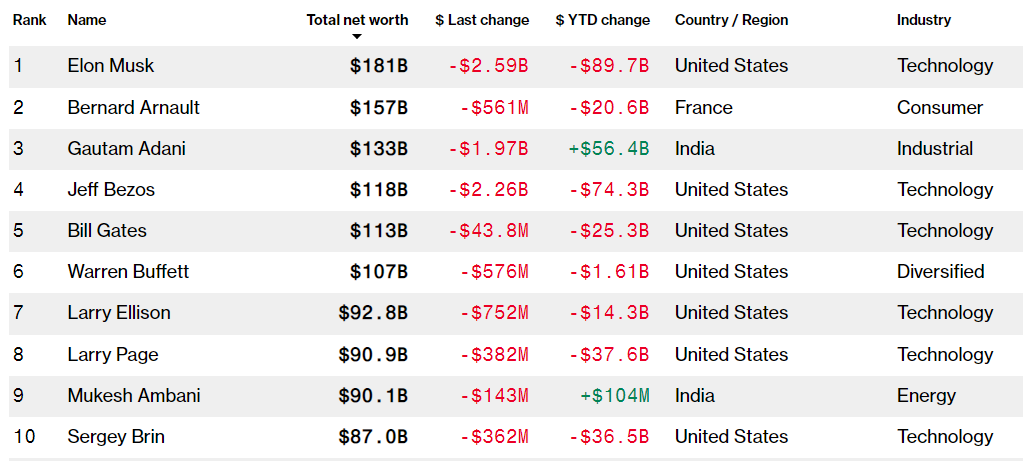
Forbes reported a record 3,428 billionaires with a combined $20.1 trillion on its 2026 list. UBS research has also documented two powerful routes into extreme wealth: creating valuable businesses and inheriting fortunes accumulated by earlier generations. The billionaire club has more than one entrance, although none has a convenient parking lot.
Ownership Beats Salary
A salary can make someone comfortable or affluent. Ownership creates most enormous fortunes. Founders become billionaires when their equity in a company is valued highly enough. Investors own appreciating assets. Heirs receive established stakes. The common denominator is a claim on future profits and growth, not merely a giant paycheck.
If a founder owns 20 percent of a company valued at $5 billion, that stake is worth $1 billion on paper. It may be illiquid, taxable when sold, and tied to control of the business. Billionaire status can therefore be spectacular while remaining surprisingly different from cash in a checking account.
Scale Changes the Mathematics
A neighborhood bakery can be excellent, but its output is limited by ovens, staff, location, and the local appetite for cinnamon rolls. A software platform, global brand, marketplace, patent, or financial network can reach millions of customers. The largest fortunes tend to emerge where revenue can grow much faster than the founder’s personal labor.
Small businesses still matter enormously. The U.S. Small Business Administration reports that they represent nearly all American businesses and employ tens of millions of people. They also teach the essentials that glossy founder stories skip: cash flow, hiring, customer retention, taxes, and why the printer has chosen violence.
Concentration Creates Wealth; Diversification Protects It
Many founders became rich because most of their wealth remained concentrated in one company. That concentration creates tremendous upside and tremendous vulnerability. After wealth is created, diversification can reduce the chance that one competitor, lawsuit, market crash, technology shift, or regulatory change destroys everything.
The paradox is simple: building exceptional wealth may require focused ownership, while preserving personal security usually requires spreading risk. The right balance depends on obligations, liquidity, time horizon, and whether losing the main asset would hurt or completely wreck the household.
Timing and Luck Matter
Skill, persistence, and judgment matter. So do market cycles, geography, health, family resources, regulation, access to capital, and entering the right industry before demand explodes. Luck does not erase achievement, but it should erase arrogance.
Four Billionaire Myths That Can Make You Poorer
Myth 1: A Secret Investment Will Do It
Promises of extraordinary returns with little risk are classic fraud warnings. Serious wealth building is usually slower and more boring than a viral video suggests. Compounding requires capital, time, consistency, and uncertain returns. Anyone selling a guaranteed shortcut probably has a better plan for your money than for your future.
Myth 2: More Risk Always Means More Reward
Calculated risk has a thesis, measurable assumptions, a downside limit, and a survival plan. Gambling essential savings on an asset discovered twelve minutes ago is not entrepreneurship. It is panic wearing a motivational quote.
Myth 3: Billionaires Simply Work Harder
Many wealthy founders work intensely, but effort alone cannot explain ten-digit outcomes. Millions of nurses, teachers, farmers, caregivers, and tradespeople work hard. The financial difference is leverage: ownership, technology, employees, capital, networks, and systems that multiply one person’s decisions.
Myth 4: Wealth Ends Human Problems
A fortune introduces privacy concerns, security costs, taxes, succession disputes, reputation risks, and uncertainty about relationships. Money solves many problems. It does not issue a lifetime exemption from being human.
A Practical Wealth-Building Framework
Define What “Rich” Must Accomplish
Choose concrete outcomes: six months of expenses in cash, freedom from high-interest debt, a paid-off home, college funding, retirement at 55, or business income that gives you control of your schedule. Specific targets create decisions. “Become extremely rich” mostly creates podcast subscriptions.
Build a Rare Skill Stack
Combine abilities that reinforce one another: engineering and sales, medicine and management, design and coding, finance and communication, or operations and industry knowledge. You need not be the world’s best at one skill if you become unusually effective at a valuable combination.
Solve a Costly Problem for a Large Market
Strong businesses save customers meaningful time, money, risk, or frustration. A scalable opportunity needs a genuine problem, buyers willing to pay, a repeatable solution, and a sufficiently large market. “Everyone will love it” is not research; it is what founders say before their relatives quietly change the subject.
Protect Cash Flow
Revenue is applause; cash flow pays payroll. Track margins, customer acquisition costs, retention, operating expenses, debt, and the time needed to recover each investment. Growth that loses money on every sale may be less of a strategy and more of a highly energetic leak.
Use Ownership Intelligently
Outside capital can accelerate growth but dilute the founder’s stake. Refusing capital can preserve ownership while starving the company. The useful question is whether a smaller percentage of a much stronger business will create greater value while preserving acceptable control and upside.
Invest for Resilience
For personal finances, favor diversified holdings, reasonable fees, appropriate asset allocation, and a long horizon. Keep emergency money separate from speculative capital. Pay attention to taxes, but remember that a bad investment with a clever deduction is still a bad investment wearing a tiny accountant’s hat.
Let Reputation Compound
Trust attracts talent, information, capital, and opportunities. Reputation takes years to build and one screenshot to demolish. Ethical behavior is not only morally important; it is a durable business advantage.
The Hidden Cost of Chasing a Billion
Ambition is useful until it consumes everything that makes success worthwhile. Founders may sacrifice sleep, health, friendships, family time, and honesty while insisting the pressure is temporary. Sometimes temporary lasts twenty years.
The pursuit can also distort ethics. When valuation becomes identity, employees turn into line items and rules begin to look like obstacles designed for less important people. The worst business failure is not always bankruptcy. It may be building a successful organization that requires you to become someone you dislike.
A healthier approach uses several scoreboards: financial progress, health, relationships, useful work, learning, generosity, and control over time. Money belongs on the dashboard. It should not become the entire windshield.
Billionaires and Social Responsibility
Billionaires can represent entrepreneurial achievement, but they also reveal how strongly ownership and investment gains concentrate. Federal Reserve data show that the wealthiest U.S. groups hold a large share of business equity and financial assets. Wealth therefore creates not only purchasing power but resilience, influence, and access to future opportunity.
The debate requires nuance. Not every fortune is stolen, and not every fortune is socially beneficial. Founders can create useful products, jobs, and investor returns while also benefiting from public infrastructure, educated workers, legal protections, and stable institutions. Wealth creation is usually both individual and collective.
Philanthropy is one response. The Giving Pledge asks extremely wealthy people to commit most of their fortunes to charitable causes during life or through their estates. Foundations, donor-advised funds, and direct gifts can support research, education, disaster relief, and local services. Still, generosity does not replace fair competition, responsible taxation, employee treatment, or democratic oversight. Charity is admirable; it is not a coupon for unlimited power.
Conclusion: Aim for Value Before Valuation
Wanting to create a billion-dollar company can be meaningful when the goal is to solve a major problem at scale. Wanting a billion dollars merely because someone else has it is an exhausting way to rent self-worth from a leaderboard.
The billionaire path is a rare result of ownership, scale, capital, persistence, timing, networks, and lucksometimes combined with inheritance. Its useful lessons are straightforward: build valuable skills, solve real problems, own part of what you create, protect cash flow, invest patiently, diversify against ruin, and decide what “enough” means before success moves the finish line.
Who wants to be a billionaire? Many people. Who wants the uncertainty, scrutiny, responsibility, and sacrifice that may accompany the number? That line is considerably shorter.
Experience Notes: Five Real-World Lessons Behind the Dream
1. The first milestone can matter more than the fantasy. Picture a freelancer who begins with the goal of becoming “seriously rich.” The phrase sounds exciting but gives no direction. After reviewing expenses, the freelancer sets a practical target: eliminate credit-card debt and build a $15,000 emergency fund. Reaching it improves sleep, confidence, and negotiating power. The experience shows that financial freedom arrives in stages, and the first stages often improve life more than a distant ten-digit dream.
2. Customers do not pay for ambition. A software founder spends months polishing features and preparing slides filled with phrases such as “global ecosystem.” Sales remain weak. Customer interviews reveal that buyers mainly want one plain feature that saves two hours of paperwork each week. The founder simplifies the product, prices the time savings, and improves retention. The lesson is blunt: markets rarely reward how emotionally attached a creator is to an idea. They reward usefulness.
3. Revenue can hide fragility. An online retailer doubles sales during the holidays, hires quickly, orders more inventory, and signs a larger warehouse lease. Then advertising costs rise, returns increase, and suppliers demand payment before customer cash settles. The company looks successful online while struggling privately. A weekly cash-flow forecast, better payment terms, and removal of low-margin products stabilize the business. Revenue may flatter, but cash flow tells the truth.
4. Concentration feels brilliant until it does not. An early employee receives company stock that grows into most of the household’s net worth. Selling feels disloyal because the stock has always recovered. Then a competitor launches a stronger product and the share price drops sharply. A gradual diversification plan would have reduced the damage without requiring an all-or-nothing sale. Concentrated ownership can create wealth, but personal security should not depend on one corporate plot twist.
5. “Enough” must be defined before success. A business owner reaches the income once described as the finish line. Within months, the target moves. A more expensive peer group makes the old goal feel ordinary. The owner finally writes personal rules: family dinners stay protected, health is scheduled like a client meeting, and growth must improve either impact or long-term freedom. Profit continues, but the company no longer receives automatic permission to consume every available hour.
These are not glamorous billionaire origin stories, which is why they are useful. They reveal the decisions that come before any giant valuation: define the goal, understand the customer, manage cash, protect against ruin, and preserve a life outside the balance sheet. Someone who follows those lessons may never become a billionaire. That person may still become financially independent, professionally useful, trusted, generous, and freean excellent result even without three commas.
“`














