
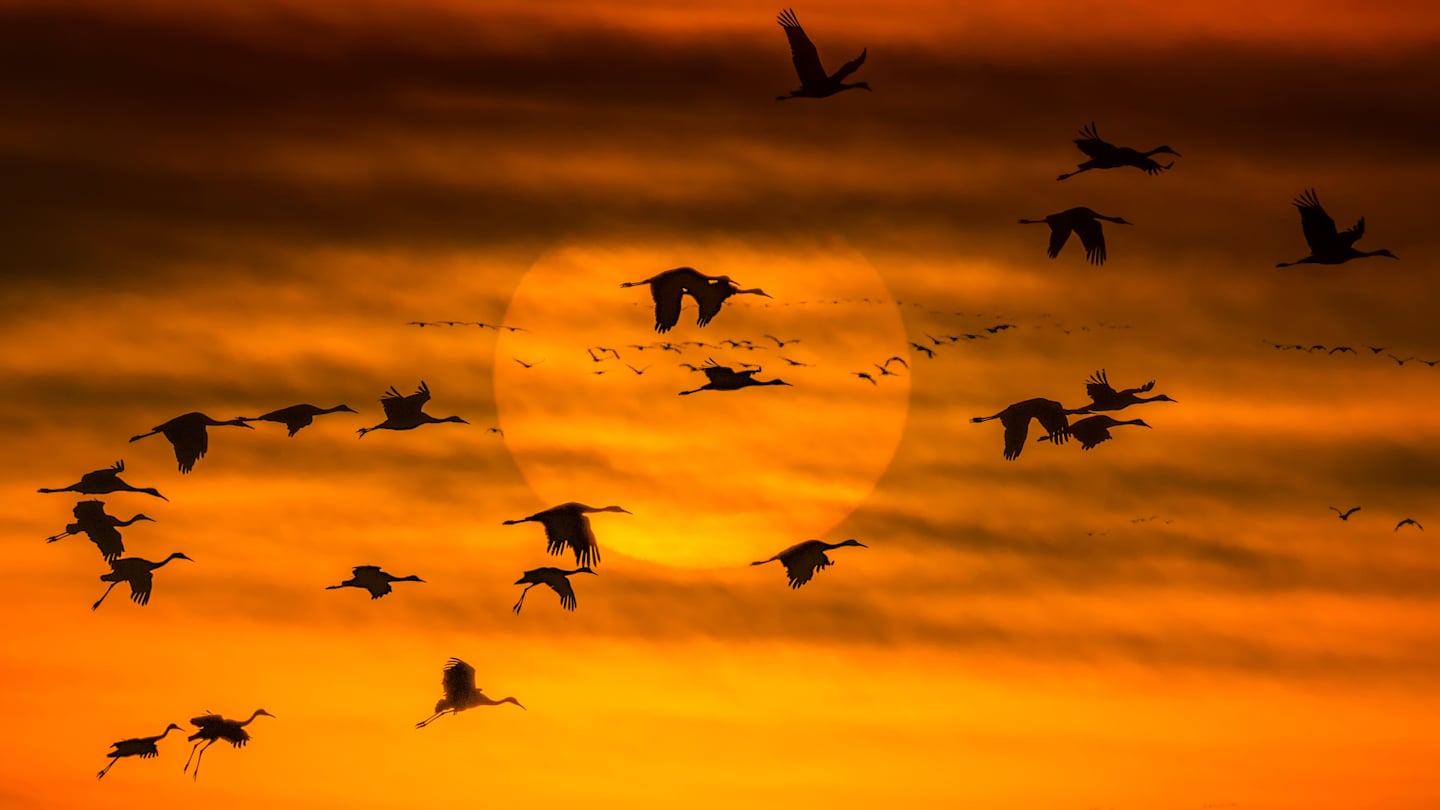
Every fall, the sky turns into a moving highway. Geese honk overhead like they are late for a very important meeting, warblers quietly slip through the night, and hawks ride invisible air currents with the confidence of pilots who never read the manual because they wrote it. This seasonal movement raises one of the most classic nature questions of all time: Why do birds fly south for the winter?
The simple answer is: birds fly south to survive. But the real answer is more interesting. Birds migrate because winter changes the rules. Food becomes scarce, insects disappear, water freezes, daylight shrinks, and safe nesting or feeding areas may no longer support them. Flying south is not a vacation. Birds are not packing tiny sunglasses and ordering coconut drinks. Migration is a demanding survival strategy shaped by food, weather, instinct, daylight, geography, and reproduction.
Not all birds migrate, and not every migrating bird goes directly south. Some travel east or west, some move downhill from mountains, some only shift a few hundred miles, and some cross continents. But for many birds in North America, heading south during winter means reaching places where food is easier to find and the climate is more forgiving. In other words, they follow the resources.
The Main Reason Birds Fly South: Food
Cold weather gets most of the blame, but food is usually the bigger reason birds migrate. Many birds can survive freezing temperatures if they have enough calories. The problem is that winter often removes their buffet.
Insects die, hide, or become dormant. Nectar-producing flowers stop blooming in many regions. Seeds may be buried under snow. Lakes and ponds can freeze, limiting access to fish, aquatic plants, and small invertebrates. For birds that depend on a steady supply of insects, fruit, nectar, or open water, staying put can become a risky gamble.
Take warblers, for example. These small songbirds spend much of the warmer season eating insects. When autumn arrives and insect activity drops, many warblers head toward Central America, South America, the Caribbean, or the southern United States. Their migration is not random; it is a carefully timed response to seasonal food availability.
Hummingbirds provide another helpful example. A tiny bird may look fragile, but many hummingbirds can tolerate cool temperatures for short periods. What they cannot tolerate is a landscape with too few nectar sources and insects. So, when flowers fade and temperatures shift, many hummingbirds move south to places where they can refuel.
Birds Are Not Just Escaping Cold Weather
It is tempting to imagine birds flying south simply because they dislike the cold. Honestly, who could blame them? But many birds are surprisingly well-equipped for winter. Chickadees, cardinals, blue jays, nuthatches, woodpeckers, and many sparrows can remain in cold northern regions all year. They fluff their feathers for insulation, seek shelter, store food, change diets, and burn calories efficiently to stay warm.
This is why some birds stay while others leave. A cardinal can survive winter by eating seeds, berries, and food from feeders. A swallow that relies heavily on flying insects has fewer options once freezing weather arrives. The question is not only “Can this bird handle cold?” but also “Can this bird find enough food every day to fuel its body?”
For birds, food is heat. Calories keep their tiny internal engines running. Without enough food, even the best feather coat in the bird world will not help for long. Migration solves that problem by moving birds to places where resources are available during the coldest months.
Why Birds Fly North Again in Spring
If the south is so comfortable, why do birds fly back north in spring? Because the north becomes a seasonal jackpot.
During spring and summer, northern regions explode with resources. Insects hatch in huge numbers, plants grow rapidly, wetlands open up, and longer daylight hours give birds more time to feed. These conditions are ideal for raising chicks, which are basically tiny feathered eating machines with open mouths and zero grocery budget.
Many birds migrate north to breed because the longer days and abundant food make it easier to raise young successfully. A pair of songbirds feeding nestlings may need to deliver hundreds of insects per day. Northern spring and summer habitats can provide that kind of abundance.
So, migration is a yearly trade-off. Birds move north for breeding opportunities and south for winter survival. They are not running away from winter as much as they are tracking the best seasonal conditions across the map.
Daylight Helps Tell Birds When to Migrate
Birds do not wait for a calendar alert that says, “Time to fly south.” Instead, they respond to natural cues. One of the most important cues is photoperiod, or day length.
As autumn approaches, days get shorter. This change in daylight can trigger hormonal and behavioral shifts in migratory birds. They may begin eating more to build fat reserves, become restless, and prepare their bodies for long-distance travel. Scientists even have a word for migratory restlessness: Zugunruhe. It sounds like a spell from a wizard movie, but it describes a real behavior seen in birds preparing to migrate.
Weather also matters. Cool fronts, favorable winds, storms, and regional food conditions can influence exactly when birds leave. But daylight is one of the most reliable signals because it changes predictably every year. A bird may not understand September, but its body understands shorter days.
How Birds Know Where to Go
Bird migration can seem almost impossible. A bird weighing less than an ounce may travel thousands of miles, often at night, sometimes over water, forests, cities, deserts, or mountains. Yet many return to the same general breeding and wintering areas year after year.
Birds use several navigation tools. Some use the sun as a compass during the day. Many nighttime migrants use stars. Birds can also sense Earth’s magnetic field, recognize landmarks such as coastlines and rivers, and possibly use smells or polarized light to stay oriented. Experienced birds may remember routes, while young birds often rely heavily on inherited instincts.
That does not mean migration is easy. Fog, storms, artificial lights, glass buildings, habitat loss, predators, and exhaustion can make the journey dangerous. Migration is one of nature’s greatest achievements, but it is also one of its biggest risks.
Major Migration Routes in North America
Birds do not all take the same path south. In North America, many migratory birds follow broad routes known as flyways. These routes connect breeding grounds, stopover habitats, and wintering areas.
The Atlantic Flyway
The Atlantic Flyway follows the eastern part of North America, including coastal areas, wetlands, forests, and barrier islands. Many shorebirds, ducks, raptors, and songbirds use this route as they move between Canada, the eastern United States, the Caribbean, and Latin America.
The Mississippi Flyway
The Mississippi Flyway is one of the most famous bird migration corridors. It follows the Mississippi River system, a natural guide rich in wetlands and feeding areas. Ducks, geese, cranes, warblers, and many other birds use this route. For birds, the river system is like an all-you-can-eat travel plaza, minus the terrible coffee.
The Central Flyway
The Central Flyway runs through the Great Plains and central parts of North America. It is especially important for waterfowl, cranes, shorebirds, and grassland birds. Wetlands, prairie potholes, rivers, and agricultural fields provide crucial resting and feeding spots.
The Pacific Flyway
The Pacific Flyway follows the western edge of the continent, from Alaska and western Canada through the western United States and into Mexico and beyond. Coastal wetlands, inland valleys, mountains, and desert oases all play important roles for birds moving through this route.
Do All Birds Fly South for the Winter?
No. Bird migration is wonderfully complicated. Some birds are year-round residents. Some are short-distance migrants. Some are long-distance migrants. Some species include both migratory and nonmigratory populations, depending on where they live.
For example, many American robins migrate, but not all disappear from northern areas in winter. Some remain where fruit is available. Canada geese may migrate long distances, but some urban and suburban populations stay year-round if open water and food are available. Dark-eyed juncos may move south from Canada into the United States, which means that for some people, winter is when these birds arrive rather than leave.
This is an important point: “south” is relative. For an Arctic-breeding bird, the northern United States may be south. For a bird breeding in Canada, the Gulf Coast may be south. For another species, Central America or South America may be the winter destination. Migration is not about a compass direction alone; it is about reaching the right habitat at the right time.
Examples of Birds That Fly South for Winter
Barn Swallows
Barn swallows are skilled aerial insect hunters. Since flying insects become scarce in cold northern winters, many barn swallows migrate long distances to warmer regions where insects remain available.
Ruby-Throated Hummingbirds
Ruby-throated hummingbirds often migrate from eastern North America toward Mexico and Central America. Some cross the Gulf of Mexico, an astonishing trip for such a tiny bird. Before migration, they build fat reserves that help fuel the journey.
Sandhill Cranes
Sandhill cranes are large, elegant birds known for their loud calls and impressive migration gatherings. Many move from northern breeding areas to wintering grounds in the southern United States and Mexico, stopping at wetlands and fields along the way.
Warblers
Many warbler species breed in North American forests and migrate south in fall. These small birds may travel at night and rely on stopover habitats where they can rest and feed before continuing.
Snow Geese
Snow geese breed in Arctic regions and move south for winter. Their huge flocks can fill the sky, turning migration into a noisy, beautiful spectacle.
Why Birds Migrate at Night
Many songbirds migrate at night. This may sound surprising because we usually notice birds during the day, but nighttime travel offers several advantages.
Night air is often cooler and calmer, which can make flying more efficient. There may be fewer predators active in the sky. Stars can help with navigation. Traveling at night also allows birds to spend daylight hours feeding and resting. For small birds that need to refuel often, this schedule makes sense: fly by night, eat by day, repeat until destination achieved.
However, night migration comes with modern dangers. Artificial lights can confuse birds, especially in cities. Bright buildings may attract or disorient migrants, increasing the risk of collisions with glass. This is why “Lights Out” efforts encourage people and businesses to reduce unnecessary nighttime lighting during peak migration seasons.
How Birds Prepare for Migration
Migration requires serious preparation. Birds may enter a phase called hyperphagia, which means they eat more than usual. This is not casual snacking. It is survival fueling. Birds store energy as fat because fat provides a lightweight, efficient fuel for long flights.
Some birds nearly double their body weight before major migration flights. Imagine eating enough pasta to walk across a continent, except the pasta is insects, berries, nectar, or seeds, and the walking is flying through storms at night. Nature does not mess around.
Birds also molt feathers, adjust muscles, and change internal physiology. Their bodies prepare for endurance. Even small birds can perform astonishing flights when conditions are right.
The Role of Stopover Habitats
Migration is not always one nonstop flight. Many birds depend on stopover habitats, places where they can rest, feed, and recover. Wetlands, forests, grasslands, coastlines, parks, backyards, and even small patches of native plants can make a difference.
A stopover site is like a roadside diner, hotel, and repair shop all in one. If birds cannot find safe places to refuel, the entire journey becomes more dangerous. Habitat loss along migration routes is one reason many bird populations are declining.
This is why conservationists focus not only on breeding grounds and wintering grounds but also on the places in between. Protecting migration means protecting the full annual cycle of a bird’s life.
How Climate Change Affects Bird Migration
Climate change is altering the timing and conditions of migration. Warmer springs can cause plants to bloom earlier and insects to emerge sooner. Some birds may adjust their migration timing, while others may arrive too late for peak food availability. This mismatch can affect breeding success.
Climate change can also influence wintering habitats, storm patterns, drought, sea-level rise, and the availability of food along migration routes. For birds that depend on precise timing, even small shifts can matter.
Migration is flexible in some species, but not endlessly flexible. Birds evolved with seasonal patterns. When those patterns change quickly, migration becomes more complicated.
How You Can Help Migrating Birds
You do not need to own a wildlife refuge to help birds, although if you do, congratulations on having the ultimate backyard. Most people can support migration in simple ways.
Turn Off Unnecessary Lights at Night
During spring and fall migration, reduce outdoor lighting when possible, especially from late evening through early morning. This helps lower the risk of disorientation and collisions.
Make Windows Safer
Birds may see reflections of trees or sky in glass and fly toward them. Window decals, screens, external patterns, and other bird-safe treatments can reduce collisions.
Plant Native Plants
Native trees, shrubs, grasses, and flowers support insects, berries, seeds, and shelter. A yard with native plants can become a valuable mini stopover habitat.
Keep Cats Indoors
Outdoor cats are a serious threat to birds. Keeping cats indoors, in enclosed patios, or supervised outdoor spaces protects birds and is safer for cats, too.
Avoid Pesticide Overuse
Many migratory birds rely on insects. Reducing pesticide use helps preserve the food web that birds need, especially during breeding and migration.
Personal Experiences and Observations: Watching Birds Fly South for the Winter
One of the best ways to understand why birds fly south for the winter is to simply watch the world around you in autumn. You do not need expensive equipment or a degree in ornithology. A quiet morning, a park bench, and a little patience can reveal a surprising amount.
In early fall, the first clues are often subtle. The backyard may still look green, but the bird community begins to change. Summer residents become quieter. Flocks start forming. Robins gather in fruiting trees. Blackbirds move in noisy groups, swirling from one field to another like living smoke. Overhead, geese call in formation, and even people who rarely notice birds look up for a moment.
There is something emotional about hearing geese in autumn. Their calls feel ancient, as if the sky is reminding everyone that the season has turned. They are not flying south because someone handed them a brochure for Florida. They are responding to a deep biological rhythm, one that connects weather, food, daylight, and survival.
At local ponds and wetlands, migration can be even more obvious. Ducks that were absent in summer may suddenly appear. Shorebirds may stop briefly along muddy edges, feeding quickly before continuing. Hawks may pass overhead on clear days, using rising warm air to conserve energy. If you watch long enough, you begin to see that migration is not one dramatic event but a rolling wave. Different birds move at different times, each following its own schedule.
One memorable experience many birdwatchers describe is noticing how active birds become before a weather change. Before a cold front, feeders may seem busier. Birds may feed intensely, as if they know the atmosphere is about to shift. After the front passes, the sky may feel empty for a day, then suddenly full of new arrivals. Migration makes the familiar feel fresh. The same yard can have a different cast of characters every week.
Night migration adds another layer of wonder. Many people sleep through it, but on peak migration nights, thousands or even millions of birds may pass overhead. Sometimes, if you stand outside after dark and listen carefully, you can hear faint flight calls in the sky. They are short, thin notes, easy to miss, but once you hear them, the night feels alive. It is humbling to realize that while porch lights glow and neighborhoods go quiet, tiny birds are navigating by stars, wind, instinct, and magnetic cues above the rooftops.
These experiences also make migration feel more fragile. A bright glass building, a missing wetland, a yard without insects, or a coastline changed by development can affect birds that are already spending enormous energy just to survive. Watching migration teaches respect. It shows that birds are tough, but not invincible.
For families, migration can become a seasonal tradition. Children can keep a simple bird journal, noting the first geese of fall, the last hummingbird at the feeder, or the arrival of winter sparrows. Adults can use birding apps, local nature centers, or migration forecast tools to learn when birds are moving through the area. Even a small balcony with native flowers or a clean water source can create a connection to the larger journey.
Perhaps the most rewarding part is realizing that migration turns ordinary places into part of a continental story. A tree outside your window might be a breakfast stop for a warbler heading to Central America. A neighborhood pond might host ducks from Canada. A dark backyard might sit below a major nighttime migration route. Birds flying south for the winter remind us that nature is not somewhere far away. Sometimes, it is passing directly over our heads.
Conclusion
Birds fly south for the winter mainly because winter changes the availability of food and suitable habitat. Cold matters, but food matters more. Many migratory birds leave northern breeding areas when insects, nectar, fruit, open water, or other resources become scarce. They travel to wintering grounds where survival is more likely, then return north in spring to take advantage of abundant food and long daylight for raising young.
Migration is guided by daylight, weather, instinct, geography, memory, stars, the sun, Earth’s magnetic field, and a remarkable set of adaptations that scientists are still studying. It is beautiful, risky, and essential to the lives of billions of birds.
The next time you see a flock moving across the autumn sky, remember: those birds are not just escaping winter. They are following food, timing, and ancient routes written into their bodies. They are making one of the greatest journeys on Earth, powered by feathers, fat, and determination. Not bad for creatures that still occasionally argue with their reflection in a window.














