
Note: This article is written for web publishing in standard American English and focuses on real, research-based information about xolography and volumetric 3D printing.
For decades, 3D printing has behaved a lot like a very patient bricklayer: build one layer, move up, build another layer, repeat until everyone in the room has finished their coffee. That approach works beautifully for many products, but it also creates familiar problems: visible layer lines, support structures, anisotropic strength, slow print times, and a very specific kind of frustration known as “why did this tiny overhang ruin my afternoon?”
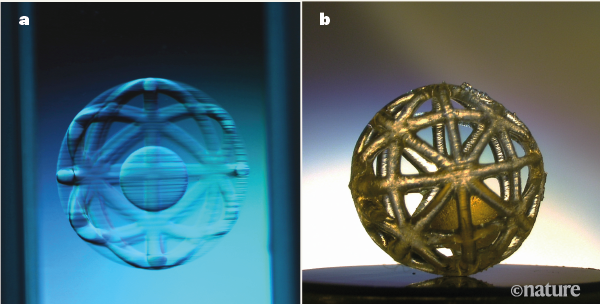
Xolography changes the conversation. Instead of stacking slices, it creates objects inside a volume of resin by carefully controlling where two different colors of light intersect. That intersection becomes the “yes, cure here” zone. Everywhere else stays liquid. The result is a form of volumetric 3D printing that can produce smooth, complex, high-resolution parts without the traditional step-by-step layering process.
In plain English, xolography is like sculpting with light inside a transparent block of liquid. In less plain English, it uses dual-color photopolymerization and photoswitchable photoinitiators to trigger local polymerization only where specific optical conditions are met. Somewhere between those two explanations sits the real magic: better spatial control, faster fabrication, and a promising route to improve the accuracy of volumetric additive manufacturing.
What Is Xolography?
Xolography is a light-based volumetric 3D printing technique designed to fabricate entire 3D objects in a resin volume rather than building them layer by layer. The name may sound like a futuristic breakfast cereal, but the concept is serious science. It was introduced as a dual-color method for inducing polymerization inside a confined monomer volume using intersecting beams of different wavelengths.
Traditional stereolithography and digital light processing cure resin at or near a surface, one layer at a time. Xolography works differently. It sends a thin light sheet through the resin while projected image patterns intersect that sheet. The resin contains special molecules called photoswitchable photoinitiators. These molecules do not simply cure everywhere a single beam passes. They require a specific sequence or combination of light exposure before they become active enough to start polymerization.
That selective response is the key. It helps xolography avoid one of the biggest problems in volumetric 3D printing: unwanted curing along the entire light path. Without control, light does not politely stop where designers want it to. It travels, scatters, refracts, and generally behaves like it owns the place. Xolography reins it in by making the chemistry respond only at the intended intersection zone.
How Volumetric 3D Printing Differs From Layer-Based Printing
To appreciate xolography, it helps to understand volumetric additive manufacturing. In conventional 3D printing, the machine usually creates an object as a sequence of 2D layers. Even fast resin printers still rely on a vertical build process. Each layer must be exposed, separated, repositioned, and repeated. This method is reliable, but it can limit speed and geometry.
Volumetric 3D printing aims to produce a 3D object more directly. Instead of asking, “What does the next layer look like?” it asks, “How do we deliver the right light dose throughout the whole volume?” Some volumetric approaches, such as computed axial lithography, use projected images from multiple angles, inspired by the mathematics of CT scans. Xolography takes a different route by combining a moving light sheet with projected patterns and specialized chemistry.
The goal is not merely speed, although speed is a big part of the appeal. The deeper goal is geometric freedom. When a part is printed inside a volume, overhangs, bridges, internal channels, delicate lattices, and soft structures become easier to fabricate because the process is not constantly fighting gravity one layer at a time.
Why Accuracy Is So Hard in Volumetric 3D Printing
Volumetric printing sounds simple until the photons enter the chat. Accuracy depends on many factors: optical alignment, resin transparency, absorption, scattering, photoinitiator behavior, exposure timing, heat, shrinkage, and post-curing. If the intended dose pattern becomes blurred or distorted, the printed object may come out swollen, undersized, softened at the edges, or missing fine details.
This challenge is especially important when printing microfluidic devices, optical elements, biomedical scaffolds, dental components, or tiny mechanical features. A decorative figurine can survive a little fuzziness. A microchannel designed to guide fluid through a biomedical device cannot simply say, “close enough.”
Layer-based printers handle accuracy by controlling layer height, pixel size, resin exposure, and mechanical movement. Volumetric systems must control a full 3D field of light and chemistry. The printing zone is not just a surface; it is a three-dimensional battlefield where optics and polymerization kinetics meet for coffee and occasionally disagree.
How Xolography Improves Accuracy
1. It Localizes Polymerization More Precisely
The most important advantage of xolography is its ability to localize curing at the intersection of two optical inputs. One wavelength prepares or switches the photoinitiator, while another triggers polymerization in the selected region. Because curing depends on the interaction of both light fields, the system can define features with sharper spatial control than a single-beam process would allow.
This dual-color mechanism reduces accidental curing outside the target area. In volumetric printing, that is a big deal. Unwanted curing is the difference between a clean internal channel and a sad resin blob wearing a lab coat.
2. It Reduces Layer Lines
Because xolography is not a conventional layer-by-layer process, it can create smoother surfaces. Layer lines are not merely cosmetic. They can affect optical clarity, friction, fatigue behavior, and fluid flow. For optical components and microfluidic parts, smoother surfaces are not a luxury; they are part of the performance specification.
Layer-free fabrication can also improve perceived resolution. Even if two printers claim similar pixel-level numbers, the one that avoids stair-stepping may produce a part that looks and functions more accurately.
3. It Supports Complex Internal Geometry
Xolography can fabricate structures that would be awkward or impossible with conventional resin printing. Internal channels, hollow lattices, soft hydrogel forms, and delicate overhangs can be printed without the same dependence on supports. This improves accuracy because removing supports often introduces defects, scarring, deformation, or breakage.
Anyone who has ever snapped a fragile resin feature while removing supports knows the emotional journey: confidence, pressure, tiny cracking sound, silence, denial. Xolography helps avoid that drama by reducing the need for support structures in the first place.
4. It Can Improve Feature Definition
Early xolography demonstrations reported fine feature sizes in the micrometer range, placing the technique in an interesting middle ground. It is much faster than extremely high-resolution point-by-point methods such as two-photon polymerization, while offering finer detail than some earlier volumetric approaches. That balance is why researchers and advanced manufacturers are paying attention.
The accuracy benefit is not only about the smallest possible feature. It is about producing useful features repeatedly across a practical build volume. A printer that can make one beautiful microscopic line under perfect conditions is impressive. A printer that can make a complete functional object with reliable geometry is commercially interesting.
The Role of Photoswitchable Photoinitiators
The chemistry behind xolography deserves a starring role. In standard photopolymer resin, a photoinitiator absorbs light and starts a reaction that turns liquid resin into solid polymer. In xolography, the photoinitiator is designed to respond selectively to two colors of light. That selectivity gives the process its spatial precision.
Think of the photoinitiator as a very picky bouncer at an exclusive polymerization club. One wavelength alone is not enough to get in. The molecule must be activated in a specific way before curing begins. This “two-factor authentication” for resin helps the printer control exactly where the solid object forms.
Recent work on dual-color photoinitiators, including naphthopyran-based systems and other photoswitchable molecules, shows why materials science is just as important as optics. Better molecules can improve sensitivity, reduce unwanted curing, expand material compatibility, and make the process more stable. In advanced 3D printing, the printer is only half the story. The resin is the other half, and sometimes it has the stronger personality.
Xolography Compared With Other Volumetric Methods
Xolography vs. Computed Axial Lithography
Computed axial lithography, or CAL, uses projected light patterns from many angles to create a cumulative 3D dose distribution inside resin. It is a powerful concept inspired by computed tomography. CAL can print complex shapes quickly and without supports, but accuracy depends heavily on projection calculation, optical correction, resin behavior, and exposure control.
Xolography does not rely on the same rotating projection strategy. Instead, it uses a light sheet and dual-color chemistry to restrict curing to a moving plane. This can make polymerization more locally controlled and potentially more predictable for high-resolution features.
Xolography vs. Two-Photon Polymerization
Two-photon polymerization can achieve nanoscale or near-nanoscale precision, which makes it extraordinary for microfabrication. The trade-off is speed and build volume. It usually writes point by point, which is not ideal when the goal is to produce larger objects quickly.
Xolography does not replace two-photon polymerization for the tiniest structures. Instead, it aims for a practical sweet spot: high resolution, high speed, and enough build volume to make functional parts rather than just microscopic trophies.
Xolography vs. Standard SLA and DLP
SLA and DLP remain excellent technologies. They are mature, widely available, and supported by a huge materials ecosystem. Xolography, however, offers a different value proposition: faster layer-free printing, smoother surfaces, fewer supports, and better suitability for certain delicate or complex geometries.
For everyday desktop printing, xolography is not about replacing every resin printer tomorrow morning. For advanced research, bioprinting, optics, and microstructured components, it represents a new tool with very sharp teeth.
Applications Where Accuracy Matters Most
Biomedical Scaffolds and Hydrogels
Volumetric printing is attractive for biomedical scaffolds because it can reduce print time and mechanical stress on soft materials. Hydrogels, for example, can be difficult to print with layer-based methods because they are soft, water-rich, and sometimes cell-friendly in the way a soufflé is oven-friendly: technically possible, but please be gentle.
Xolography may help by forming structures rapidly and without dragging a nozzle through the material. This could support tissue engineering research, cell culture platforms, and custom biomedical models. Accuracy matters here because pore size, channel geometry, and scaffold architecture can influence biological behavior.
Microfluidics
Microfluidic devices rely on small channels, chambers, mixers, and valves. Traditional fabrication can involve cleanrooms, molds, bonding steps, and enough process control to make a spreadsheet sweat. Xolography offers a potential route to directly print complex internal fluid pathways with smooth walls and fewer assembly steps.
For lab-on-a-chip devices, improved accuracy can mean better flow rates, cleaner mixing, more predictable pressure drops, and fewer failed experiments caused by blocked channels.
Optical Components
Optical parts demand smooth surfaces, dimensional fidelity, and material clarity. Layer lines and surface roughness are not welcome guests. Xolography’s layer-free nature makes it promising for lenses, waveguides, transparent structures, and other optical elements where surface quality is directly tied to performance.
Recent work exploring direct 3D printing of optical elements with xolography suggests that the method may become valuable for rapid prototyping and custom optics, especially when conventional machining or molding is too slow or expensive.
High-Viscosity and Advanced Materials
Some advanced resins are difficult to print using conventional methods because they are viscous, filled with particles, or chemically sensitive. Xolography’s contactless, volumetric approach may expand what can be processed, especially as photoinitiator chemistry improves.
This matters because the future of 3D printing is not just about prettier shapes. It is about better materials: tougher polymers, ceramic precursors, biocompatible hydrogels, thermoplastic-like systems, and functional composites.
Current Limitations of Xolography
Xolography is exciting, but it is not a magic wand with a USB-C port. The technology still faces challenges. Build volume is limited compared with many conventional printers. Resin transparency is critical. Optical alignment must be precise. Materials must be designed for dual-color chemistry. Post-processing still matters. And because the technology is newer, the material catalog is smaller than what users expect from mainstream SLA or DLP systems.
Another challenge is process repeatability. Accuracy in photopolymer printing depends on resin age, temperature, exposure dose, light intensity, oxygen inhibition, and post-cure conditions. For xolography to move deeper into industrial production, users need robust calibration, metrology, material data, and standards. This is where organizations focused on photopolymer additive manufacturing measurement play an important role.
In other words, xolography is promising because it is precise, but precision is a lifestyle. It requires good hardware, disciplined chemistry, careful software, and operators who do not treat calibration like an optional side quest.
Why Xolography Could Shape the Future of Volumetric 3D Printing
The biggest opportunity for xolography is not simply printing faster. Speed is wonderful, but speed without accuracy is just a quick way to manufacture disappointment. The real value is speed plus spatial control. If xolography can keep improving feature size, material compatibility, build volume, and repeatability, it may become one of the most important volumetric manufacturing methods for high-value applications.
The development of commercial xolography platforms, including research-focused systems with adjustable projection settings, modular light sources, and fine optical resolution, shows that the field is moving beyond laboratory proof-of-concept. These machines are not yet household appliances, unless your household has a photonics lab next to the laundry room. But they are real tools for researchers exploring bioprinting, MedTech, optics, dental applications, and advanced materials.
As the technology matures, expect progress in three areas. First, better photoinitiators will make resins more responsive, stable, and versatile. Second, improved optical systems will increase resolution and build size while reducing distortion. Third, smarter software and in-situ monitoring will help correct errors during printing rather than discovering them afterward, which is the manufacturing equivalent of checking your parachute after landing.
Practical Experiences and Lessons From Xolography-Style Volumetric Printing
For teams experimenting with xolography or closely related volumetric 3D printing methods, the first practical lesson is that the process rewards preparation. Conventional printing allows a certain amount of casual tweaking: add supports, adjust exposure, re-slice, and try again. Xolography asks for a more complete understanding of the optical and chemical system before pressing print. The resin, photoinitiator, light-sheet thickness, projection energy, scan speed, temperature, and post-cure routine all influence the final geometry.
A useful workflow starts with small calibration artifacts. Instead of printing an ambitious microfluidic reactor on day one, experienced users often begin with simple bars, grids, holes, lattices, and wall-thickness tests. These reveal whether the resin is curing too aggressively, whether fine gaps remain open, and whether the light sheet is aligned properly. It may feel less glamorous than printing a tiny architectural masterpiece, but calibration is where accuracy is born. The printer does not care about confidence; it cares about dose.
Another practical lesson is that “transparent” resin is not automatically good resin. Light must travel through the material predictably. If the formulation scatters too much light or absorbs unevenly, fine features can become rounded or partially cured. Pigments, fillers, bubbles, dust, and even container quality can affect results. In a volumetric process, the resin vat is not just a container. It is part of the optical system. Treating it casually is like wearing sunglasses during an eye exam and blaming the doctor.
Temperature control also matters. Photopolymer viscosity, reaction speed, diffusion, and biological compatibility can shift with temperature. For hydrogel or cell-related work, gentle environmental control becomes even more important. Researchers working with sensitive materials often need to balance print speed with material health. A faster exposure is not always better if it creates stress, overheating, or uneven polymer networks.
Post-processing deserves equal respect. Printed parts may need rinsing, additional curing, solvent exchange, drying, or thermal treatment depending on material. Poor post-processing can erase the accuracy gained during printing. Thin features may warp. Internal channels may trap uncured resin. Soft structures may swell. The best results come from designing the print and the cleanup process together, not treating washing and curing as janitorial duties after the “real” work is done.
Finally, the most valuable experience is learning to think volumetrically. Designers trained on layer-based printers often add supports, orient parts to reduce overhangs, and avoid enclosed geometry. Xolography invites a different mindset. Internal channels, unsupported lattices, smooth optical surfaces, and delicate hydrogel forms become more realistic. The design question shifts from “Can this survive layer-by-layer printing?” to “Can the light and chemistry define this geometry cleanly?” That shift is the real power of xolography. It is not only a new machine process; it is a new design language.
Conclusion
Xolography is one of the most fascinating advances in volumetric 3D printing because it attacks the accuracy problem at its source: the interaction between light and chemistry. By using two wavelengths and photoswitchable photoinitiators, it can localize polymerization inside a resin volume with impressive precision. That opens the door to smoother parts, finer features, faster fabrication, and geometries that traditional layer-based printing struggles to produce cleanly.
The technology still has hurdles, including material development, build volume, calibration, standardization, and process monitoring. But its promise is hard to ignore. For applications where accuracy, speed, surface quality, and internal complexity matter, xolography may become a major step toward the future of additive manufacturing.
In short: layer lines had a good run. Xolography is here to politely shine two colors of light through the wall and ask whether manufacturing would like to become a little more elegant.













