
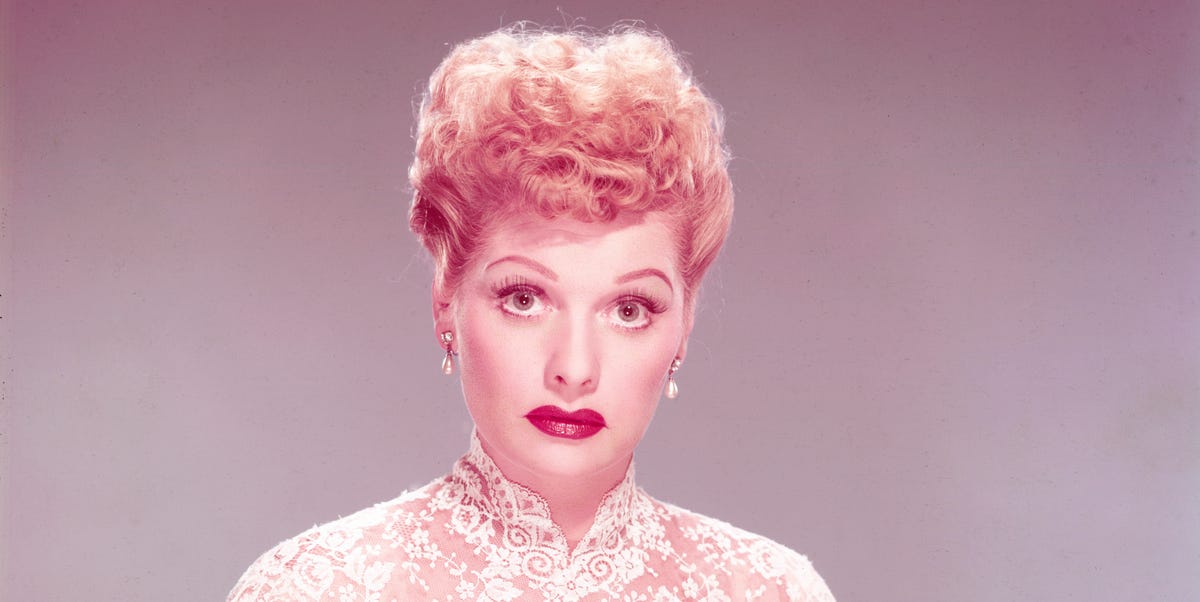
Some stars look polished in publicity stills and slightly terrifying in candid photos. Lucille Ball managed the opposite trick. The more candid the image, the more fascinating she becomes. That is the fun of rare Lucille Ball photos: they do not shrink the legend, they widen it. They show the woman before the punchline landed, after the applause faded, and in those in-between moments when a television icon looks less like a myth and more like a working artist with a wicked brain, a sharp eye, and somewhere to be.
If your mental picture of Lucy begins and ends with the grape-stomping scene, the candy conveyor belt, or that famous Vitameatavegamin face, the rare photographs tell a much bigger story. They reveal the pre-fame hustler, the disciplined comedian, the ambitious producer, the hometown daughter, and the businesswoman who understood television so well she helped reshape it. In other words, these images do not just say, “Look, it’s Lucy.” They say, “Look again.”
Why Rare Lucille Ball Photos Hit Differently
There is a reason people keep searching for rare Lucille Ball photos decades after her death. The standard images are already part of American pop culture wallpaper. We know the stills from I Love Lucy. We know the flame-red hair, the startled eyes, the comic panic. But rare images work like trapdoors. They drop you beneath the polished surface and into the actual machinery of a career.
That matters with Lucille Ball because her public image can be misleading. The best-known version of Ball is a lovable chaos engine in pearls. The fuller version is more interesting. She was a model in New York, a Hollywood contract player, a radio performer, a physical comedian with fearless timing, and later a studio executive who could spot both talent and opportunity. Rare photos give those identities room to breathe. They let you see the evolution instead of just the result.
And frankly, they are fun. One frame might show her in a glamorous dress at an awards celebration. Another might catch her peering into a mirror while her hair is being fixed. Another shows her revisiting her childhood home. Another captures her laughing with ordinary people in Jamestown as if global fame had simply wandered back into town wearing a good coat. That range is exactly why the photos endure.
Before Lucy Ricardo, There Was Lucille the Striver
The Model, the Showgirl, and the Woman Who Refused to Quit
Rare early photos of Lucille Ball are a nice antidote to lazy celebrity mythology. She did not appear out of thin air one day as the fully formed queen of sitcom comedy. She had a long apprenticeship. Before television made her a household name, she worked as a model and pursued performance in New York. Then came Hollywood, where she moved through the studio system as many ambitious actors did: by taking jobs, learning on the fly, and waiting for the right vehicle to arrive.
Those early images often carry a different energy from the later Lucy pictures. The face is familiar, but the persona is still in development. In some shots, she looks like a woman testing the boundaries of glamour. In others, she looks like someone who knows that being photogenic is useful but not nearly enough. That is part of their charm. You can almost watch her figuring out which version of herself the camera loves most.
Photos from the early 1930s and 1940s are especially revealing because they remind us that Ball spent years in films before television finally aligned with her gifts. She was often cast as stylish, witty, or attractive, but not always positioned as the singular comic force she would later become. Rare pictures from that era feel like behind-the-scenes evidence from a career laboratory. They show the ingredients before the recipe became iconic.
The Rare Images That Reveal the Offstage Lucy
Jamestown: The Homecoming Photos That Feel Like a Small Movie
Some of the most delightful rare Lucille Ball photos come from her 1956 return to Jamestown, New York. These are not just celebrity snapshots. They play like a visual short story. There is the hometown crowd. There is the weather. There is the emotional pull of memory. And there is Ball herself, moving between public spectacle and private recognition.
What makes this group of images so compelling is the contrast. In one moment, she is greeted by a massive crowd, a national star welcomed like a conquering heroine. In another, she is back at her childhood home, reconnecting with the architecture of her own beginnings. A rare photo can do what a formal biography sometimes cannot: it collapses time. Suddenly the woman who ruled Monday night television is also the girl who once imagined performance from inside that same town.
The unpublished and less-circulated images from that homecoming are especially rich. They show not only the public fanfare but the quieter textures of the trip: Ball pausing in intimate spaces, interacting with local people, and appearing less like a monument and more like a person trying to hold together memory, fame, nostalgia, and schedule. It is history without the museum voice telling you how to feel.
Domestic, Personal, and Gently Unscripted
Other rare photos from family scrapbooks and archival collections work because they are not trying so hard. Images of Ball with her first car after arriving in Hollywood, relaxing at the Desilu ranch, boating with Desi Arnaz, or appearing in mid-1940s publicity pages feel like visual footnotes to the life story. And footnotes, as any good history nerd will tell you, are where the good stuff lives.
These images remind us that Ball’s life was not made entirely of punchlines and camera marks. She had a home life, a social world, a marriage that was deeply collaborative and deeply complicated, and a sense of herself that extended far beyond the Lucy Ricardo character. A rare photograph of Ball away from the set can be strangely moving because it interrupts the sitcom loop we have in our heads. She stops being a rerun and becomes a person again.
That is also why scrapbook images matter. Scrapbooks preserve what publicity departments did not always prioritize: relationships, travel, casual moments, and the kinds of details that do not fit neatly into studio branding. In Ball’s case, those details are gold. They help explain why audiences loved her so intensely. She could seem larger than life without ever feeling entirely unreachable.
Behind the Scenes: Where the Legend Gets Even Better
If you really want to appreciate Lucille Ball, the rare behind-the-scenes photos are the jackpot. Publicity stills show the finished joke. Backstage and rehearsal images show the labor. That is where you see audience warm-ups, writers at work, shooting schedules, costume preparation, and the overall seriousness behind the silliness.
This is the part of the Lucille Ball story that deserves more attention. Her comedy looked effortless, which is usually a sign that somebody worked very hard to make it look that way. Rare images from rehearsals and production settings reveal the infrastructure around the laughs. They suggest discipline, repetition, technical precision, and a performer who understood the camera so completely that she could make chaos feel perfectly timed.
Even photographs from awards celebrations tell on her in the best possible way. They show not only fame, but the payoff for relentless craft. By the time Ball was collecting honors and smiling at cameras in formalwear, she had already done the harder thing: she had changed what television comedy could look like.
What Rare Photos Teach Us About Lucille Ball and Desi Arnaz
You cannot tell the Lucille Ball story honestly without Desi Arnaz, and rare photos make that clear fast. The usual shorthand about their marriage is too flat. Yes, it was turbulent. Yes, it ended in divorce. But the images often capture something just as important: they were a creative partnership of unusual force.
Rare photographs of the couple in vaudeville, on set, at events, and during travel show two people who were not merely co-stars. They were collaborators building a new television model while also living inside a very public romance. That tension is visible in the best photos. Sometimes you see glamour. Sometimes teamwork. Sometimes fatigue. Sometimes chemistry so obvious it almost hums through the frame.
That complexity is part of why these images keep pulling people back. They preserve both the fairy tale and the fine print. They reveal that the smiling couple who transformed television were also two ambitious professionals carrying the weight of fame, business, family, and expectation. The photos do not solve that contradiction. They make it visible. Which is better, honestly.
Lucille Ball Was Not Just Funny. She Was Smart About the Business.
One of the most satisfying things about looking at rare Lucille Ball photos is that they eventually steer you toward the truth that her career was never just about comic brilliance. She was an operator in the best sense of the word. She understood how an image worked, how an audience worked, and later how an entertainment company worked.
That is why photos from the Desilu era matter so much. They are not merely nostalgic artifacts from classic television. They document a woman who moved from performer to executive authority. By the early 1960s, Ball was no longer only starring in television. She was helping run the machine. And not in a ceremonial, smile-for-the-trade-press way. In a real, consequential way.
That shift changes how rare photos should be read. A candid shot of Ball on a set is not just a comedian waiting for her cue. It may also be a producer evaluating the work. A formal portrait from her later career is not just glamour photography. It may also be the image of a woman managing power in an industry that did not exactly hand it out like free samples at the grocery store.
Put bluntly, the rare photos are useful because they rescue her from one-dimensional nostalgia. Lucille Ball was funny, yes. But she was also strategic, resilient, and unusually influential in the business of television. That fuller picture is not less lovable than the legend. It is more impressive.
Why These Photos Still Matter in the Streaming Age
It might seem odd that in an era of algorithmic recommendations, endless celebrity access, and approximately twelve million selfies per hour, rare photos of a mid-century star still feel special. But that is exactly why they matter. Today, images are everywhere and meaning is thin. Lucille Ball’s rare photos are fewer, slower, and richer. They feel earned.
They also remind us of a version of fame built on work rather than saturation. Ball became iconic because she delivered. Week after week. Format after format. Studio after studio. The rare photographs preserve evidence of that process. They show a performer becoming an institution without losing all traces of the person underneath.
For younger audiences, these photos can also serve as a better gateway into Lucille Ball than the usual greatest-hits montage. Instead of treating her like a relic from “olden TV,” they reveal her as modern in surprising ways: image-conscious, business-savvy, physically fearless, collaborative, and very aware of how performance and identity interact. She was not just ahead of her time. She helped create the timeline other performers followed.
A Longer Reflection: What It Feels Like to Encounter Rare Lucille Ball Photos Today
There is a very particular feeling that comes with seeing rare Lucille Ball photos for the first time, and it is not just ordinary nostalgia. It is closer to the sensation of overhearing history speak in a more personal voice. The familiar Lucille Ball is loud in the best way: comic, expressive, instantly readable. The rare Lucille Ball is quieter, but somehow she stays with you longer.
Maybe that is because the rare photos ask you to slow down. A still of Lucy Ricardo stuffing chocolates into her mouth gives you the joke immediately. A rarer image of Ball standing in her childhood home, looking at a room she once knew as a girl, asks something different of you. It asks you to imagine the years in between. The disappointments. The hustle. The breakthroughs. The reinvention. In one frame, the distance between small-town ambition and American iconography becomes visible.
That experience can be surprisingly emotional, even for people who are not hardcore classic television fans. You start out looking for a celebrity photo and end up thinking about ambition, memory, and how fame freezes people into one version of themselves. Rare images unfreeze them. They return movement to the story. Ball is no longer only the clown with impeccable timing. She is also a daughter, partner, worker, executive, and aging professional carrying decades of experience behind one glance.
There is also something deeply human in the way these photos catch her between performances. She is fixing her hair. She is smiling at local workers. She is visiting familiar streets. She is standing near Desi in ways that suggest both affection and history. She is appearing in public while also seeming momentarily private. Those moments feel intimate without being intrusive. They are revealing because they are ordinary, and ordinary can be more powerful than glamour ever intended.
And then there is the craft angle, which makes the experience even better. The more you know about Lucille Ball, the more the photos start to look like documents of problem-solving. Here is a woman who learned how to use the camera, the set, the audience, and her own body with astonishing control. Even in photographs where she is offstage, you sense the professional mind at work. She knows where the moment is. She knows what the frame can do. She knows that performance does not begin when the director says action; it begins when attention enters the room.
That may be the biggest reason rare Lucille Ball photos remain so compelling. They do not just flatter the past. They deepen it. They let modern viewers feel the texture of a life that popular memory has simplified. The legend says Lucille Ball was hilarious, groundbreaking, and beloved. The rare photos say yes, absolutely, and also much more. They reveal a person who earned her status through persistence, technical intelligence, emotional elasticity, and a willingness to keep adapting long after lesser stars would have coasted on reputation.
So when someone says, “You should see these rare photos of Lucille Ball,” the sentence is not really about old pictures. It is about rediscovery. It is about meeting a cultural icon at a slightly different angle and realizing she is even more interesting than the version you already knew. That is a rare gift in celebrity history. Usually the curtain gets pulled back and the magic shrinks. With Lucille Ball, the opposite happens. The curtain moves, and somehow the stage gets bigger.
Conclusion
Rare Lucille Ball photos matter because they turn a beloved television figure back into a full human story. They show the young woman working her way into show business, the star returning home to Jamestown, the comic technician behind the chaos, the partner building something bold with Desi Arnaz, and the executive who helped shape modern television. They also remind us why Ball’s legacy remains so sturdy: she was never just an image. She was the intelligence behind the image.
So yes, you really should see these rare photos of Lucille Ball. Not because they are obscure, collectible, or good for a quick hit of vintage glamour, though they can certainly deliver all of that. You should see them because they restore dimension to one of the most recognizable women in American entertainment. And once you do, the old famous pictures get better too. They stop being the whole story and become part of a bigger, smarter, funnier one.













